
 Worksheets
Unit 1 Exam - Skills of a Scientist
Total questions: 30
Worksheet time: 17mins
Name
Class
Date
1.
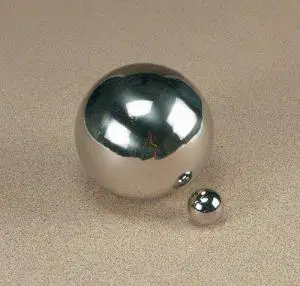
Which are observations of these steel spheres?
a)
They are reflective and have different volumes.
b)
They are reactive with sulfuric acid and will oxidize in high temperatures.
c)
They are pretty, fun to play with and loud when they drop.
2.
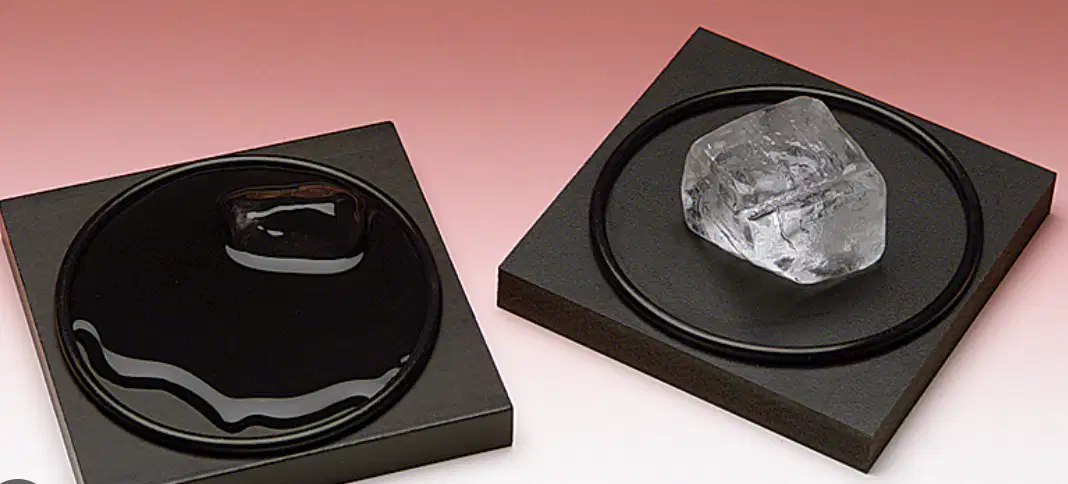
Which black disc was an insulator?
a)
The one that melted the ice quicker.
b)
The one that did not melt the ice as quickly.
c)
The one that felt cold when we began.
d)
Ours were circles which indicates that neither of these are insulators.
3.
What is serendipitous?
a)
when something good happens unexpectedly
b)
the ability to float or sink
c)
the downward force due to the mass of Earth (also known as gravity)
d)
an opinion that Katrina is weird
4.
One way to measure the mass of an object is to
a)
use a ruler and measure it
b)
put the object in water and see if it floats or sinks
c)
drop the object and see how it falls
d)
put the object on a scale and weigh it
5.
Qualitative observations
a)
use words to describe objects being observed (not numbers).
b)
use numbers to describe objects being observed (not just words).
c)
are your opinion or thoughts on an object being observed.
d)
are conclusions based on data collected in an experiment.
6.

What is one observation and one claim from this gif?
a)
Evidence: A cute dog is runs away. An earthquake happens. Claim: The dog is a rescue from a shelter.
b)
Evidence: An earthquake shakes the building and camera. Claim: A volcano erupted nearby causing the earthquake.
c)
Evidence: A dog is startled and runs away. Something shakes the camera. Claim: The dog detected an earthquake before the humans.
7.

What happens after the Alka Seltzer tablet is placed in the water with the lid on the film canister? Why?
a)
It will do nothing because ours did not work when we tried it.
b)
It will melt because Alka Seltzer causes an exothermic reaction producing much heat.
c)
It will shoot the canister up into the air because of the build up of pressure as carbon dioxide is released.
d)
It will change colors because it is a chemical indicator of acids or bases.
8.
Homeostasis is
a)
maintaining a constant internal environment like temperature or water concentration.
b)
the scientific name for humans.
c)
observing an object carefully and collecting data in an experiment.
d)
being safe and following directions in a lab.
9.
The manipulating variable is
a)
the dependent variable and you will collect data to graph on the y-axis.
b)
the independent variable and you will collect data to graph on the x-axis.
c)
the dependent variable and you will collect data to graph on the x-axis.
d)
the independent variable and you will collect data on the y-axis.
10.
Systems, including Earth, are made up of _____ and ____.
a)
truth and lies
b)
parts and people
c)
matter and energy
d)
computers and humans
11.
Weight is
a)
the amount of gravitational force exerted on an object
b)
the amount of matter in an object
c)
the amount of work done in a given time
d)
the amount of power done when you work
12.
What happens if one part of a system stops working?
a)
The system duplicates itself
b)
The entire system may be affected
c)
Nothing changes
d)
The system becomes stronger
13.
What is the index of refraction for air?
a)
Slightly more than 1
b)
2.5
c)
0.5
14.
Newton's Third Law is better stated as
a)
An object at rest remains at rest and an object in motion remains in motion until an unbalanced or external force acts upon it.
b)
Force equals mass times acceleration. An object that has more mass will move slower than an object with less mass when the same force is applied.
c)
For every force, there is an equal and opposite force. All forces act in pairs.
d)
Weight is how much matter an object is made up of but mass is how much gravitational force is applied.
15.
Alka-Seltzer Rockets illustrate Newton's ___ Law as the water reacts with the tablet to make carbon dioxide gas.
a)
1st
b)
2nd
c)
3rd
d)
Universal Law of Gravitation
16.
Energy is
a)
how active a person is in their lifestyle
b)
how happy and bubbly a person is in their personality
c)
the ability to do work or cause change
d)
the ability to lift an object in a given time
17.
Why do the polymer beads become nearly invisible in water?
a)
They dissolve completely
b)
They change color
c)
Their index of refraction matches water
18.
How does a sports team demonstrate a system?
a)
By each player performing their specific role
b)
By ignoring team strategy
c)
By having multiple coaches
d)
By competing alone
19.
Systems have parts that are touching and working together called ________.
a)
input
b)
output
c)
components
d)
boundary
20.

What type of data is shown here?
a)
qualitative
b)
quantitative
21.

Which step of the scientific method would this scenario be:
You happen to notice that your cat is gaining weight since switching to the new cat food
a)
Propose a hypothesis
b)
Ask a question
c)
Observation
d)
Iterate
22.

________________ is anything that has mass and takes up space.
a)
volume
b)
matter
c)
mass
d)
weight
23.

What is the INDEPENDENT variable (cause)in this experiment?
"Which type of metal, copper or aluminum, conducts heat faster?"
"Which type of metal, copper or aluminum, conducts heat faster?"
a)
size of metal
b)
types of metal
c)
time it takes to heat up
d)
shape of the metal
24.

Steam is an example of what state of matter?
a)
Solid
b)
Liquid
c)
Gas
d)
Thermo
25.

What state of matter is ice in?
a)
Solid
b)
Liquid
c)
Gas
d)
Thermo
26.

Name this tool.
a)
Thermometer
b)
Triple Beam Balance
c)
Pan Balance
d)
Safety Goggles
27.

Name the tool.
a)
terrarium
b)
spring scale
c)
balance
d)
hand lens
28.

The diagram shows a graduated cylinder containing water. From which position will the most accurate measure of the volume of water be made?
a)
Position 1
b)
Position 2
c)
Position 3
d)
Position 4
29.

Name the tool.
a)
balance
b)
meter stick
c)
graduated cylinder
d)
hand lens
30.

A student needs to measure 50 mL of water. Which tool should the student use to make the most accurate measurement?
a)
a balance
b)
a thermometer
c)
a glass beaker
d)
a graduated cylinder
100 %

