
 Worksheets
Concrete and Wood Quiz
Total questions: 27
Worksheet time: 16mins
What are the ingredients in the mixture of concrete?
Cement
Aggregate
Water
Soil
Marbles
It is a plastic mass which can be cast, molded or formed into predetermined size or shape.
Concrete
Cement
Aggregate
Water
Concrete in which steel reinforcement is embedded in such a manner that the two materials act together in resisting forces.
Reinforced Concrete
Hardened Concrete
Proportioned Concrete
Retarded Concrete
A kind of cementing material patented by John Aspdin in 1824.
Portland Cement
Pozzolan Cement
Gypsum
Lime
For general purpose commonly used for structural work, bridges, pavements and concrete masonry units.
Normal
Modified Portland Cement
High Early Strength Cement
Low-heat Cement
This is used for decorative architectural concrete, stucco, white or pigmented grout.
White Portland Cement
Air-entraining Portland Cement
Sulfate Resistant Cement
Modified Portland Cement
Gravel is considered to be what type of aggregate?
Coarse
Fine
Heavy
Small
These are substances added to a concrete mix to alter or enhance a specific property.
Admixtures
Additives
Add-ons
Plasticizers
Used to speed up setting time and reduces the length of time for curing and protection.
Accelerators
Air-entraining Agents
Retarders
Reducers
What is the average mixture proportion of cement, sand, gravel, and water in cubic foot?
1 : 2 : 4 : 6
1 : 3 : 2 : 6
1 : 3.5 : 7
1 : 2.5 : 5
A classcification of wood that comes from the broad-leaves or deciduous trees.
Hardwood
Softwood
Sapwood
Heartwood
The older, harder central portion of a tree.
Hardwood
Softwood
Sapwood
Heartwood
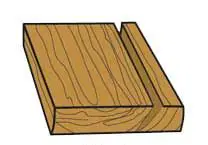
Identify the wood defect.
Shakes
Checks
Knots
Wane
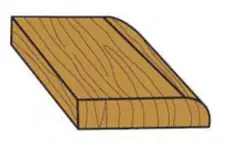
Identify the wood defect.
Shakes
Checks
Knots
Wane
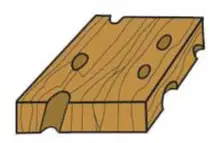
Identify the wood defect.
Shakes
Checks
Knots
Wane
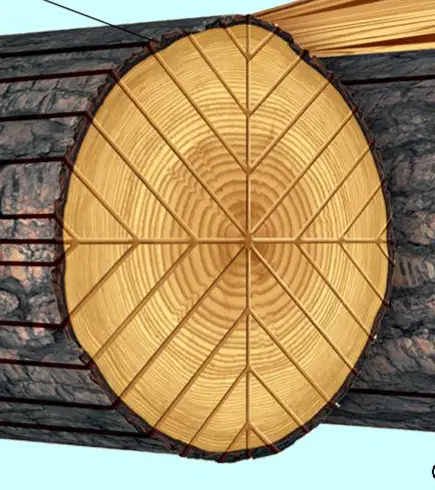
Identify the method of sawing wood.
Quarter Sawing
Plain Sawing
Rift Sawing
Live Sawing
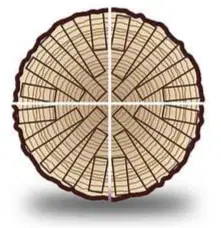
Identify the method of sawing wood.
Quarter Sawing
Plain Sawing
Rift Sawing
Live Sawing
The timber product manufactured by sawing, re-sawing, passing lengthwise through a planing machine, cross-cutting to length and grading.
Lumber
Dressed Lumber
Rough Lumber
Timber
Lumber less that 2" thick and less than 8" wide.
Strips
Planks
DImension Lumber
Board Lumber
Pieces more than 2" and less than 5" in any dimension. Classified for strength rather than appearance.
Strips
Planks
DImension Lumber
Board Lumber
The condition of dryness of the wood is called E.M.C., which stands for...
Equilibrium Moisture Content
Equal Moisture Content
Equal Measure Count
Equated Measure Checking
The process of removing moisture from green wood is called...
Seasoning
Drying
Evaporation
Condensation
Give at least one reason seasoned lumber is better than green lumber.
What are the two type of seasoning of lumber?
Air-Drying
Kiln-Drying
Natural Drying
Artificial Drying
Give one kind of Philippine wood good for post and other pasrt requiring stregnth an durability.
Compute for bdft: 25pcs 2” x 4” x 11’
140 bdft
143 bdft
183 1/2 bdft
170 bdft
Compute for bdft: 452pcs 1” x 12” x 3’
1,356 bdft
1,242 bdft
1,526 bdft
1,422 bdft

