
 Worksheets
2025/26 Q1 LSA Practice
Total questions: 100
Worksheet time: 8hrs 20mins

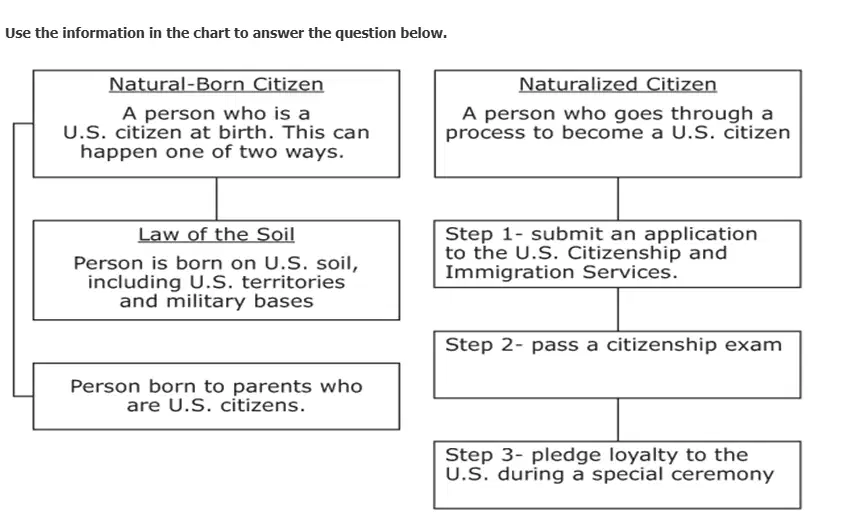
According to the 14th Amendment, what do you have to be in order to be given US citizenship?
Raised in the US for 5 years
Born or Naturalized in the US
Wealthy
None of the above
Paying your taxes is a
Responsibility
Duty
Both
Voting is a
Duty
Responsibility
Both
Infrastructure
The physical systems that allow a country, state, or region to function
The decisions and actions a government takes to solve problems in the community
The process of becoming a citizen if you were born outside the US
The position or status of being a citizen of a particular country
Naturalization
the position or status of being a citizen of a particular country
the process of becoming a citizen if you were born outside of the U.S.
The decisions and actions a government takes to solve problems in the community
The physical systems that allow a country, state, or region to function.
Citizenship
The decisions and actions a government takes to solve problems in the community
the process of becoming a citizen if you were born outside of the U.S.
The physical systems that allow a country, state, or region to function.
the position or status of being a citizen of a particular country
Which term is defined as the legal process of becoming a U.S. Citizen?
Assimilation
Immigration
Naturalization
Adoption
Which of these are a Duty for citizens?
Paying Taxes
Volunteering in your community
Attending a civic meeting
Voting in an election
Which of the following best defines the term citizen?
An individual who exercises political authority over a group of people
An individual who is from another country
A legal member of a country
A person who likes America
What is the Law of Soil?
Being Born to U.S. Citizen Parents
Being Born in the U.S. or one of it's territories
Only People who touch the ground are Citizens
Being Born in a country outside the United States
What is the Law of Blood?
Being Born in the U.S. or one of it's territories
Being Born to U.S. Citizen Parents
Only People who touch the ground are Citizens
Being Born in a country outside the United States
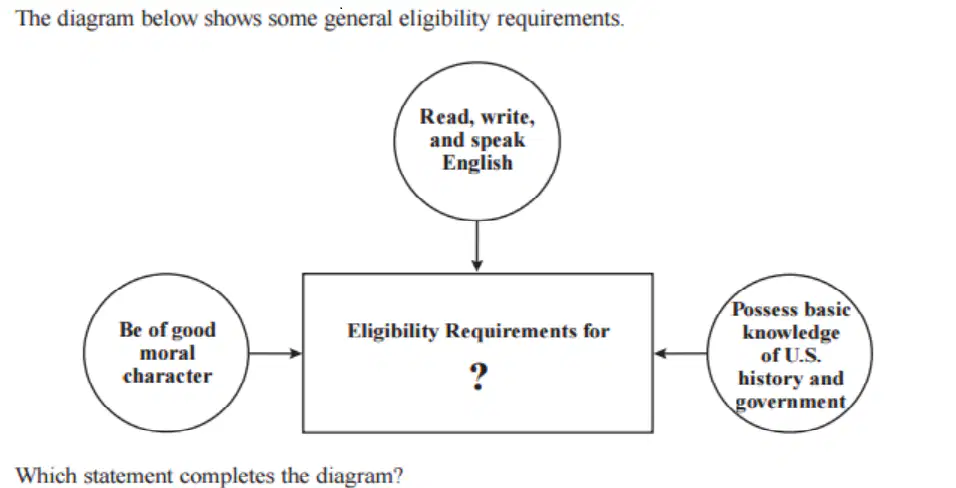
Which statement completes the diagram?
Joining a Military Service
Obtaining a Driver’s License
Becoming a Naturalized Citizen
Receiving a Social Security Card
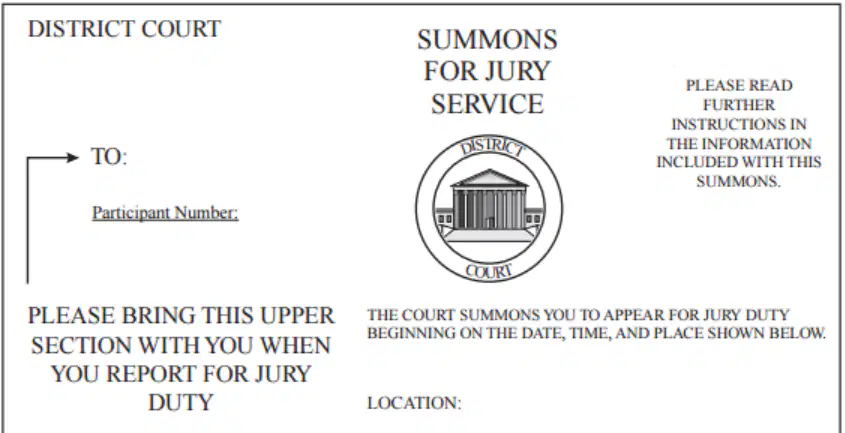
Why are citizens obligated to respond to this document?
To guarantee court hearings remain public
To guarantee courts provide probable cause
To protect the constitutional right to be tried by a jury
To protect the constitutional right to confront one’s accuser
Which is a qualification to become a Naturalized citizen?
Living in the US for 5 years
Marrying someone who lives in the US
Visiting the US at least once
Being a bank robber
What is a person who was born in the U.S. called?
Foreign Born Citizen
Natural/Native Born Citizen
Naturalized Citizen
Blood Related Citizen
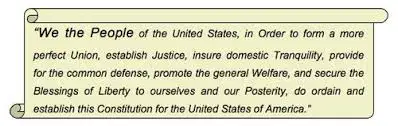
What is the purpose of this part of the Constitution?
to establish the purpose of government
to establish the supreme law of the land
to explain the need for separation of powers
to describe the branches of the federal government
How does the rule of law affect the actions of government?
It allows government to expand its power
It prevents government from abusing its power
It prevents citizens from ignoring the government
It ensures that citizens have a say in the government
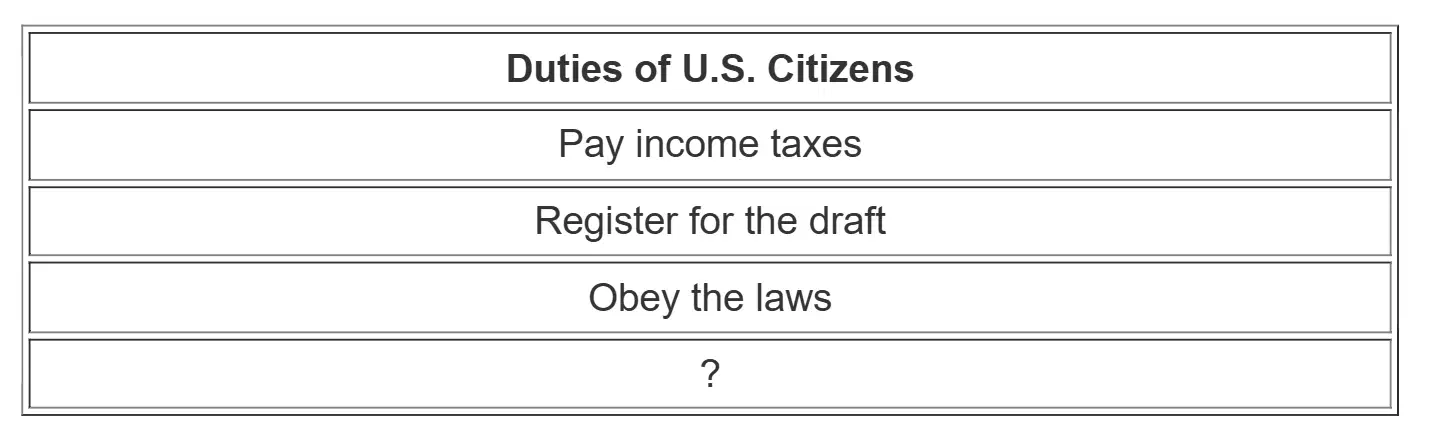
DUTIES OF US CITIZENS // Pay income taxes, Register for the draft, obey laws, ??? // Which action completes this list?
Serve on a jury
Vote in local elections
Participate in charity work
Respect the opinions of others
What idea from these documents influenced the development of government in the American colonies? // Magna Carta, English Bill of Rights
Governments should not have kings
Governments should not have legislative bodies
Governments should grant citizens specific rights
Governments should allow leaders to have unlimited power
Read the following description and answer the question below // "In 2009, President Barack Obama nominated Judge Sonia Sotomayor to the U.S. Supreme Court to replace an outgoing judge. Sotomayor met with the Senate Judiciary Committee to answer questions about her experiences and opinions. The Senate Judiciary Committee approved of Sotomayor's nomination and sent it on to the Senate for a vote. On August 6, 2009, the Senate voted 68 to 31 to make her a justice on the Court." // Which feature of US government is being described?
judicial review
concurrent powers
popular sovereignty
checks and balances/separation of powers
Which statement describes the concept of natural rights found in the Declaration of Independence
Natural rights can only exist without government
Natural rights do not apply to foreign-born citizens
People are born with natural rights that cannot be taken away
Governments give people natural rights that cannot be taken away

Based on the information, disagreement over what main issue caused this series of events?
The colonists ability to criticize their national government
The colonists privilege to establish local colonial settlements
the colonists right to participate in their national government
the colonists responsibility to finance local colonial operations
Read the following quotation and answer the question below: // The following quotation by Thomas Paine relates to the concept of rule of law.
"...in America the law is King. For as in absolute governments the King is law, so in free countries the law ought to be King; and there ought to be no other."
-Thomas Paine" // How do these ideas impact the United States government?
The rule of law is similar to a king’s power, which is why the U.S. government decided to get rid of the rule of law.
The rule of law has power like a king does, and all the branches of the U.S. government must uphold the rule of law
The rule of law is greater than a king's power, and laws can allow the U.S. government to keep some information secret.
The rule of law has more power than a king, which means the ruler does not have to follow the law.
Which agreement was made to ensure the ratification of the US Constitution
The Antifederalists agreed to ratify the Constitution if a bill of rights was included.
The Antifederalists agreed to ratify the Constitution if a court system was created.
The Federalists agreed that all states would have the same power under the Constitution.
The Federalists agreed to minimize the power given to the president under the Constitution.
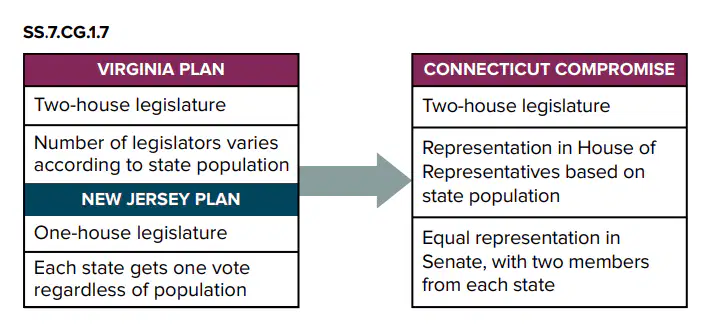
How did the Connecticut Compromise, or Great Compromise, satisfy both those who supported the Virginia Plan and those who supported the New Jersey Plan?’
by creating both equal and population-based representation
by making both legislative houses equal in power
by making the House of Representatives larger than the Senate
by separating the powers of the two legislative houses
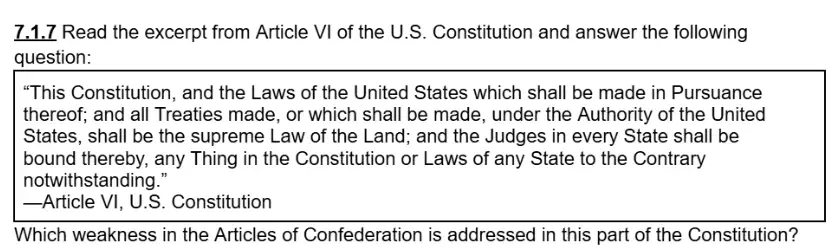
Which weakness in the Articles of Confederation is addressed in this part of the Constitution?
There was no executive branch to enforce national laws
The states had more power than the national government
There was no national court system
Laws required the approval of nine states

According to the excerpt, which problem did the Articles of Confederation create?
A lack of checks on legislative powers
A lack of powers given to state legislatures
The lack of authority to enforce congressional acts
The lack of authority to apportion congressional districts
What principle of government does the phrase "We the People" in the Preamble establish?
Rule of Law
Federalism
Separation of Powers
Popular Sovereignty
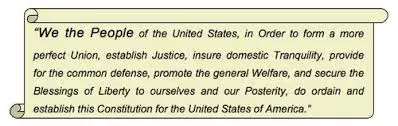
Which of the following excerpts from the Constitution supports the intention of the phrase “to form a more perfect Union” in the Preamble?
From Article I: “The House of Representatives shall choose their Speaker and other Officers; and shall have the sole Power of Impeachment.”
From Article IV: “New States may be admitted by the Congress into this Union.”
From Article VI: “All Debts contracted and Engagements entered into, before the Adoption of this Constitution, shall be as valid against the United States under this Constitution, as under the Confederation.”
From Article VII: “The Ratification of the Conventions of nine States, shall be sufficient for the Establishment of this Constitution between the States so ratifying the Same.”
Why did the Anti-Federalists oppose the Constitution?
They did not like the bicameral legislature
They worried that the national government was too strong
They objected to the proposed Bill of Rights
They were angry about the Three-Fifths Compromise
During the debate over approving the U.S. Constitution, how did Anti-Federalists’ and Federalists’ viewpoints differ?
Anti-Federalists feared that state governments would have too much power under the Constitution.
Federalists objected to two legislative bodies and preferred a unicameral legislature.
Federalists believed that the central government created by the Constitution was too strong.
Anti-Federalist worried that the Constitution failed to adequately protect citizens’ individual freedom
Definition: To Declare
Ordain
Posterity
Tranquility
Domestic
Definition: Future generations
Ordain
Posterity
Tranquility
Domestic
Definition: Peace
Ordain
Posterity
Tranquility
Domestic
Definition: Home
Ordain
Posterity
Tranquility
Domestic
The process to become a citizen
Citizenship
Naturalization
Right
Constitution
A plan for government
Citizenship
Naturalization
Right
Constitution
A legal protection or guarantee
Citizenship
Naturalization
Right
Constitution
The status of being a citizen
Citizenship
Naturalization
Right
Constitution
People have a say in the government
Natural Rights
Rule of Law
Due Process
Democracy
Rights you have just for being alive
Natural Rights
Rule of Law
Due Process
Democracy
Nobody is above the law
Natural Rights
Rule of Law
Due Process
Democracy
The legal system has to give everyone the same rights, protections, and procedures if they are charged with a crime
Natural Rights
Rule of Law
Due Process
Democracy
Required American colonists to pay taxes on all printed paper (newspapers, pamphlets, letters)
Stamp Act
Quartering Act
Townshend Act
Tea Act
Required colonists to house and feed British soldiers
Stamp Act
Quartering Act
Townshend Act
Tea Act
Taxes on glass, lead, tea, and paint
Stamp Act
Quartering Act
Townshend Act
Tea Act
Limited colonists to only buying tea from the British East India Company
Stamp Act
Quartering Act
Townshend Act
Tea Act
Loose group of states
Confederation
Sovereignty
Amendment
Article
Authority to govern yourself
Confederation
Sovereignty
Amendment
Article
A change to the constitution
Confederation
Sovereignty
Amendment
Article
A section of a document
Confederation
Sovereignty
Amendment
Article
To control
Regulate
Compromise
Interstate Commerce
Preamble
To come to an agreement
Regulate
Compromise
Interstate Commerce
Preamble
Trade between states
Regulate
Compromise
Interstate Commerce
Preamble
The introduction to the Constitution
Regulate
Compromise
Interstate Commerce
Preamble
"Break up" letter that America sent to England
Declaration of Independence
Constitution
Articles of Confederation
English Bill of Rights
The current plan for the United States' Government
Declaration of Independence
Constitution
Articles of Confederation
English Bill of Rights
The first plan of government for the United States
Declaration of Independence
Constitution
Articles of Confederation
English Bill of Rights
The source of government power in the United States
We the People
In order to form a more perfect Union
Establish Justice
Insure domestic tranquility
Translate: To make a better government
We the People
In order to form a more perfect Union
Establish Justice
Insure domestic tranquility
Translate: Create a fair society
We the People
In order to form a more perfect Union
Establish Justice
Insure domestic tranquility
Translate: guarantee peace within the United States
We the People
In order to form a more perfect Union
Establish Justice
Insure domestic tranquility
Translate: Work to protect each other
Provide for the common defence
Promote the general welfare
Secure the blessings of liberty
To ourselves and our posterity
Translate: Help everyone live a better life
Provide for the common defence
Promote the general welfare
Secure the blessings of liberty
To ourselves and our posterity
Translate: Protect our rights and freedoms
Provide for the common defence
Promote the general welfare
Secure the blessings of liberty
To ourselves and our posterity
Translate: For future generations
Provide for the common defence
Promote the general welfare
Secure the blessings of liberty
To ourselves and our posterity
Lists the goals of the entire United States Government
The Preamble to the Constitution
Article I of the Constitution
Article II of the Constitution
Article III of the Constitution
Jury Duty
Civic Duty
Civic Responsibility
Voting
Civic Duty
Civic Responsibility
Attending a civic meeting
Civic Duty
Civic Responsibility
Registering for Selective Service (the Draft)
Civic Duty
Civic Responsibility
Paying taxes
Civic Duty
Civic Responsibility
Mayflower Compact
Self-Government
Rule of Law
Separation of Powers
Natural Rights
Magna Carta
Self-Government
Rule of Law
Separation of Powers
Natural Rights
Spirit of the Law // Montesquieu
Self-Government
Rule of Law
Separation of Powers
Natural Rights
Second Treatise on Government // John Locke
Self-Government
Rule of Law
Separation of Powers
Natural Rights
American colonies declaring independence from England can be seen as a result of England violating ______________
The Social Contract
Separation of Powers
Trade regulations
The King's powers