
 Worksheets
Tools and Equipment
Total questions: 11
Worksheet time: 6hrs 30mins
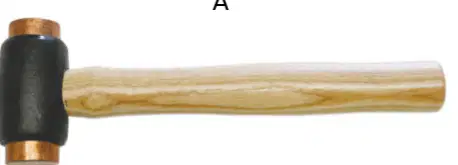
Using the images below: Identify the tool labeled A.
Type of tool: Mallet; Safety checks: Check for cracks in the handle and head, ensure the head is securely attached; Use: Used for striking without damaging surfaces.
Type of tool: Screwdriver; Safety checks: Check for a worn or damaged tip, ensure handle is not cracked; Use: Used for driving screws.
Type of tool: Chisel; Safety checks: Check for a sharp edge, ensure handle is not split; Use: Used for carving or cutting hard materials.
Type of tool: Pliers; Safety checks: Check for rust or damage, ensure jaws align properly; Use: Used for gripping and bending objects.
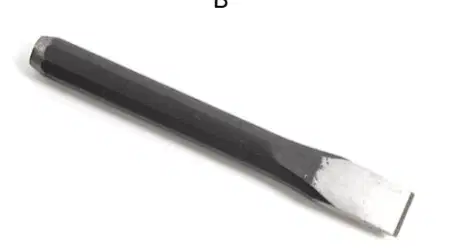
Using the images below: Identify the tool labeled B.
Cold chisel; Check for mushroomed head, cracks, and sharpness; Used for cutting metal.
Ball peen hammer; Check for loose head, cracks, and handle condition; Used for striking chisels and punches.
Screwdriver; Check for bent shaft, worn tip, and handle damage; Used for driving screws.
Pliers; Check for jaw alignment, rust, and handle grip; Used for gripping and bending objects.
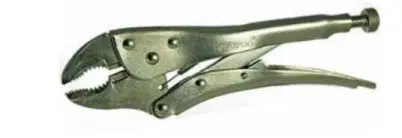
Using the images below: Identify the tool labeled C.
Type of tool: Locking pliers (vise-grip); Safety checks: Check for proper locking mechanism, rust, and wear; Use: Used for gripping and holding objects tightly.
Type of tool: Needle-nose pliers; Safety checks: Inspect for bent tips and smooth operation; Use: Used for bending wire and reaching into tight places.
Type of tool: Adjustable wrench; Safety checks: Check for smooth adjustment and jaw alignment; Use: Used for turning nuts and bolts of various sizes.
Type of tool: Pipe wrench; Safety checks: Inspect for worn teeth and handle cracks; Use: Used for gripping and turning pipes.
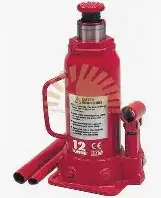
Identify the type of equipment shown in image A, state the safety checks to be carried out prior to its use, and explain how it would be used in vehicle maintenance and repair.
The equipment is a hydraulic bottle jack; safety checks include inspecting for leaks and ensuring stability; it is used to lift vehicles for repairs.
The equipment is a torque wrench; safety checks include checking calibration; it is used to tighten bolts to specific torque values.
The equipment is a battery charger; safety checks include checking cable insulation; it is used to charge vehicle batteries.
The equipment is a tire inflator; safety checks include checking pressure gauge accuracy; it is used to inflate tires.
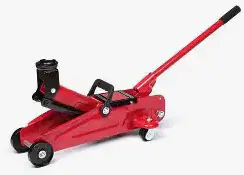
Using the image labeled A below, select the correct type of equipment, the safety checks to be carried out prior to its use, and how the tool would be used in vehicle maintenance and repair.
A trolley jack; check for oil leaks, ensure the jack is not damaged, and confirm it operates smoothly; used to lift vehicles for maintenance.
A torque wrench; check calibration, inspect for cracks, and ensure the handle is secure; used to tighten bolts to a specific torque.
A multimeter; check battery, inspect leads for damage, and ensure display works; used to measure electrical values in vehicles.
A spanner; check for rust, ensure jaws are not worn, and confirm size markings are visible; used to loosen or tighten nuts and bolts.
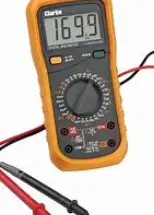
Identify the type of equipment shown in image, the safety checks to be carried out prior to its use, and how it would be used in vehicle maintenance and repair.
It is a hydraulic jack; check for leaks, cracks, and proper operation before use; it is used to lift vehicles for repairs.
It is a torque wrench; check calibration and cleanliness; it is used to tighten bolts to specific torque values.
It is a multimeter; check battery and leads; it is used to measure electrical values in vehicles.
It is a tire inflator; check hose and pressure gauge; it is used to inflate vehicle tires.
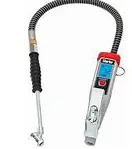
Identify the type of equipment, the safety checks to be carried out prior to its use, and how the tool would be used in vehicle maintenance and repair.
The equipment is a hydraulic jack; safety checks include inspecting for leaks and ensuring stability; it is used to lift vehicles for repairs.
The equipment is a torque wrench; safety checks include checking calibration; it is used to tighten bolts to specification.
The equipment is a multimeter; safety checks include checking battery and leads; it is used to measure electrical values.
The equipment is a tyre inflator; safety checks include checking pressure gauge; it is used to inflate tyres.
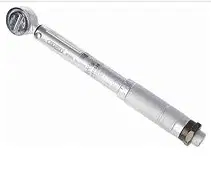
Identify the type of equipment, the safety checks to be carried out prior to its use, and how the tool would be used in vehicle maintenance and repair.
The image shows a hydraulic jack; safety checks include inspecting for leaks and ensuring stability; it is used to lift vehicles for repairs.
The image shows a torque wrench; safety checks include checking calibration; it is used to tighten bolts to specification.
The image shows a battery tester; safety checks include checking for damaged cables; it is used to test battery charge.
The image shows a tire inflator; safety checks include checking pressure gauge accuracy; it is used to inflate tires.
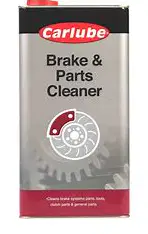
Consumable materials in vehicle maintenance and repair must be identified, safety checks carried out prior to use, and their application in maintenance and repair understood. Which of the following best summarizes these requirements?
Identify consumable materials, perform safety checks before use, and understand their application in vehicle maintenance and repair.
Use any available materials without safety checks and apply them as needed.
Only identify consumable materials; safety checks are not necessary.
Consumable materials do not require identification or safety checks before use.
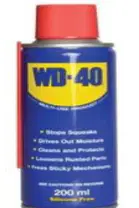
Type of consumable material for the product shown (WD-40): __________
Lubricant (WD-40 is a lubricant and water-displacing spray)
Adhesive
Paint
Coolant
Product information relating to the safe use of consumable materials can be located in:
Safety Data Sheets (SDS)
Product advertisements
Social media posts
Customer reviews

