
 Worksheets
Forensic Science Fundamentals
Total questions: 41
Worksheet time: 21mins
Who is often called the "father of forensic science" for his pioneering work in the field?
Albert Einstein
Edmond Locard
Isaac Newton
Charles Darwin
Which federal agency operates the largest crime laboratory in the United States?
CIA
FBI
DEA
ATF
What is the primary responsibility of a crime scene investigator?
Defending suspects in court
Collecting and preserving evidence
Conducting autopsies
Prosecuting criminals
Which of the following is a career in forensic science?
Forensic Pathologist
Civil Engineer
Graphic Designer
Chef
What is the most common type of fingerprint pattern?
Arch
Loop
Whorl
Tented Arch
Which historical event is considered a milestone in the development of forensic science?
The invention of the telephone
The establishment of the first police crime lab in Paris in 1910
The discovery of penicillin
The first moon landing
Which U.S. agency specializes in the analysis of drugs and controlled substances?
FBI
DEA
ATF
EPA
Who is responsible for determining the cause of death in suspicious cases?
Forensic Pathologist
Crime Scene Investigator
Police Officer
Defense Attorney
Which fingerprint analysis technique involves using powder to reveal prints on smooth surfaces?
Ninhydrin
Cyanoacrylate fuming
Dusting
Iodine fuming
Which of the following is NOT a major U.S. crime lab?
FBI Laboratory
DEA Laboratory
ILD Laboratory
ATF Laboratory
Which principle states that "every contact leaves a trace" in forensic science?
Newton's Law
Locard's Exchange Principle
Boyle's Law
Darwin's Theory
Which type of fingerprint pattern is characterized by ridges entering from one side and exiting the other?
Loop
Whorl
Arch
Double Loop
Which of the following best describes the role of a forensic toxicologist?
Studies insects on corpses
Analyzes bodily fluids for toxins and drugs
Examines handwriting samples
Collects trace evidence
Which of the following is a responsibility of a forensic anthropologist?
Identifying skeletal remains
Analyzing blood spatter
Collecting fiber evidence
Conducting DNA analysis
Which of the following best explains why the establishment of the FBI Laboratory in 1932 was significant for forensic science in the U.S.?
It was the first lab to use DNA analysis
It centralized forensic services for law enforcement agencies nationwide
It focused only on fingerprint analysis
It was the first lab to use computers
How does the role of a forensic odontologist differ from that of a forensic pathologist?
Odontologists analyze blood, while pathologists analyze teeth
Odontologists identify individuals through dental records, while pathologists determine cause of death
Odontologists collect fingerprints, while pathologists analyze handwriting
Odontologists work only with living patients
Why is it important for crime scene personnel to follow proper evidence collection procedures?
To make the process faster
To prevent contamination and ensure evidence is admissible in court
To avoid paperwork
To impress the jury
What is the main difference between a loop and a whorl fingerprint pattern?
Loops have two deltas, whorls have one
Loops have one delta and ridges that enter and exit from the same side, while whorls have two deltas and circular ridges
Loops are only found on toes, whorls on fingers
Loops are always larger than whorls
Which scenario best illustrates the application of Locard's Exchange Principle at a crime scene?
A suspect leaves a fingerprint on a window
A suspect and victim exchange fibers during a struggle
A police officer writes a report
A witness gives a statement
How might a forensic scientist use fingerprint analysis to link a suspect to a crime scene?
By comparing the suspect's fingerprints to those found at the scene
By interviewing witnesses
By analyzing handwriting samples
By collecting DNA from the scene
Which of the following best describes the collaborative nature of crime scene personnel?
Each person works alone and does not share information
Personnel from different specialties work together to collect, analyze, and interpret evidence
Only police officers are involved in evidence collection
Only forensic scientists analyze evidence
A forensic scientist is asked to analyze a bloodstain pattern at a crime scene. Which forensic career does this task most likely belong to?
Forensic Entomologist
Forensic Pathologist
Forensic Serologist
Forensic Odontologist
A crime scene investigator finds a partial fingerprint on a glass. What steps should they take to ensure the print is preserved for analysis?
Wipe the glass clean
Photograph the print, then lift it with tape and store it properly
Leave the glass at the scene
Wash the glass with water
A forensic scientist is presented with a set of fingerprints from a crime scene and a suspect. What reasoning process should they use to determine if the prints match?
Compare the overall size of the prints only
Analyze ridge patterns, minutiae points, and overall characteristics to look for a match
Ask the suspect if the prints are theirs
Use only the color of the print
Given a scenario where multiple types of evidence (hair, fibers, fingerprints) are found at a crime scene, how should crime scene personnel prioritize their collection and why?
Collect the largest items first for convenience
Collect fragile or easily lost evidence first to prevent contamination or loss
Collect evidence in alphabetical order
Collect evidence only after the scene is cleaned
A forensic scientist is tasked with determining whether a fingerprint found at a crime scene is a match to a suspect. What evidence and reasoning should they use to make a reliable conclusion?
Rely on a single ridge characteristic
Compare multiple minutiae points and ensure a sufficient number of matching features
Use only the general pattern type (loop, whorl, arch)
Guess based on the size of the print
A forensic pathologist is presented with a body showing unusual marks. What steps should they take to determine the cause of death, and what evidence should they consider?
Ignore the marks and write a report
Conduct a thorough autopsy, examine the marks, collect tissue samples, and consider toxicology results
Only look at the external appearance
Ask the family for their opinion
A crime scene contains both fingerprints and blood evidence. How should forensic personnel plan their collection and analysis to avoid cross-contamination and ensure reliable results?
Collect all evidence at once without planning
Use separate tools and gloves for each type of evidence, and document the process carefully
Only collect the evidence that is easiest to reach
Mix all evidence together for convenience
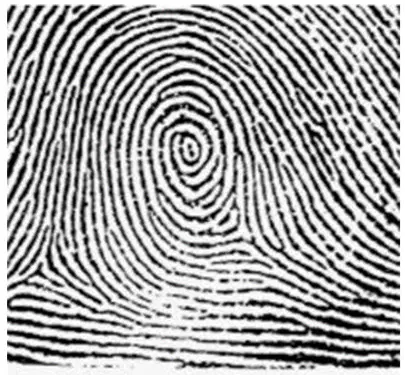
What type of fingerprint is this?
Whorl
Loop
Arch
Tented Arch
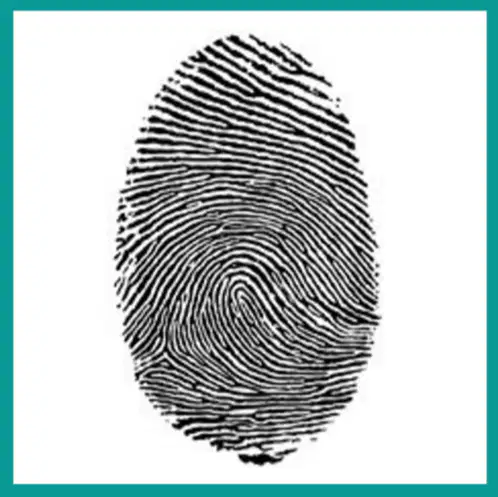
What kind of fingerprint is shown in this photo?
Whorl
Loop
Arch
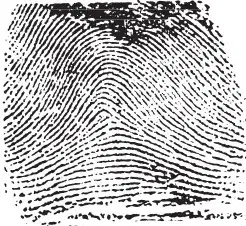
What type of fingerprint is shown in this photo?
Whorl
Loop
Plain Arch
Tented Arch
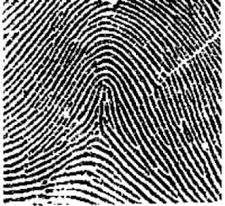
Which type of fingerprint is shown in the photo?
Whorl
Loop
Plain Arch
Tented Arch
Which forensic specialist is primarily responsible for analyzing bite mark evidence found at a crime scene?
Forensic Anthropologist
Forensic Serologist
Forensic Entomologist
Forensic Odontologist
Which fingerprint pattern is identified by ridges that rise in the center forming a tent-like appearance?
Plain Arch
Tented Arch
Whorl
Loop
Which of the following best describes the primary function of the DEA Laboratory?
Examining drug-related evidence and controlled substances
Processing immigration documents
Investigating environmental crimes
Analyzing explosives and firearms
What is the main responsibility of crime scene personnel when collecting evidence at a scene?
To interview witnesses
To make arrests
To ensure evidence is collected systematically and documented properly
To clean the scene before investigators arrive
Which forensic specialist would most likely be called to identify human remains found in a mass disaster?
Forensic Odontologist
Forensic Toxicologist
Forensic Serologist
Forensic Anthropologist
Which of the following best describes the primary responsibility of a forensic serologist?
Studying bone fragments
Collecting fingerprints from surfaces
Examining dental records
Analyzing blood and other bodily fluids for identification
Which of the following agencies is NOT primarily involved in forensic science investigations in the United States?
FBI
ATF
DEA
USDA
What is the primary purpose of using gloves and separate tools when collecting different types of evidence at a crime scene?
To prevent cross-contamination between evidence samples
To make the process faster
To impress supervisors
To avoid leaving fingerprints on the evidence
Which of the following fingerprint patterns is the most common among the general population?
Whorl
Loop
Arch
Tented Arch

