
 Worksheets
DMV Mastery
Total questions: 190
Worksheet time: 2hrs 35mins
Definition: An intersection is considered “blind” if there are no stop signs at any corner and you cannot see for 100 feet in either direction during the last 100 feet before crossing.
Term: _________
Basic Speed Law
California’s “Move Over” Law
Blind Intersection
Definition: Never drive safe for current conditions.
Term: _________
Basic Speed Law
California’s “Move Over” Law
Blind Intersection
Definition: When turning at low speeds, parking, or recovering from a skid, use hand-over-hand steering.
Term: _________
High-Occupancy Vehicle (HOV) Lane
California’s “Move Over” Law
Hand-Over-Hand Steering
Definition: Vehicles displaying diamond-shaped signs on the cargo must stop before crossing railroad tracks.
Term: _________
Hazardous Load
Hand-Over-Hand Steering
Blind Intersection
Definition: A carpool lane marked with a diamond symbol.
Term: _________
High-Occupancy Vehicle (HOV) Lane
Hazardous Load
NEV and LSV Routes
Definition: When tires lose contact with the road surface and ride on top of water.
Term: _________
Hazardous Load
NEV and LSV Routes
Hydroplaning
Definition: Any place where one line of roadway meets another roadway.
Term: _________
Intersection
Legal U-Turn
Limit Line
Definition: A U-turn may be made across a double yellow line when it is safe and legal.
Term: _________
NEV and LSV Routes
Intersection
Legal U-Turn
Definition: A white line painted across a traffic lane that shows where you must stop your vehicle.
Term: _________
Intersection
Legal U-Turn
Limit Line
Definition: A designated traffic lane for motorcyclists, often adjacent to regular travel lanes.
Term: _________
Intersection
Motorcycle Lane
Pedestrian
Definition: The large blind spots around trucks and large vehicles
where cars disappear from a driver’s view.
Term: _________
Intersection
Motorcycle Lane
No Zone
Definition: A designated traffic lane for motorcyclists,
often adjacent to regular travel lanes.
Term: _________
Intersection
Motorcycle Lane
Pedestrian
Definition: When you see stationary emergency vehicles with flashing lights,
you must move over a lane if safe to do so or slow down.
Term: _________
California’s “Move Over” Law
No Pedestrian Signals
Blind Spot
Definition: Areas you cannot see using your mirrors; you must turn your head to check.
Term: _________
No Pedestrian Signals
Blind Intersection
Blind Spot
Definition: If there are no pedestrian signals, obey the vehicle traffic signals.
Term: _________
No Pedestrian Signals
Blind Intersection
Blind Spot
Definition: Means the protected turning time is ending. The signal will change soon. If you cannot stop safely or are already in the intersection, cautiously complete your turn.
The next signal could be: Green or red traffic signal light or Red arrow
Term: _________
Yellow Arrow
White Rectangular Sign
Unmarked Crosswalk
Definition: Areas of highway construction or maintenance marked by
warning signs and/or traffic control devices.
Term: _________
Work Zone
White Rectangular Sign
Warning Signs
Definition: Communicates many important rules you must obey.
Term: _________
White Rectangular Sign
Unmarked Crosswalk
Solid Green Light
Definition: At intersections where a crosswalk is not marked by painted lines,
pedestrians still have the right-of-way.
Term: _________
Unmarked Crosswalk
Warning Signs
Solid Green Light
Definition: You are approaching a railroad crossing. Look, listen, slow down, and prepare to stop. Let any trains pass before you proceed.
Term: _________
Warning Signs
Solid Green Light
Yellow and Black Circular Sign or X-shaped Sign
Definition: A business district is a street where 50% or more of the property for a distance of 300 feet or more is occupied by businesses.
Term: _________
Warning Signs
Solid Green Light
Business District
Definition: The part of the roadway set aside for pedestrian traffic. Every intersection where streets meet at about right angles has a crosswalk, whether marked or unmarked.
Term: _________
Yellow and Black Circular Sign or X-shaped Sign
Business District
Crosswalk
Definition: Warns you of specific road conditions and dangers ahead.
Term: _________
Yellow and Black Circular Sign or X-shaped Sign
Crosswalk
Diamond-shaped Sign
Definition: Crisscross and diagonal crosswalks that allow pedestrians to cross the intersection in any direction at the same time. Cross only when the WALK signal allows it.
Term: _________
Business District
Diamond-shaped Sign
Diagonal Crossing
Definition: Indicate a lane barrier between a regular use and a preferential use lane, such as a carpool/HOV lane.
Term: _________
Diagonal Crossing
Double Solid White Lines
Double Solid Yellow Lines
Definition: Never drive to the left of these lines unless you are in a carpool lane, instructed by construction, or turning left into/out of a driveway or side road.
Term: _________
Business District
Double Solid White Lines
Double Solid Yellow Lines
Definition: Solid lines along the side of the road that show you where the edge of the road is located.
Term: _________
Edge Lines
Double Solid White Lines
Double Solid Yellow Lines
Definition: Large broken lines painted on the pavement that tell you the freeway lane is ending.
Term: _________
Edge Lines
End of Lane Markings
Double Solid Yellow Lines
Definition: A flashing red signal light means STOP. After stopping, you may go when it is safe.
Term: _________
Flashing Red Light
Flashing Yellow Arrow
Flashing Yellow Light
Definition: You can turn, but your turn is not protected from other traffic. Proceed to turn left after yielding to oncoming traffic and proceed with caution.
Term: _________
Flashing Yellow Arrow
Flashing Yellow Light
Green Arrow
Definition: A flashing yellow traffic signal light is a warning to PROCEED WITH CAUTION. Slow down and be alert. You do not need to stop.
Term: _________
Flashing Red Light
Flashing Yellow Arrow
Flashing Yellow Light
Definition: A green arrow means GO in the direction the arrow is pointing. Allows you to make a protected turn. Oncoming vehicles are stopped by a red traffic signal light.
Term: _________
Flashing Red Light
Flashing Yellow Arrow
Green Arrow
Definition: Do not start crossing. The light is about to change. Drivers must yield to pedestrians, even if the DON’T WALK light is flashing.
Term: _________
Flashing DON’T WALK or Flashing Raised Hand
Red YIELD Sign
Red Arrow
Definition: Follow the sign’s instruction. For example, DO NOT ENTER means do not enter the road or ramp where the sign is posted.
Term: _________
Red and White Regulatory Sign
Red YIELD Sign
Red Arrow
Definition: means STOP. Do not turn here.
Remain stopped until a green traffic signal light or green arrow appears.
Term: _________
Red and White Regulatory Sign
Red YIELD Sign
Red Arrow
Definition: The picture inside the circle shows what you cannot do and may be shown with words.
Term: _________
Red YIELD Sign
Red Arrow
Red Circle with a Red Line Through It
Definition: Slow down and be ready to stop to let any vehicle, bicyclist, or pedestrian pass before you proceed.
Term: _________
Red YIELD Sign
Red Arrow
Red Circle with a Red Line Through It
Definition: Rules that specify who must yield when paths cross.
Term: _________
Red Arrow
Right-of-Way
Safety Zone
Definition: An intersection where traffic travels around a central island in a counter-clockwise direction.
Term: _________
Safety Zone
Roundabout
Sharrow
Definition: A space set aside for pedestrians, marked by raised buttons or markers on the road.
Term: _________
Safety Zone
Roundabout
Sharrow
Definition: Obey all warning signs regardless of their shape or color.
Term: _________
Roundabout
Sharrow
Signs
Definition: Make a full stop before entering the crosswalk or at the limit line. If there is no limit line or crosswalk, stop before entering the intersection. Check traffic in all directions before proceeding.
Term: _________
Warning Signs
STOP Sign
Traffic Light Not Working
Definition: If you enter a roadway against traffic, DO NOT ENTER and WRONG WAY signs may be posted. When it is safe, back out or turn around. At night, road reflectors shine red in your headlights if you are going the wrong way.
Term: _________
Warning Signs
STOP Sign
WRONG WAY Sign
Definition: Warn of conditions related to pedestrians, bicyclists, schools, playgrounds, school buses, and school passenger loading zones.
Term: _________
Warning Signs
Traffic Light Not Working
WRONG WAY Sign
Definition: When a traffic light is not working, stop as if the intersection is controlled by STOP signs in all directions. Then proceed cautiously when it is safe to do so.
Term: _________
STOP Sign
Traffic Light Not Working
WRONG WAY Sign
Definition: A green traffic signal light means GO. Stop for any vehicle, bicyclist, or pedestrian in the intersection. Proceed only if you have enough space without creating danger. Do not enter the intersection if you cannot get completely across before the light turns red.
Term: _________
Solid Yellow Light
Solid Red Light
Solid Green Light
Definition: A red traffic signal light means STOP. You can turn right at a red light if there is no NO TURN ON RED sign posted, and after stopping, yielding to pedestrians, and turning when safe.
Term: _________
Solid Yellow Light
Solid Red Light
Solid Green Light
Definition: A yellow traffic signal light means CAUTION. The light is about to turn red. Stop if you can do so safely. If you cannot stop safely, cautiously cross the intersection.
Term: _________
Solid Yellow Light
Solid Red Light
Solid Green Light
Definition: Separate traffic lanes going in opposite directions.
Double solid yellow lines mean that overtaking is prohibited from both directions.
A single solid yellow line next to a broken yellow line
means that overtaking is permitted, if it is safe to do so
Term: _________
Yellow Lines
Solid Red Light
Solid Green Light
Definition: If you are driving in a lane marked with this, be prepared to exit the freeway or for the lane to end. Look for a sign that tells you to exit or merge.
Term: _________
Yellow Lines
Broken lines
Solid Green Light

What sign/signs is this?
Highway Construction and Maintenance Signs
Guide Signs
Hazardous Loads Placards
Slow Moving Vehicle

What sign/signs is this?
Highway Construction and Maintenance Signs
Guide Signs
Hazardous Loads Placards
Slow Moving Vehicle
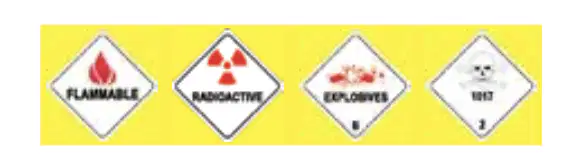
What sign/signs is this?
Highway Construction and Maintenance Signs
Guide Signs
Hazardous Loads Placards
Slow Moving Vehicle
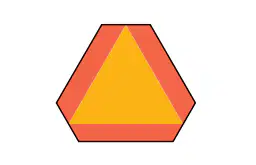
What sign/signs is this?
Highway Construction and Maintenance Signs
Guide Signs
Hazardous Loads Placards
Slow Moving Vehicle
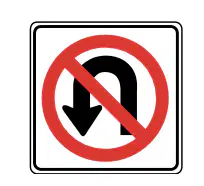
What sign/signs is this?
No U-Turn
Guide Signs
No Left Turn
No Right Turn
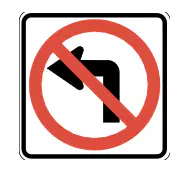
What sign/signs is this?
No U-Turn
Guide Signs
No Left Turn
No Right Turn
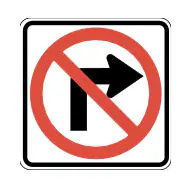
What sign/signs is this?
No U-Turn
Guide Signs
No Left Turn
No Right Turn
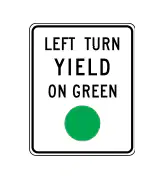
What sign/signs is this?
No U-Turn
Left turn must
yield the right-of-way to all oncoming traffic
One Way
Left turn and U turn
must turn left or make a u turn at the upcoming intersection
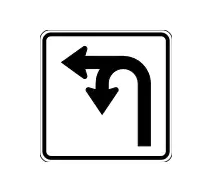
What sign/signs is this?
Left turn must
yield the right-of-way to all oncoming traffic
One Way
Left turn and U turn
must turn left or make a u turn at the upcoming intersection
Left turn only
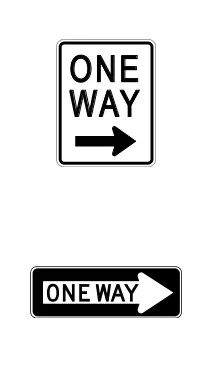
What sign/signs is this?
Left turn must
yield the right-of-way to all oncoming traffic
One Way
Left turn and U turn
must turn left or make a u turn at the upcoming intersection
Left turn only
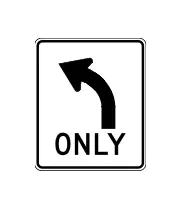
What sign/signs is this?
Left turn must
yield the right-of-way to all oncoming traffic
One Way
Left turn and U turn
must turn left or make a u turn at the upcoming intersection
Left turn only
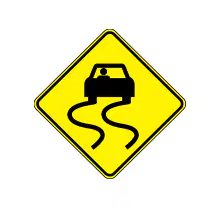
What sign/signs is this?
Slippery When Wet
Merging Traffic
Traffic Signal Ahead
Two Way Traffic
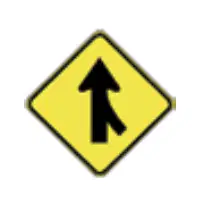
What sign/signs is this?
Slippery When Wet
Merging Traffic
Traffic Signal Ahead
Two Way Traffic
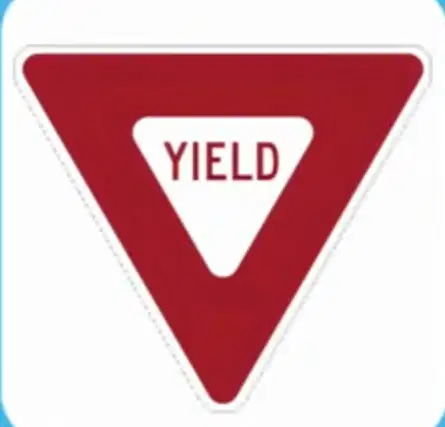
What sign/signs is this?
Yield
Merging Traffic
Traffic Signal Ahead
Two Way Traffic
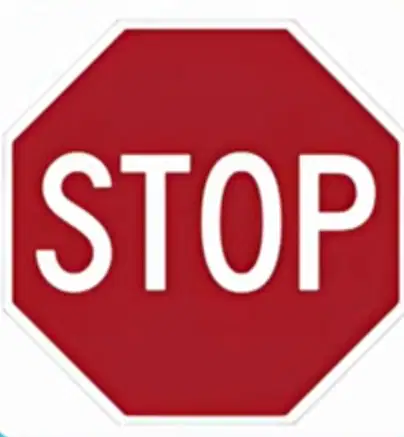
What sign/signs is this?
Yield
Stop Sign
Traffic Signal Ahead
Two Way Traffic
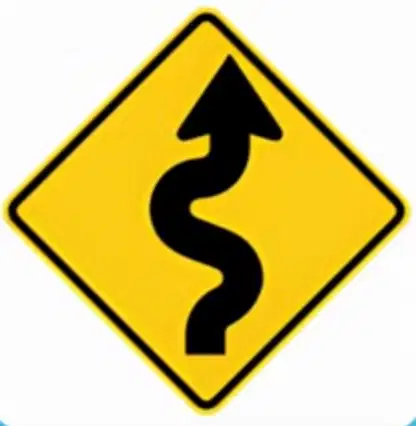
What sign/signs is this?
Yield
Stop Sign
Winding Road
Two Way Traffic
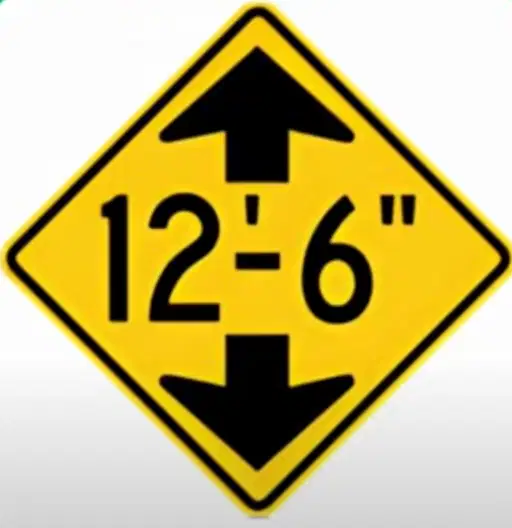
What sign/signs is this?
Yield
Stop Sign
Low Clearance
space under a structure like a bridge is limited.
Two Way Traffic
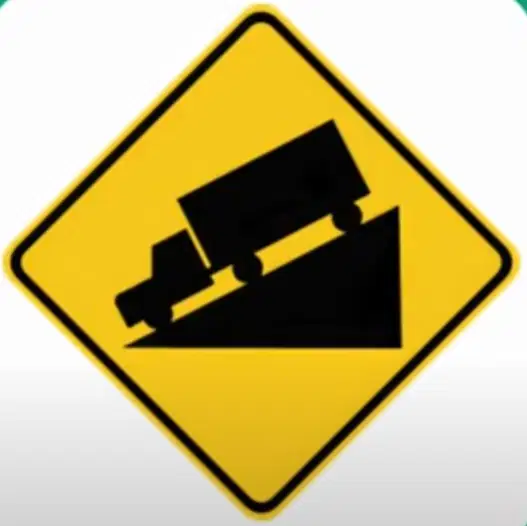
What sign/signs is this?
Yield
Stop Sign
Low Clearance
space under a structure like a bridge is limited.
Steep grade
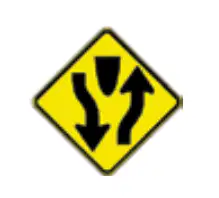
What sign/signs is this?
Divided Highway
Merging Traffic
Traffic Signal Ahead
Two Way Traffic
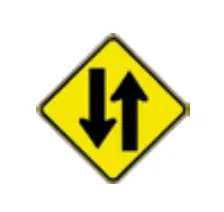
What sign/signs is this?
Divided Highway
Merging Traffic
Traffic Signal Ahead
Two Way Traffic
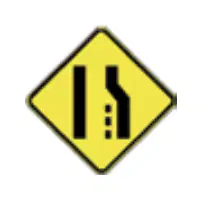
What sign/signs is this?
Lane Ends
End Divided Highway
Divided Highway
Two Way Traffic
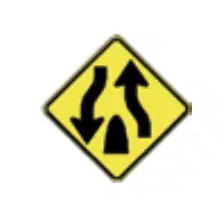
What sign/signs is this?
Lane Ends
End Divided Highway
Divided Highway
Two Way Traffic
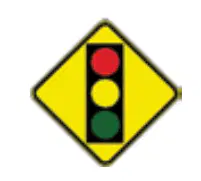
What sign/signs is this?
Lane Ends
End Divided Highway
Divided Highway
Traffic Signal Ahead
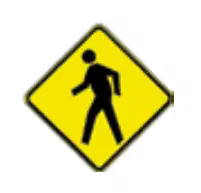
What sign/signs is this?
Lane Ends
End Divided Highway
Traffic Signal Ahead
Pedestrian Crossing
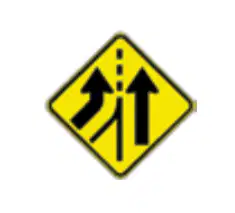
What sign/signs is this?
Added Lane
Crossroad
Stop Ahead
Yield Ahead
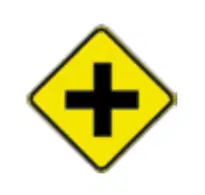
What sign/signs is this?
Added Lane
Crossroad
Stop Ahead
Yield Ahead
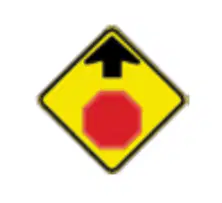
What sign/signs is this?
Added Lane
Crossroad
Stop Ahead
Yield Ahead
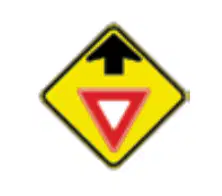
What sign/signs is this?
Added Lane
Crossroad
Stop Ahead
Yield Ahead
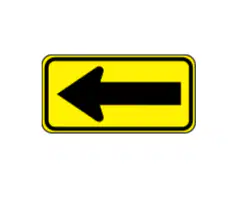
What sign/signs is this?
Directional Arrow
Curve (Left)
T Intersection
Winding Road
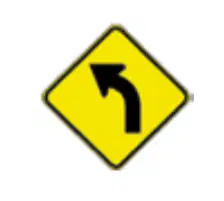
What sign/signs is this?
Directional Arrow
Curve (Left)
T Intersection
Winding Road
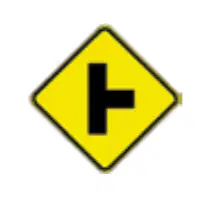
What sign/signs is this?
Directional Arrow
T Intersection
Winding Road
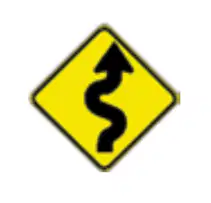
What sign/signs is this?
Curve (Left)
T Intersection
Winding Road
True or False:
It is illegal to smoke when a minor is in the vehicle. You can be fined.
True
False
True or False:
A person MAY NOT ride in the back of a pickup truck
even if the vehicle has secure seats and seat belts
True
False
True or False:
You must not drive a vehicle so overloaded that you cannot control it or see properly
True
False
True or False:
A video monitor visible to the driver is legal if it displays
vehicle information, navigation, or audio controls
True
False
True or False:
Throwing a cigarette or glowing substance from your vehicle is prohibited
True
False
True or False:
You may NOT operate a vehicle with an illegible license plate or alter
a license plate in any way.
True
False
True or False:
You may NOT dump or abandon animals on a highway. This crime is punishable
by a fine of up to $1,000, six months in jail, or both.
True
False
When should you signal?
At least 50 Feet before you turn
At least 100 Feet before your turn
At least 200 Feet before your turn
T/F : When police or other emergency vehicles approach you from behind using flashing lights, you do NOT have to immediately yield the right-of-way
True
False

When driving what should you do at or near each road sign shown?
Know that the lawful speed limit is 35 miles per hour in this zone.
Drive in the left lane if you are going over 35 miles per hour.
Slow down to at least 35 miles per hour for the curve ahead.

When driving what should you do at or near each road sign shown?
Get ready to enter a one-way street.
Follow a temporary route to the left.
Stay on the main highway if you can.

When driving what should you do at or near each road sign shown?
Watch for a very dangerous crossing.
Slow down for 1,000 feet of road repairs.
Watch for highway machinery.

When driving what should you do at or near each road sign shown?
Slow down for a reverse turn ahead.
Watch for side road traffic to the right.
Get ready to cross or enter a one-way street to the right.
When is it legal to drive off the road to pass another vehicle?
If the vehicle ahead is turning left.
It is not legal under any conditions.
If there are two or more one-way lanes.
When a railroad crossing is not controlled, what is the speed limit when you are within 100 feet and cannot see for 400 feet in both directions?
20 mph
15 mph
25 mph
Which of the following is the proper procedure for parallel parking?
Drive forward into the space without stopping.
Stop next to the vehicle behind the open space, and then drive forward into the space.
Stop next to the vehicle in front of the open space, and then back into the space.
What speed should you be driving when entering onto a highway?
At or near the speed of traffic.
Faster than the speed of traffic. Slower than the speed of traffic.
Slower than the speed of traffic.
How many feet away should you switch from high beam to low beam headlights when approaching a vehicle coming towards you?
500 feet
1000 feet
100 feet
Who can legally park next to curb painted blue?
Someone who is either picking up or dropping off passengers at this location.
A person who is disabled and has a special placard or vehicle license plate for disabled persons.
A person who will only be parked at the curb for less than 15 minutes.
What should you do when there is a school bus ahead that starts flashing yellow warning lights?
Slow down and prepare to stop.
Cautiously pass the school bus on the left.
Cautiously pass the school bus on the right.
Which of the following is a requirement of California’s Basic Speed Law?
Always drive the speed limit, regardless of conditions.
Match your speed to that of your surrounding traffic.
Never drive faster than is safe for current conditions.
You must notify the DMV with 5 days, if you:
Paint your vehicle a different color
Sell or transfer ownership of your vehicle
Receive a traffic violation
Which of the following is an example of a safe driving practice?
Always keep your eyes moving to scan the surroundings.
Staring only at the middle of the road.
Using your high-beam headlights in the fog.
Which of the following is true about large trucks?
They are made of many trailers, which make them more maneuverable than passenger vehicles.
They have large blind spots, which makes it difficult for the truck driver to see other vehicles.
Using your high-beam headlights in the fog.They have large and powerful emergency brakes, which gives them the capability to stop quickly.
Which of the following is illegal while driving?
Wearing a headset or ear plugs that covers one ear.
Wearing a headset or ear plugs that covers both ears.
Using cruise control on residential streets.
What should you do when traffic is slow and heavy, and you must cross railroad tracks before reaching the upcoming intersection?
Begin crossing when the vehicle in front of you is crossing the tracks.
Wait on the tracks until the stoplight at the intersection turns green.
Wait until you can completely cross the tracks before proceeding.
Which of the following should you do if you are being followed by a tailgater?
Change lanes and allow the tailgater to pass.
Tap the brakes to signal you are moving at a slower pace.
Increase your speed to match the speed of the vehicle.
When you are driving the speed limit, you can be given a speeding ticket?
If road or weather conditions require a slower speed.
Under no circumstances because it is always legal.
Only if you are approaching a sharp curve in the road.
Which lights should be used if a driver is having trouble seeing other vehicles because of dust or smoke blowing across the roadway?
Headlights.
Parking lights.
Emergency lights.
What should you do to make a right turn at an upcoming intersection?
Wait until the bicycle lane ends, then make the turn.
Parking lights.Make the turn from your current lane and do not enter the bicycle lane.
Merge into the bicycle lane before making the turn.
What should you do to make a right turn at an upcoming intersection?
Wait until the bicycle lane ends, then make the turn.
Make the turn from your current lane and do not enter the bicycle lane.
Merge into the bicycle lane before making the turn.
What does a flashing yellow traffic signal light direct a driver to do?
Stop and proceed when the traffic allows you to proceed safely.
Slow down and proceed with caution.
Stop and wait for a flashing green signal.
What should you do if a pedestrian is still in the crosswalk after the "Dont Walk" sign?
Wait until the pedestrian is out of your path before proceeding.
Wait until the pedestrian signals that it is okay for you to proceed.
Wait until the pedestrian has crossed the street completely before proceeding.
When is it legal for a person to drive with an alcoholic beverage container that has been opened?
If the container is under the front seat.
If the container is in the trunk of the vehicle.
If the container is in the glove compartment.
What color curb does not allow vehicles to stop or park?
Yellow.
Red.
White
You are required to notify DMV by filing a Report of Traffic Accident Occurring in California (SR-1) form if:
You change your insurance company.
You were involved in a collision with an injury.
Your vehicle fails a smog test.
What is indicated by two sets of double yellow lines spaced 2 feet or more apart?
Lanes of traffic moving in the same direction.
Barrier.
Carpool/High-Occupancy (HOV) lane.
What should you do to make a right turn at an upcoming intersection?
Merge into the bicycle lane before making the turn.
Wait until the bicycle lane ends, then make the turn.
Make the turn from your current lane and do not enter the bicycle lane.
A highway has a posted speed limit of 65 mph. What does this mean?
You must always drive 65 mph on that highway.
You may drive faster only if there are no other vehicles.
You must drive 65 mph only if driving conditions are ideal.
What should you do if your cell phone rings and you do not have a hands-free device?
Do not answer the phone and let it go to voice mail.
Answer the call and keep the conversation short.
Answer the call if you are stopped at a red light.
If a traffic signal is green, but traffic is blocking the intersection, what should you do?
Wait and do not enter the intersection until your vehicle can get completely across.
Partially enter the intersection, as allowed by traffic.
Drive around the traffic on the shoulder to help ease the congestion.
In which lane should you end your turn when making a RIGHT turn?
The lane closest to the right edge of the road.
Any lane free of traffic.
The lane closest to the left edge of the road.
When is it required for you to obey directions from a crossing guard?
At all times.
During school hours only.
Only when children are present in front of a school.
What should you do when reaching an intersection where a person operating a motorized wheelchair has entered the crosswalk?
Remain stopped behind the crosswalk line until the motorized wheelchair has safely finished crossing.
Remain stopped behind the nearest crosswalk line until the motorized wheelchair is beyond the range of your vehicle.
Assume right-of-way if the motorized wheelchair stops in the crosswalk.
Which of the following is true about large trucks?
They have large blind spots, which makes it difficult for the truck driver to see other vehicles.
They are more maneuverable than passenger vehicles.
They have large and powerful emergency brakes, which gives them the capability to stop quickly.
What is one of the most common causes of traffic collisions?
Driver distractions.
Paying attention to your surroundings.
Better traffic flow.
Any driver who willfully flees or attempts to evade law enforcement, during which a person is seriously injured, is subject to:
Attending an anger-management class.
A fine of less than $1,000.
Imprisonment in a state prison for up to seven years.
What should a driver do who is stopped at an intersection and wants to make a left turn?
Take the right-of-way turn before oncoming traffic.
Turn immediately if there are no pedestrians.
Give the right-of-way to any approaching vehicle that is close enough to be dangerous.
In addition to setting your parking brake, what should you do when parking on a hill?
Make sure your vehicle is left in the “neutral” position.
Make sure the front vehicle wheels are parallel to the road.
Make sure your vehicle is in the “park” position or in gear.
You are under 18 years of age and have had your license for eight months. You may drive:
Between 7 a.m. and 8 p.m.
Between 5 a.m. and 11 p.m.
At any time.
Where should you begin a LEFT turn from a one-way street onto a one-way street?
The far-left lane.
The lane closest to the center of the street.
You can turn from any lane.
You are required to notify DMV by filing a Report of Traffic Accident Occurring in California (SR-1) form if:
You were involved in a collision with more than $1,000 in damages.
You allowed a licensed driver from another state to drive your vehicle.
You failed to pay your registration fees.
At what point during a rainfall are roads slippery on a hot day?
Immediately after it has stopped raining.
When it has been raining for a few hours.
As soon as it begins to rain, the first several minutes.
A California driver’s license allows you to:
Drive on private property roads
Drive on all public roads
Operate different types of vehicles, including motorcycles and commercial trucks
Before you can get a driver’s license in California, you are required to pass:
Both the knowledge and behind-the-wheel drive tests
The knowledge test only
The behind the wheel test if over the age of 21
Most people need a:
Commercial Class A driver’s license
Noncommercial Class C driver’s license
REAL ID card only if over the age of 21
When you are under 18 years old, your driver’s license will be a provisional driver.
As a provisional driver, you cannot drive:
With passengers under 16 years old
On freeways
Between 11 p.m. and 5 a.m. during the first 12 months you have your license
A provisional driver cannot drive with passengers under 20 years old unless
A parent, guardian, or other California-licensed driver (at least 25 years old) rides with you
You are driving to school
You are driving during daylight hours only
As a provisional driver you must have:
To drive for a SCHOOL activity as a minor, a note signed by your school principal
To drive for WORK reasons as a minor, a note signed by your employer confirming your employment
To drive an immediate FAMILY member as a minor, a note signed by your parent or legal guardian
To drive for a MEDICAL NEED as a minor, a note signed by your physician.
Always signal when you:
Turn, change lanes, slow down, or stop
Enter a parking space
Park on a hill
You can signal using your vehicle’s signal lights or using:
Flashing headlights
Hand-and-arm positions
Brake lights
You should signal:
At least 100 feet before you turn
At least 25 feet before you turn
At least 500 feet before you turn
On a freeway, You should signal at least:
Three seconds before you change lanes
Five seconds before you change lanes
Ten seconds before you change lanes
You should use your vehicle’s horn to:
Let other drivers know you are there or warn others of a hazard
Signal when you are turning
Tell other drivers to speed up
Use your horn to alert oncoming traffic on narrow mountain roads where you cannot see at least:
100 feet ahead
200 feet ahead
500 feet ahead
For highbeam headlights: Within 500 feet of a vehicle coming toward you
or 300 feet of a vehicle you are following, you should?
Dim your high-beam headlights to low beams
Turn up your low-beam headlights to to high-beams
Turn on your hazzards
True or False:
It is illegal to drive using only parking lights
True
False
True or False:
It is illegal to make a U-Turn at or on a railroad crossing.
True
False
True or False:
When parking uphill with a curb, turn your front wheels toward the curb
True
False
True or False:
A red curb means parking is allowed for disabled persons.
True
False
True or False:
You should always use your headlights beginning
30 minutes before or after sunrise or sunset,
True
False
True or False:
If you can see a collision or hazard ahead, or if you need to stop because of vechicle trouble,
You should turn on your emergency flashers
True
False
True or False:
Before you change lanes you must signal, check your mirrors,
look over your shoulder, and check your blind spots
True
False
A single solid yellow line marks
The center of a road with two-way traffic
The edge of a one-way street
The bicycle lane
Do not pass over double solid yellow lines unless you are:
Entering an HOV lane with a designated entrance on the left
Passing on a hill
Driving on a freeway
Double solid white lines indicate:
A lane barrier between a regular use and a preferential use lane
An area where passing is encouraged
One way lane
You may only drive for 200 feet in:
A center left turn lane
A carpool lane
A roundabout
You may not turn right if you are stopped at a
Red arrow
Solid red light
Green arrow
You may turn left against a red light only:
From a one-way street onto a one-way street
From any street onto a freeway
From the far-right lane
When parking uphill with a curb, turn your front wheels:
Straight ahead
Toward the curb
Away from the curb
Never park:
Within 15 feet of a fire hydrant or fire station driveway
Within 50 feet of a crosswalk
More than 12 inches from the curb
If you are driving within 500 to 1,000 feet of a school while children are outside or crossing the street, what is the speed limit unless otherwise posted?
15 mph
25 mph
20 mph
Which of the following is true about stopping for a school bus that is flashing red lights?
You must stop from either direction until the children are safely across the street and the red lights stop flashing.
You only need to stop if you are traveling in the same direction as the bus.
You may cautiously pass if no children are present.
When driving in an alley, what is the speed limit?
10 mph.
15 mph.
25 mph.
A single solid yellow line marks
The center of a road with two-way traffic.
The edge of a one-way street.
A bicycle lane.
When can you cross double solid yellow lines?
To enter an HOV lane at a designated entrance.
To pass slower traffic.
To make a U-turn at any intersection.
You may turn left against a red light only
From a one-way street onto a one-way street
From any street onto a freeway
From the far-right lane.
During a law enforcement stop, what should you do first?
Turn on your right turn signal to acknowledge the officer.
Immediately exit your vehicle.
Drive to the nearest parking lot before stopping
What documents must a driver produce during a law enforcement stop?
Driver’s license, proof of insurance, and vehicle registration
Vehicle registration, and insurance
Drivers Liscense only
A white painted curb means:
Loading zone for freight or passengers
Loading zone for passengers or mail only
Loading zone for freight only
A white painted curb means:
Loading zone for freight or passengers
Loading zone for passengers or mail only
Loading zone for freight only
True or False: When parking uphill with a curb,
you should turn your front wheels toward the curb (away from the street).
True
False
True or False: When parking when parking uphill or downhill without a curb,
you should turn your front wheels towards the right (towards the side shoulder of the road)
True
False
What must you do at a solid red traffic signal light if you want to turn right?
You may turn after a full stop only during daylight hours
You yield to traffic and pedestrians, but no need to stop if the way is clear
There is not a NO TURN ON RED sign posted, you stop at the stop or limit line, yield for pedestrians, and turn when it is safe
What does a flashing red signal light mean?
Stop. After stopping, you may go when it is safe
Yield to all traffic before entering
The signal is out of order, treat as a four-way stop
What does a yellow arrow signal light mean?
The protected turning time is ending. If you cannot stop safely, or are already in the intersection, you may turn
It warns to slow down; you must yield to oncoming traffic before turning
It means red soon, so finish the turn quickly then stop
What is true about pedestrians in crosswalks?
Pedestrians have the right-of-way in both marked and unmarked crosswalks
Drivers must stop at the limit line and allow pedestrians to cross if there is a crosswalk
Pedestrians must always yield to vehicles if there is no walk signal
At an uncontrolled intersection, who has the right-of-way?
The vehicle that arrives first
The larger vehicle
The vehicle that signals first
What must you do when entering a roundabout?
Yield to all traffic already in the roundabout
Enter heading to the left when there is a big enough gap in traffic
Proceed without yielding since you have priority
When turning right, what must you do with pedestrians and bicyclists?
Check for pedestrians crossing, and motorcycles and bicycles riding next to you
You only need to yield if they are in a marked crosswalk
They always yield to your turn
When approaching traffic signals or signs, what must you do?
Yield to pedestrians, bicyclists, and other nearby vehicles that may have the right-of-way
Proceed if there is no traffic even if a pedestrian is waiting to cross
Go slowly through the intersection without stopping
What is the “three second rule” used for
To avoid tailgating, leave three seconds of space between you and the vehicle ahead
To measure how long it takes your car to stop
To count how many seconds you can look away from the road
When should you use your high-beam headlights
Whenever it is legal and safe
Only when driving in fog
Whenever you are following another vehicle closely
What should you do if you start to skid
Take your foot off the accelerator
Brake hard and hold the pedal down
Turn the steering wheel sharply in the opposite direction
What is the best advice for driving in heavy fog or dust
Try to avoid driving until conditions improve
Turn on your high-beam headlights
Follow closely behind the car ahead
What should you do if another driver is tailgating you
Change lanes or slowly reduce your speed to encourage the driver to pass
Tap your brakes repeatedly to warn the driver
Increase your speed to create more space
What is the best way to stay alert and avoid drowsy driving
Drive faster so you can reach your destination sooner
Roll down your window and turn up the radio
Get normal rest before you drive
When driving in the rain on wet roads, how should you reduce the chance of skidding
Slow down and drive slower than you would on dry roads
Turn on your cruise control
Use your high-beam headlights