
 Worksheets
MCQ NEURO COMPILE
Total questions: 170
Worksheet time: 1hrs 25mins
A 9 month baby boy was taken to a GP because there was tuft of hair in his lumbar region. After examination the GP explained to the parents that he suspected a congenital malformation. Therefore the GP told the parents that he would consult a Pediatric surgeon. The organ that have the greatest possibility to be involved in case above is:
Spinal cord
Nervous system
Brain and cerebellum
Peripheal Nervou system
Central nervous system
A 67 year-old man has history of progressive memory loss for 2 years. His examination is otherwise normal. A diagnosis of Alzheimer disease is made. Which of the following medications may result in some cognitive improvement?
Prostigmin
Vitamin B12
L-Dopa
Donepezil
Risperidone
You are able to pull your hand quickly away from hot water before pain is felt because:
The autonomic division of the peripheral nervous system intervenes to speed contraction of the muscles of the hand
Movement of the hand does not require intervention by the central nervous system
Movement of the hand does not require intervention by the peripheral nervous system
Movement of the hand is a reflex that involves intervention of the spinal cord only
The brain reacts quickly to prevent severe injury
A 50-year-old male has been moody and irritable for five weeks. He has lost interest in sex and his favorite leisure activities and nothing seems to cheer him up. He has difficulty falling asleep at night and his appetite is decreased, although he has lost 2 kg in one month. What is the most likely diagnosis?
Dystimic Disorder
Bipolar I disorder
Major Depression Disorder
Bipolar II disorder
Cyclothyimic Disorder
A 1-year-old child has delayed mental development and enlarged head diameter after being diagnosed with encephalitis 6 months ago. His mother brought him to the hospital and later was diagnosed with hydrocephalus. Cerebrospinal fluid is mostly absorbed by:
Duramater granulation
Pia mater granulaton
Cerebral vessel
The choroid plexus
Arachnoid granulation
A 58 years woman suddenly had difficulty to raise her right arm and leg, an also slurred speech. She brought to ER, her blood pressure 180/100 mmHg, pulse 80 x/minute, RR 16 x/minute, temperature 36,6 C. She was still alert and could communicate. Previously she had uncontrolled hypertension. Twelve hours later she had improvement, her complains resolved, she can raise her right arm and leg, also could speak normally. What is the most possible diagnosis for this patient?
Reversible Ischemic Neurologic Deficit (RIND)
Complete stroke
Transient Ischemic Attack (TIA)
Hemorrhagic Stroke
Ischemic stroke
A 27-year-old patient gave birth to a dead on delivery (DOD) male baby. Upon his examination, the doctor found that the baby has no calvaria (cranial vault), scalp, and major portion of the brain. The baby’s eyes bulged forward. Embryological structure that has the greater possibility as the cause of this congenital malformation is failure of the:
Neural tube lateral folding
Neural tube cephalocaudal folding
Anterior neuropore closure
Posterior neuropore closure
Neural tube closure
Betty remarks frequently that she is extraordinarily wealthy, despite being housed in a psychiatric hospital and having an empty bank account. When asked to explain this apparent contradiction, she indicates that the hospital is keeping her money, but that it is part of a vast conspiracy because the administrators fear her great power when she is not hospitalized. She has experienced symptoms such as these since she graduated high school. These symptoms are sometimes collectively referred to as:
Thought insertion
Grandiose delusions
Thought withdrawal
Ideas of reference
Delusional jealousy
A 30 year-old male patient presents at Emergency and states that he was discharged from a mental hospital three days ago. He complains of severe dysarthria because he is unable to retract his tongue properly. On further questioning he states that he stopped all medications when he left hospital but does not know which medication he was being given. What is the most likely diagnosis?
Tardive dyskinesia
Catatonic schizophrenia
Extrapyramidal syndrome
Hysterical conversion
Myoclonic epilepsy
A 25 year old man is suspected of abusing drugs. His parents find him in comatose state in his room and was taken to the emergency where he is assessed to be in a stupor with bilateral pinpoint pupils, cold and clammy skin, skeletal muscle flaccidity and his respiratory rate is 6-8/min. Which of the following medication should be given for this situation?
Neostigmine
Amphetamine
Naloxone
Caffein
Flumazenil
The drugs donepezil, rivastigmine, and galanthamine are used in Alzheimer’s Disease to try to raise the availability of what transmitter in the brain?
Glutamate
Dopamine
Acetylcholine
GABA
Norepinephrine
A 54-year-old woman was brought to clinic and the daughter said that this morning she couldn’t sleep, became agitated and ran out to the street naked. She shouted, ”My son is still alive! I want to give food to my son!” Later on she became more agitated and was not cooperative. She had never had any education or formal occupation. She is a widow and her husband died 2 years ago because of cancer. What is the type for this condition?
Paranoid type
Catatonic type
Disorganized type
Residual type
Undifferentiated type
A 19-year old man was brought by his family to emergency department. Patient says: “The voices told me to do ‘bad things’, there are often two or three voices talking, and they often comment to each other on his behavior.” He believes that someone wants to kill him. He repeated this statement of idea since one year ago. His affect is congruent, although it is flat and his mood is good. He has loose associations and ideation of killing his father occasionally. What psychopathologies are found in the patient above?
Auditory hallucination, delusion
Illusion, ambivalence
Disorganized behavior, social phobia
Derealisasi, anti-social
Depersonalization, abulia
A 36-year-old male had a motor vehicle accident. His head hit the road and afterwards he complained numbness in his right arm and leg. The brain CT scan examination showed an intracranial hemorrhage at left parietal lobe. Which Broadman area number is the most probably injured?
Area 2, 3
Area 9, 10
Area 17, 18
Area 4, 6
Area 7, 8 Top of Form
A 32-year-old female came to clinic with difficulty walking since a month ago after accident which broke her left leg. The doctor said she had nerve injured and cause lower motor neuron lesion of the left leg. Which of the following signs could present in this patient?
Loss of tendon reflex
Spasticity
Prominent patellar reflex
Increased in muscle tonus
Positive Babinski sign
Mr. Hugo, 60 years old, presents with complaint of sleeping difficulty since 2 months ago. He feels easily awake during night sleep, but no complaint of any pain, shortness of breath, or chest pain at night. He also has decreasing appetite and feel that he could hardly smell any familiar scent. Previously, since one year ago, he was diagnosed with Parkinson’s disease due to tremor in his hand during resting position and stiffness in extremities. He routinely consumes medication which contained Levodopa and could do his daily activities relatively normal as usual. The supportive criteria for diagnosis of Parkinson’s disease:
Cerebellar signs
Clear and definite response to levodopa
Levodopa response for 7 years or more
Unilateral onset
Severe levodopa-induced rigidity
A 68 year old man is found fall on the ground because he is suddenly unable to move his right hand and leg. Which of the following region was most likely directly affected?
Broca’s area
Wernicke‘s area
Primary motor cortex
Primary somatosensoric cortex
Superior temporal gyrus
A 17-year-old man visited the physician because he had severe headache and seizure. He was suspected with brain tumor that originated from neuron or glial cell. What is the characteristic of dendrit?
Numerous terminal branches
Convey electrical signals as action potential
Convey electrical signals as graded potential
Electrical signal within
Carries information away from soma
Mrs N, 32 years old, is complaining about lack of energy, depressed mood, insomnia, lack of motivation, and loss of weight for about 1 month. Which neurotransmitter is primarily responsible for the symptoms in Mrs N?
Glutamate
Norepinephrine
GABA
Serotonin
Adrenaline
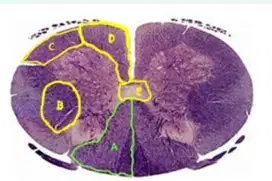
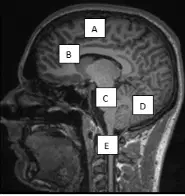
A 28-year-old male patient has a loss of voluntary motor control below the L2 spinal level on the right side of his body, with no sensory losses. Which of the following demarcated regions indicates the site of the lesion?
B
A
E
C
D
A 50-year-old patient with recent damage to the hippocampus from a stroke would likely have cognitive deficits, which cognitive ability is probably remain intact in this patient?
Learning a new vocabulary word
Recalling a childhood memory
Remembering a face
Describing a recent event
Learning new facts
An 18-year-old high school senior was brought to the emergency room by police after being picked up wandering in traffic on the Benton Junction. He was angry, agitated, and aggressive, and he talked of various people who were deliberately tryng to confuse him by giving him misleading directions. His story was rambling and disjointed, but he admitted to the police that he had been using speed. In the emergency room he had difficulty focusing his attention and had to ask that questions be repeated. He was disoriented as to time and place and was unable to repeat the names of three objects after five minutes. From the case above, you can also make the same diagnosis if the patient uses:
Cimeng
Crack
Bir
Shabu
Putau
An infant has a head CT examination because of a large head and failure to thrive. The diagnosis of hydrocephalus is made by the physician. Congenital hydrocephalus may develop as a consequence of which of the following first-semester maternal disorders?
Chorea gravidarum
Hyperemesis gravidarum
Eclampsia
Placental dysfunction
Viral infection
An elderly man has an expressionless face and has uncontrollable movements caused by muscular rigidity. When in sitting, his hands have a pill-rolling tremor. Which of the following pathologic conditions of his brain is the most likely happened?
Loss of pigmented neurons in thalamus
Neuronal degenerative and neuronal loss in hypocampus
Neurofibrillary tangles and neuronal degenerative in neurocortex
Neuronal degenerative and neuronal loss in caudate
Loss of pigmented neurons in substantia nigra
A 30-year-old woman, married 6 years ago, is complaining of having pain during sexual intercourse with her husband. She did not enjoy having sex with him, and she has got no infection or abnormality in her vagina. What is the diagnosis of the case above?
Dyspareunia
Vaginismus
Does not like her husband
Lack of estrogen
Chronic pain disorder
A 25 years old woman was suddenly becoming aggressive, impulsive, having sleep disturbance, and sometimes speaking or giggling by herself. She told to everybody that she was a princess from outer space. Her mind and her body were being controlled from outer space. Her mission was to protect the earth from outer space enemies; she was suspicious with the neighbors. The condition started seven month ago. Which dopaminergic pathways that responsible for positive symptoms of schizophrenia?
Tuberostriatal
Nigrostriatal
Tuberoinfundibular
Mesolimbic
Mesocortical
What is the main factor to influence the secretion of Cerebro spinal fluid?
The active transport of potassium ions through ependymal cells
The active transport of sodium ions through ependymal cells
The active transport of magnesium ions through ependymal cells
The active transport of calcium ions through ependymal cells
The active transport of chloride ions through ependymal cells
A 25-year-old man came to emergency department, fully alert, no fever. He complained sudden left sided weakness when he is working at home. He denied any history of hypertension, nor diabetes mellitus. No history of smoking. He works as physical education teacher. In history taking, which component should be asked to narrow down the differential diagnosis of the patient?
Sign of vessel obstruction located in specific organ system, other than brain vascularization
Sign of increased intracranial pressure to exclude brain hemorrhage
Dyspnea or chest pain to suspect the cardiac problems
Positive meningeal sign to rule out subarachnoid hemorrhage
Chronic type headache to exclude intracranial tumor
Male, 60 years old was brought to emergency department with history of recurrent seizure since 2 days prior to admission. He also complained of visual hallucination that he saw black shadow which chasing him. On physical examination, blood pressure 110/60 mmHg, heart rate 89 bpm, respiratory rate 16x/minutes, temperature 38oC. Meningeal sign was negative and no focal neurological deficit was found. Which pathogen of CNS infections that frequently causes neurological sequel?
Cytomegalovirus
Toxoplasma gondii
Herpes simplex virus
Mycobacterium tuberculosis
Neisseria meningitides
A 25-year-old man is brought to the emergency unit with a high fever, lethargy, and a stiff neck. Based on the history taking, physical examination, lumbar puncture, and laboratory analysis that indicated bacterial growth in the cerebrospinal fluid, the attending physician suspect infection of central nervous system. Embryological structure that has the greater possibility involved in the above case is the derivative of mmesenchyme surrounding:
Mesencephalon
Neural tube (tubulus neuralis)
Anterior neuropore (neuroporus anterior)
The brain vesicles (vesiculae cerebri)
Rhombencephalon
A 17 year old male patient came to the Emergency Department of Siloam Hospitals with chief complaint having seizures for 1 minute. While having seizures, patient was unconscious, both legs and arms were stiff and twitched, his head and eyes faced upwards. After the seizure, he regained conscious again. This was his first seizure in his life. He had no remarkable previous history. What is the basic pathophysiology of a seizure to happen?
Too few GABA neurotransmitter in the brain
Too many dopamine neurotransmitter in the brain
Too few dopamine neurotransmitter in the brain
Too many GABA neurotransmitter in the brain
Too few excitatory neurotransmitter in the brain
Following Mita’s near-fatal car accident, her doctor noticed that the pupillary reflex of her eyes was abnormal. Which of the following indicates the damage because the accident?
Right frontal lobe
Autonomic nervous system
Cerebellum
Left occipital cortex
Left temporal lobe
A man came to the doctor with history of run out of the oxygen reserve during climbing the high mountain to the 24.000 ft altitude. After descent, he had suffered memory deficient. The doctor suspected that he had a problem in his neuron cellular signaling or conducting synapse transmission. What is the characteristic of graded potential?
Long-lived, localized changes in membrane potential
An local current depolarizes the neighboring region of the axon membrane
An electrical current depolarizes the neighboring region of the axon membrane
Spreads as local currents change the membrane potential of adjacent regions
Action potentials are triggered by membrane depolarization to threshold
A 25-year old girl came to her physician consulting her multiple nodules around 1.1 to 2.0 cm scattered dominantly in the extremities and torso. The physical examination found café-au-lait, irregular borders in her skin beside multiple nodules. The biopsy from one of her nodules showed a benign neoplasm. What is the best diagnosis for her?
Dermatofibroma
Neurilemmoma
Neurofibromatosis Von Reckling Haussen
Angiofibrolipoma
Benign Low grade Perineural sheath tumor
A 25 years old woman was suddenly becoming aggressive, impulsive, having sleep disturbance, and sometimes speaking or giggling by herself. She told to everybody that she was a princess from outer space. Her mind and her body were being controled from outer space. Her mission was to protect the earth from outer space enemies; she was suspicious with the neighbors. The condition started seven month ago. Her mind and her body were being controled from outer space. What is the interpretation of this statement?
Delusion
Auditory hallucination
Illusions
Derealization
Visual hallucination
The microscopic appearance of a mass from the left cerebellum of a 10 year-old boy showed a rosette structure from a blastemal cells. What is the most possible diagnosis for his cerebellum mass?
Ependymoma
Oligodendroglioma
Medulloblastoma
Neuroblastoma
Astrocytoma
Mrs. Pamela, 78 years old, was brought to neurology clinic by her son because he noticed that patient had problems with her memory, particularly short term memory loss, with patient not being able to remember the task she was doing at a time since 1 year ago. She forgot where she kept her purse and eyeglasses. Sometimes she also found difficulty to remember way back home from the market that she regularly visited every week. She could not do her daily activities on her own, such as eating, taking bath, and dressing. The patient had no history of hypertension, diabetes mellitus, or previous stroke event. She is diagnosed with Alzheimer’s disease. Classical conditioning is an example of:
Episodic memory
Implicit memory
Nonassociative memory
Semantic memory
Declarative memory
A bodybuilder friend suddenly seems to have grown several centimeters in height. You suspect that your friend’s growth spurt has occurred he has been using drug tThalamusat effect the:
Thalamus
Thyroid gland
Adrenal glands
Parathyroid gland
Pituitary gland
Mrs. Dora, 23 years old, came to neurology clinic with complaint of tingling sensation on first to fourth fingers of both hands since 6 weeks ago. At first, the tingling only appeared during night and resolved by shaking her hands. The tingling was worsened and felt the whole day. Mrs. Dora had a hobby of playing badminton routinely 3 times a week and riding a motorcycle for daily transportation. What is the most possible diagnosis for this patient?
Erb Syndrome
Radial Sulcus Syndrome
Cubital Tunnel Syndrome
Carpal Tunnel Syndrome
Guyon Canal Syndrome
Glial-appearing cells, called pituicytes, are found within which region of the pituitary gland?
Pars distalis
Infundibular stalkPars tuberalis
Pars tuberalis
Pars nervosa
Pars intermedia
A 35 years old male got a motor vehicle accident, he was unconscious for 15 minutes, forgot all memory around the accident time frame. He was conscious when he admitted to emergency unit. BP was 130/80 mmHg and HR 88 x/minute. During clinical investigation in emergency unit, he became unconscious. He also developed right pupil dilatation, and left side weakness. Why he develops right pupil dilatation?
Direct uncal compression at the pons level
The uncus cause stretching of the sixth nerve
The uncus cause stretching of the third nerve
Direct uncal compression at the medulla oblongata
The uncus cause stretching of the fourth nerve
A 35- year old male has had increasing difficulty with activities of daily living for the past years which mainly because of choreiform movements. His families have also observed that he has exhibited behavioral changes although his memory remains intact. The most likely finding in the CNS changes you will get is,
Diffuse Lewy body in the cerebral
The Loss of motor neurons
Diffuse negri body cells in cerebral
The loss of pigmented dopaminergic neuron
Loss of neurons and gliosis in nucleus caudatus
In testing for motor dysfunctions, a neurologist identified an upward movement of the patient toe when the plantar surface of his foot was scratched. This response is indicative of a lesion of a part of the nervous system. Which of the following is linked to this response?
Autonomic nerves
Sensory neuron
Lower Motor Neurons
Column dorsal
Upper Motor Neurons
A 13 year-old girl has severe case of mastoiditis. Despite treatment she develops a fluent aphasia. Her aphasia is most likely the result of extension of the infection into which portion of the brain?
Frontal lobe
Cerebellum
Temporal lobe
Occipital lobe
Parietal lobe
Mr.X, 27 years old, was brought to the mental hospital by his father because he was found on the street as a vagabond (gelandangan) after he left his house 3 months ago. Previously, he often sat up all night, slept all day, and became very angry when his father tried to get him out of bed. He did not shave or took a bath for weeks. He smoked continuously, and ate very irregularly. He kept to himself (likes being alone) as much as possible and and rarely speaks with other people. This patient could be treat by conventional antipsychotics. What is the principles of the drugs?
Dopamine receptor antagonists
Cholinergic receptors
Serotonin receptors
Histamine receptors
Serotonin dopamine antagonists
A 25 year old man had walking while he was sleep. He also suddenly woke up in the middle of his sleep due to nightmare. Which of the following disorder is the most appropriate with this condition?
Circardian rhythm sleep disorder
Somnabulisme
Substance-induced sleep disorder
Insomnia
Sleep wake sleep disturbance
A 17-year-old man visited the physician because he had severe headache and seizure. He was suspected with brain tumor that originated from neuron or glial cell. What is the function of glial cell?
Generates nerve impulses
Conducting region of a neuron
Insulate one neuron from another
Convey electrical signals
Integrates the information
A 34 years old woman came to the physician with depression and sleep disorders problem. The doctor thinks she had a problem in some neurotransmitter. What is the mechanism of action of glutamate?
Glutamate bind to AMPA receptor opening calcium channel
Glutamate bind to AMPA receptor opening Na channel
Glutamate bind to AMPA receptor removing Mg blockade
Glutamate bind to NMDA receptor removing Mg blockade
Glutamate bind to NMDA receptor opening Na channel
Female, 24 years old was brought to emergency department with loss of consciousness since 3 days prior to admission. One week ago, she complained headache and fever. She also had double vision and weakness of left arm and legs. During examination, the patient had generalized seizure for 2 minutes, which was stopped with injection of diazepam intravenously. On neurological examinations, the nuchal rigidity and Brudzinki’s sign were positive. Which components do not comprise the blood brain barrier?
Endothelial cells of blood vessels
Pericytes/Rouget cells
Macrophage
Astrocytes
Basement membrane
A 80-year-old man with metabolic syndrome has had 6 episodes of sudden dysarthria, a feeling of weakness in his hand, and dizziness in the past 3 months. These episodes usually last less than 1 hour, and then he feels fine. Today, he suddenly lost consciousness while walking to the bathroom in his house and fell to the floor. On regaining consciousness 4 minutes later, he was unable to move his right arm. Which of the following underlying lesions is most likely to be found in his brain?
Frontal lobe astrocytoma
Cerebral atherosclerosis
Subdural hematoma
Arteriovenous malformation
Meningoencephalitis
Mrs. Dora, 23 years old, came to neurology clinic with complaint of tingling sensation on first to fourth fingers of both hands since 6 weeks ago. At first, the tingling only appeared during night and resolved by shaking her hands. The tingling was worsened and felt the whole day. Mrs. Dora had a hobby of playing badminton routinely 3 times a week and riding a motorcycle for daily transportation. Which is the most possible nerve injury mechanism that underlying the patient’s condition?
Neuroma formation
Axonotmesis
Neurapraxia
Neurotmesis
Wallerian degeneration
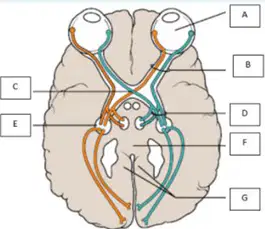
A 29 year-old male had a brain tumor with bitemporal hemianopsia. Which location within visual tract that might be affected in this patient?
F
G
C
B
D
A 23-year-old man who has been receiving treatment for substance addiction presents to the physician's office with complaints of weakness and anorexia. Assessment of vital signs shows a pulse rate of 107 beats per minute and a respiratory rate of 24 breaths per minute. Lacrimation, rhinorrhea, and mydriasis are present, and the patient yawns repeatedly during the interview. These clinical signs and symptoms are most consistent with withdrawal from:
Cocaine
Benzodiazepines
Alcohol
Opiates
Marijuana
A patient is brought to the ER following a motor vehicle accident. On examination he has weakness on both arms and legs, dominantly in the upper extremities. He also complained for urinating difficulty. This clinical picture is most consistent with:
An anterior spinal cord syndrome
A left spinal cord hemisection syndrome
A right spinal cord hemisection syndrome
A complete cord syndrome
A central cord syndrome
The histopathologic of a curettage biopsy from an ulcerative mass around Vertebra Thoracalis 12-L1 in a -2 year old baby girl showed necrosis caseousa, granulomas and Langhan’s cells. The best diagnosis for hers is:
Myelitis
Multiple myeloma
Granuloma
Spina Bifida
Pott’s disease
A 35 years old male got a motor vehicle accident, he was unconscious for 15 minutes, forgot all memory around the accident time frame. He was conscious when he admitted to emergency unit. BP was 130/80 mmHg and HR 88 x/minute. During clinical investigation in emergency unit, he became unconscious. He also developed right pupil dilatation, and left side weakness. The physician did a CT Scan, according to the clinical findings, what would you expected to find?
Subdural hemorrhage at interhemispheric
Epidural hemorrhage at occipital region
Epidural hemorrhage at posterior fossa
Intraventricular hemorrhage
Epidural hemorrhage at temporal region
Female, 24 years old was brought to emergency department with loss of consciousness since 3 days prior to admission. One week ago, she complained headache and fever. She also had double vision and weakness of left arm and legs. During examination, the patient had generalized seizure for 2 minutes, which was stopped with injection of diazepam intravenously. On neurological examinations, the nuchal rigidity and Brudzinki’s sign were positive. What is the triad sign and symptoms of encephalitis?
Fever, headache, seizure
Fever, headache, loss of consciousness
Fever, loss of consciousness, neck stiffness
Fever, headache, neck stiffness
Fever, loss of consciousness, seizure
As a result of an infection, a 50 year old woman experience a loss of taste affecting the front of her tongue and the ability to smile. If the sensory loss involves damage of cell bodies, which of the following would be so affected?
Gasseri ganglion
Pterygopalatine ganglion
Geniculate ganglion
Otic ganglion
Trigeminal ganglion
A 56-year-old female patient came to the clinic with chief complaint of having the first seizure in her life. Her family described her seizures as head and eye turning to the left side accompanied by stiffness and twitching of the left extremities and followed by the right extremities. She was unconscious while seizing and the seizure duration was 2 minutes. After the seizure, she was fully alert. She had a history of brain tumor removal over the right temporal area 1 year ago. According to your diagnosis above, what is the best treatment to be given to this patient?
Dexamethasone
Lidocaine
Diazepam
Midazolam
Phenytoin
A person has such a character that he is very quiet, will not and cannot make many friends what he had is only one friend in this world, he talks very little, tendency to withdraw from group of people, and can only work alone and prefer to handle a nonliving object rather than human such as work with computer only, he is having a personality disorder of type
Paranoid
Histrionic
Schizoid
Narcisisitic
Antisocial
An infant has a head CT examination because of a large head and failure to thrive. The diagnosis of hydrocephalus is made by the physician. In the patient above, uncorrected congenital hydrocephalus will produce which of the following?
Bracycephaly
Dolicocephaly
Microcephaly
Macrocephaly
Holoprosencephaly
A 45-year-old woman complains of recurring episodes of vertigo that began after she bumped her head rather forcefully 2 weeks ago. Her spells last 10 to 15 seconds and occurs whenever she goes to bed or wakes up. She denies any hearing loss or tinnitus. Her physical examination is normal except for a latent, rotatory nystagmus whe
Viral vestibular neuronitis
Ménière disease
Benign paroxysmal positional vertigo
Acute serous labyrinthitis
Vestibular migraine
Male, 36 years old came to the emergency department with headache after head trauma due to motorcycle accident since one day prior to admission. On physical examinations, there were open fracture of right temporal bone. No abnormal findings on neurological examination. He was suggested to be hospitalized, but decided to go home because of economical reason. Three days later, the patient had worsening headache and fever. He was re-hospitalized and diagnosed with meningitis. Which infection pathway or mechanism is most possibly happened in this patient?
Pathogens penetrated CNS through infected olfactory nerve as portal to brain
.Pathogens penetrated CNS through damaged adherents junction of blood-brain barrier
Pathogens penetrated CNS through damaged tight junctions of blood-brain barrier
Pathogens penetrated CNS through blood-cerebrospinal fluid barrier
Pathogens penetrated CNS through direct trauma of adjacent bone structure of brain
A 22 year-old woman is involved in a car accident. She was not wearing a seatbelt and she received a skull fracture when her head hit the windshield. By what mechanism would this patient develop anosmia (loss of sense of smell)?
Traction on the chorda tympani damages fibers as the course through the skull
Torsion on the brainstem inures trigeminal tracts
Shearing forces sever filaments of the receptor cells as they cross the cribriform plate
Injury to the temporal tip injures the olfactory cortex
Subarachnoid blood causes pial adhesion on the olfactory nerve
Following a head injury, a patient has ongoing difficulties to stay awake. Which of the following is the most likely structure to be injured?
Reticular formation
Basal ganglia
Thalamus
Cerebellum
Corpus callosum
A 72-year-old man complains that he frequently forgot what he just doing. He went to the doctor and was suspected as having a neurotransmitter problem which probably caused by a neurodegenerative disease. What is the characteristic of GABA?
GABAA acts via metaboreceptor controlling potassium channel
GABAB acts via ionotropic receptor controlling potassium channel
GABAA acts via ionotropic receptor controlling sodium channel
Predominant excitatory neurotransmitter which increase the activation of calcium channel
Predominant inhibitory neurotransmitter which decrease the activation of calcium channel
A man went to the doctor given intramuscular injections in the right buttock. After the injection the patient experienced weakness on the right leg and cannot stand or squat. Which of the following nerve is affected?
Superior gluteal nerve
Inferior cluneal nerve
Pudendus nerve
Inferior gluteal nerve
Sciatic nerve
After a car accident which produced trauma to her skull, a 25-year-old patient complains of double vision (diplopia). Knowing which cranial nerves innervate the muscles of the eye and their course from the brain stem to the orbit, the physician in charge can determine the extent of the damage. The physician would need to consider which of the following cranial nerves in his diagnosis:
Oculomotor (III), trochlear (IV), and trigeminal (V)
Optic (II), oculomotor (III), and trigeminal (V)
Oculomotor (III), trochlear (IV), and abducens (VI)
Oculomotor (III), trigeminal (V), and facial (VII)
Oculomotor (III), trigeminal (V), and abducens (VI)
A 1-year-old child has delayed mental development and enlarged head diameter after being diagnosed with encephalitis 6 months ago. His mother brought him to the hospital and later was diagnosed with hydrocephalus. Where is the obstruction located if the lateral and third ventricles are dilated, while the fourth ventricle remains relatively normal?
Foramen of Luschka
Through ductus ventricular
Foramen of Monro
Cerebral aqueduct of Sylvius
Foramen of Magendie
A 9 month baby boy was taken to a GP because there was tuft of hair in his lumbar region. After examination the GP explained to the parents that he suspected a congenital malformation. Therefore the GP told the parents that he would consult a Pediatric surgeon. Spinal cord develops from:
Posterior neuropore
Diencephalon
Mesencephalon
Anterior neuropore
Telencephalon
Where is the most conspicuous stimulation area for causing almost natural sleep?
The hypothalamus
The pontomesencephalon
The locus coeruleus
Reticular Activating System (RAS)
The raphe nuclei
A 35 years old male got a motor vehicle accident, he was unconscious for 15 minutes, forgot all memory around the accident time frame. He was conscious when he admitted to emergency unit. BP was 130/80 mmHg and HR 88 x/minute. During clinical investigation in emergency unit, he became unconscious. He also developed right pupil dilatation, and left side weakness. He got a lucid interval, means conscious interval between two episodes of unconsciousness. What is the most probable cause of second episode of unconscious?
Direct uncal compression at midbrain
Direct uncal compression at cingulate gyrus
Direct uncal compression at the medulla oblongata
Direct uncal compression at corpus callosum
Direct uncal compression at the pons level
A 25-year-old mother develops an illness during pregnancy. A diagnosis of cytomegalovirus (CMV) infection is made by serology. What is the common neuroimaging findings in congenital CMV infection?
Cortical infarction
Periventricular calcification
Obstructive hydrocephalus
Intracranial hemorrhage
Multiple microaneurysm
A 55 year-old man has been taking haloperidol for schizophrenia since his initial diagnosis 20 years ago. On examination he displays continual facial movements which look as though he is chewing his own mouth. These movements have been present for some time. Which ONE of the following side-effects is he suffering?
Serotonin syndrome
Tardive dyskinesia
Akathisia
Acute dystonia
Parkinsonism
A patient came to a clinic with uneasy state preoccupied by the feeling that his proportion of chest to waist and other parts of body do not satisfy him. He wished that his physical appearance should be more manly rather than his current proportion. He feels that his body stature is so girlish. What condition is described above?
Somatoform disorder
Hypochondrical disorder
Body Dysmorphic disorder
Somatization disorder
Neurasthenia
A man came to the doctor with history of run out of the oxygen reserve during climbing the high mountain to the 24.000 ft altitude. After descent, he had suffered memory deficient. The doctor suspected that he had a problem in his neuron cellular signaling or conducting synapse transmission. What is the characteristic of electrical synaps?
The neurotransmitter may initiate an electrical response
Neurotransmitter are released to gap junction
Connected by special channels called gap junctions
Connected by special channels called synaptic gap
Neurotransmitter are released to synaptic cleft
A 17 year old male patient came to the Emergency Department of Siloam Hospitals with chief complaint having seizures for 1 minute. While having seizures, patient was unconscious, both legs and arms were stiff and twitched, his head and eyes faced upwards. After the seizure, he regained conscious again. This was his first seizure in his life. He had no remarkable previous history. What is the type of seizure mentioned above?
Generalized onset tonic seizure
Generalized onset clonic seizure seizure
Focal onset to bilateral tonic clonic seizure
Focal onset impaired awareness motor onset seizure
Generalized onset tonic clonic seizure
One of the tasks of participants of the Students Dissecting Program is to remove cadaver’s visceral organs. After having removed cadaver’s brain the students found that the cerebellum still remain at the posterior cranial fossa because the student forgot to dissect reflexion of meninges that covers cerebellum. Reflexion of meninges that the student forgot to dissect is:
Falx cerebelli
Falx cerebri
Diaphragma sellae
Tentorium cerebelli
Reflexion of duramater
A 20-year-old man came to outpatient clinic complaining that he is sexually aroused by woman’s shoes, hair, and underwear. He felt uncomfortable and ashamed with his condition. What is the most appropriate diagnosis?
Fetishism
Voyeurism
Exhibitionism
Transvestic fetishism
Frotteurism
An 18-year-old high school senior was brought to the emergency room by police after being picked up wandering in traffic on the Benton Junction. He was angry, agitated, and aggressive, and he talked of various people who were deliberately tryng to confuse him by giving him misleading directions. His story was rambling and disjointed, but he admitted to the police that he had been using speed. In the emergency room he had difficulty focusing his attention and had to ask that questions be repeated. He was disoriented as to time and place and was unable to repeat the names of three objects after five minutes. Which of the following would be your diagnosis to this patient?
Cannabis withdrawal
Cannabis intoxication
Opioid withdrawal
Amphetamine intoxication
Opioid intoxication
A 56-year-old female patient came to the clinic with chief complaint of having the first seizure in her life. Her family described her seizures as head and eye turning to the left side accompanied by stiffness and twitching of the left extremities and followed by the right extremities. She was unconscious while seizing and the seizure duration was 2 minutes. After the seizure, she was fully alert. She had a history of brain tumor removal over the right temporal area 1 year ago. According to ILAE (International League Against Epilepsy) classification, what is the best diagnosis of this patient?
Brain tumour
Acute symptomatic seizure
Chronic symptomatic seizure
Status epilepticus
Epilepsy
A 27-year-old male patient is in a car accident in which he is thrown from the vehicle because he was not wearing a seat belt. He has sustained several fractures, including a fracture on the base of his skull. Upon regaining consciousness in the hospital, he notices that he cannot move the muscles on the right side of his face, leading to drooling and a dry eye on that side. Further testing by his neurologist indicates that the motor component of the facial nerve (VII) on his right side is not functional (although lacrimal secretion, submandibular secretion, and taste are all intact). This suggests that the nerve was severed as it passed through the:
Foramen rotundum
Internal acoustic meatus
Petrotympanic fissure
Foramen spinosum
Stylomastoid foramen
Mr. Vinson, 34 years old, came to neurology clinic with low back pain that radiated to right legs since 1 week ago. No numbness or tingling sensation in the leg and no weakness of both legs. Before the complaint, he had history of lifting heavy objects. Which nerve fibers that responsible for causing the symptoms of this patient?
Ab and C
Aα and Ab
Aα and Ad
Ab and Ad
C and Ad
A 58 years woman suddenly had difficulty to raise her right arm and leg, an also slurred speech. She brought to ER, her blood pressure 180/100 mmHg, pulse 80 x/minute, RR 16 x/minute, temperature 36,6 C. She was still alert and could communicate. Previously she had uncontrolled hypertension. Twelve hours later she had improvement, her complains resolved, she can raise her right arm and leg, also could speak normally. Which of the following tract make her could not move her right arm and leg?
Lateral spinothalamic
Extrapyramidal
Anterior cerebellar
Anterior spinothalamic
Pyramidal
A 25-year-old man has complained of headaches for the past 5 months. During that time, family members noticed that he was not as mentally sharp as he has been in the past, and that he has become more emotionally labile. Over a 2-week period, he has 4 generalized seizures. On physical examination, he now has no papilledema or movement disorder. CT scan of the head shows a 2-cm mass in the right frontal lobe. A stereotactic biopsy specimen of this lesion shows only gliosis and evidence of recent and remote hemorrhage. The mass is removed, and histologic examination shows a conglomerate of various-sized tortuous vessels surrounded by gliosis. What is the most likely diagnosis?
Arteriovenous malformation
Organizing abscess
Angiosarcoma
Multiple sclerosis plaque
Prior head trauma
A 28-year-old female is involved in a car accident in which her spinal cord is damaged at the T6 level. Detailed testing of her sensory and motor systems reveals that her motor system is intact and she has no loss in pain or temperature sensation. However, she has lost fine touch, vibration, and proprioceptive sensation from the left side of her body below the T6 level. Therefore, she has damaged her:
Anterior column on the left side
Lateral column on the right side
Lateral column on the left side
Posterior column on the right side
Posterior column on the left side
A 45 year old women complains of imbalance and unsteadiness while standing up or walking. On neurological examination, she could not distinguish the position and direction of her toes directed by the examiner while she close her eyes. The neurologic tract that may be involved is
Lateral spinothalamic tract
Anterior corticospinal tract
Spinocerebellar tract
Corticobulbar tract
Lateral corticospinal tract
A 40-year-old, previously healthy man has developed headaches over the past month. There are no remarkable findings on physical examination. A cerebral MR angiogram shows a 7-mm saccular aneurysm at the trifurcation of the right middle cerebral artery. Which of the following is the most likely complication from this lesion?
Subdural hematoma
Epidural hematoma
Hydrocephalus
Cerebellar tonsillar herniation
Subarachnoid hemorrhage
A 37-year-old man comes to a clinic complaining sudden shortness of breath, palpitation, frequent urination, numbness over his hands, sweating all over his body, and neck rigidity. He is very afraid that his heart would suddenly stopped. This condition appeared since 2 months ago. What is the most likely diagnosis for this condition?
Social phobia
Panic disorder
Acute stress disorder
General anxiety disorder
Agoraphobia
A college student received an injury as a result of being tackled in a football game. After the game, the student was found to be unable to abduct and rotate the left arm at the shoulder, flex the elbow and extend the wrist of the left side. Further examination revealed depression of the biceps reflex of this limb, but the reflex involving the other limbs was normal. Which of the following is the most likely site of the injury?
Triceps muscles
Basilar pons
Precentral gyrus
Ventral horn cells at C1
Nerve roots of C5-C6
A 63 year-old man presents to the emergency room with a right hemiparesis and non-fluent aphasia that began acutely 45 minutes ago. Blood pressure is 160/90 mmHg, and there is no recent history of bleeding. A head CT scan shows no evidence of intracranial hemorrhage. Which of the following is the most appropriate therapy at this point?
Intravenous streptokinase
Intravenous heparin
Intravenous mannitol
Oral Aspirin
Intravenous rTPA
Mr.X, 27 years old, was brought to the mental hospital by his father because he was found on the street as a vagabond (gelandangan) after he left his house 3 months ago. Previously, he often sat up all night, slept all day, and became very angry when his father tried to get him out of bed. He did not shave or took a bath for weeks. He smoked continuously, and ate very irregularly. He kept to himself (likes being alone) as much as possible and and rarely speaks with other people. What is your diagnosis?
Schizophrenia Hebefrenic
Simple Schizophrenia
Schizophrenia paranoid
Residual schizophrenia
Schizophrenia Katatonia
A woman 37 year old, came to the emergency room with a spinning sensation since 1 day ago. She instantly felt dizzy and nauseated and had been vomiting many times. The spinning sensation was felt continuously, accompanied by hearing loss of the left ear and fever. The patient problem is probably caused by disorder in which site?
Vestibular nerve
Semicircular canal
Labyrinth
Superior olivary nucleus
Incus and stapedius
Male, 60 years old, presented with sudden onset of vertigo in the past 1 hour prior to admission. He
complained left sided weakness, slurred speech, and dificulty of swallowing. No history of trauma. Previous
medical history showed uncontrolled hypertension and smoking for 15 years. Which blood vessel is most
likely affected in this patient?
Middle cerebral artery
Basilar artery
Anterior communicating artery
Anterior cerebral artery
Posterior communicating artery
A male teenager was brought by his father to your clinic with history of hysterical screaming 2 hours after he
started to sleep. He was looked very frightened and inconsolable. This event occurred around 15 minutes and
already happened 3 times in the last 1 month. His parents were very worried, but the patient stated that he
did not remember anything regarding this matter. What type of sleep disorder that is happened in this
patient?
Wake
REM
N2
N1
N3
Female, 32 years old, had history of easily felt anxious since junior high school, lacking self-con�dence, and
had low self-esteem. She worked in multinational company with good performance. Due to her lack of
satisfaction, she often worked extra hours. She would like to have romantic relationship, but she felt not
con�dence enough. In this type of personality, which neurotransmitter system determines her
temperamental constitution?
GABA
Glutamat
Serotonin
Melatonin
Dopamine
Female, 48 years old, presented with fever, bad headache, and vomiting. History revealed that she loved fresh
soft goat cheese; 2 weeks before the onset of symptoms, she had purchased some at a rural roadside stand.
The local merchant told her he had obtained the cheese from a farm that pasteurized the goat milk. On
examination, her temperature was 39°C. She was lethargic but could give a reasonable history, had a stiff
neck, and was nauseated. Head CT was normal. Lumbar puncture showed an opening pressure of 260 mm
CSF, 500 white blood cells/mm3 (predominance of neutrophils), glucose of 26 mg/dL, protein of 95 mg/dL.
Random blood glucose after LP procedure was 100 mg/dL. What is the most possible diagnosis in this
patient?
Meningitis
Mielitis
Cerebral abcess
Encephalitis
Meningoencephalitis
A 75-year-old man is diagnosed with dementia for the past 5 years by neurologist in the hospital. The patient
is suspected to suffer from Alzheimer’s disease as indicated by neuronal degeneration in cerebral cortex.
What is the name of prominent neurons that degenerated as described in the vignette?
Motor neuron
Martinotti cell
Purkinje cell
Stellate cell
Pyramidal cell
Female, 20 years old, presented with feeling of “pressed down” by something heavy during night sleep. It was
happened around 5 am in the morning that she felt awake, but unable to move or speak. She had breathing
difficulty, sensation of “evil spirit”, and saw a vague shadow. She came to your clinic because she felt anxious
and scared that this thing might happen again. What condition that is most possible happened in this
patient?
Sleep Paralysis
Somnabulism
Night Terror
Nightmare disorder
Restless Leg Syndrome
A 25-year-old man with numbness and tingling of the little and ring finger, weakness and wasting of the
dorsal interossei and abductor digiti minimi, sensory disturbance over the little and ring finger. Which of the
following site of peripheral nerve lesion for this condition?
Ulnar Nerve
Median nerve
Radial nerve
Common peroneal nerve
Brachial plexus
A 62 year old male over a period of weeks begins to experience difficulty in swallowing and hoarseness in
speech. A thorough examination reveals the presence of growing tumor. Which of the following loci best
accounts for this deficit?
Jugular foramen
Dorsal midbrain
Geniculate ganglion
Ventral aspect of pons
Facial foramen
Female, 28 years old, presented with episodic unilateral headache in the past 10 years. She experienced
throbbing sensation in the left side, pain score 8-9, and duration of headache about 24-48 hours if left
untreated. During the attack, she felt nauseous and vomited several times. There were no other focal
neurological defict found. She already taken acetaminophen with no significant improvement. What is the
best abortive medication that should be given to the patient?
Sumatriptan
Steroid
Topiramate
Propanolol
Diazepam
A 65 year old female patient with a history of ischemic stroke 3 months prior with weakness over the left
extremities and aphasia. She has a history of chronic hypertension and Diabetes Mellitus. On general
examination, GCS is E4M6Vaphasia BP 120/80, HR 88x/m, R 20x/m T 36,80C. She is scheduled for
neurorehabilitation. In what phase is this patient on her recovery journey?
Hyperacute phase
Subacute phase
Chronic phase
Acute phase
Subchronic phase
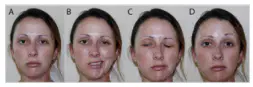
A 35-year-old female is referred to neurology clinic by her primary care physician for right-sided facial
weakness. The patient notes that she been suffering from an upper-respiratory tract infection for the past
week. The previous morning, she noticed some pain over her right ear. This was followed over the next couple
hours by drooling from the right corner of her mouth and dryness in her right eye. When she looked in the
mirror, she noted that her face appeared distorted. Furthermore, she could not close her right eye. When she
ate lunch, her taste was blunted. The symptoms all came on over the course of 3 hours and have stayed
largely the same since. There is no associated blurring of vision, double vision, rash, hearing loss, numbness, or
weakness. Facial nerve examination revealed the result as shown below.
What is the most appropriate treatment that should be given to this patient?
Clopidogrel 75 mg once a day
Aspirin 160 mg once a day
Plasmapheresis
Pyridostigmine 60 mg twice a day
Prednisone 60 mg daily

A previously healthy man in his forties presented with confusion and ataxic gait that had progressed over
several days. On examination, he was febrile to 38.9°C. He was inattentive and disoriented, but his language
was fluent and he was able to follow most simple commands. He had marked sensory ataxia and grossly 3/5
power in all four extremities. Deep tendon reflexes were absent. CSF examination showed 100 nucleated
cells/mm3, elevated protein, normal glucose, and normal opening pressure.
Over the course of 2 days, his mental status rapidly declined to complete loss of brainstem reflexes. CT scan
showed diffuse cerebral edema and loss of gray/white differentiation. Further investigation into his history
revealed bat exposure in his home, although he had no known bites.
What is the most possible diagnosis in this patient?
Meningitis
Encephalitis
Diffuse axonal injury
Ischemic stroke
Cerebral abcess
Male, 57 years old, presented with sudden onset of persistence vertigo with no hearing loss or tinnitus. He
complained right sided weakness and lack of coordination in left side. He has history of uncontrolled
hypertension and diabetes mellitus for last 5 years. Which neurological examination result is most likely to
be found in this patient?
Positive test of skew
Positive head impulse test
Unilateral horizontal nystagmus
Positive Weber test (right lateralization)
Positive Romberg test
A 59-year-old male suffered a stroke and later presented with a spastic paralysis. Which of the following was
affected by the stroke that accounts for the spasticity?
Corpus callosum
Internal capsule
Ventral horn cells
Substansia nigra
Postcentral gyrus
Female, 28 years old, presented with episodic unilateral headache in the past 10 years. She experienced
throbbing sensation in the left side, pain score 8-9, and duration of headache about 24-48 hours if left
untreated. During the attack, she felt nauseous and vomited several times. There were no other focal
neurological deficit found. She already taken acetaminophen with no significant improvement. What is the
best prophylaxis medication that should be given to the patient?
Acetaminophen
Steroid
Diazepam
Ibuprofen
Amitriptyline
Female, 20 years old, came to your clinic, accompanied by her mother. She was looked very thin with IMT 17
kg/m . In the last 6 months, she had a very restricted diet and had vigorous physical exercises, such as went to
the gym twice a day and consumed many diet pills. The patient stated that sometimes she could not control
the amount of food that she ate, so she threw it up again. What is the most possible diagnosis in this patient?
Bulimia nervosa
Atypical anorexia nervosa
Binge eating disorder (BED)
Anorexia nervosa
ARFID
Mrs. N, 32 years old, is complaining about lack of energy, depressed mood, insomnia, lack of motivation, and
loss of weight for about 1 month. Mrs. N was given medication to improve her mood. Which of the following
antidepressant belongs to SSRIs class?
Bupropion
Vortioxetine
Amitriptyline
Moclobemide
Escitalopram
His wife noted that her husband had troubles with simple calculation and remembering recent
conversations. On one ocassion, while staying at an unfamiliar environment, he became confused, unclothed,
and attempted to enter the hotel rooms of other guests. These symptoms mostly refer to impairment in
domain:
Language
Visuospasial
Memory
Executive function
Attention
Female, 36 years old, presented with sudden onset of episodic vertigo which is worsen by head movement.
Hearing problems, tinnitus, and fever is denied. Neurological examinations showed positive Dix Hallpike test.
Which part of vestibular system that is most likely caused the vertigo in this patient?
Anterior semicircular canal
Utricle
Saccule
Posterior semicircular canal
Lateral semicircular canal
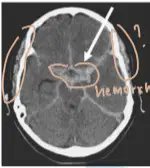
Female, 45 years old, presented with sudden onset of severe headache since 1 hour prior to admission. She
remained conscious, but vomited several times. Neurological examinations showed positive nuchal rigidity
test with no other focal neurological deficits. Non-contrast brain CT scan revealed the result as shown below.
Brain parenchyma
Cranial nerves V
Cranium
Neck muscles
Meninges
Male, 60 years old, previously admitted to hospital with haemorrhagic stroke. He appeared awake and alert,
but unable to move his extremities and unable to speak. Neurological examinations showed intact vertical
eye movements. Where is the most possible location of lesion in this patient?
B
E
C
A
D
Male, 53 years old, presented with sudden left-sided facial weakness 2 hours prior to admission. He also
complained for double vision and slurred speech. He has previous medical history of uncontrolled
hypertension. Neurological examinations revealed right-sided hemiparesis, grade 4/5. Brain MRI showed
hyperacute infarct in left side of pons. What is the most appropriate thrombolytic medication in this
patient?
Heparin SC 10,000 IU
Aspirin PO 320 mg
Alteplase IV 0.9 mg/kg
Citicoline IV 1,000 mg
Clopidogrel PO 300 mg
Female, 20 years old, came to your clinic, accompanied by her mother. She was consulted by obstetric
gynecology department with hypothalamic amenorrhea. She was looked very thin with IMT 17 kg/m . In the
last 6 months, she had a very restricted diet and had vigorous physical exercises, such as went to the gym
twice a day and consumed many diet pills. The patient stated that sometimes she could not control the
amount of food that she ate, so she threw it up again. What is the best treatment for this patient?
Psychoanalytic Psychotherapy
Multidisciplinary Intervention
Typical Antipsychotic
Hypnosis
High-dose Antidepressant
A 65 year old female patient with a history of ischemic stroke 3 months prior with weakness over the left
extremities and aphasia. She has a history of chronic hypertension and Diabetes Mellitus. On general
examination, GCS is E4M6Vaphasia BP 120/80, HR 88x/m, R 20x/m T 36,8 C. She is scheduled for
neurorehabilitation. What is the aim of neurorehabilitation ?
Restoration of the individual to the the best motor function
Restoration of the individual to the highest feasible functional level
Restoration of the individual to be able to speak again
Restoration of the individual to the condition before illness
Restoration of the individual to return to baseline
A 40-year-old man was brought to the Emergency Department of the Regional General Hospital (RSUD) by
the police. The victim was found lying on the side of the road as a result of being hit by a motorbike in an
unconscious condition and with injuries to the head and body. On physical examination, his consciousness
level showed drowsiness, the right pupil was larger than the left with slowed light reflexes and an injury to the
right temple. CT-Scan examination of the brain showed a buildup of blood in the subarachnoid space
(subarachnoid hemorrhage) and lateral ventricular space. The normal fluid that occupies the spaces which
are filled with blood as described in the vignette above is produced by specific structure inside the brain.
What is the name of the structure?
Telodendria
Villi subarachnoid
Gemulae
Bouton terminaux
Plexus choroidalis
A 55 year old male patient with a history of surgery of brain tumor over the left hemisphere 3 years prior with
weakness over the right extremities and spacticity. She has a history of chronic hypertension and Diabetes
Mellitus. On general examination, GCS is E4M6Vaphasia BP 120/80, HR 60x/m, R 24x/m T 36,8 C. She is
scheduled for neurorehabilitation. What does augmenting interventions in neurorehabilitation consist of?
Tactile stimulation
Passive movements
Motor and visual imagery
Transcranial magnetic stimulation
Biofeedback
A person is suffering from typhoid fever with high temperature of 40 0C, and when in this state he became
very agitated, hallucinated shouting that so many people are jeering at him, and would drive all visitors not to
come near him stating that they are robbers, this person is suffering from:
Schizophrenic reaction
Delirium
Affective manic state
Paranoid reaction
Dementia
A 60-year-old man came to the doctor with chief complaint of no pain in his sole when accidentaly stepped
upon nail a week ago. The patient has history of hypertension and uncontrolled diabetes mellitus. What is the
name of the dysfunctional structure which causes inability to sense pain as described in the vignette?
Ruffini corpuscle
Meissner corpuscle
Paccinian corpuscle
Krausse corpuscle
Free nerve ending
Female, 45 years old, came with chief complaint of episodic spinning sensation in the last 3 years, along with
tinnitus and left sided hearing loss. Fever and one-sided weakness is denied. What is the most appropriate
treatment for this patient?
Antiplatelet drugs
Steroid and antiviral drugs
Log roll exercise
Epley maneuver
Low sodium diet and diuretic
A fashion model, 24 years old along with several celebrities attended a party after cocaine usage several days
ago. She was looked euphoric, hyperactive, and restless. Urine drug test showed negative results. She insisted
that this condition seldomly happened and she was originally emotional, with swing affect, tantrum, and
easily cried, in which supported by her spouse. She paid special attention for her physical appearance and
demanded for mirror so that she could make sure that she “looks good” during interview and put on make-
up before the interview. Along the interview, she was appeared fiirtatious and kept seducing you. Other
mental status examination showed normal. What is the most possible diagnosis in this patient?
Intermittent explosive disorder
Cocaine intoxication
Bipolar affect disorder
Hypomania
Histrionic personality disorder
A 67-year-old male patient came with acute onset progressive and ascending lower extremity weakness and
voiding difficulty for 3 days. He also had fever and chills. On neurologic examination, motor power was
decreased in both lower extremities (grade 2/5). Sensory testing showed hypesthesia from umbilical level
down. Babinski reflexes positive in both lower extremities. Cerebrospinal fluid (CSF) tests showed a white
blood cell count of 300/mm , an elevated concentration of protein (76.4 mg/dL), and a decreased
concentration of glucose (43/150 mg/dL). What is the most possible diagnosis in this patient?
Inflammatory polineuropathy
Mielitis
Cerebral abcess
Meningitis
Encephalitis
An engineering faculty lecturer, 42 years old, came to your clinic to seek help for his history of alcohol abuse.
He was looked distant and lack of emotional engagement with his surrounding. He is unmarried and has no
close friends, but very dedicated to his job as economic researcher. His hobby is playing fantasy games and
chess in computer. He desctibed himself as very introspective, independent, and introvert. Which personality
disorder that is best described this patient?
Skizoid
Antisosial
Skizotipal
Paranoid
Avoidant
Female, 25 years old, came to your clinic with chief complaint of anxious feeling before the bedtime. She
frequently had a nightmare in the past 3 months, about 3 times in a week. She felt very tired and sleepy
during daytime because of interrupted sleep. The patient could memorize her nightmare clearly and it felt
very realistic that she was chased by a man in black suit. During daytime, she continuously thought about the
dream and became easily irritated, which affect her work as administration staff in a university. In which sleep
phase that the sleep disorder in this case is most likely happened?
REM
N1
NREM
N2
Delta sleep
A 35-year-old man was brought to emergency room by his family due to repeated seizures in his whole body.
On physical examination, he appeared conscious with abrupt seizures upon stimulation and the presence of
neck and abdominal stiffness. Several days before, the man’s right toes were injured by a rusty nail. Doctor
placed working diagnosis tetanus infection for the patient. How is the mechanism of tetanus toxin spreading
in the vignette?
Toxin spreads through the nerve fibers by retrograde axonal transport
Toxin spreads to lymphatic vessel
Toxin spreads through the nerve fibers by rapid anterograde axonal transport
Toxin spreads through hematogenic route
Toxin spreads through the nerve �bers by slow anterograde axonal transport
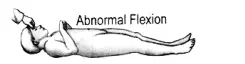
Male, 56 years old, presented with sudden onset of loss of consciousness 2 hours prior to admission. He
showed no response with verbal stimuli, but was able to open his eyes and shouted “Ouch!” on pain stimuli in
sternum area (extremities movement is shown in figure below).
What is the most possible Glasgow Coma Scale score of this patient?
E2 M5 V2
E2 M3 V3
E2 M4 V3
E2 M5 V3
E2 M2 V2
A 70-year-old man is found on the ground, suddenly paralyzed in his right upper and lower limb, and unable to understand spoken words (receptive aphasia). Which of the following Broadman areas was most likely directly affected?
Wernicke’s area
Broca’s area
Primary auditor
Primary visual
Temporal gyrus
A 40-year-old man experiences excessive worry, muscle tension, and restlessness. He has difficulty controlling these symptoms and has been experiencing them for several months. He is described as excessively overthinking small matters about career, society, politics, and financial situation. What condition is he most likely suffering from?
Bipolar Disorder
Schizophrenia
Major Depressive Disorder
Panic Disorder
Generalized Anxiety Disorder
A 45-year-old man has been experiencing periods of elation, decreased need for sleep, increased energy, and impulsive behavior. He has also engaged in risky financial investments and started multiple new projects simultaneously. There are no past episodes of depression. Which class of medications is often used as a first-line treatment for managing this condition?
Benzodiazepines
Serotonin–Norepinephrine Reuptake Inhibitors (SNRIs)
Selective Serotonin Reuptake Inhibitors (SSRIs)
Stimulants
Mood Stabilizers
A 7-year-old boy is referred to a pediatrician by his teacher due to concerns about his behavior in school. The boy often fidgets in his seat, has difficulty remaining seated during class, and frequently interrupts others. He struggles to follow instructions and frequently loses his school materials. Despite his intelligence, he is falling behind in his academic work due to his inattentiveness and impulsivity. His teacher reports that these behaviors have been ongoing for at least six months and are causing disruption in the classroom. After a thorough evaluation, what is the most appropriate psychopharmacological intervention for this child's condition?
Fluoxetine
Lithium
Methylphenidate
Haloperidol
Olanzapine
A 30-year-old man was crashed by motorcycle and fell down at his back. Afterwards he loses the sensation of vibration and position in his limb contra-laterally. What tract of spinal cord is injured?
Spinoreticularis
Funiculus posterior
Spinothalamicus
Spinotectalis
Corticospinalis
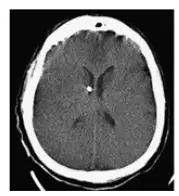
What is the most possible diagnosis in this patient?
Diffuse axonal injury
Meningitis
Ischemic stroke
Cerebral abscess
Encephalitis
A 28-year-old woman presents with a complex pattern of symptoms that have been ongoing for several years. During some periods, she experiences elevated mood, increased energy, and a decreased need for sleep. During these times, she engages in impulsive spending sprees, takes on numerous new projects, and reports feeling invincible. However, she also has recurrent episodes characterized by profound sadness, loss of interest in previously enjoyed activities, excessive guilt, and thoughts of worthlessness. During these depressive episodes, she isolates herself and experiences psychomotor retardation. Additionally, she sometimes hears voices that make derogatory comments, believes that the television is sending her hidden messages, and experiences visual hallucinations, often seeing shadowy figures in her peripheral vision. These psychotic symptoms occur independently of her mood episodes. What is the most likely diagnosis for this individual?
Borderline Personality Disorder
Bipolar Disorder
Schizophrenia
Major Depressive Disorder
Schizoaffective Disorder
A 21-year-old man begins treatment with Haloperidol. Three weeks after the initiation of therapy, physical examination shows mask-like facies, drooling, tremors, pill-rolling motion, cogwheel rigidity and shuffling gait. Which of the following is the most likely pathophysiology of these symptoms?
Decreased dopamine levels in the nigrostriatal pathway
Decreased dopaminergic activity in the mesolimbic pathway
Decreased dopamine levels in the tuberoinfundibular pathway
Decreased dopaminergic activity in the mesocortical pathway
Increased dopaminergic activity in the mesolimbic pathway
A 65-year-old female, with a long history of severe hypertension, experienced a TIA and showed motoric dysfunction of the limb. Which gyrus of the cerebral cortex is most likely having less blood perfusion?
Parahypocampal gyrus
Middle frontal gyrus
Precentral gyrus
Temporal gyrus
Cingulate gyrus
A 38-year-old man, Mark, has been exhibiting a range of concerning behaviors. He appears chronically sedated and has difficulty staying awake during the day. He often slurs his speech and struggles to maintain his balance while walking. Mark's work performance has deteriorated significantly, and he has been frequently absent from his job. His family has noticed his increasingly lethargic state and his inability to engage in normal family activities. When questioned about his condition, Mark is often vague and evasive. He has also been making frequent visits to different doctors, requesting medications to help him sleep and alleviate his anxiety. His family has found multiple prescription pill bottles in his possession, all containing various medications. What is the most probable substance of abuse in this vignette?
Alcohol
Cocaine
Benzodiazepines
Opioids
Cannabis

Male, 56 years old, presented with sudden onset of loss of consciousness 2 hours prior to admission after a car accident. Physical examinations showed abnormal breathing pattern as shown below. Where is the most possible location of lesion in this patient?
Medulla oblongata
Pons
Basal ganglia
Brainstem tegmentum
Bilateral cerebral hemisphere
A 32-year-old woman has a history of unstable relationships, intense mood swings, and a chronic fear of abandonment. She often becomes emotionally reactive, alternating between idealizing and devaluing others, leading to tumultuous interpersonal dynamics. She engages in impulsive behaviors such as overspending and risky sexual encounters. She often feels empty and struggles with a shaky sense of self. What is the most likely diagnosis for this individual?
Major Depressive Disorder
Bipolar Disorder
Narcissistic Personality Disorder
Social Anxiety Disorder
Borderline Personality Disorder
A 19-year-old man exhibits periods of extreme elation, racing thoughts, and decreased need for sleep. He engages in reckless behaviors such as driving at high speed and has inflated self-esteem. He also buys stocks in irrational amount that later cause him to suffer great deal of financial loss. What condition is most likely?
Major Depressive Disorder
Manic episode of Bipolar Disorder
Schizoaffective Disorder
Bipolar Depression
Schizophrenia
A 22-year-old woman has alternating periods of elevated mood, increased energy, and impulsivity, followed by episodes of severe sadness and hopelessness. What diagnosis is most likely?
Obsessive-Compulsive Disorder
Major Depressive Disorder
Generalized Anxiety Disorder
Bipolar Disorder
Schizophrenia
A 78-year-old woman has great difficulty in appreciating vision since a year ago, she could not recognize what she sees. Which of the following lobe is the most likely locus of lesion that causes such a deficit?
Wernicke’s area
Parietal lobe
Occipital lobe
Broca’s area
Temporal gyrus
A 35-year-old woman has been feeling sad, hopeless, and fatigued for the past several months. She reports a loss of interest in her hobbies and has difficulty concentrating. She reported occasional thoughts to end her life. What is the most likely diagnosis?
Schizophrenia
Bipolar Disorder
Social Anxiety Disorder
Obsessive-Compulsive Disorder
Major Depressive Disorder
A 25-year-old man has been experiencing persistent auditory hallucinations and believes that he has special powers for five months. His mood appears to be in dysphoric stated for most of the months. He isolates himself from family and friends and barely take care of personal hygiene. Which disorder is most likely?
Bipolar Disorder
Major Depressive Disorder
Panic Disorder
Schizophrenia
Generalized Anxiety Disorder
A 28-year-old man experiences sudden, intense fear accompanied by palpitations, sweating, trembling, and a fear of losing control. He avoids places where these attacks have occurred. The attacks occurred in the alley where he has been robbed and physically assault 5 years ago. What condition is this indicative of?
Generalized Anxiety Disorder
Post-Traumatic Stress Disorder
Panic Disorder
Schizophrenia
Bipolar Disorder
A child 1 year old has delayed mental development and a wider diameter of his head than normal after suffering encephalitis 6 months ago. He was diagnosed with hydrocephalus. What is the mechanism in the absorption of cerebrospinal fluid (CSF) in arachnoid granulation?
Free flow of CSF, sodium ions through arachnoid granulation
Free flow of CSF, magnesium ions through arachnoid granulation
Free flow of CSF, potassium ions through arachnoid granulation
Free flow of CSF, protein through arachnoid granulation
The active transport of CSF protein through arachnoid granulation
A 21-year-old man with a history of schizophrenia is brought to the emergency department by his mother because of the acute onset of neck stiffness. He says his neck has been locked to the right for the last hour, and he has been unable to move it. Physical examination shows that his upper body and neck are rigid, with his neck locked in flexion and rotated to the right. He recently took an additional dose of haloperidol. Which of the following best describes the physical findings in this patient?
Tardive dyskinesia
Neuroleptic malignant syndrome
Dystonia
Parkinsonism
Akathisia
A 25-year-old man is brought to the physician by his parents due to abnormal behavior, acting strangely over the past eight months. He sometimes appears to be talking to people who are not there and responds to voices that no one in the room can hear. He said that these voices have told him to do “bad things” to his family, but he refuses because he loves his family. Additionally, the family states that he has been accusing them of working with the government to insert a chip in his brain. One year ago, he dropped out of college due to declining grades and poor performance. There is no past medical history of illicit drug use, head trauma, seizures or unknown fever. Which of the following is the most likely pathophysiology of this patient’s auditory hallucinations?
Decreased dopaminergic activity in the mesocortical pathway
Decreased dopamine levels in the nigrostriatal pathway
Decreased dopamine levels in the tuberoinfundibular pathway
Decreased dopaminergic activity in the mesolimbic pathway
Increased dopaminergic activity in the mesolimbic pathway
A 30-year-old man has a fracture of his sacrum, then he has problem of dysfunction of erection. What nervous system is the most likely injured?
Parasympathetic nervous system
Central motor neuron
Sensoric nervous system
Sympathetic nervous system
Motoric nervous system
A 22-year-old college student has recently begun exhibiting unusual behavior. He claims to hear voices that others cannot hear, telling him that he is being monitored by hidden cameras and that he must protect himself from impending danger. He also believes that he possesses special powers that allow him to communicate with extraterrestrial beings. These beliefs have caused him significant distress and impaired his ability to function socially and academically. What is the main underlying pathophysiological mechanism that is contributing to his symptoms?
Dysregulation of dopamine signaling
Excessive serotonin reuptake
Hypofunction of the GABAergic system
Impaired glutamate transmission
Hyperactivity of the HPA axis (hypothalamic-pituitary-adrenal axis)
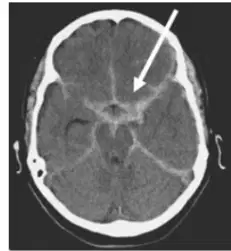
Which pain sensitive structures is most likely affected and caused the headache in this patient?
Meninges
Cranium
Brain parenchyma
Cranial nerves V
Neck muscles
A 40-year-old man was brought to the Emergency Department of the Regional General Hospital (RSUD) by the police. The victim was found lying on the side of the road as a result of being hit by a motorbike in an unconscious condition and with injuries to the head and body. On physical examination, his consciousness level showed drowsiness, the right pupil was larger than the left with slowed light reflexes and an injury to the right temple. CT-Scan examination of the brain showed a buildup of blood in the subarachnoid space (subarachnoid hemorrhage) and lateral ventricular space. The doctor plans to administer intravenous therapy to decrease cerebral edema. One of the structure that the drug have to traverse is formed by which cell?
Astrocyte
Fibrocyte
Ependymal cell
Oligodendroglia
Microglia
A 65-year-old woman suddenly fell on the floor. The CT scan figures showed a hemorrhage in the occipital brain area. Which vessel is the most responsible for those area?
Meningeal artery
Vertebral artery
Posterior cerebral artery
Anterior cerebral artery
Medial cerebral artery
A 10-year-old boy is brought to a developmental clinic by his parents due to concerns about his intellectual and adaptive functioning. The boy has always been slower in reaching developmental milestones, such as walking and speaking, than his peers. He struggles with reading, writing, and basic arithmetic. Socially, he finds it challenging to make friends and often misunderstands social cues, leading to social isolation. Despite special education support, his academic progress is significantly behind his age group. His parents report that he has difficulty with daily tasks like getting dressed and brushing his teeth. What is the most likely diagnosis for this child?
Intellectual Disability (ID)
Autism Spectrum Disorder (ASD)
Oppositional Defiant Disorder (ODD)
Specific Learning Disorder
Attention-Deficit/Hyperactivity Disorder (ADHD)
A 28-year-old woman has been struggling with persistent intrusive thoughts about germs and contamination. These thoughts lead to intense anxiety, which she tries to alleviate by washing her hands excessively and avoiding public places. Her rituals have become time-consuming and interfere with her daily life. What is the most appropriate medication treatment for her condition?
Lithium 400 mg/day
Risperidone 4 mg/day
Lorazepam 2 mg/day
Fluoxetine 40 mg/day
Sertraline 10 mg/day
A 25-year-old man has a history of episodes of extreme irritability, impulsivity, and reckless behavior. He also experiences periods of elevated mood and grandiosity. What is the probable diagnosis?
Bipolar Disorder
Major Depressive Disorder
Schizophrenia
Generalized Anxiety Disorder
Panic Disorder
A 45-year-old man has been experiencing persistent low mood, loss of interest in activities he once enjoyed, significant changes in appetite and sleep patterns, feelings of worthlessness, and difficulty concentrating for the past six months. His symptoms have not been triggered by any specific event, and they are not accompanied by manic episodes. What is the underlying pathophysiological mechanism that is most likely contributing to his condition?
GABAergic hyperactivity
Elevated levels of dopamine
Overactivity of the HPA axis (hypothalamic-pituitary-adrenal axis)
Dysregulation of norepinephrine signaling
Impaired serotonin release
A 50-year-old woman reports hearing voices that criticize her constantly and tell her she is worthless, in the past one week. She experiences reduced pleasure in daily activities for 3 months, low mood, and low energy. She loses weight and sleep poorly, despite of wanting to sleep well. What is the likely diagnosis?
Major Depressive Disorder with psychotic symptoms
Major Depressive Disorder without psychotic symptoms
Hebephrenic Schizophrenia
Paranoid Schizophrenia
Bipolar Depression
A 35-year-old woman has been excessively cleaning and washing her hands for hours each day, fearing contamination. These rituals interfere with her daily life for example causing her to come late 3 hours to the office. She is aware of this problem but cannot help to stop the thoughts and rituals. What condition is most likely?
Social Anxiety Disorder
Schizophrenia
Major Depressive Disorder
Obsessive-Compulsive Disorder
Bipolar Disorder
A 30-year-old woman has a persistent, irrational fear of social situations and often avoids them to prevent embarrassment. She experiences physical symptoms of anxiety in social settings. What is the likely diagnosis?
Panic Disorder
Generalized Anxiety Disorder
Post-Traumatic Stress Disorder
Social Anxiety Disorder
Bipolar Disorder
A man came to the doctor with a history of running out of oxygen reserve during climbing a high mountain to the 24,000 ft altitude. After descent, he suffered memory deficiency. The doctor suspected a problem in his neuron cellular signaling or synapse transmission. What is the characteristic of a G protein-linked receptor?
Activate adenylyl cyclase to hydrolyze ATP to be cAMP
Activate PKA to activate IP3
Activate PKA to activate Diacylglycerol
Activate PKC to activate ATP to cAMP
Activae Adenyl cyclase to activate IP3
A 36-year-old man got into a motor vehicle accident; his head hit the road, and afterwards he couldn't move. The MRI showed bleeding at the cortex of the motoric area. Which Broadman area number is most probably injured?
Area 17, 18
Area 4, 6
Area 7, 8
Area 9, 10
Area 11,12
A 26-year-old man admitted to the psychiatric ward for the treatment of auditory hallucinations that have been commanding him to hurt others. He begins treatment with Aripiprazole. The following day he seems increasingly anxious and pacing the halls incessantly. He states that he feels as if he “has to move” and his pacing helps with this feeling. He denies that his thoughts are racing. What is likely going on with this patient?
Tardive dyskinesia
Akathisia
Parkinsonism
Neuroleptic malignant syndrome
Dystonia
A 57-year-old male presented with sudden onset of persistent vertigo with no hearing loss or tinnitus, right-sided weakness, and lack of coordination in the left side. He has a history of uncontrolled hypertension and diabetes mellitus for the last 5 years. Which input integration system is most likely affected in this patient?
Vestibulo-ocular reflex
Vestibular system
Visual tract
Somatosensory tract
Cerebellum
A 30-year-old man fell from the staircase and the imaging showed a fracture of intervertebral C3-4. According to the injury, which muscle is possibly paralyzed?
Subscapularis
Levator scapulae
Pectoralis major
Serratus anterior
Deltoid
A 4-year-old boy is brought to a pediatrician by his parents due to concerns about his behavior and development. The child avoids eye contact, rarely responds to his name, and seems disinterested in interacting with other children. He has a strong preference for routines and becomes distressed if there are changes in his daily schedule. The boy often engages in repetitive behaviors, such as repeatedly lining up toys or flapping his hands. He does not engage in imaginative play and does not seem to understand or use gestures like pointing. His parents also note that he is particularly sensitive to certain sensory stimuli, becoming overwhelmed by loud noises and bright lights. What is the most likely diagnosis for this child?
Autism Spectrum Disorder (ASD)
Attention-Deficit/Hyperactivity Disorder (ADHD)
Conduct Disorder
Oppositional Defiant Disorder (ODD)
Specific Learning Disorder
A 45 years old man, has a traffic accident of his right neck and bleeding. The doctor suspects that the blood come from the external carotid artery. At which vertebral level does the artery begin?
C2
C3
C4
C1
C5
Extrapyramidal symptoms are side effects of antipsychotic therapy. Apart from dose reduction of antipsychotics, medications are often needed to reduce this adverse effect. Which of the following treatment is not a medication for extrapyramidal symptoms?
Paracetamol
Diphenhydramine
Benzodiazepine
Propranolol
Trihexyphenidyl
A 16 year-old girl is doing well at school. She is told by a friend that some of the boys think that she is too fat and this news, though apparently well meant, upsets her. She has not had many dates, though she would have liked them, and she decides to diet. She does so with success, and loses weight. However, she becomes too thin and her parents, though somewhat reassured by the way she maintains her school and sporting activities, are alarmed. Her mother finally takes her to a gynecologist to determine the reason for the amenorrhea that ensues. What is the girl most likely to be suffering from?
Sexual adjustment problem
Anxiety state
Primary amenorrhea
Anorexia nervosa
Adolescent adjustment disorder

