
 Worksheets
Understanding the Self - Worksheet Extraction
Total questions: 77
Worksheet time: 39mins
What is self-understanding? Fill in the blank: Self-understanding is essential to understanding behaviors and beliefs that affect oneself and others, specifically in becoming an effective and successful person in life, work, and relationships.
(a)
Which of the following is NOT a benefit of self-understanding?
Provides a sense of purpose
Leads to healthier relationships
Helps harness your natural strength
Promotes conflict.
The etymological derivative of personality comes from the word 'persona,' the theatrical masks worn by Romans in Greek and Latin drama.
True
False
Fill in the blank: The commonly accepted definition of personality is that it is a relatively (a) trait and unique characteristics that give both consistency and individuality to a person's behavior.
Personality plays a key role in affecting how people shape their lives.
True
False
Which of the following is NOT a component of personality?
Physical self
Intelligence
Weather
Attitudes
Which of the following is an environmental factor of personality?
Hereditary factors
Friends and colleagues
Brain
Physical features
Fill in the blank: Hereditary factors or genetic make-up of the person that is inherited from their parents describes the tendency of the person to appear and behave the way their (a) are.
Which of the following is a biological factor of personality?
Social circle
Physical features
Situational factors
Colleagues
Situational factors do not literally create and shape an individual's personality, but they do alter a person's behavior and response from time to time.
True
False
What is the tendency to appreciate new art, ideas, values, feelings, and behaviors called?
Conscientiousness
Openness
Extraversion
Agreeableness
Which personality trait is defined as the tendency to be careful, on time for appointments, to follow rules, and to be hard-working?
Neuroticism
Extraversion
Conscientiousness
Openness
The tendency to be talkative, sociable, and to enjoy others; the tendency to have a dominant style is called (a) .
Agreeableness is the tendency to (a) and go along with others rather than to assert one's own opinions and choices.
Which personality trait is associated with frequently experiencing negative emotions such as anger, worry, and sadness, as well as being interpersonally sensitive?
Openness
Neuroticism
Agreeableness
Conscientiousness
Which of the following is an example behavior of someone scoring high in Openness?
A) Prefers not to be exposed to alternative moral systems; narrow interests; inartistic; not analytical; down-to-earth
B) Enjoys seeing people with new types of haircuts and body piercings; curious; imaginative; untraditional
Which of the following is an example behavior of someone scoring low in Conscientiousness?
A) Never late for a date; organized; hardworking; neat; persevering; punctual; self-disciplined
B) Prefers spur-of-the-moment actions to planning; unreliable; hedonistic; careless; lax
Being the life of the party; active; optimistic; fun-loving; affectionate is an example behavior of someone scoring (a) in Extraversion.
Which of the following is an example behavior of someone scoring high in Agreeableness?
Quickly and confidently asserts own rights; irritable; manipulative; uncooperative; rude
Agrees with others about political opinions; good-natured; forgiving; gullible; helpful; forgiving
Constantly worrying about little things; hypochondriacal; insecure; feeling inadequate is an example behavior of someone scoring (a) in Neuroticism.
According to Richard Crisp and Rhiannon Turner, the individual self consists of attributes and personality traits that differentiate us from other individuals. Give an example of an individual self.
(a)
According to Richard Crisp and Rhiannon Turner, the relational self is defined by our relationships with significant others. Give an example of a relational self.
(a)
According to Richard Crisp and Rhiannon Turner, the collective self reflects our membership in social groups. Give an example of a collective self.
(a)
What is philosophy defined as?
(a)
Why is philosophy called 'The Queen of All Sciences'?
(a)
Who is known from the writings of his student Plato?
(a)
In the Socratic method, what is the main approach Socrates used to teach?
(a)
What are the two realms that compose the self according to the dichotomous view?
(a)
Which realm is described as changeable, temporal, and imperfect, and is best exemplified by the physical world?
(a)
Which realm is described as imperfect & unchanging, eternal, and immortal, and includes intellectual essences like beauty, truth, and goodness?
(a)
According to Plato, what are the three parts of the soul/self?
Reason, Physical Appetite, Spirit (Passion)
Mind, Body, Spirit
Reason, Emotion, Appetite
Body, Soul, Mind
What is always the responsibility of the reason, according to Plato?
(a)
In Plato's metaphor in 'Phaedrus', what does the white horse represent?
(a)
In Plato's metaphor in 'Phaedrus', what does the black horse represent?
(a)
Who are considered successful charioteers in Plato's metaphor?
(a)
According to St. Augustine, what are the two realms?
Body and Mind
God and Sinfulness of Man
Reason and Appetite
Spirit and Appetite
According to St. Augustine, what is the cause of sin or evil?
(a)
True or False: St. Augustine believed that the physical body is the same as the immortal soul.
True
False
What does St. Augustine say about real happiness?
(a)
Who is known as the founder of modern philosophy and established the phrase 'cogito, ergo sum — I think, therefore I exist'?
John Locke
Rene Descartes
David Humes
Immanuel Kant
According to Rene Descartes, what is integral to having a personal identity?
Physical strength
Being self-conscious
Social status
Wealth
Fill in the blank: The essence of self is being a (a)
Which philosopher is associated with the concept of 'Tabula Rasa' or Blank Slate?
Rene Descartes
John Locke
David Humes
Socrates
According to John Locke, what is the self?
The body
Consciousness
The soul
Memory
For Locke, personal identity and the soul or substance in which the personal identity is situated are two very different things.
True
False
According to David Humes, how many distinct entities are there in 'On Personal Identity'?
One
Two
Three
Four
What are the two distinct entities mentioned by David Humes in 'On Personal Identity'?
(a)
What are impressions according to the text?
Basic sensations of our experience, the elemental data of our minds
Copies of impressions that include thoughts and images
The self that is being experienced by an individual
The dualistic view of self by Freud
Fill in the blank: Ideas are copies of impressions that include (a) and images that are built up from our primary impressions through a variety of relationships.
None of the perceptions resembles a unified and permanent self-identity that exists over time.
True
False
According to Hume, what is the fiction self?
The self that is governed by the reality principle
The self that is being experienced by an individual is nothing but a kind of fictional self
The self that is aggressive and destructive
The self that mediates between impulses and restraints
Who is Sigmund Freud?
A) A well-known Australian psychologist and the Father and Founder of Psychoanalysis
B) The creator of the concept of impressions
C) The founder of the reality principle
D) The theorist of the pleasure principle
Fill in the blank: The conscious self is governed by the (a) principle.
The unconscious self is governed by the pleasure principle.
True
False
What is the main task of the conscious self according to the text?
To seek immediate discharge
To control the constant pressures of the unconscious self
To act as the repository of past experiences
To mediate between the id and superego
Fill in the blank: The subconscious serves as the repository of past experiences, repressed memories, fantasies, and (a) .
Which level of the mind is based on the pleasure principle and demands immediate satisfaction?
Ego
Superego
Id
Conscious
The superego is primarily dependent on learning the difference between right and wrong; thus, it is called a (a) principle.
Which kind of instinct is directed towards destruction in the form of aggression and violence?
Eros (life instinct)
Libido (death instinct)
Superego
Ego
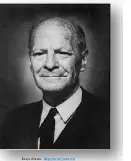
Who is Gilbert Ryle?
A) A German philosopher
B) A British analytical philosopher focused on solving philosophical puzzles through an analysis of language
C) An American neurophilosopher
D) A French existentialist
According to Ryle, the self is best understood as a (a) of behavior, the tendency or disposition for a person to behave in a certain way in certain circumstances.
What is a category mistake according to Gilbert Ryle?
When we speak about the self as independent of the physical body
When we confuse physical and mental entities
When we analyze language incorrectly
When we fail to synthesize sensations
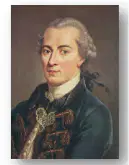
Immanuel Kant is known as:
The greatest philosopher of the modern period
The founder of existentialism
A British analytical philosopher
A neurophilosopher
Kant maintained that an individual self makes the experience of the world (a) because it is responsible for synthesizing the discrete data of sense experience into a meaningful whole.
According to Kant, what is the function of the self?
To regulate behavior
To make consciousness for the person to make sense of everything
To misrepresent reality
To analyze language
Transcendental apperception happens when people do not experience themselves directly, but instead as a unity of all impressions that are organized by the mind through (a) .
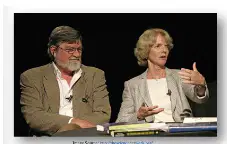
Who are Paul & Patricia Churchland?
Philosophers interested in the fields of philosophy of mind, science, cognitive neurobiology, epistemology, and perception
Founders of existentialism
German metaphysicians
British analytical philosophers
Churchland's central argument is that the concepts and theoretical vocabulary that people use to think about the selves using such terms as belief, desire, fear, sensation, pain, and joy actually misrepresent the reality of minds and selves.
True
False
According to Patricia Churchland, the modern scientific inquiry looks into the application of (a) to age-old problems in philosophy.
According to the philosophy of neuroscience, what is responsible for man's thoughts, feelings, and behavior?
The soul
The biochemical properties of the brain
The environment
The mind only
Paul Churchland viewed the self from a (a) point of view, contending that mental states are identical with, reducible to, or explainable in terms of physical brain states.
What does Paul Churchland believe is needed to better understand the self?
More religious studies
A new vocabulary and conceptual framework grounded in neuroscience
More philosophical debates
Less technology
WORLD & SENSE OF SELF are (a) phenomena in the ongoing process of man's becoming.
Phenomenology provides a direct description of the human experience.
True
False
According to phenomenology, the world is a field of perception, and human consciousness assigns (a) to the world.
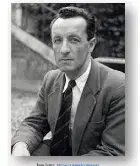
Maurice Merleau-Ponty was a:
French philosopher and phenomenologist
American neuroscientist
German psychologist
British biologist
For Maurice Merleau-Ponty, the division between the 'mind' and the 'body' is a product of (a) thinking.