
 Worksheets
Unit 1 Test - Motion, Newton's Laws, & Momentum
Total questions: 19
Worksheet time: 10mins
A scientist measures a liquid volume of 350 milliliters. What is this volume in liters?
35 L
0.35 L
350,000 L
3.5 L
The slope of a position–time graph represents:
Distance
Velocity
Acceleration
Force
Momentum is defined as:
Mass × Acceleration
Mass × Velocity
Force × Time
Weight × Distance
The Law of Conservation of Momentum states:
Momentum is always zero after a collision
The total momentum before a collision equals the total momentum after, if no external forces act
The more massive object keeps all its momentum
Momentum can increase if energy is added
Matching: Match each description with the correct equation, unit, or conversion. Write the letter on the line.
p = mv
F = ma
kg·m/s
m/s²
Newton (N)
Matching: Match each description with the correct equation, unit, or conversion. Write the letter on the line. 3. ____ Acceleration
C. F = ma
E. Newton (N)
D. p = mv
B. m/s²
A. kg·m/s
Matching: Match each description with the correct equation, unit, or conversion. Write the letter on the line. 7. ____ 1000 mL
m/s²
kg·m/s
1 L
F = ma
p = mv
Matching: Match each description with the correct equation, unit, or conversion. Write the letter on the line. 10. ____ Distance traveled on v–t graph
m/s²
kg·m/s
Area under curve
F = ma
p = mv
A train starts from rest and accelerates at 3.0 m/s² for 10 s. How far does it travel during this time?
150 m
100 m
300 m
75 m
A car accelerates from 12 m/s to 28 m/s in 4.0 s. What is the car’s acceleration?
4 m/s²
2 m/s²
8 m/s²
16 m/s²


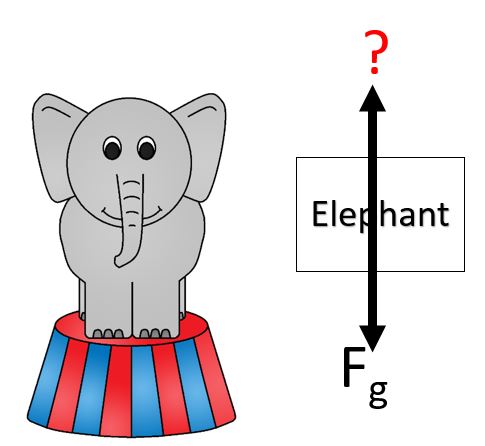
When two ice skaters, initially at rest, push off one another on a frictionless ice rink, which law explains why they move in opposite directions with equal momentum?
Newton's First Law
Newton's Second Law
Newton's Third Law
The Law of Universal Gravitation
Which of the following quantities is measured in meters per second squared (m/s²)?
Force
Momentum
Acceleration
Velocity
If a 2 kg object is moving at 5 m/s, what is its momentum?
2.5 kg·m/s
7 kg·m/s
0.4 kg·m/s
10 kg·m/s
What is the SI unit for measuring force?
Watt (W)
Pascal (Pa)
Newton (N)
Joule (J)

