
 Worksheets
Term 1 Bio Review
Total questions: 136
Worksheet time: 2hrs 1mins
What are the building blocks of protein called?
nucleic acids
monosaccharides
amino acids
fatty acids
What is a monosaccharide?
carbohydrate
fatty acid
nucleic acid
glycerol
Which of the following is the MAIN organic source of energy for living things?
carbohydrates
nucleic acids
proteins
lipids
Which of the following is not a function of protein?
builds tissues such as bone and muscle
stores genetic information
produces hemoglobin
helps to fight diseases
A molecule made up of nucleic acids would be classified into which of the following groups?
simple or complex carbohydrate
RNA or DNA
fat, wax, phospholipid, or steriod
protein
Amino acids can form a larger molecule called what?
nucleic acid
glycerol
fat
protein
Which of the following is NOT an organic molecule?
protein
lipid
carbohydrate
vitamin

The picture indicates which Macromolecule?
Carbohydrates
Lipids
Proteins
Nucleic Acids

The picture indicates which macromolecule?
Carbohydrates
Lipids
Proteins
Nucleic Acids
The following examples Glucose, Starch, Cellulose, and Glycogen belong to which macromolecule:
Carbohydrates
Lipids
Proteins
Nucleic Acid

The picture indicates which macromolecule
Carbohydrates
Lipids
Proteins
Nucleic Acid
The monomer of a fatty acid + glycerol belongs to which macromolecule?
Carbohydrates
Lipids
Proteins
Nucleic Acid
The element _______is found in all of the organic compounds.
Iron
Nitrogen
Carbon
Oxygen
_________ are composed out of carbon (C), hydrogen (H), oxygen (O), nitrogen (N), and phosphorus (P)
Carbohydrates
Lipids
Proteins
Nucleic Acids
Waxes, oils and fats are examples of
Carbohydrates
Lipids
Proteins
Nucleic Acids
Carbohydrates are made of...
C H O
C H O N
C H O N P
C H O N S
Lipids are made of...
C H O
C H O N
C H O N P
C H O N S
Proteins are made of...
C H O
C H O N
C H O N P
C H O N S
Which macromolecule functions as enzymes, structural components, and signaling molecules?
Carbohydrates
Lipids
Proteins
Nucleic acids
Which distinction between carbohydrates and lipids is accurate?
Carbs are hydrophobic; lipids are hydrophilic
Both use nucleotide monomers
Carbs provide quick energy; lipids store long-term energy
Both have identical chemical structures
Which macromolecule stores energy, insulates us, and makes up the cell membrane?
lipids
proteins
carbohydrates
nucleic acids

Identify the macromolecule in the picture. *Glucose
proteins
carbohdyrates
lipids
nucleic acids

Which of the macromolecules are structured in this way?
Carbohydrates
Lipids
Proteins
Nucleic acids

Which macromolecule is structured in this way?
Carbohydrates
Lipids
Proteins
Nucleic acids

Which macromolecule is structured this way?
Carbohydrates
Lipids
Proteins
Nucleic acids
Match the following Macromolecules to their pictures.

Carbohydrate

Lipid

Protein

Nucleic acid
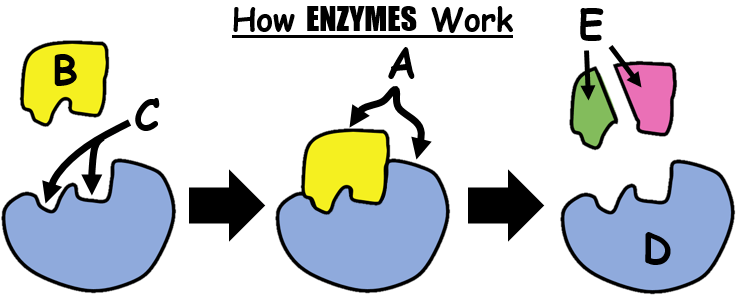
Letter D...
active site
enzyme
substrate
products
Enzymes are responsible for-
Speeding up reactions
Giving the body energy
Slowing down reactions
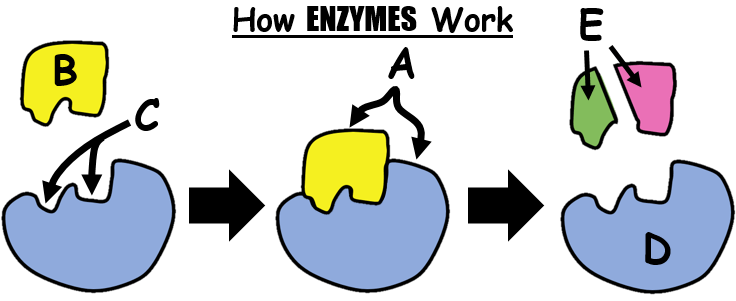
Letter B...
active site
enzyme
substrate
products
Letter c...
active site
enzyme
substrate
products
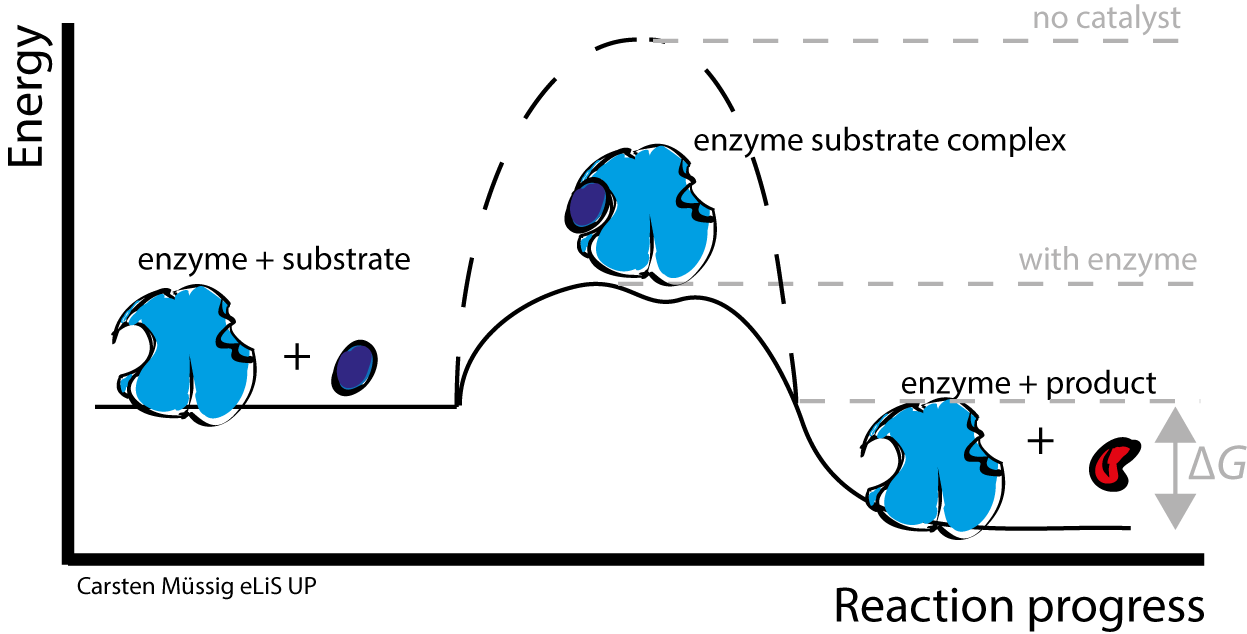
An enzyme speeds up a reaction by
lowering the activation energy.
raising the activation energy.
releasing energy.
absorbing energy.
In the lock-and-key model of enzyme action, the __________ fits into the __________ of the enzyme.
product; substrate
active site; product
substrate; active site
active site; substrate
Which organelle is responsible for cellular respiration and energy production?
Golgi apparatus
mitochondria
endoplasmic reticulum
lysosome
Controls cell functions because DNA is stored here.
nucleus
nucleolus
ribosome
cholorplast
Which 2 organelles are only found in plant cells?
chloroplast and mitochondria
chloroplast and cell membrane
mitochondria and cell wall
chloroplast and cell wall
Which organelle receives proteins and materials from the endoplasmic reticulum, packages them, and distributes them?
lysosomes
golgi apparatus
ribosomes
endoplasmic reticulum
Which of the following is true about prokaryotic cells?
They have a nucleus
They lack membrane-bound organelles
They are always multicellular
They contain mitochondria
Identify the type of cell each column represents.

Match the following definition to the organelle.
The Mitochondrion (a)
The nucleus is (b)
The cytoplasm is (c)
The Cell Membrane (d)
generates energy (powerhouse)
the control center
gel-like material that maintains the cell's shape
regulates material that enter and exit the cell.
Match the organelle with its correct function.

Stores and Protects DNA

Builds Proteins

Generates energy for the cell

Controls what enters and leaves the cell

Packages up proteins to be shipped out of the cell
What feature do viruses have in common with animal cells?
ability to form proteins at the ribosomes
existence of lipids in cell membranes
presence of genetic code in nucleic acid
production of energy by a mitochondrion

What do viruses have in common with living cells? They both...
store genetic information
have chloroplasts
use glucose for cellular respiration
have endoplasmic reticulum
Which of these describes a difference between a virus and a cell?
cells contain protein, viruses only contain carbohydrates
viruses have flagella, cells have cilia
cells reproduce independently, viruses require a host cell to replicate
viruses have a protein membrane, cells have membranes made of nucleic acids
What type of cell are fungi?
eukaryotes
prokaryotes
animal
plant
Which cell type's structure contains the a protein coat, genetic information, an envelope, a tail(sheath), and tail fibers.
virus
fungi
bacteria
animal
Produces energy in the form of ATP for the cell.
chloroplast
mitochondria
ribosome
nucleus
Selectively permeable barrier that controls what enters and leaves the cell.
cell membrane
cell wall
cytoskeleton
rough ER
Controls cell functions because DNA is stored here.
nucleus
nucleolus
ribosome
cholorplast
Site of protein synthesis.
nucleus
mitochondria
vacuole
ribomsome
Stores materials such as water, salts, proteins, & carbohydrates.
ribosome
lysosome
vacuole
endoplasmic reticulum
Transports materials throughout the cell. Acts as an assembly line for proteins.
endoplasmic reticulum
vacuole
nucleus
ribosome
Contains digestive enzymes to break down worn out parts of the cell.
vacuole
lysosome
ribosome
nucleolus
Rigid, nonliving support structure made of cellulose in plant cells
cell membrane
nuclear membrane
lysosome
cell wall


Which organelle captures energy from the sunlight and uses it to produce food in plant cells?
mitochodria
cell membrane
chloroplast
centrioles
Which organelle receives proteins and materials from the endoplasmic reticulum, packages them, and distributes them?
lysosomes
golgi apparatus
ribosomes
endoplasmic reticulum
According to cell theory, all living things are made up of ___
proteins
cells
organelles
tissues
Which of the following is true about prokaryotic cells?
They have a nucleus
They lack membrane-bound organelles
They are always multicellular
They contain mitochondria


Which statements correctly describe the main ideas of the Cell Theory?
All organisms are made up of cells
Cells are the fundamental units of life
New cells arise only from pre-existing cells
All organisms are made up of water
Cells are the basic units of music in living things
New cells are created by magic
All organisms are made up of cells
Cells are the basic units of structure and function in living things
All cells are produced from cheese factories
All organisms are made up of cells
Cells are the basic units of structure and function in living things
All cells are produced from other planets

Who among the following played a significant role in the development of the cell theory?
Robert Brown, Anton van Leuwenhoek, Rudolf Virchow
Matthais Schleiden, Theodor Schwann, Robert Hooke
Rudolf Virchow, Theodor Schwann, Louis Pasteur
Matthais Schleiden, Theodor Schwann, Rudolf Virchow, Anton van Leuwenhoek
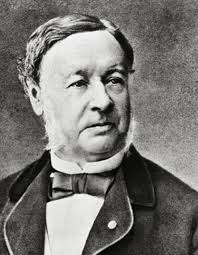
Which scientist is credited with concluding that all plants are composed of cells?
Rudolf Virchow
Matthais Schleiden
Robert Hooke
Theodor Schwann
Identify the type of cell each column represents.
Select the correct Cell: This cell is considered complex since it contains a well-defined nucleus and membrane-bound organelles. Animals, Plants, Fungi, and Protists are considered this type of cell.

Match the following biological terms with their definitions.
Cell
The basic unit of all forms of life
Nucleus
The control center of a cell
Prokaryote
A unicellular organism without a nucleus
Eukaryote
An organism whose cells contain a nucleus
Match the following definition to the organelle.
The Mitochondrion (a)
The nucleus is (b)
The cytoplasm is (c)
The Cell Membrane (d)
Cell part #2 is:
smooth ER
nucleus
nucleolus
mitochondrion
Match the organelle with its correct function.
Stores and Protects DNA
Builds Proteins
Generates energy for the cell
Controls what enters and leaves the cell
Packages up proteins to be shipped out of the cell
What is the main function of the cell membrane in maintaining homeostasis?
Producing energy for the cell
Controlling movement of things in and out of the cell
Storing genetic information
Breaking down waste products
What is the main function of the cell membrane in maintaining homeostasis?
Producing energy for the cell
Controlling movement of things in and out of the cell
Storing genetic information
Breaking down waste products
Which term describes the cell membrane’s ability to allow some substances to pass while blocking others?
Completely permeable
Selectively permeable
Impermeable
Semi-solid
Which type of molecules can pass easily through the cell membrane?
Large, polar molecules
Small, nonpolar molecules
Proteins only
DNA molecules
Which of the following best describes a solution?
A single pure substance
A uniform mixture of two or more substances
A solid and a gas only
Only water and sugar
Why can’t polar and/or large molecules pass easily through the cell membrane?
They are too small
The membrane is hydrophobic and nonpolar
They are neutral
They are always needed inside the cell
What does equilibrium mean in the context of diffusion?
Molecules are only on one side of the membrane
Molecules are equally concentrated on both sides of the membrane
Molecules stop moving entirely
Molecules move from low to high concentration
What is osmosis?
The diffusion of proteins across the membrane
The simple diffusion of water across the cell membrane
The active transport of ions
The movement of glucose into the cell
What happens to a cell placed in a hypertonic solution?
It swells
It shrivels
It bursts
It stays the same
What happens to a cell placed in a hypotonic solution?
It shrivels
It swells
It stays the same
It bursts immediately
A cell is placed in a solution and does not change in size. What type of solution is it in?
Hypertonic
Hypotonic
Isotonic
Supersaturated
Which type of transport uses energy to pump molecules across the membrane against the concentration gradient?
Facilitated diffusion
Osmosis
Molecular pumps
Diffusion
What type of transport is responsible for muscle contractions and nerve signal conduction?
Facilitated diffusion
Molecular pumps
Osmosis
Diffusion
Which ion is NOT listed as being transported by molecular pumps?
Potassium (K+)
Sodium (Na+)
Calcium (Ca+2)
Glucose
Which type of transport helps ensure every cell is oxygenated?
Diffusion
Exocytosis
Endocytosis
Molecular pumps
What is the main function of endocytosis in white blood cells?
Sending signals to the brain
Removing bacteria to keep the body from getting sick
Regulating blood sugar
Controlling blood pressure
Which of the following is an example of active transport?
Osmosis
Diffusion
Exocytosis
Facilitated diffusion
What is transported by osmosis?
Glucose
Water
Neurotransmitters
Oxygen
What is the role of molecular pumps in the cell?
To move water across the membrane
To pump ions across the membrane using energy
To engulf bacteria
To secrete neurotransmitters
Which of the following is an example of a substance transported by diffusion?
Glucose
Water
O2 and CO2
Potassium ions
Selectively Permeable Membrane
Allows some materials to pass through but keeps other materials out
Concentration
Amount of substance in a given space
Diffusion
Movement of particles from an area of concentration to an area of lower concentratioin
Osmosis
Diffusion of water molecules through a selectively permeable membrane
Diffusion is the movement of molecules from an area of (a) concentration to an area of (b) concentration.
(a) does NOT require energy.
Passive Transport
No energy required from the cell
Diffusion
Net movement of particles from an area of high concentration to low
Dynamic Equilibrium
Continuous movement of molecules, BUT, no overall change
Facilitated Diffusion
Diffusion through transport proteins
Osmosis
Diffusion of water across a semipermeable membrane
Isotonic
Soln. w/ same concentration of solutes as cytoplasm
Hypertonic
Soln w/ higher concentration of solutes than cytoplams
Hypotonic
Soln w/ lower concentration of solutes than cytoplasm

Osmosis

Facilitated Diffusion

Active Transport

Diffusion
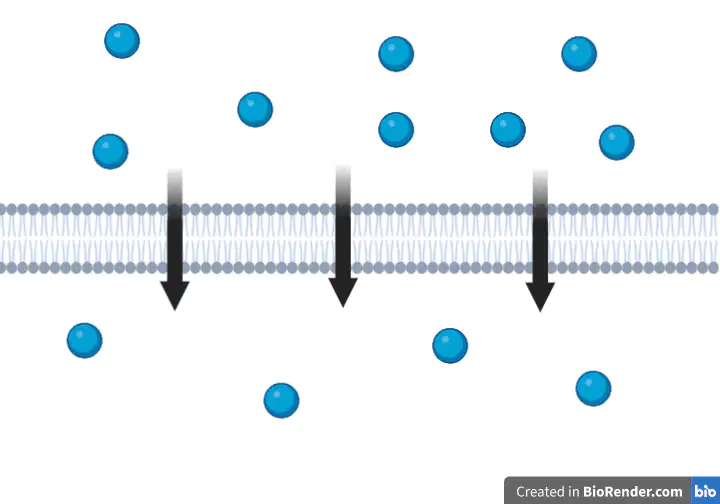
Simple Diffusion
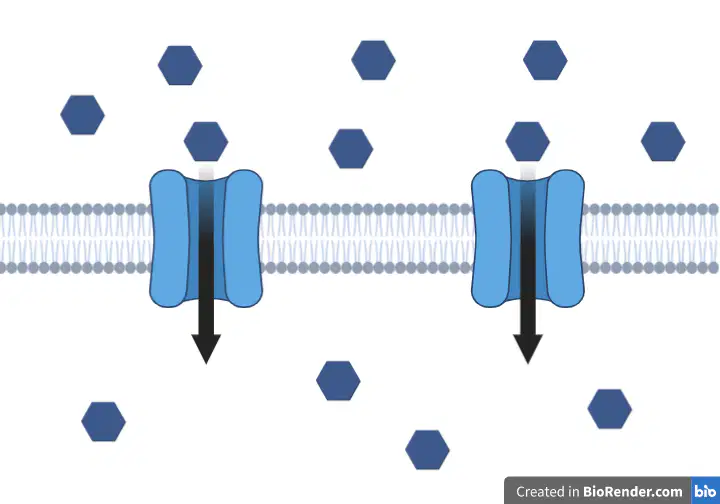
Facilitated Diffusion
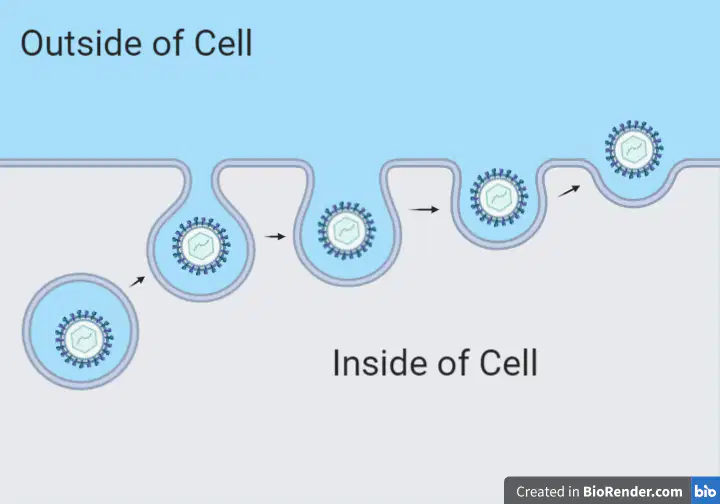
Exocytosis
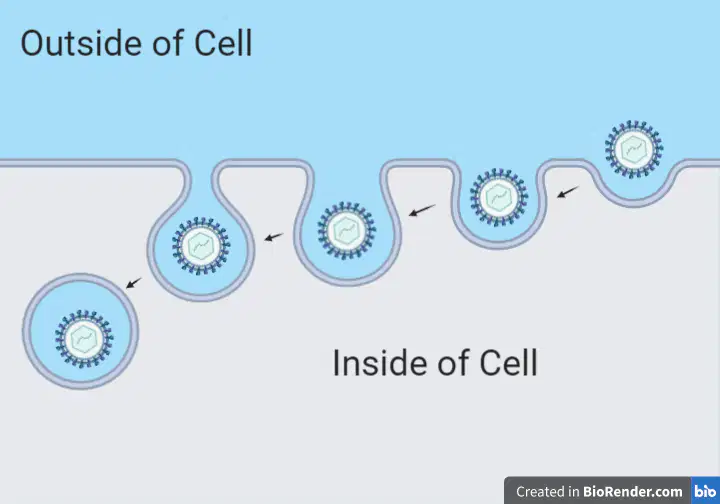
Endocytosis

What direction will most of the molecules have to move through diffusion in order to achieve equal concentrations on both sides of the membrane?
To the inside of the cell.
To the outside of the cell.
The molecules will move in and out because they are at equal concentrations.
The molecules will not move.

What direction will most of the molecules have to move through diffusion in order to achieve equal concentrations on both sides of the membrane?
To the inside of the cell.
To the outside of the cell.
The molecules will move in and out because they are at equal concentrations.
The molecules will not move.

The (a) of water, across a semipermeable (b) is called (c) . This is how (d) gets into and out of most cells.
diffusion
membrane
osmosis
water

Endocytosis

Exocytosis

Molecular Pump

Facilitated Diffusion

Osmosis
Which of the following best describes the purpose of the cell cycle?
To allow cells to grow, replicate their DNA, and divide to produce new cells.
To help cells absorb nutrients from food.
To enable plants to perform photosynthesis.
To allow animals to breathe and circulate oxygen.
What is mitosis?
Part of the cell cycle when the nucleus divides
The process of photosynthesis in plants
The breakdown of glucose in cells
The movement of water across a membrane
Which of the following stages occur during mitosis?
Metaphase
Prophase
Interphase
Anaphase
What is produced at the end of mitosis?
Two diploid cells
Four haploid cells
One large cell
Three daughter cells
What is the longest part of a cell cycle called, during which the cell grows, replicates DNA, and makes proteins and RNA?
Interphase
Mitosis
Cytokinesis
Telophase
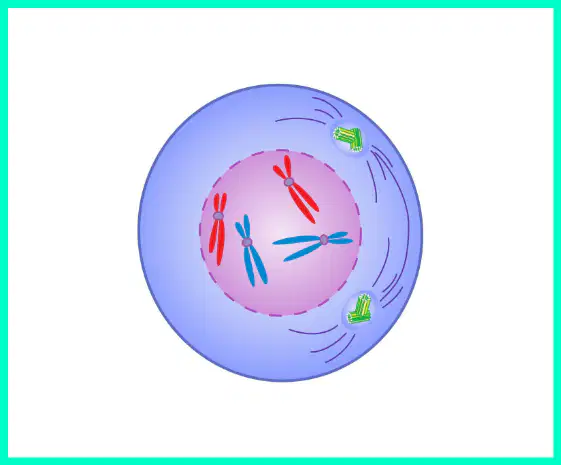
What is the first stage of mitosis when chromatin condenses and can be seen?
Prophase
Metaphase
Anaphase
Telophase
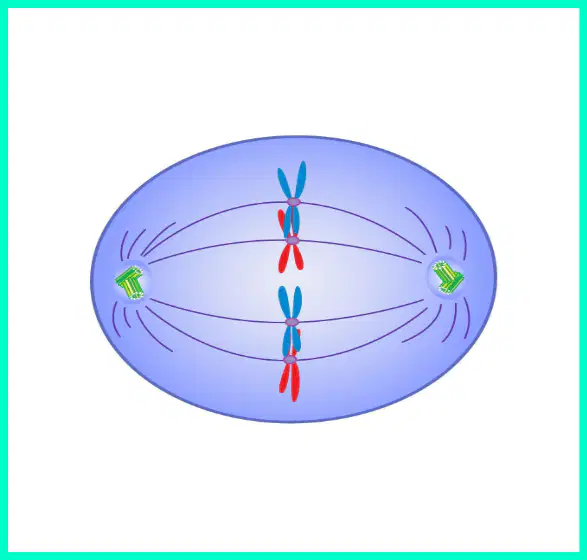
What is the name of the second stage of mitosis when the chromatids line up along the midline of the nucleus?
Metaphase
Prophase
Anaphase
Telophase
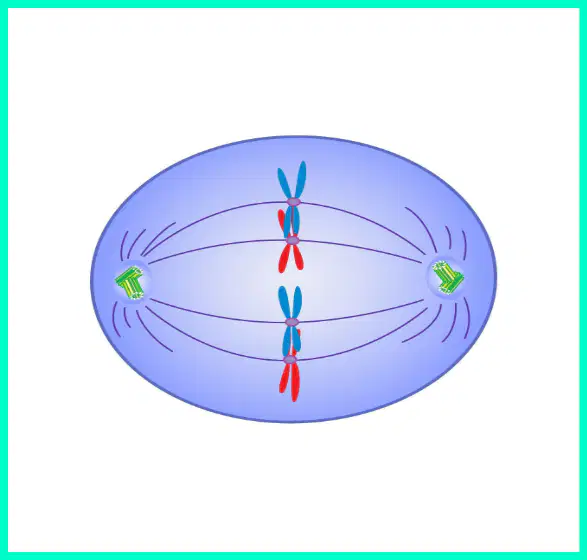
During metaphase, where do the chromatids line up?
Along the midline of the nucleus
At the cell membrane
In the cytoplasm
At the poles of the cell
What is the third stage of mitosis called, when centromeres divide and sister chromatids separate?
Prophase
Metaphase
Anaphase
Telophase
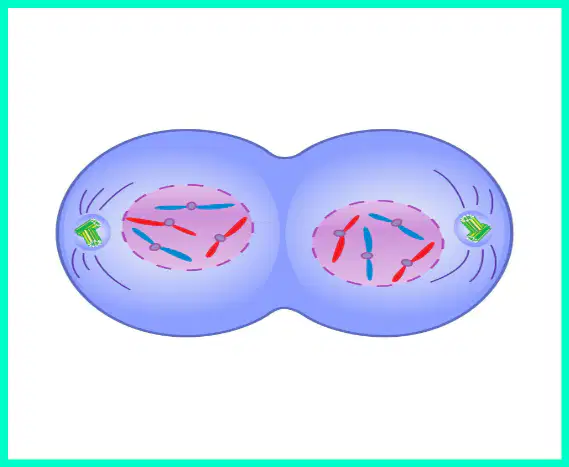
What is the last phase of mitosis called, when new nuclear membranes are formed around each set of chromosomes?
Telophase
Prophase
Metaphase
Anaphase
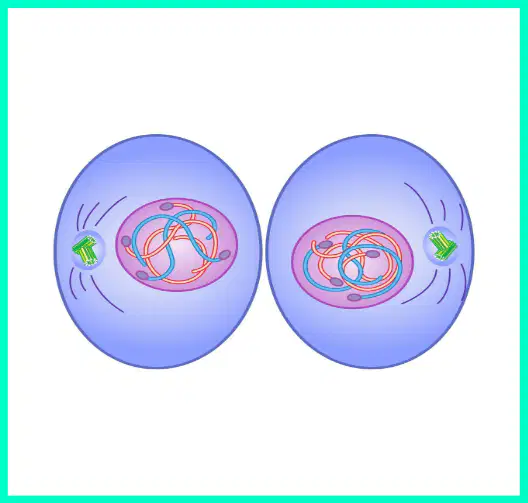
During cytokinesis, what is formed?
Two daughter cells
Four gametes
One large cell
Three new nuclei
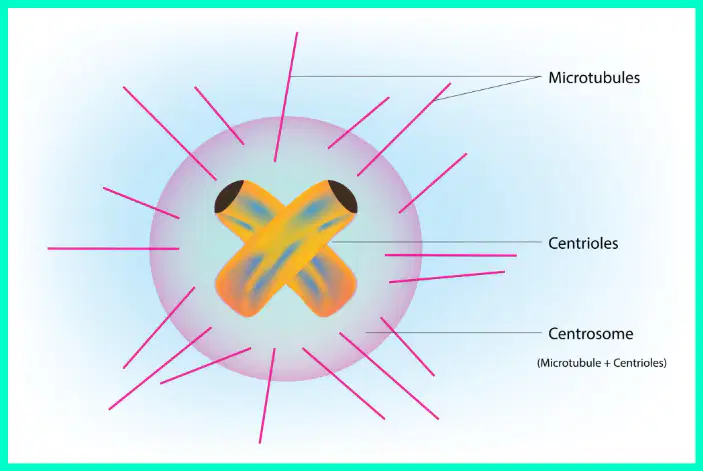
What is the main function of microtubules during mitosis?
They form a spindle and aid in moving chromatids.
They produce energy for the cell.
They store genetic information.
They synthesize proteins.
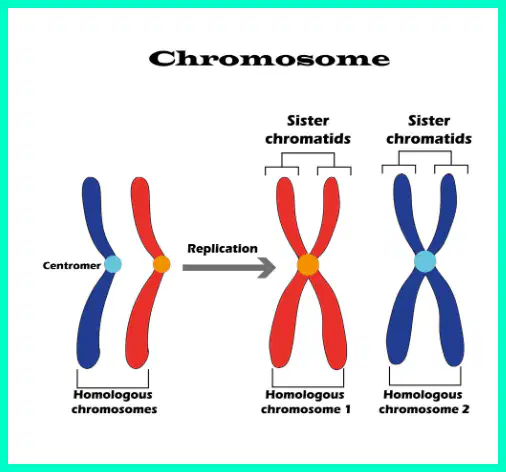
What are sister chromatids?
Two identical copies of a chromosome that are attached by a centromere
Two different chromosomes attached by a centromere
Two identical chromosomes not attached to each other
Two different chromatids attached by a spindle fiber
What are somatic cells?
All the cells in the body except the sex cells (gametes)
Only the sex cells (gametes)
Only the cells in the brain
Only the cells in the heart
What is cancer?
A disorder of the cell cycle that results in uncontrolled cell division and tumor formation
A type of bacterial infection
A genetic disorder that affects only the skin
A condition caused by a lack of vitamins
What is a carcinogen?
Any substance directly involved in causing cancer
A type of healthy cell
A medicine used to treat cancer
A vitamin found in food
What is metastasis?
Process of cancer cells spreading to other parts of the body and forming new masses
Process of normal cells dividing to repair tissue
Process of blood cells carrying oxygen
Process of digestion in the stomach
What is a checkpoint in the cell cycle?
A control point in the cell cycle where stop signals can regulate the cell cycle
A location where DNA is replicated
The end of cell division
A place where cells die
Label the stages of the Cell Cycle.
Cytokinesis
Prophase
Metaphase
Anaphase
Telophase

Match the following
Interphase
The longest stage of a cell's life
G1
part of interphase where the cell is growing
S phase
DNA Synthesis
When the cell is making more DNA
G2
part of interphase where the cell prepares to divide
Cell Division
A small stage in the cell's life where the cell splits to make more cells

