
 Worksheets
Biology Quiz on Cells and Competencies
Total questions: 100
Worksheet time: 50mins
Apa topik utama yang diperkenalkan di Bab 1 dari materi pembelajaran?
Pengenalan Sel
Anatomi Manusia
Reaksi Kimia
Pertumbuhan Tanaman
Manakah di antara berikut ini yang TIDAK terdaftar sebagai topik utama dalam materi?
Sel dan mikroskop
Sel hewan dan tumbuhan
Spesialisasi sel
Proses fotosintesis
Apa salah satu kompetensi yang diharapkan dicapai siswa menurut materi tersebut?
Menjelaskan apa itu sel
Menjelaskan proses pencernaan
Menyebutkan semua jenis bakteri
menggambar tata surya
Skill manakah yang melibatkan perbandingan antara dua jenis sel menurut kompetensi yang terdaftar?
Menamai organel dalam sel
Mengukur ukuran sel
Menyatakan perbedaan antara sel tumbuhan dan sel hewan
Menjelaskan proses fotosintesis
Mengapa penting untuk mengumpulkan informasi tentang sel punca, seperti yang disebutkan dalam kompetensi?
Untuk memahami perannya dalam menyembuhkan penyakit yang sulit
Untuk belajar cara menggunakan mikroskop
Untuk membandingkan sel tumbuhan dan hewan
Untuk mendeskripsikan organel sel
Manakah di antara berikut ini yang paling tepat menggambarkan proses spesialisasi dan diferensiasi sel?
Proses di mana sel menjadi organ
Proses pembelahan sel
Proses fotosintesis
Proses respirasi
Apa itu sel?
Unit terkecil yang membentuk tubuh makhluk hidup
Sejenis virus
Organ besar dalam tubuh
Sejenis bakteri
Kenapa penting untuk mempelajari sel?
Karena sel adalah unit dasar kehidupan
Karena sel hanya ditemukan pada tumbuhan
Karena sel tidak penting bagi makhluk hidup
Karena sel hanya ditemukan pada virus
Manakah dari pernyataan berikut yang benar tentang makhluk hidup?
Makhluk hidup terdiri dari sel
Makhluk hidup terdiri hanya dari air
Makhluk hidup tidak memiliki struktur apapun
Makhluk hidup terdiri dari virus
Seorang siswa mengamati sebuah sampel di bawah mikroskop dan melihat banyak unit kecil. Apa unit-unit ini kemungkinan besar?
Sel
Atom
Molekul
Organ
Alat apa yang umum digunakan untuk mengamati sel?
Mikroskop
Teleskop
Kalkulator
Termometer
Siapa ilmuwan Inggris yang menemukan mikroskop pada tahun 1663?
Antonie Van Leeuwenhoek
Isaac Newton
Galileo Galilei
Robert Hooke
Tahun berapa Antonie Van Leeuwenhoek, seorang ilmuwan Belanda, menemukan versinya dari mikroskop?
1663
1674
1700
1650
Manakah dari pernyataan berikut yang paling tepat menggambarkan kontribusi Robert Hooke dan Antonie Van Leeuwenhoek terhadap pengembangan mikroskop?
Keduanya menciptakan jenis mikroskop yang sama pada tahun yang sama.
Robert Hooke menciptakan mikroskop pada tahun 1663, dan Antonie Van Leeuwenhoek menciptakan versinya sendiri pada tahun 1674.
Antonie Van Leeuwenhoek menciptakan mikroskop sebelum Robert Hooke.
Tidak ada yang berkontribusi pada penemuan mikroskop.
Negara mana yang berasal dari Robert Hooke?
Prancis
Jerman
Inggris
Belanda
Negara manakah Antonie Van Leeuwenhoek berasal?
Inggris
Belanda
Italia
Prancis
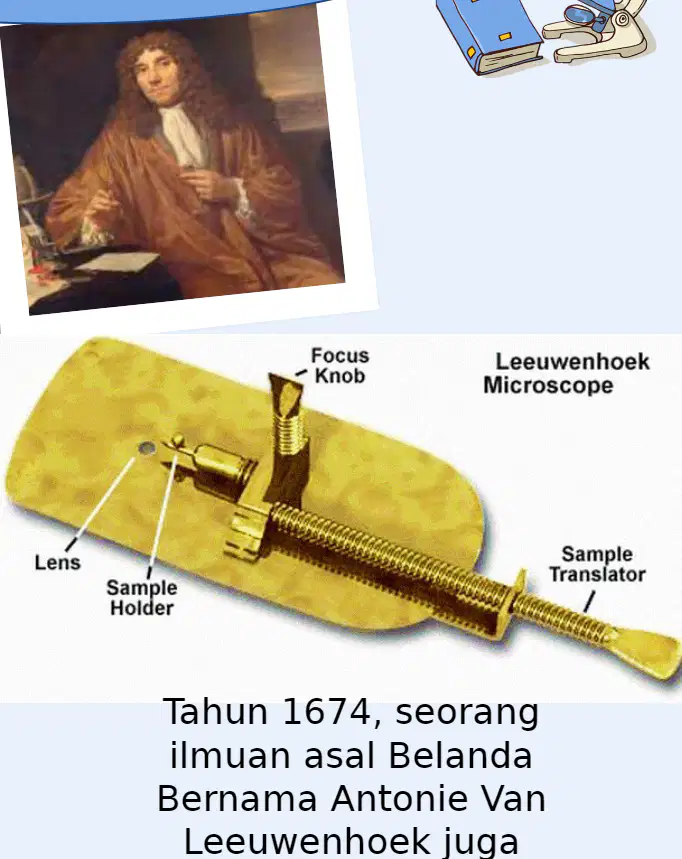
Berdasarkan diagram, bagian mana dari mikroskop yang digunakan untuk memfokuskan gambar?
Okuler
Knob Fokus
Tempat Sampel
Tabung

Apa perbedaan utama antara mikroskop cahaya monokuler dan mikroskop cahaya binokuler?
Mikroskop monokuler memiliki satu lensa mata, sedangkan mikroskop binokuler memiliki dua lensa mata.
Mikroskop monokuler menggunakan elektron, sedangkan mikroskop binokuler menggunakan cahaya.
Mikroskop monokuler hanya digunakan dalam biologi, sedangkan mikroskop binokuler digunakan dalam kimia.
Mikroskop monokuler tidak menggunakan lensa, sedangkan mikroskop binokuler menggunakannya.
Apa yang digunakan mikroskop cahaya untuk menghasilkan gambar yang diperbesar?
Cahaya yang melewati lensa
Elektron yang melewati vakum
Gelombang suara yang melewati air
Medan magnet yang melewati logam
Microskop cahaya dapat memperbesar objek karena:
Ini menggunakan cahaya yang melewati lensa untuk menciptakan gambar yang diperbesar.
Ini menggunakan gelombang suara untuk bergetar objek.
Ini menggunakan panas untuk memperluas objek.
Ini menggunakan bahan kimia untuk mengubah ukuran objek.
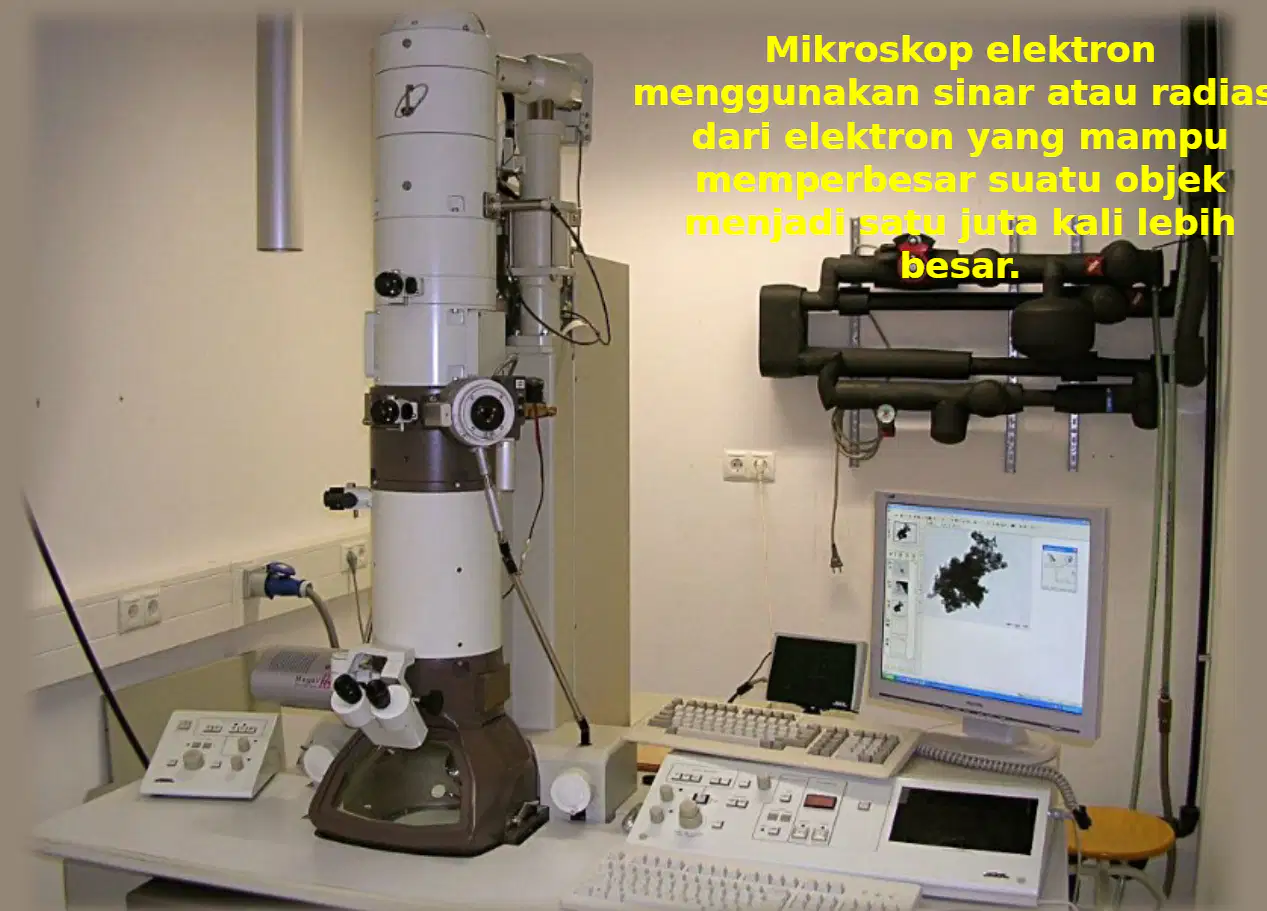
Jenis radiasi apa yang digunakan mikroskop elektron untuk memperbesar objek?
Gelombang cahaya
Gelombang suara
Radiasi elektron
Radiasi inframerah
Seberapa besar sebuah mikroskop elektron dapat memperbesar objek dibandingkan dengan ukuran aslinya?
Sepuluh kali lebih besar
Seratus kali lebih besar
Seribu kali lebih besar
Satu juta kali lebih besar
Apa dua karakteristik penting yang harus dimiliki oleh mikroskop cahaya dan mikroskop elektron?
Warna dan ukuran
Perbesaran dan resolusi
Berat dan tinggi
Kecepatan dan akurasi
Kenapa resolusi merupakan karakteristik penting dalam mikroskop?
Ini menentukan warna gambar.
Ini mempengaruhi kecepatan pengamatan.
Ini menentukan kejernihan atau ketajaman gambar.
Ini meningkatkan berat mikroskop.
Apa objek yang diamati di bawah mikroskop disebut?
Lensa
Tabung
Spesimen
Cermin
Bagian mana dari mikroskop yang digunakan untuk melihat spesimen dengan mata Anda?
Lensa obyektif
Lensa okuler
Meja benda
Kondensor
Jika lensa okuler (eyepiece lens) memperbesar 10X dan lensa objektif (objective lens) memperbesar 40X, berapa total pembesaran?
400X
50X
30X
4X
Bagian mana dari mikroskop yang bertanggung jawab untuk menahan dan memindahkan lensa objektif?
Tabung
Revolver
Cermin
Diafragma
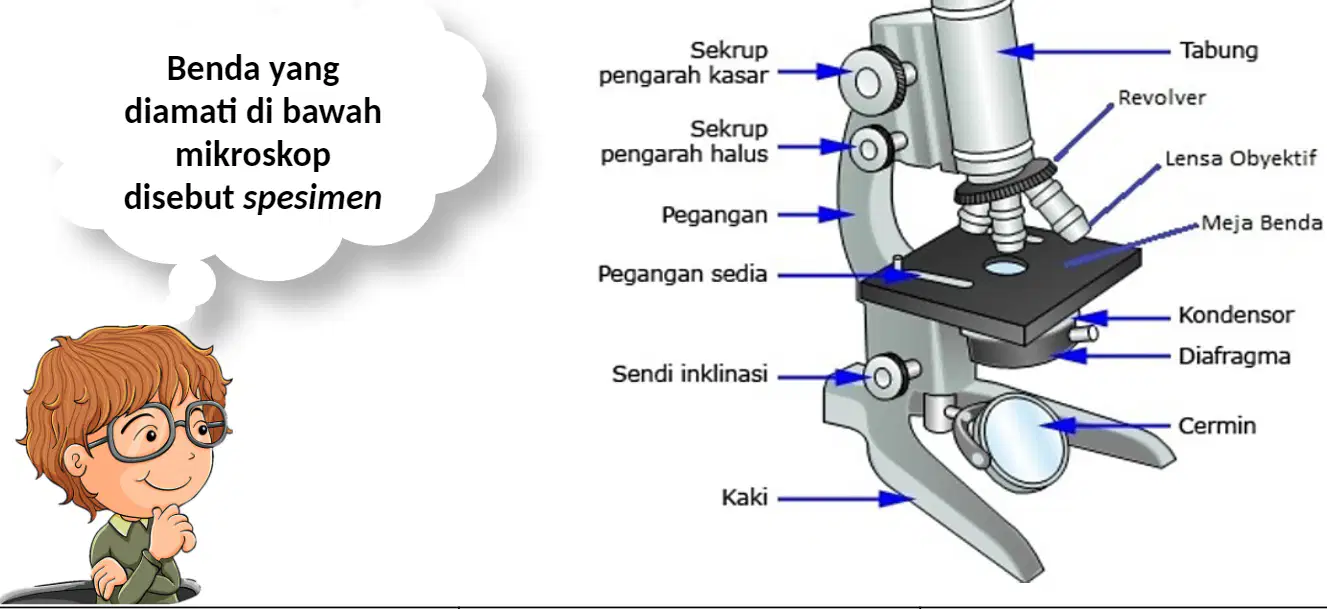
Bagian mana dari mikroskop yang digunakan untuk menyesuaikan fokus lebih tepat setelah menggunakan knop penyesuaian kasar?
Sekrup kasar
Sekrup halus
Pegangan
Meja benda
Kenapa penting untuk menggunakan kedua tombol penyesuaian kasar dan halus saat memfokuskan spesimen di bawah mikroskop?
Untuk mengubah warna spesimen
Untuk meningkatkan ukuran mikroskop
Untuk mendapatkan gambar yang jelas dan tajam dari spesimen
Untuk memutar lensa objektif
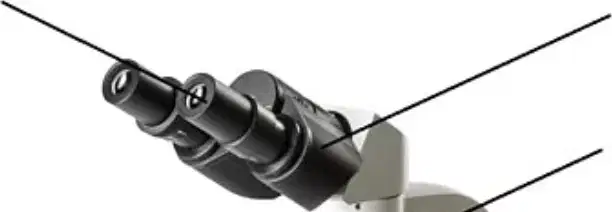
Apa fungsi utama dari 'Lensa okuler' dalam mikroskop cahaya?
Untuk menghubungkan lensa okuler dengan lensa objektif
Untuk memperbesar penampilan objek
Untuk memfokuskan gambar dengan cepat
Untuk menahan spesimen di tempatnya
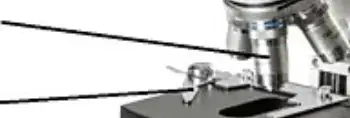
Bagian mana dari mikroskop yang bertanggung jawab untuk menahan slide spesimen di tempatnya?
Penjepit
Lensa objektif
Lampu
Lengan
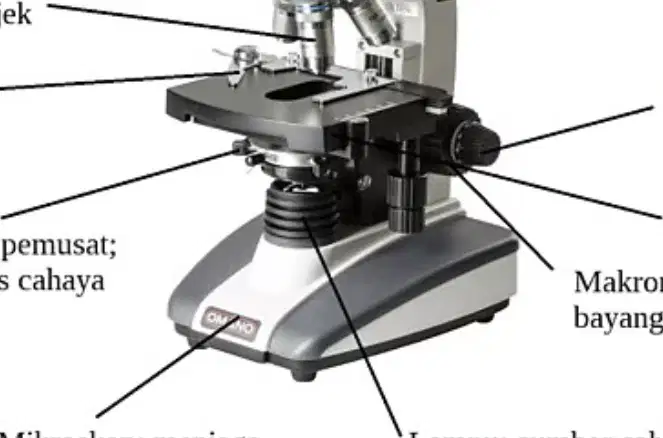
Apa fungsi 'Makrometer' pada mikroskop cahaya?
Untuk memfokuskan gambar secara perlahan
Untuk mengatur intensitas cahaya
Untuk memfokuskan gambar dengan cepat
Untuk mendukung mikroskop
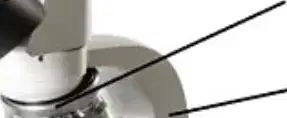
Jika Anda ingin memindahkan mikroskop dari satu tempat ke tempat lain, bagian mana yang harus Anda pegang?
Dasar Mikroskop
Lensa okuler
Lengan
Meja objek
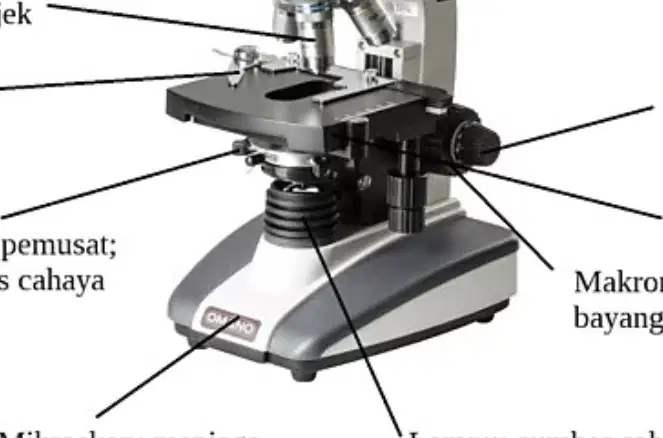
Bagaimana 'Tombol pengatur pemusat' dan 'Lampu' bekerja sama untuk meningkatkan visibilitas spesimen di bawah mikroskop?
Tombol mengatur fokus gambar sedangkan lampu memberikan cahaya sehingga spesimen terlihat lebih jelas
Tombol menahan spesimen dan lampu memperbesarnya
Tombol menghubungkan lensa okuler dan lampu menopang mikroskop
Tombol mengganti lensa objektif dan lampu memfokuskan gambar
Apa fungsi membran sel pada sel hewan dan tumbuhan?
Untuk mengontrol semua aktivitas sel
Untuk berfungsi sebagai jalur pertukaran zat masuk dan keluar dari sel
Untuk menyimpan informasi genetik
Untuk memproduksi energi bagi sel
Bagian mana dari sel yang bertanggung jawab untuk mengatur semua aktivitas sel?
Sitoplasma (Cytoplasm)
Membran sel (Cell membrane)
Inti sel (Nucleus)
Mitokondria (Mitochondria)
Apa fungsi utama sitoplasma dalam sel?
Untuk mengatur aktivitas sel
Untuk berfungsi sebagai bagian terluar sel
Untuk mengandung organel sel dan menyediakan medium untuk aktivitas mereka
Untuk melindungi sel dari bahaya eksternal
Manakah di antara berikut ini yang BUKAN organel yang ditemukan di sitoplasma?
Ribosom
Mitochondria
Membran sel
Golgi apparatus
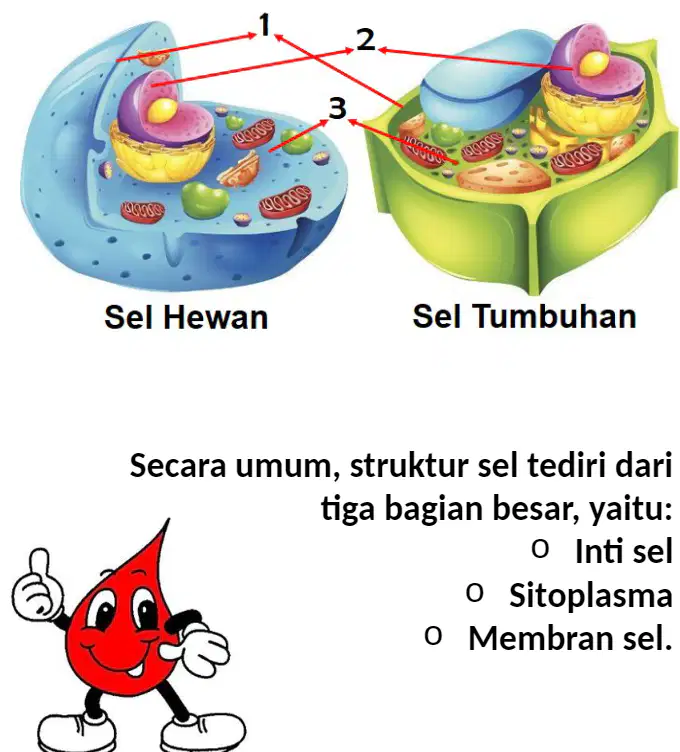
Berdasarkan diagram, tiga bagian utama apa yang membentuk struktur sel hewan dan sel tumbuhan?
Inti sel, sitoplasma, membran sel
Inti sel, mitokondria, ribosom
Sitoplasma, plastid, vakuola
Dinding sel, sitoplasma, mitokondria
Kenapa bagian-bagian yang berbeda dari sel disebut organel?
Karena mereka hanya ditemukan di sel tumbuhan
Karena masing-masing memiliki fungsi spesifiknya sendiri
Karena mereka terlihat dengan mata telanjang
Karena mereka terbuat dari hanya satu jenis molekul
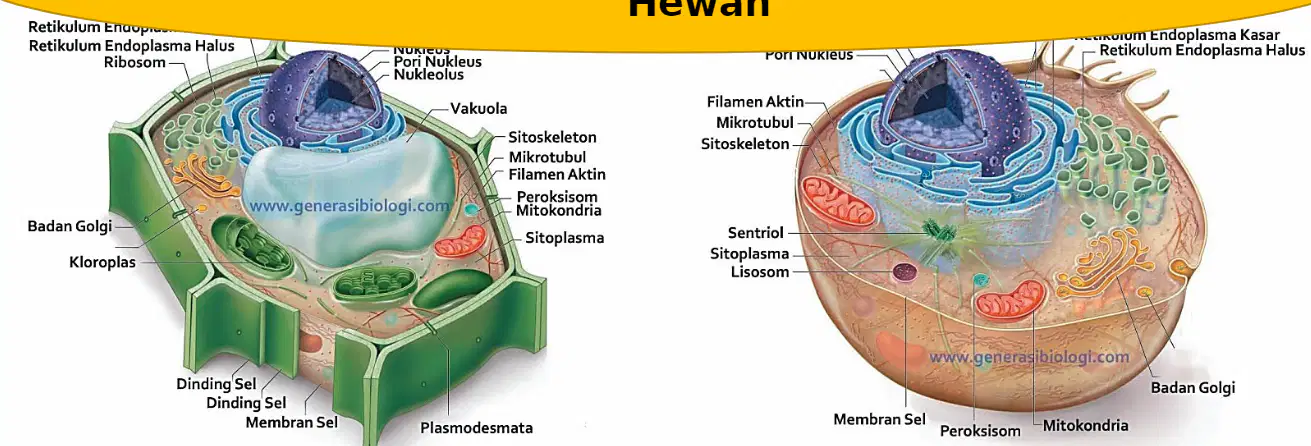
Struktur manakah yang terdapat pada sel tumbuhan tetapi tidak ada pada sel hewan?
Dinding Sel
Lisosom
Sentriole
Granula glikogen
Apa substansi penyimpanan utama yang ditemukan dalam sel tumbuhan?
Starch
Glycogen
Fat
Protein
Manakah dari pernyataan berikut yang paling tepat menggambarkan bentuk sel tanaman dibandingkan dengan sel hewan?
Sel tanaman memiliki bentuk tetap, sementara sel hewan memiliki bentuk yang bervariasi.
Baik sel tanaman maupun sel hewan memiliki bentuk tetap.
Sel hewan memiliki bentuk tetap, sementara sel tanaman memiliki bentuk yang bervariasi.
Baik sel tanaman maupun sel hewan memiliki bentuk yang bervariasi.
Organela manakah yang terdapat pada sel hewan tetapi tidak ada pada sel tumbuhan?
Lisosom
Plastid
Dinding sel
Kloroform
Seorang siswa mengamati sel dengan vakuola besar dan banyak serta lapisan luar yang kaku. Berdasarkan fitur-fitur ini, jenis sel apa yang paling mungkin dimiliki?
Sel tumbuhan
Sel hewan
Sel bakteri
Sel jamur
Sel-sel hewan tidak memiliki plastid, sehingga mereka tidak dapat melakukan fotosintesis dan harus memperoleh energi dari mengkonsumsi organisme lain.
Sel-sel hewan tidak memiliki plastid, sehingga mereka tidak dapat melakukan fotosintesis dan harus memperoleh energi dari mengkonsumsi organisme lain.
Sel-sel hewan memiliki plastid, sehingga mereka dapat melakukan fotosintesis.
Sel-sel hewan tidak memiliki plastid, tetapi mereka masih dapat melakukan fotosintesis.
Sel-sel hewan memiliki plastid, tetapi tidak menggunakannya untuk fotosintesis.
Bagian mana dari sel yang bertanggung jawab untuk membentuk dan melindungi sel?
Dinding sel
Mitochondria
Nukleus
Lisosom
Organel sel manakah yang ditemukan di sel hewan dan tumbuhan dan berfungsi untuk mengatur masuk dan keluarnya zat serta membungkus sel?
Kloroplas
Membran sel
Vakuola
Lisosom
Apa fungsi utama dari nukleus dalam sel?
Fotosintesis
Mengatur/mengendalikan semua aktivitas sel
Menyimpan kristal/substansi
Mendaur ulang objek asing
Which organelle is only found in plant cells and is the site of photosynthesis?
Mitochondria
Chloroplast
Lysosome
Golgi body
What is the function of the vacuole in plant cells?
Site of respiration
Storing crystals/substances and digestion in single-celled animals
Protein synthesis
Recycling foreign objects
Which organelle is the center of combustion or respiration in the cell?
Mitochondria
Golgi body
Endoplasmic reticulum
Lysosome
What is the main function of lysosomes in animal cells?
Photosynthesis
Recycling foreign objects in the cell
Protein synthesis
Storing substances
Which organelle helps in protein formation and the export of substances in the cell?
Golgi body
Mitochondria
Vacuole
Chloroplast
What is the function of the endoplasmic reticulum in the cell?
Protein and carbohydrate metabolism
Photosynthesis
Digestion of food
Cell protection
What is the main difference between uniseluler and multiseluler organisms?
Uniseluler organisms have one cell, while multiseluler organisms have many cells.
Uniseluler organisms have many cells, while multiseluler organisms have one cell.
Both uniseluler and multiseluler organisms have only one cell.
Both uniseluler and multiseluler organisms have many cells.
Which of the following is an example of a uniseluler organism?
Octopus
Petromyzon
Paramecium
Human
Which group do Amoeba and Chlamydomonas belong to?
Multiseluler
Uniseluler
Both multiseluler and uniseluler
Neither multiseluler nor uniseluler
Why might a scientist classify an octopus as a multiseluler organism?
It is made up of only one cell.
It is made up of many cells.
It cannot move.
It is invisible to the naked eye.
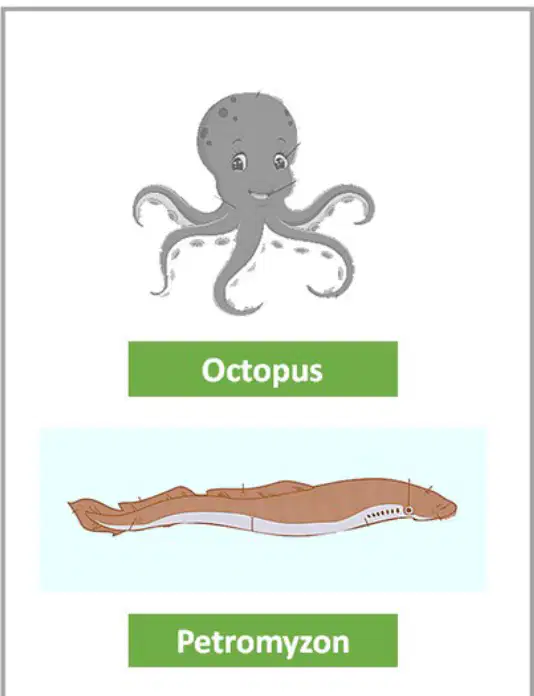
Based on the diagram, which organism is NOT uniseluler?
Bacteria
Amoeba
Octopus
Chlamydomonas

What is the main characteristic of cells in multicellular organisms as described in the text?
All cells look the same and have the same function.
Cells look different and have different functions.
Cells do not have any specific function.
All cells are specialized for the same task.
What is the process called when cells in multicellular organisms develop different structures and functions?
Mutation
Specialization
Division
Regeneration
Which of the following is NOT a type of specialized cell shown in the diagram?
Muscle cell
Red blood cell
Plant cell
Nerve cell

Specialization of cells in multicellular organisms is important because:
It allows cells to perform the same function more efficiently.
It allows different cells to perform different functions, supporting the organism's survival.
It makes all cells identical, which is necessary for growth.
It prevents cells from dividing.
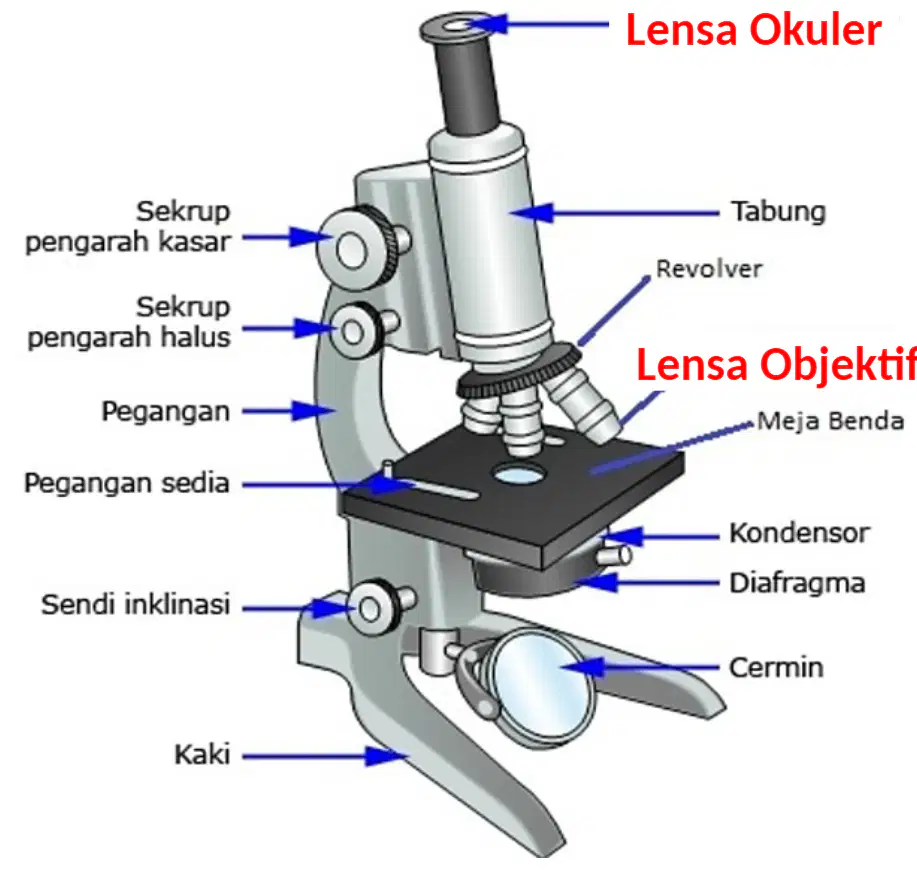
What is the function of the "Lensa Okuler" in a microscope?
To magnify the image formed by the objective lens
To hold the microscope steady
To adjust the amount of light
To support the stage
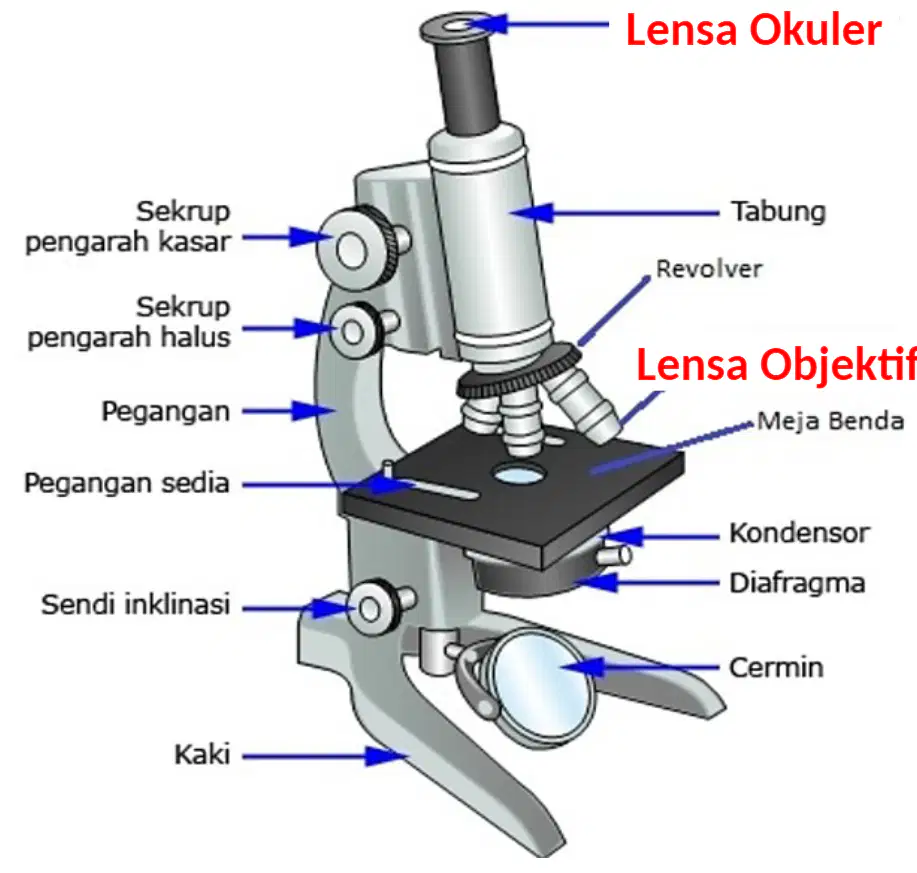
Which part of the microscope is used to move the stage up and down for focusing?
Sekrup pengarah kasar
Tabung
Kaki
Kondensor
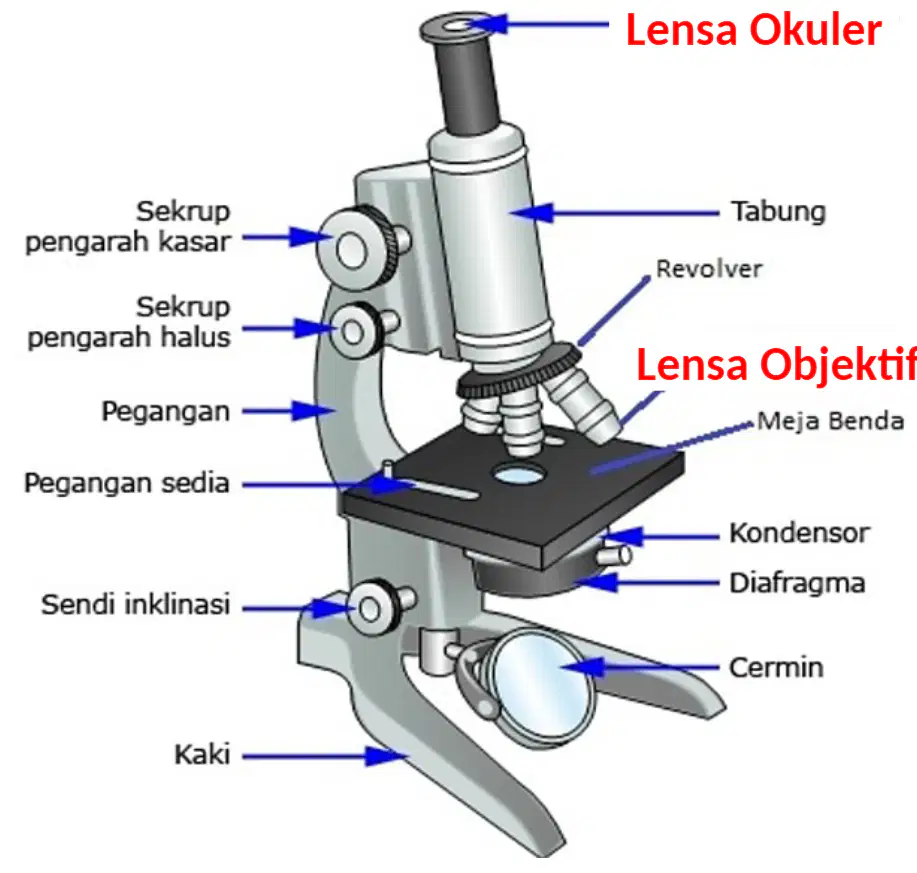
If you want to increase the magnification of the specimen, which part of the microscope should you adjust?
Lensa Objektif
Pegangan
Cermin
Diafragma
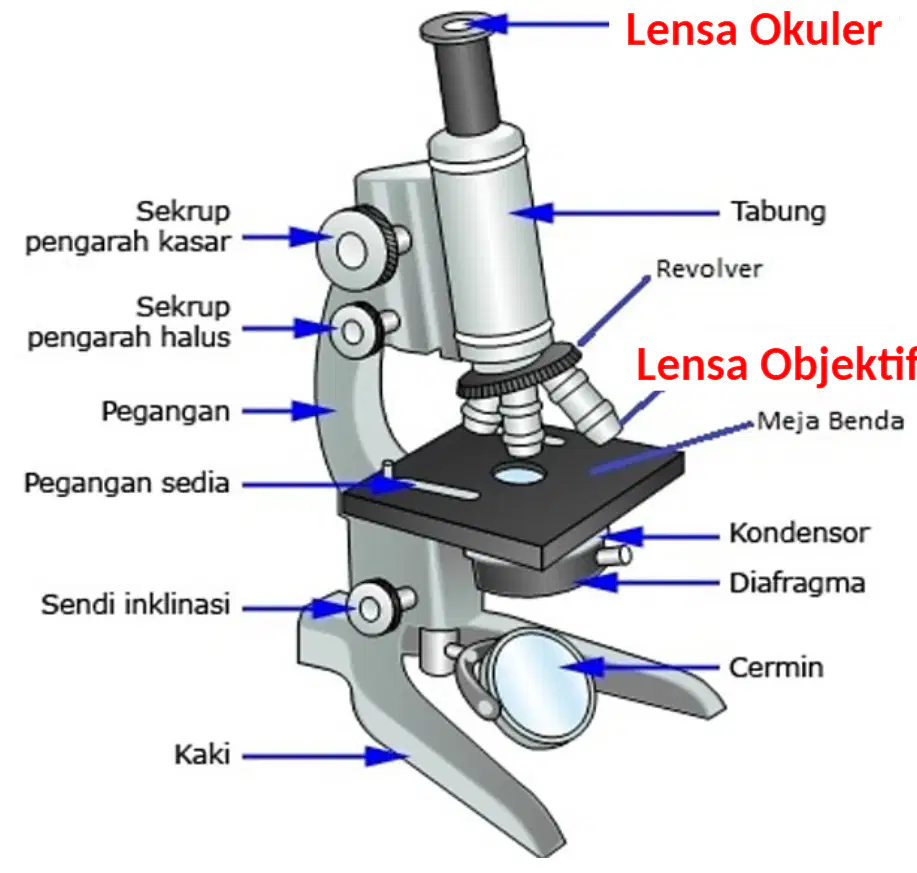
The function of the "Cermin" (mirror) and "Diafragma" (diaphragm) in a microscope is to:
The mirror reflects light up through the diaphragm, which controls the amount of light passing through the specimen, improving visibility.
The mirror magnifies the specimen, and the diaphragm holds the slide in place.
The mirror focuses the image, and the diaphragm changes the color of the light.
The mirror and diaphragm both support the microscope base.

What is the main function of a "sel induk" (stem cell) as shown in the diagram?
To produce energy for the body
To differentiate into various specialized cells
To transport oxygen in the blood
To digest food in the stomach

Which type of cell labeled in the diagram is responsible for transmitting nerve impulses?
Sel-sel otot
Sel-sel hati
C
Sel-sel usus halus
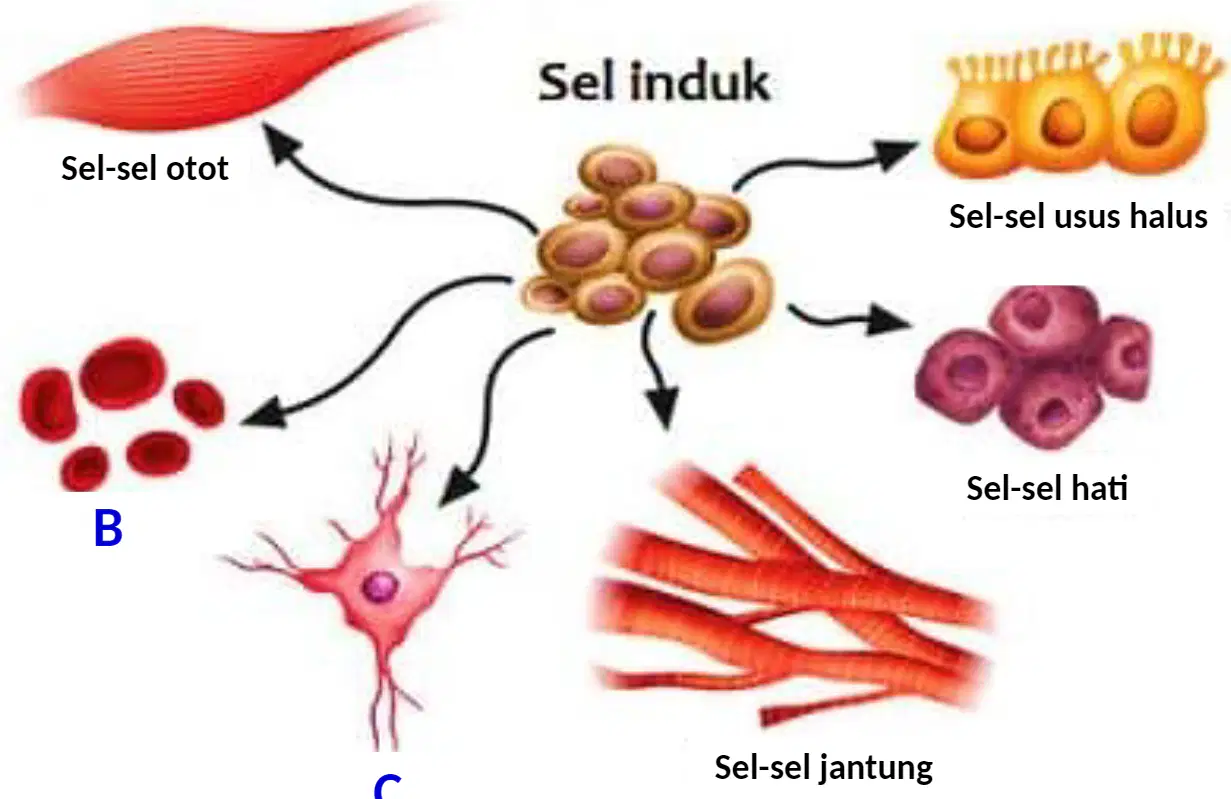
In the diagram, which cell type is labeled "B" and what is its primary function?
Muscle cell; contraction
Blood cell; transporting oxygen
Nerve cell; transmitting signals
Liver cell; detoxification

The importance of stem cells (sel induk) for the development and repair of tissues in the human body is due to their ability to:
Only become one type of cell
Help in digestion
Differentiate into many types of specialized cells needed for growth and repair
Produce hormones
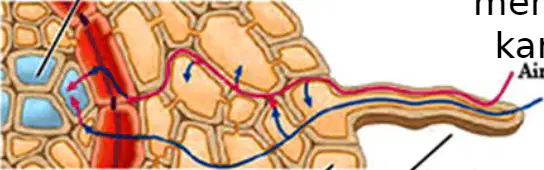
What is the main function of root hair cells (sel akar rambut) in plants?
To absorb water from the soil
To produce food through photosynthesis
To transport oxygen to the leaves
To protect the plant from insects
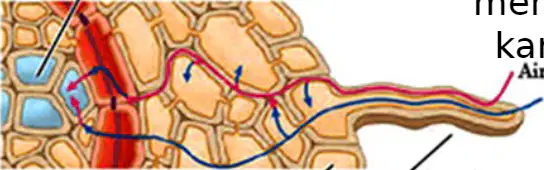
How does the specialization of root hair cells help plants?
It increases the surface area for water absorption
It decreases the amount of sunlight needed
It helps the plant grow taller
It produces more seeds
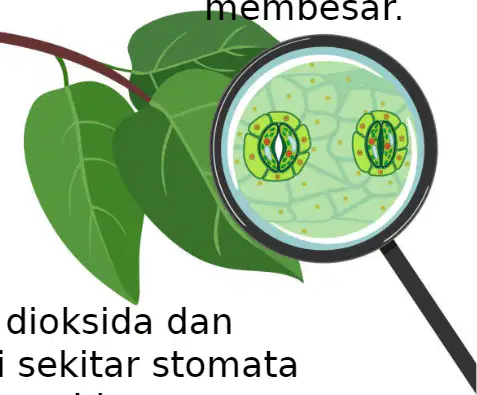
What is the main function of stomata in plant leaves?
To take in carbon dioxide and release oxygen
To absorb water from the soil
To store food for the plant
To protect the plant from herbivores
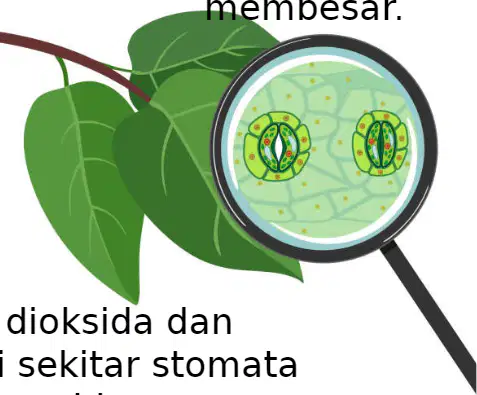
What role do guard cells play in the function of stomata?
They open and close the stomata to control water loss
They absorb sunlight for photosynthesis
They transport nutrients to the roots
They produce chlorophyll
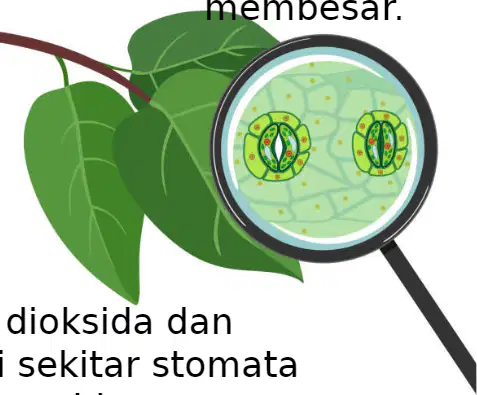
Why is it important for stomata to be able to open and close?
To reduce the amount of water lost from the plant
To increase the plant’s height
To attract pollinators
To produce more seeds
What is the main function of red blood cells in animals?
To transmit nerve impulses
To produce energy for movement
To bind and transport oxygen
To digest food
Why do mature red blood cells have a flattened shape?
Because they contain many mitochondria
Because they lose their nucleus to perform their function
Because they have a thick cell wall
Because they store fat
What is the purpose of the long shape of nerve cells?
To store nutrients
To increase oxygen absorption
To transmit information between sensory organs, the brain, and muscles
To produce hormones
Which part of the nerve cell is extended to help transmit information?
Nucleus
Cytoplasm
Mitochondria
Cell wall
Why do muscle cells have many nuclei and mitochondria?
To store water
To support their function as movement organs by producing energy
To absorb sunlight
To protect against diseases
How does the abundance of nuclei and mitochondria benefit muscle cells?
It helps them store fat
It allows them to produce the energy needed for various activities
It makes them resistant to infection
It increases their size

What is formed when cells with similar characteristics and functions work together?
Organ
Tissue
Organ system
Organism
Which of the following is the correct sequence of biological organization from simplest to most complex?
Organism → Organ system → Organ → Tissue → Cell
Cell → Tissue → Organ → Organ system → Organism
Tissue → Cell → Organ → Organ system → Organism
Organ system → Organ → Tissue → Cell → Organism
What is the main function of an organ system in a multicellular organism?
To produce energy for the cell
To carry out a specific function for the body by working together with other organs
To store genetic information
To protect the organism from predators
Why is specialization of cells important in multicellular organisms?
It allows all cells to perform the same function
It enables cells to adapt and perform specific functions efficiently
It prevents cells from dividing
It makes the organism unicellular
If a tissue is damaged in an organism, which of the following levels of organization is directly affected next?
Cell
Organ
Organ system
Organism
What is cell differentiation?
The process by which less specialized cells become more specialized cell types.
The process of cell division to produce identical cells.
The process of removing waste from cells.
The process of cells shrinking in size.
Which of the following is NOT a type of specialized cell that can result from stem cell differentiation?
Muscle cells
Red blood cells
Nerve cells
Bacterial cells
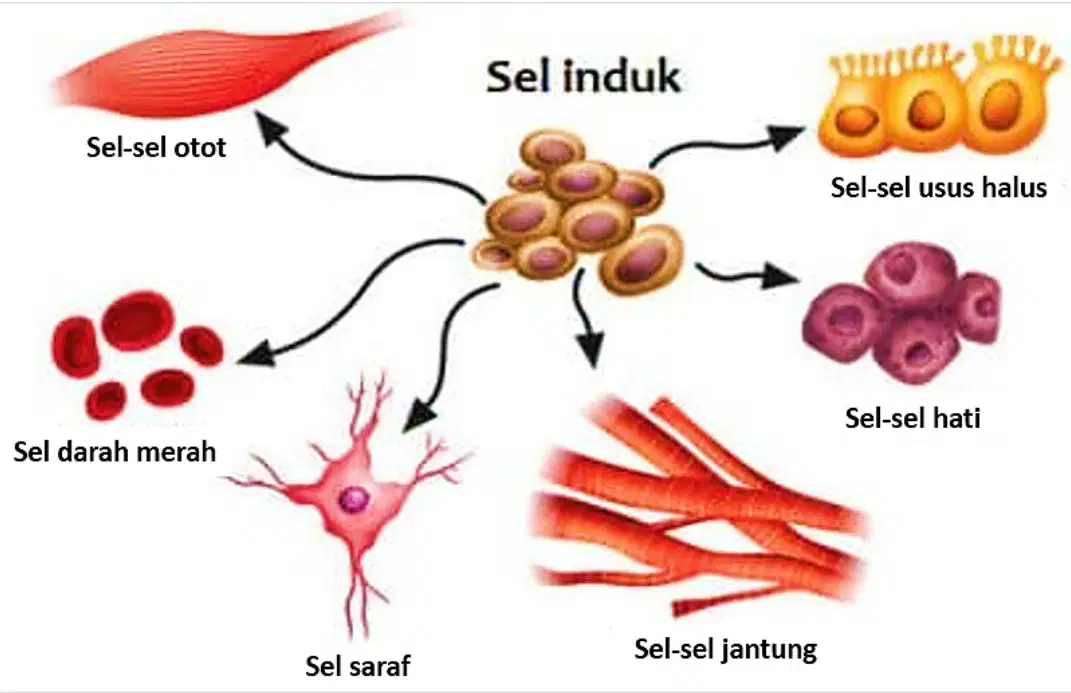
Based on the diagram, which cell type is NOT shown as a result of stem cell differentiation?
Muscle cells
Skin cells
Nerve cells
Liver cells
Why is cell differentiation important for the development of organs in multicellular organisms?
It allows cells to perform specialized functions necessary for organ formation.
It causes all cells to remain the same and undifferentiated.
It prevents cells from dividing.
It makes cells lose their ability to function.
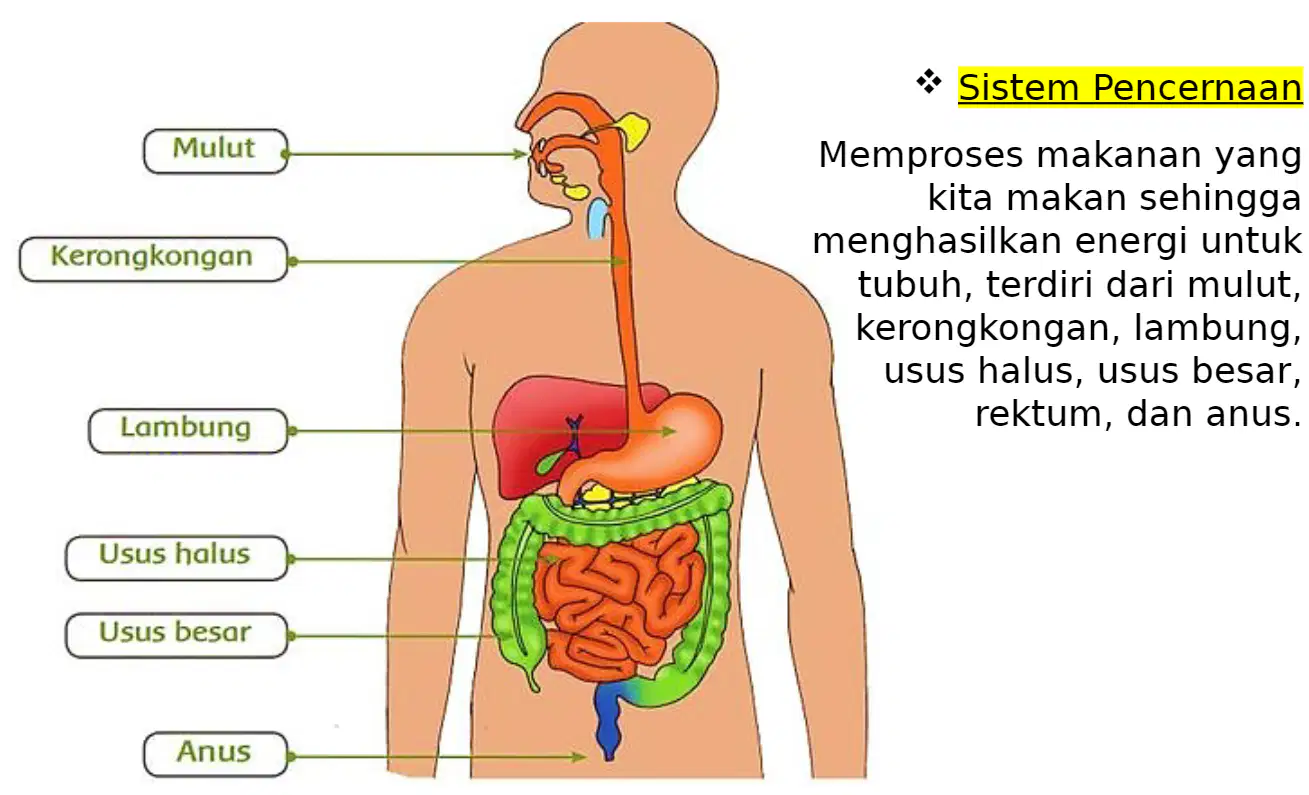
Which of the following is NOT a part of the human digestive system as described in the material?
Mouth
Esophagus
Heart
Stomach
What is the main function of the digestive system in the human body?
To pump blood throughout the body
To process food and produce energy for the body
To control movement and balance
To filter waste from the blood
Arrange the following parts of the digestive system in the correct order as food passes through them: mouth, esophagus, stomach, small intestine, large intestine, anus.
Mouth, esophagus, stomach, small intestine, large intestine, anus
Mouth, stomach, esophagus, small intestine, large intestine, anus
Esophagus, mouth, stomach, large intestine, small intestine, anus
Mouth, esophagus, small intestine, stomach, large intestine, anus
The digestive system is important for the human body because:
It helps us breathe and circulate blood.
It processes food to produce energy needed by the body.
It controls our thoughts and emotions.
It helps us move our muscles.
What is the main function of the circulatory system in the human body?
To digest food
To transport blood throughout the body
To control movement
To produce hormones
Which organs and components are part of the circulatory system?
Lungs, trachea, and bronchi
Stomach, intestines, and liver
Heart, blood vessels, and blood cells
Kidneys, bladder, and ureters
Why is the circulatory system important for the human body? (DoK Level 2)
It helps in breathing
It delivers oxygen and nutrients to all parts of the body
It stores energy
It controls body temperature only

