
 Worksheets
Forces Task Cards
Total questions: 20
Worksheet time: 10mins
Name
Class
Date
1.
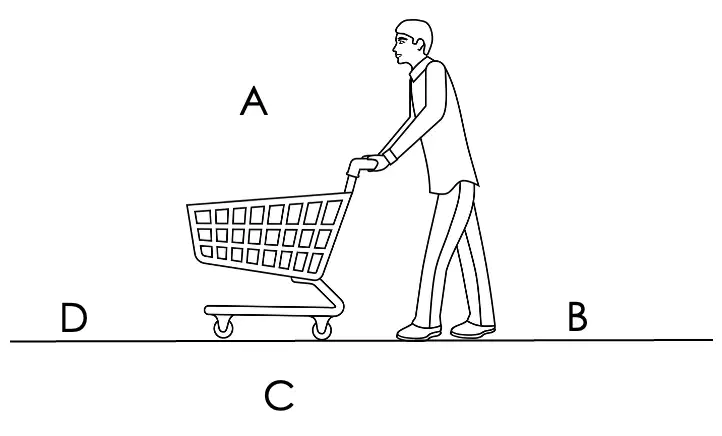
1. A man is pushing a shopping cart. Which letter represents the direction the cart will roll?
a)
A
b)
B
c)
C
d)
D
2.
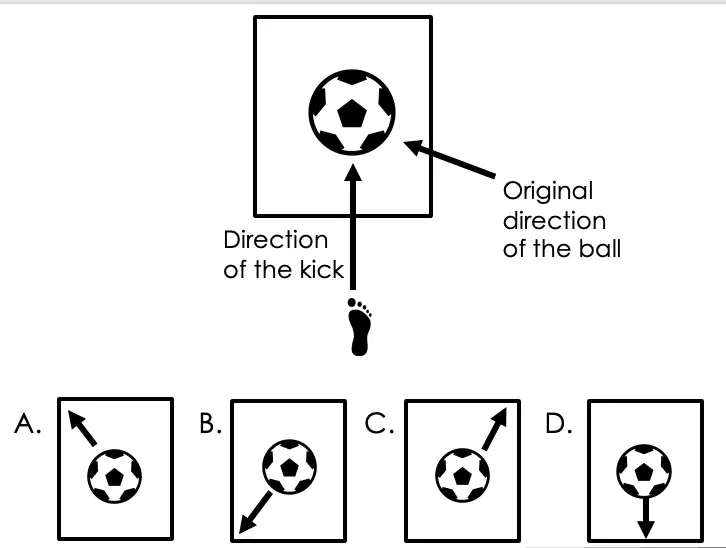
2. The diagram shows an overhead view of a ball rolling. A person gently kicks the ball in the direction shown.
In which direction will the ball most likely move after it has been kicked?
a)
A
b)
B
c)
C
d)
D
3.
3. Which of the following is a pulling force?
a)
A. Typing on a keyboard
b)
B. Opening a drawer
c)
C. Hitting a baseball
d)
D. Hammering a nail
4.
4. Which of the following is a pushing force?
a)
A. A magnet attracting paper clips
b)
B. Playing tug-of-war
c)
C. Kicking a ball
d)
D. Opening the refrigerator
5.
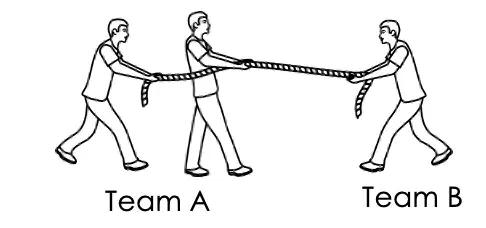
5. Students are playing tug-of-war.
If each student is equally strong, which team should win?
a)
A. A low amount of friction slows skate down.
b)
B. A high amount of friction speeds skates up.
c)
C. A high amount of friction slows skates down.
d)
D. A low amount of friction speeds skates up.
6.
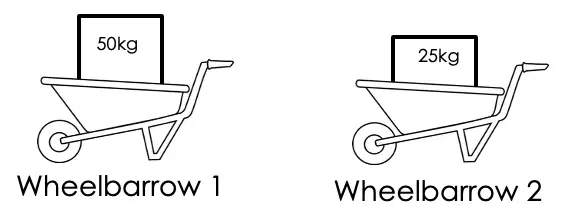
6. Which wheelbarrow would be most difficult to push?
a)
A. Wheelbarrow 1, because it has more mass.
b)
B. Wheelbarrow 2, because it has less mass.
c)
C. It is not possible to push either wheelbarrow.
d)
D. Both wheelbarrows would require the same amount of force to move.
7.
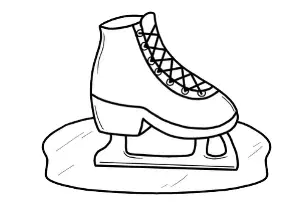
7. Why do ice skates glide easily on ice?
a)
A. A low amount of friction slows skate down.
b)
B. A high amount of friction speeds skates up.
c)
C. A high amount of friction slows skates down.
d)
D. A low amount of friction speeds skates up.
8.
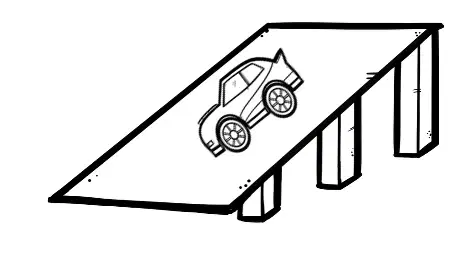
8. A ramp can make things easier to move. Ramps can also make objects move faster.
What force is responsible for making a ramp helpful?
a)
A. Friction
b)
B. Gravity
c)
C. Magnetism
d)
D. Electricity
9.
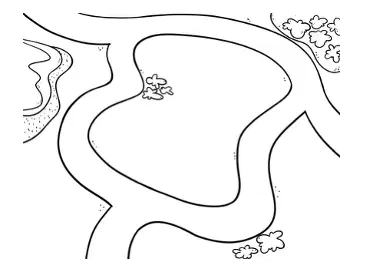
9. A park is installing a roller skating track.
Which surface would allow roller skaters to skate fastest?
a)
A. Rocky gravel
b)
B. Thick carpet
c)
C. Brushed concrete
d)
D. Polished glass
10.
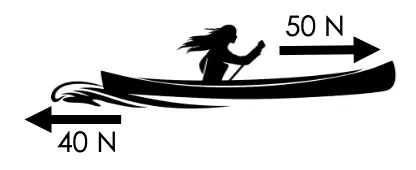
10. A canoer is paddling in the river in the opposite direction than the river is flowing. The canoer paddles forward with 50 Newtons of force while the water is flowing backward with 40 Newtons of force.
How will the canoe move?
a)
A. The canoe will will move forward.
b)
B. The canoe will move backward.
c)
C. The canoe will stop moving.
d)
D. The canoe will stop and then start moving.
11.
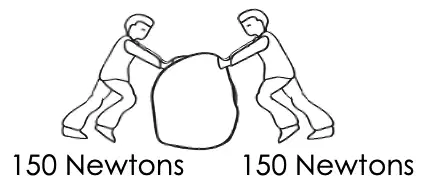
11. Two men stand on opposite sides of a large rock and push.
What will most likely happen?
a)
A. The rock will not move.
b)
B. The rock will roll to the right.
c)
C. The rock will roll to the left.
d)
D. The rock will sway back and forth.
12.
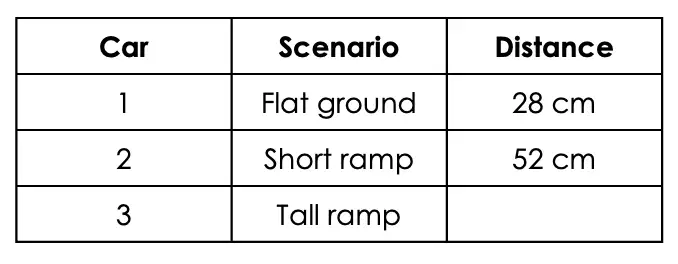
12. Students conducted an investigation using toy cars.
Which is a reasonable result for Car 3?
a)
A. 45 cm
b)
B. 72 cm
c)
C. 24 cm
d)
D. 39 cm
13.
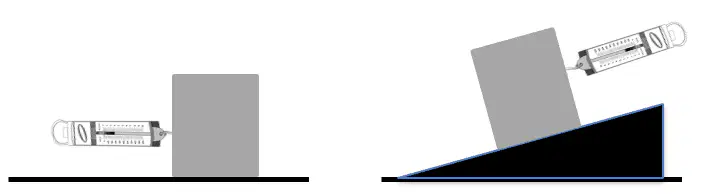
13. Students conduct an investigation to pull a box across flat ground and then up a ramp. The amount of force for each scenario is measured with a spring scale.
What question are they answering?
a)
A. Does a ramp increase or decrease the amount of force needed to move an object?
b)
B. Do ramps make things heavier?
c)
C. How does friction affect force?
d)
D. Will a ramp affect an objects’ physical properties?
14.
14. Which of the following investigations would best test the effects of friction on objects?
a)
A. Students drop objects from different heights to see how high they bounce.
b)
B. Students roll balls across different surfaces to see which surface allows the ball to roll longest.
c)
C. Students pull wagons with different-sized wheels to see which is fastest.
d)
D. Students pull objects of various masses down ramps to see which ramp height requires the least amount of force.
15.
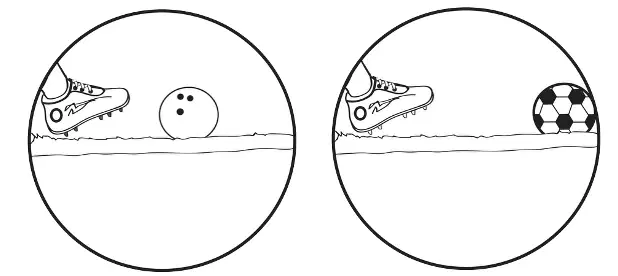
15. Using the same amount of force each time, a student gently kicks a bowling ball and a soccer ball.
What question might they be answering?
a)
A. Do objects with greater mass take more force to move?
b)
B. Do objects with greater mass take more friction to move?
c)
C. Does it take more mass to move objects with more force?
d)
D. How does friction affect force?
16.
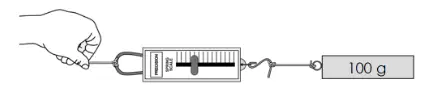
16. Students conduct an investigation to see how much force it takes to move a 100g block.
What should they ensure during the investigation?
a)
A. They should only conduct the investigation once.
b)
B. They should pull items with a different amount of force for each trial.
c)
C. They should stack a different amount of 100g blocks each time they try the investigation.
d)
D. They should conduct 5 trials to ensure data is reliable and valid.
17.
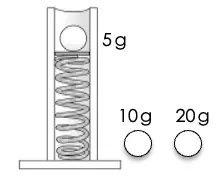
17. A student set up an investigation to launch spheres of different masses and recorded the height that each sphere reached.
What is the independent variable that the students are testing?
a)
A. Launch height
b)
B. Sphere mass
c)
C. Force of launch pull
d)
D. Time each sphere is in the air
18.

18. An inventor is working with new types of materials and wants to test their strength.
She drops a heavy metal ball from one meter above each material. She can improve the investigation by—
a)
A. adjusting the drop height
b)
B. only conducting one trial
c)
C. using a different amount of force for each drop
d)
D. ensuring the materials have the same thickness
19.
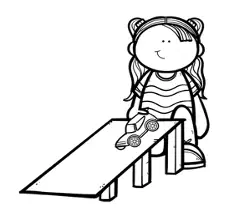
19. A student uses a ramp to roll a toy car across different surfaces.
What variable should NOT be controlled, or constant, during the investigation?
a)
A. The floor surface under the ramp
b)
B. The height of the ramp
c)
C. The toy car
d)
D. The method used to release the car
20.
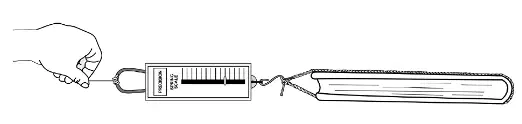
20. A student pulls a book with a spring scale.
Which of the following is NOT something that the student could do to increase the amount of force needed to move the book?
a)
A. Pulling the book up a ramp
b)
B. Pulling the book across a rougher surface
c)
C. Adding something heavy on top of the book
d)
D. Pulling the book down a ramp
100 %

