
Font size
 Worksheets
Introduction to Akhlaaq
Total questions: 97
Worksheet time: 49mins
According to the passage 'INTRODUCTION TO AKHLAAQ', what is Akhlaaq?
Akhlaaq is having good manners regarding our own conduct and regarding other people; it refers to character.
Akhlaaq is a type of traditional clothing worn on special occasions.
Akhlaaq is a festival celebrated at the end of the year.
Akhlaaq is a form of ancient architecture found in old cities.
Who was sent by Allah to perfect the character of mankind, according to the passage?
Nabee Muhammad
Nabee Musa
Nabee Isa
Nabee Nuh
A person with good Akhlaaq is always clean, respectful, honest, and caring.
True
False
What did Nabee Muhammad say about his purpose?
I have been sent to perfect good character.
I have been sent to gather wealth.
I have been sent to conquer lands.
I have been sent to perform miracles.
According to the passage, what will admit us into Jannah?
Fear of Allah and good manners will admit us into Jannah.
Wealth and power will admit us into Jannah.
Do Muslim manners change with time or go out of fashion, according to the passage?
No, Muslim manners do not change with time nor go out of fashion.
Yes, Muslim manners change frequently with time.
Fill in the blank: Knowledge helps us to understand our religion correctly. It prevents us from wrong beliefs and protects us from the control of ________.
Shaytaan
Angels
Prophets
Friends
Fill in the blank: I learn so that ______ becomes happy with me.
Allaah
My teacher
My parents
My friends
Fill in the blank: I learn so that I can become a better ______.
Muslim
Teacher
Doctor
Engineer
Fill in the blank: I learn so that I can understand my ______.
deen
car
school
phone
Fill in the blank: I learn so that I can defend my ______.
deen
car
house
money
Fill in the blank: I learn so that I can spread ______.
Islaam
Science
Wealth
Fame
Fill in the blank: I spend time in the company of the ______ and pious people.
learned
lazy
rude
ignorant
Fill in the blank: I spend time reading ______ books.
Islaamic
science
comic
history
Fill in the blank: I listen to ______ lectures.
Islaamic
Mathematics
Cooking
History
Fill in the blank: I am not ______ to ask questions.
shy
happy
tall
late
Why did the man make fun of Islaam in public?
Because he liked Islaam
Because no one could answer his three questions
Because he was a scholar
Because he was a boy
How old was the boy who accepted the man's challenge?
10 years old
8 years old
12 years old
15 years old
How did the boy react when the man laughed at him?
The boy patiently remained certain of his challenge.
The boy ran away in embarrassment.
The boy started to cry loudly.
The boy became angry and shouted back.
What did the disbeliever ask the small boy at the top of the hill?
What is your God doing right now?
Where are your parents?
Why are you alone here?
Do you want to come with me?
What was the little boy's reply after climbing the hill?
Oh Allaah Almighty! You be my witness in front of all these people. You have just made it so that a disbeliever be brought down to a low level, and that a Muslim be brought to a high level!
I am tired and want to go home now.
This hill is too high for anyone to climb easily.
What did the man count backwards from, as asked by the boy?
10
5
20
15
What comes before 0, according to the man in the story?
Nothing
One
Minus one
Infinity
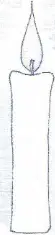
According to the passage, what did the boy use to explain the direction of Allah's nur?
A book
A candle
What was the man's final question to the boy in the passage?
In which direction is your Allaah facing?
What is your name?
How old are you?
Where do you live?
What did the boy say about the direction of Allah's nur?
Allah's nur goes in all directions. He is everywhere.
Allah's nur only goes to the east.
Allah's nur only goes to the west.
Allah's nur only goes upwards.
The man in the passage became a mureed (student) of the young boy after being impressed by his knowledge and spirituality.
True
False
What did the crowd cheer after the boy answered the man's question?
Allaah-hu-akbar!!!
Bravo!
Well done!
Congratulations!
We help the needy for the pleasure of _______.
Allaah
Wealth
Fame
People
We do not expect a _______ in return for our help.
favour
gift
punishment
reward
We do not remind people of our _______ to them.
favours
complaints
We hide the good we do and make known the good _______ to us.
done
given
lost
missed
We make _______ for the poor and needy.
dua
food
clothes
money
Allaah’s mercy comes down because of the orphans, the poor, the weak, and the _______.
needy
rich
powerful
famous
We do not only help when people come to our door, we also go out to look for the _______ and poor.
needy
wealthy
famous
healthy
We can help people in many different ways. We can help them with our money, our time, our knowledge, and our _______.
strength
anger
distance
silence
Allaah helps those who help their fellow brothers. Is this statement True or False?
True
False
In the city of Madeenah there lived a poor, blind woman. Who used to fetch her water, sweep the floors and milk her goat?
Sayiddina Umar
Sayiddina Ali
Sayiddina Abu Bakr
Sayiddina Uthman
During the time when Sayiddina Aboo Bakr was khalifa, what change did Sayiddina Umar notice at the house of the blind woman?
The work he used to do was already done when he arrived.
The house was empty and abandoned.
There were many visitors at the house.
The woman had moved to another city.
Who was the mysterious helper that did the work for the blind woman before Sayiddina Umar arrived?
The Khalifa himself (Sayiddina Aboo Bakr)
A servant from the market
A neighbor from the village
A merchant passing by
Sayiddina Aboo Bakr believed that the khalifa was not the ruler of the Muslims but rather their ________.
servant
leader
judge
teacher
Fill in the blank: Animals are created for the benefit of _______.
mankind
plants
machines
weather
Fill in the blank: We have to protect and care for the _______ of animals.
surroundings
food
toys
owners
Fill in the blank: We do not destroy the surroundings of animals, by chopping down trees or _______ our rivers, seas, and land.
polluting
decorating
measuring
navigating
Fill in the blank: We slaughter an animal in a kind manner using a _______ knife.
sharp
blunt
rusty
plastic
Fill in the blank: We do not kill animals for _______ or without a reason.
sport
food
medicine
protection
Fill in the blank: We do not _______ or flog our animals.
overwork
feed
pet
train
We are allowed to kill harmful animals, like snakes and scorpions.
True
False
We do not make animals fight against each other. Dog-fights and bull-fights are cruel sports.
True
False
We do not frighten or harm animals.
True
False
Animals are a sign of the might and power of Allaah.
True
False
In the story 'The Thirsty Dog', what did the woman use to fetch water from the well?
Her leather sock
A clay pot
A wooden bucket
A metal cup
Why did the woman feel sorry for the dog in the story 'The Thirsty Dog'?
Because the dog was very thirsty and licking the mud.
Because the dog was barking loudly at her.
Because the dog was chasing a cat.
Because the dog was lost in the forest.
What did Allaah do after the woman helped the thirsty dog in the story 'The Thirsty Dog'?
Allaah was pleased with the woman's deed and forgave her.
Allaah punished the woman for helping the dog.
Allaah ignored the woman's action.
Allaah made the woman thirsty instead.
We show kindness to people of all colour.
True
False
We show kindness to people of all religions.
True
False
We show kindness to the young and old.
True
False
We show kindness to man and woman.
True
False
We show kindness to animals.
True
False
We are most kind to our parents, relatives, and neighbours.
True
False
We treat those who work for us with respect and kindness.
True
False
We do not bully, laugh at other people, or call them with bad nicknames.
True
False
We remove harmful objects from the road.
True
False
Allaah is kind and He loves kindness.
True
False
Who was passing through a date garden and noticed a slave sitting in a corner?
Sayyidina Hasan
Sayyidina Umar
Sayyidina Ali
Sayyidina Abu Bakr
What did the slave do with his bread when he saw a hungry dog?
He shared his bread with the dog.
He threw the bread away.
He ate all the bread himself.
He hid the bread from the dog.
Why did the slave say he felt ashamed?
He felt ashamed to eat and drive the dog away.
He felt ashamed because he lost his way.
He felt ashamed because he was late.
He felt ashamed because he broke a vase.
What did Sayyidina Hasan do after he was pleased with the slave?
He bought the slave and the garden, set the slave free, and gave the garden to him as a gift.
He punished the slave for his mistake.
He sold the slave to another master.
He kept the slave and the garden for himself.
Sayyidina Hasan set the slave free and gave him the garden as a gift.
True
False
We are always first to make _______.
salaam
noise
excuses
mistakes
We allow our elders to enter first and if necessary, offer our _______ to them.
seat
book
pen
bag
We speak to our elders, teachers, and those who work for us with _______.
respect
anger
jealousy
carelessness
We do not address our elders or teachers by their _______ names.
first
last
middle
nick
We do not say anything that is _______.
disrespectful
beautiful
interesting
helpful
We do not laugh or make fun of our elders, teachers, or those who work for us.
True
False
We obey our elders in all that is _______.
lawful
difficult
unusual
impossible
We do not obey our elders if they command us to do what is against the teachings of _______.
Islaam
Science
Mathematics
History
We are most _______ to our parents. We may not even say 'Oof' to our parents. (Fill in the blank)
respectful
careless
rude
indifferent
If we respect our elders when we are young, people will _______ us when we are old. (Fill in the blank)
respect
ignore
fear
avoid
Who was Maamun?
The son of King Harun-Ar-Rashid
A servant in the palace
The teacher
The king himself
Why did the servants in the palace grow tired of Maamun?
He was hardworking
He was rude and spoiled
He was helpful
He was quiet
Fill in the blank: The teacher called for Maamun but he was busy _________.
playing and making fun
reading a book
doing his homework
sleeping in class
What did the teacher do when Maamun finally came?
Gave him a gift
Gave him a good hiding
Praised him
Sent him away
How did Maamun react to the punishment? Fill in the blank: Out of respect for the teacher, he did not cry aloud but ________ did flow from his eyes.
tears
smiles
words
laughter
According to the passage, who did Maamun not complain to after being punished?
He did not complain to anybody, not even to his father, the king.
He complained to his teacher.
He complained to his friends.
He complained to his mother.
When the teacher asked Maamun why he did not complain, what did Maamun say?
It was for my own good that you punished me.
I was afraid to speak up.
I did not know how to complain.
I thought you would not listen to me.
Maamun complained to his father, the king, after being punished.
True
False
We need to be truthful in our words, deeds, and intentions. We need to be honest even when playing or joking. Nabee (صلى الله عليه وسلم) cursed a person who speaks lies simply to make people laugh. He also said that: "When a person speaks lies, the angels go one mile away from him because of the bad smell that comes from him." (Tirmizee) Lies create hatred, and mistrust.
True
False
We need to be truthful in our words, deeds, and intentions. We need to be honest even when playing or joking. Nabee (صلى الله عليه وسلم) cursed a person who speaks lies simply to make people laugh. He also said that: "When a person speaks lies, the angels go one mile away from him because of the bad smell that comes from him." (Tirmizee) Lies create hatred, and mistrust.
True
False
We need to be truthful in our words, deeds, and intentions. We need to be honest even when playing or joking. Nabee (صلى الله عليه وسلم) cursed a person who speaks lies simply to make people laugh. He also said that: "When a person speaks lies, the angels go one mile away from him because of the bad smell that comes from him." (Tirmizee) Lies create hatred, and mistrust.
True
False
We need to be truthful in our words, deeds, and intentions. We need to be honest even when playing or joking. Nabee (صلى الله عليه وسلم) cursed a person who speaks lies simply to make people laugh. He also said that: "When a person speaks lies, the angels go one mile away from him because of the bad smell that comes from him." (Tirmizee) Lies create hatred, and mistrust.
True
False
We need to be truthful in our words, deeds, and intentions. We need to be honest even when playing or joking. Nabee (صلى الله عليه وسلم) cursed a person who speaks lies simply to make people laugh. He also said that: "When a person speaks lies, the angels go one mile away from him because of the bad smell that comes from him." (Tirmizee) Lies create hatred, and mistrust.
True
False
We need to be truthful in our words, deeds, and intentions. We need to be honest even when playing or joking. Nabee (صلى الله عليه وسلم) cursed a person who speaks lies simply to make people laugh. He also said that: "When a person speaks lies, the angels go one mile away from him because of the bad smell that comes from him." (Tirmizee) Lies create hatred, and mistrust.
True
False
We need to be truthful in our words, deeds, and intentions. We need to be honest even when playing or joking. Nabee (صلى الله عليه وسلم) cursed a person who speaks lies simply to make people laugh. He also said that: "When a person speaks lies, the angels go one mile away from him because of the bad smell that comes from him." (Tirmizee) Lies create hatred, and mistrust.
True
False
We need to be truthful in our words, deeds, and intentions. We need to be honest even when playing or joking. Nabee (صلى الله عليه وسلم) cursed a person who speaks lies simply to make people laugh. He also said that: "When a person speaks lies, the angels go one mile away from him because of the bad smell that comes from him." (Tirmizee) Lies create hatred, and mistrust.
True
False
Always encourage your friends to be honest.
True
False
Truthfulness leads a man to good actions, and falsehood leads him to sin.
True
False

