
 Worksheets
Atomapalooza
Total questions: 35
Worksheet time: 19mins
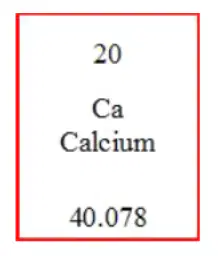
How many electrons would be in the ion Ca2+?
2
10
18
20
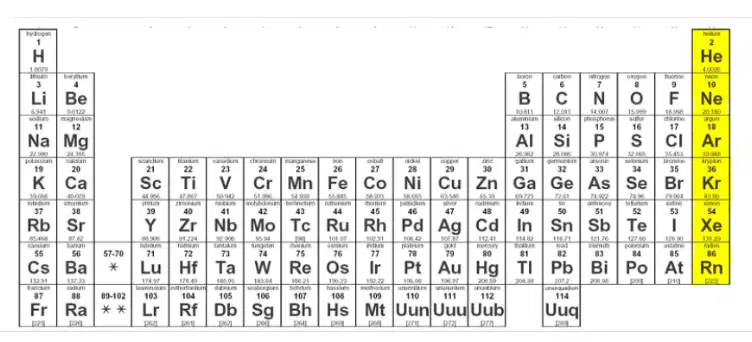
The highlighted section of the periodic table is known by what TWO names?
Periods and Rows
Families and Groups
Columns and Rows
Buttons and Bows
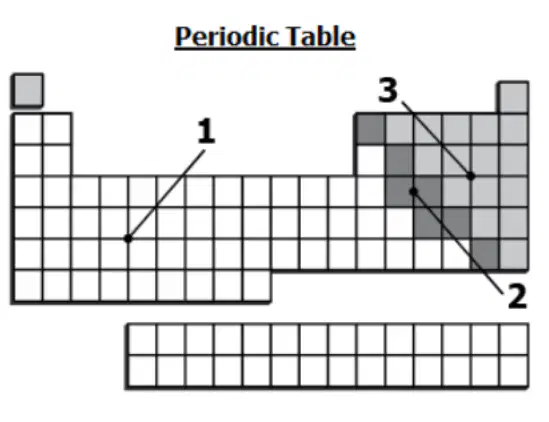
The area of the Periodic Table labeled 1 would be the __________.
Nonmetals
Metals
Metalloides
Actinoids
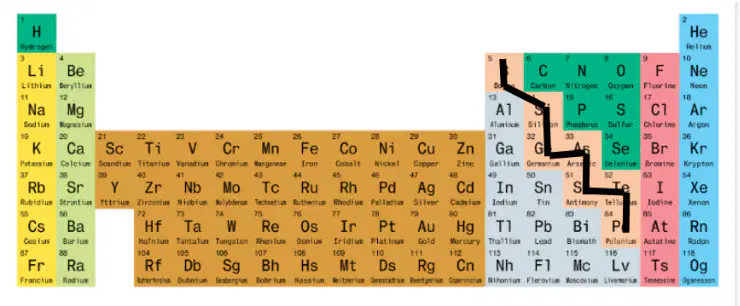
The elements touched by the black "stair step" line are called the __________.
Alkaline Earth metals
Alkali Metals
Metalloids
Transition metals
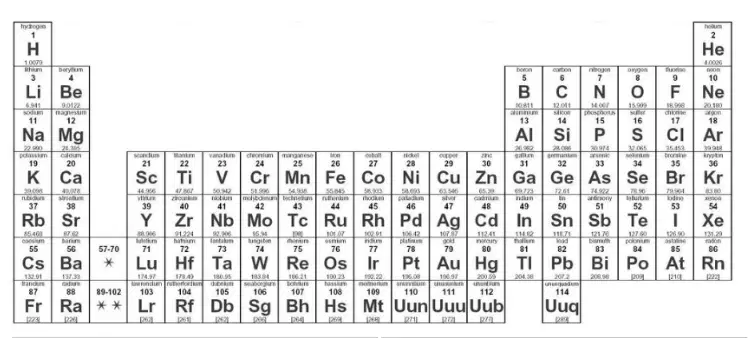
Identify the Nonmetals.
Carbon (C), Oxygen (O), Fluorine (F)
Lithium (Li), Calcium (Ca), Copper (Cu)
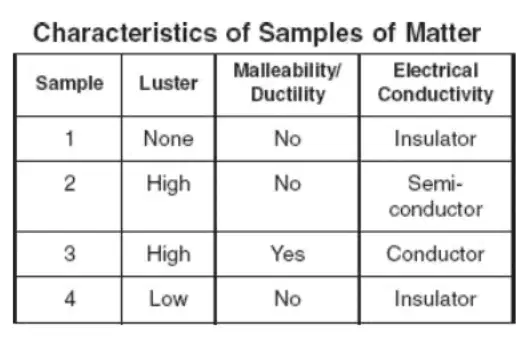
According to the data table, which sample of matter is most likely a metal?
Sample 4
Sample 3
Sample 2
Sample 1
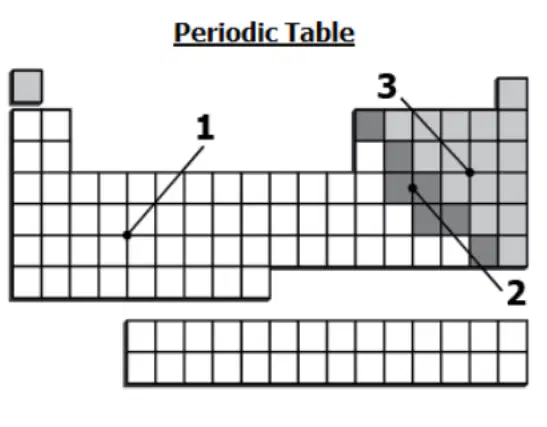
The area on the periodic table labeled 2 would be the _________.
Metals
Nonmetals
Metalloides
Actinoides
Identify the Metals.
Carbon (C), Oxygen (O), Fluorine (F)
Lithium (Li), Calcium (Ca), Copper (Cu)
Most of the elements on the periodic table are _________
Metals
Nonmetals
Metalloids
The elements found by the "stair steps" on the periodic table would be the __________.
Metals
Nonmetals
Metalloids
The elements that reside on the right side of the "stair step" line of the periodic table would be the __________.
Metals
Nonmetals
Metalloids
Good at losing electrons.
Metals
Nonmetals
Metalloids
Good at gaining electrons.
Metals
Nonmetals
Metalloids
Can gain or lose electrons.
Metals
Nonmetals
Metalloids
An atom of which noble gas contains 48 Neutrons?
Helium (He)
Neon (Ne)
Argon (Ar)
Krypton (Kr)
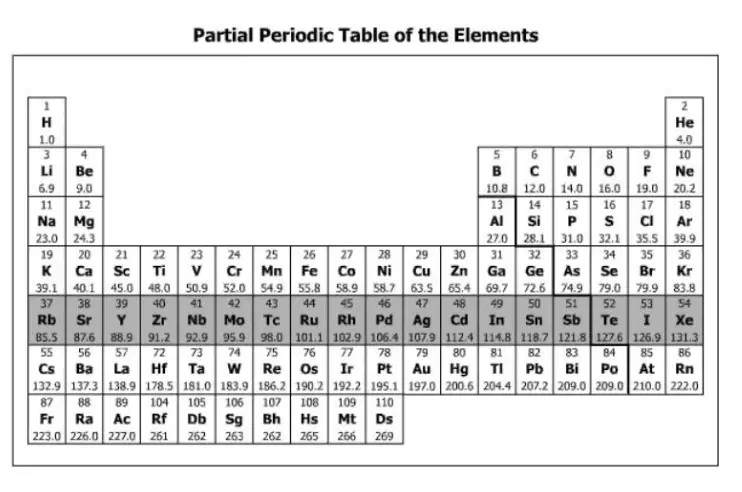
The shaded row in the table above is called a __________.
column
family
group
period
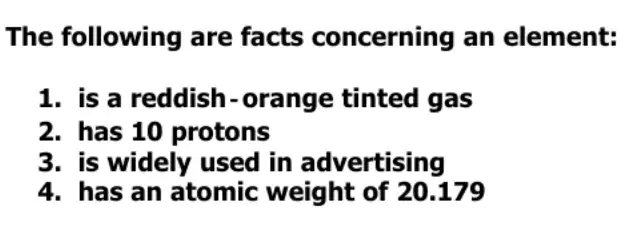
From the facts listed above, what can you infer is the identity of the element?
Helium
Neon
Argon
Hydrogen
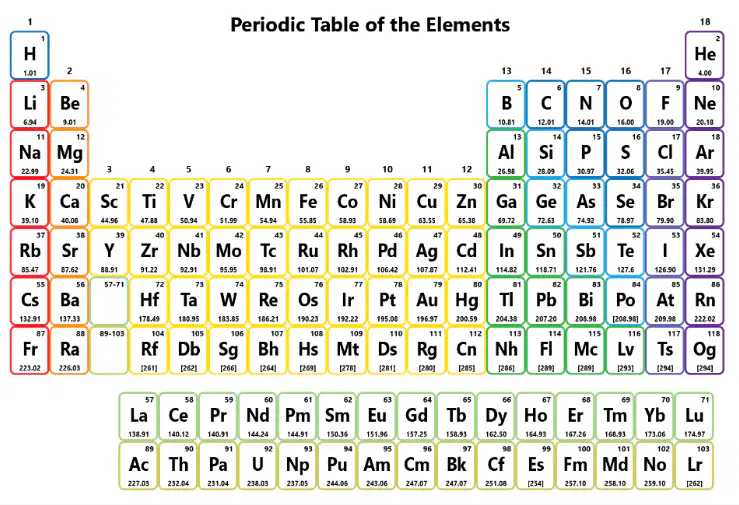
Referring to the periodic table, what is the average atomic mass of Oxygen?
6
14
40
16
A student receives a model of an atom that contains seven protons, seven neutrons, and seven electrons, and has an atomic mass of fourteen. What procedure can the student use to identify the atom?
The student can reference the periodic table and find the element has the atom number of 7 which represents the number of neutrons in the atom.
The student can reference the periodic table and finds that the element has the atomic number of 14 which represents the number of protons in the atom.
The student can reference the periodic table and finds that the element has the atomic number of fourteen which represents the number of electrons and neutrons in the atom
The student can reference that periodic table and finds that the element has the atomic number of 7 which represents the number of protons.
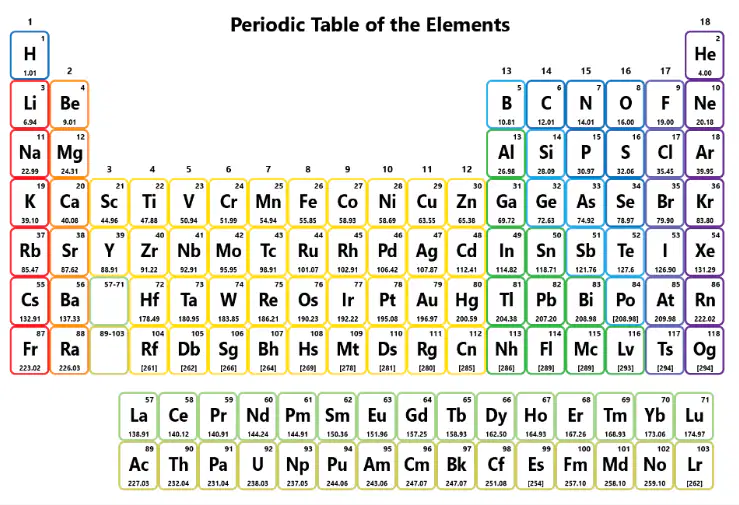
What is the chemical symbol for Magnesium?
Hg
Mg
Mo
H
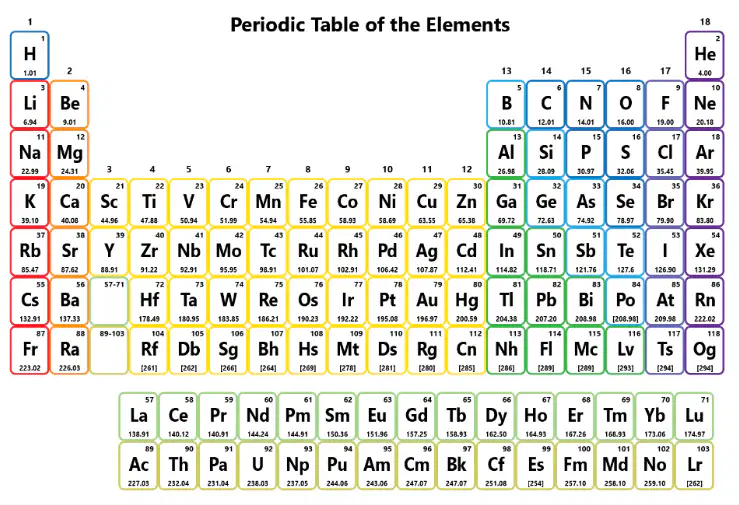
According to the periodic table, what is true about Neon?
Neon is a very reactive metal.
Neon will not bond with other elements.
Neon is a very reactive nonmetal.
Neon has two valence electrons.
The atomic number of an element that has 6 protons and 6 neutrons is _________.
9
12
6
3
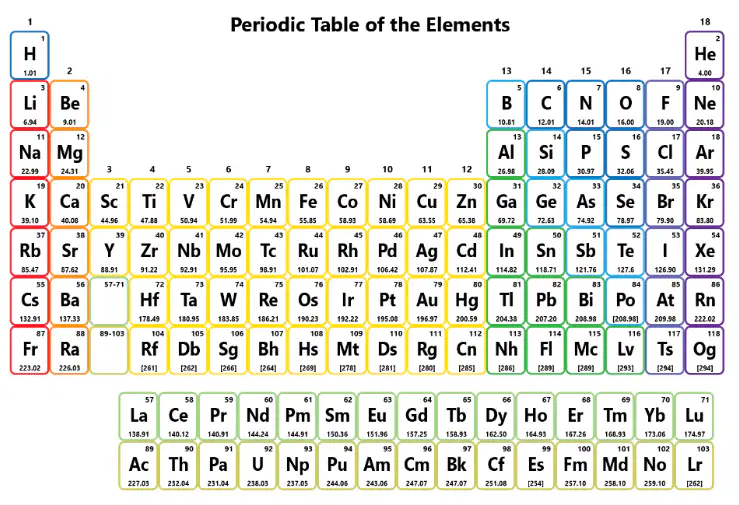
Referring to the periodic table, the element sulfur is most like the element _________.
phosphorus (P)
Chlorine (Cl)
Calcium (Ca)
Oxygen (O)
The nucleus of an atom has an overall _______ charge.
positive
negative
static
neutral
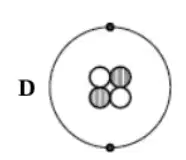
Assuming these atoms are stable with no charge, which atom has less protons (grey) than neutrons (white)
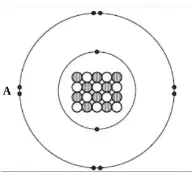
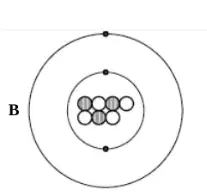
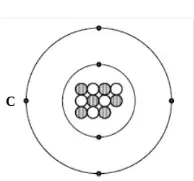
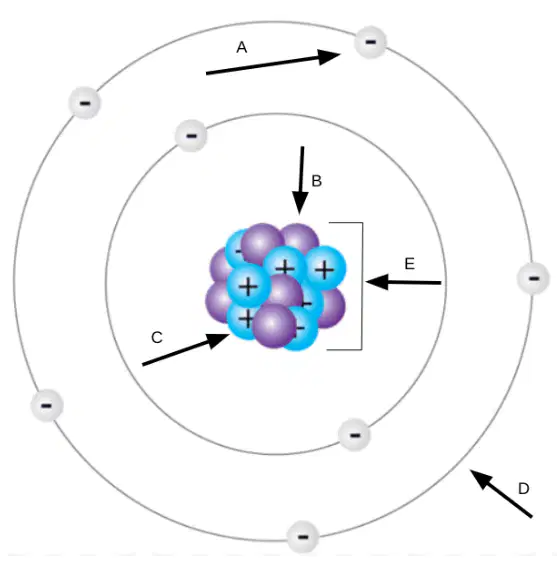
The letter "A" would represent which part of the atom?
The nucleus
The proton
The electron
An energy level
The neutron
The letter "B" would represent which part of the atom?
The nucleus
The proton
The electron
An energy level
The neutron
The letter "C" would represent which part of the atom?
The nucleus
The proton
The electron
An energy level
The neutron
The letter "D" would represent which part of the atom?
The nucleus
The proton
The electron
An energy level
The neutron
The letter "E" would represent which part of the atom?
The nucleus
The proton
The electron
An energy level
The neutron
Where is most of the mass of an atom located?
In the electron
evenly spread out throughout the atom
in the nucleus
in the electron cloud
The electron has a ___________.
positive
negative
static
neutral
The positively charged particle in the center of the atom is called the _________.
proton
electron
neutron
quark
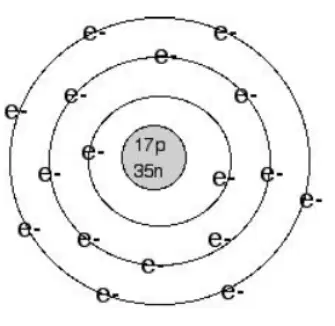
Analyze the following diagram of a neutral atom. The name of the atom is _____________.
Carbon
Chlorine
Argon
Sodium
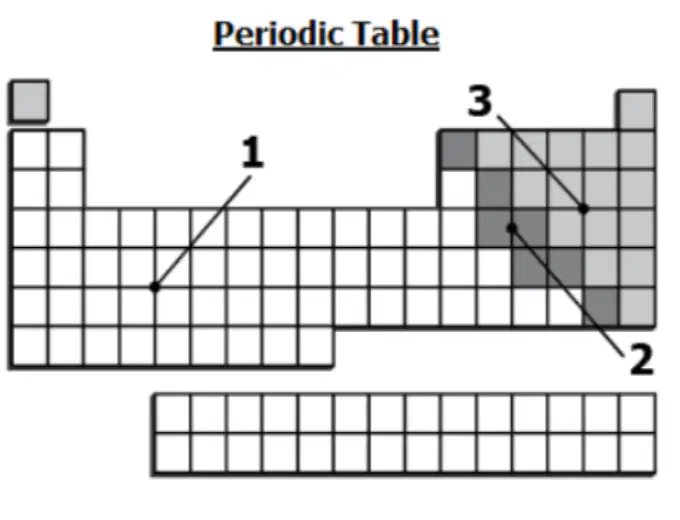
The area labeled "3" on the periodic table would be called
Metals
nonmetals
metalloids
Actinoides

