
 Worksheets
intro mod phy ch 1
Total questions: 61
Worksheet time: 31mins
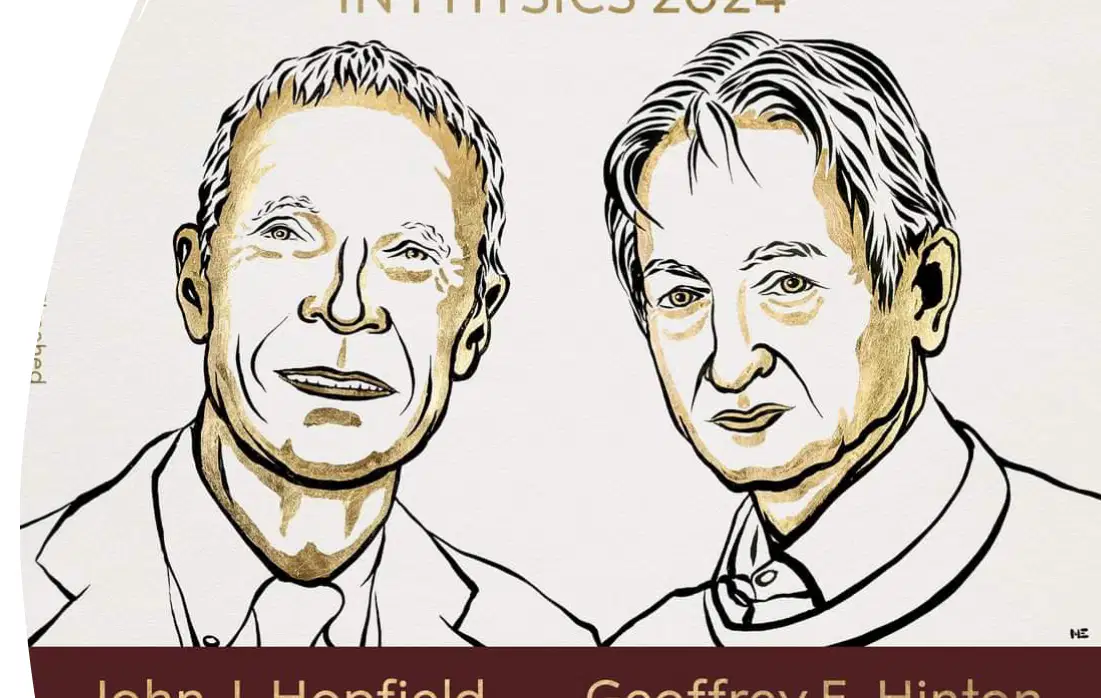
Who were awarded the 2024 Nobel Prize in Physics?
Albert Einstein and Niels Bohr
John J. Hopfield and Geoffrey E. Hinton
Marie Curie and Richard Feynman
Isaac Newton and Stephen Hawking
The 2024 Nobel Prize in Physics was awarded for foundational discoveries and inventions that enable machine learning with artificial neural networks.
True
False
Fill in the blank: John J. Hopfield created a structure that can store and ______ information.
reconstruct
delete
compress
encrypt
Which field's tools did John Hopfield and Geoffrey Hinton use to construct methods for machine learning?
Chemistry
Biology
Physics
Mathematics
Although computers cannot think, machines can now mimic functions such as memory and learning.
True
False
Fill in the blank: In this chapter, you will learn a brief introduction about ______ and Modern Physics.
Classical
Quantum
Nuclear
Astro
Fill in the blank: In this chapter, you will learn a brief introduction about ______ Mechanics.
Newtonian
Quantum
Statistical
Relativistic
Fill in the blank: In this chapter, you will learn a brief introduction about Max Planck and ______ body Radiation.
Black
White
Red
Blue
Fill in the blank: In this chapter, you will learn a brief introduction about Albert Einstein and the Theory of ______.
Relativity
Evolution
Gravity
Quantum Mechanics
Fill in the blank: In this chapter, you will learn a brief introduction about Werner Heisenberg and the Principle of ______.
Uncertainty
Relativity
Superposition
Exclusion
Fill in the blank: In this chapter, you will learn a brief introduction about Neils Bohr and ______-wave duality.
particle
energy
magnetic
electric
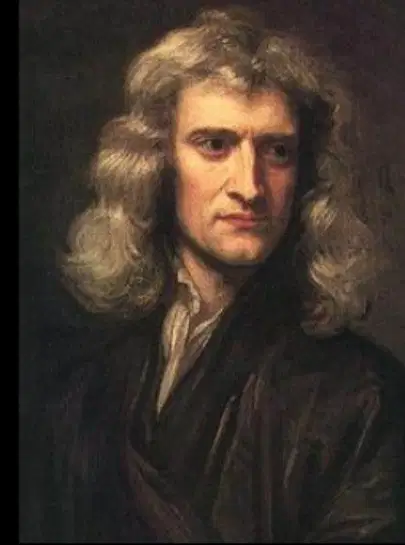
Who formulated the mathematics for the universal law of gravitation?
Albert Einstein
Sir Isaac Newton
Galileo Galilei
Nikola Tesla
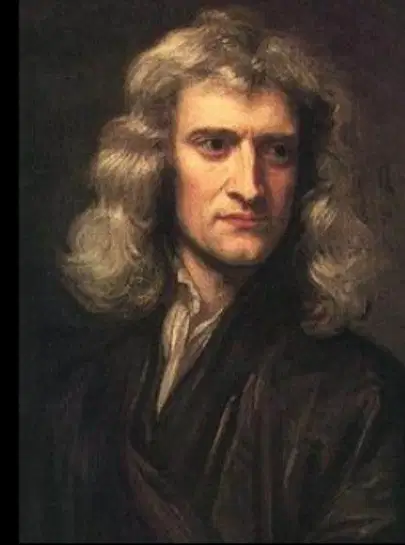
Fill in the blank: Sir Isaac Newton lived from ____ to ____.
1642 to 1727
1564 to 1642
1701 to 1776
1620 to 1687
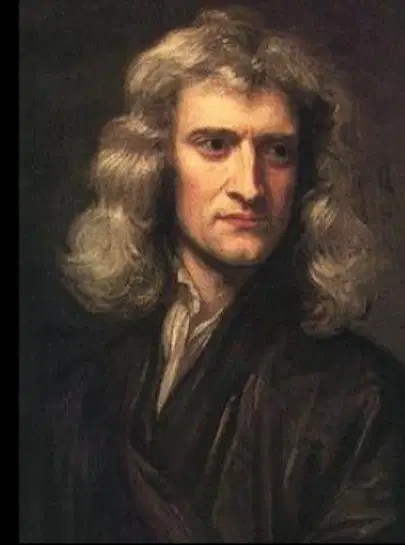
What did Sir Isaac Newton determine about light?
He determined the nature of light.
He discovered the law of gravity in light.
He proved light is a form of sound.
He invented the light bulb.
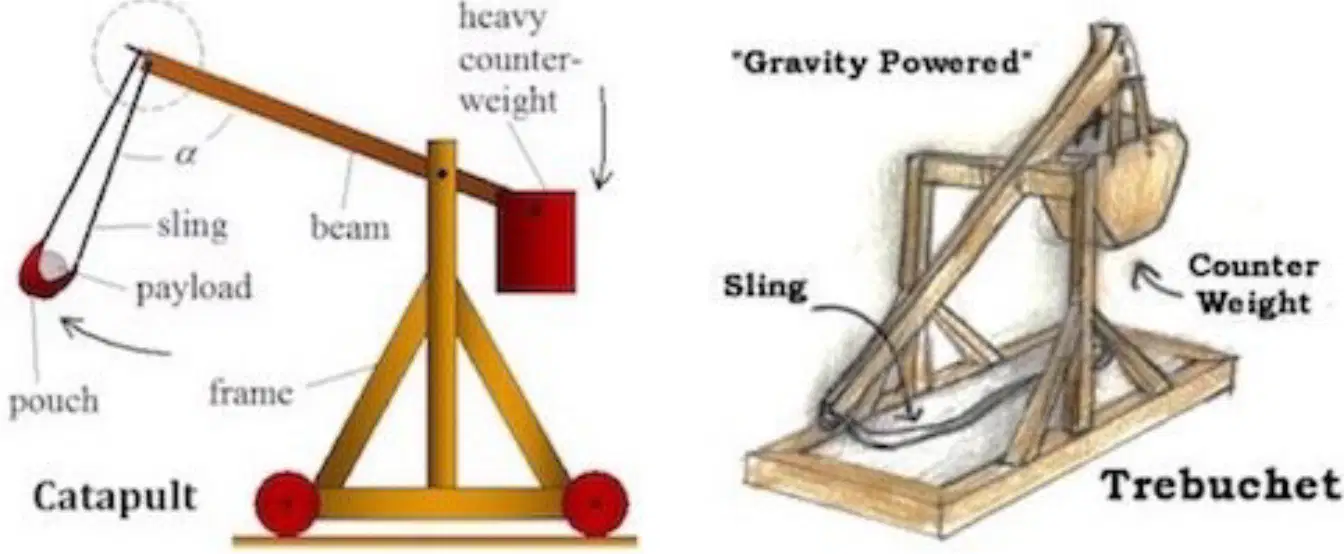
Refer to the diagram of the catapult. Which part is responsible for holding the payload before launch?
Beam
Sling
Frame
Pouch

What provides the force needed to launch the projectile?
Spring
Counter Weight
Beam
Sling

Fill in the blank: The catapult uses a ______ to launch its payload.
sling
wheel
rope
lever
Fill in the blank: According to Newton's first law of motion, a body remains in a state of rest or continues its motion in a straight line unless ________ to change by forces impressed on it.
impelled
rotated
expanded
compressed
Fill in the blank: According to Newton's second law of motion, the change in a motion of a body is proportional to the ________ acting upon it.
forces
velocity
distance
mass
Fill in the blank: According to Newton's third law of motion, for every action, there is an ________ and opposite reaction.
equal
unequal
delayed
random
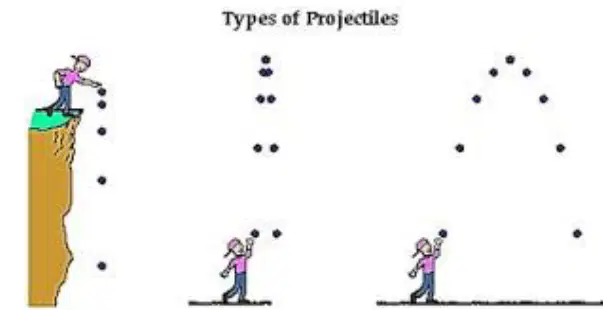
Look at the diagram labeled 'Types of Projectiles.' Which type of motion is shown in the rightmost part of the diagram?
Vertical motion
Horizontal motion
Parabolic motion
Circular motion
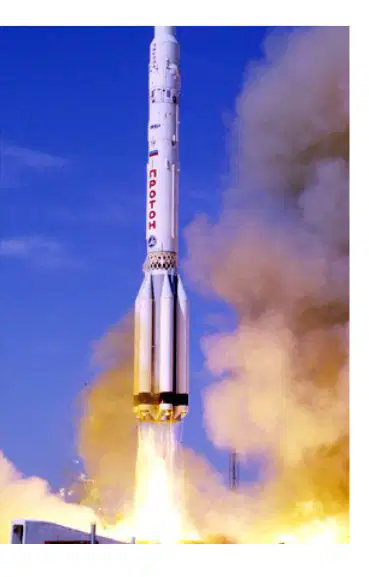
The motion of the rocket shown in the image can be explained using which law of motion?
Newton's First Law of Motion
Newton's Second Law of Motion
Newton's Third Law of Motion
Law of Universal Gravitation
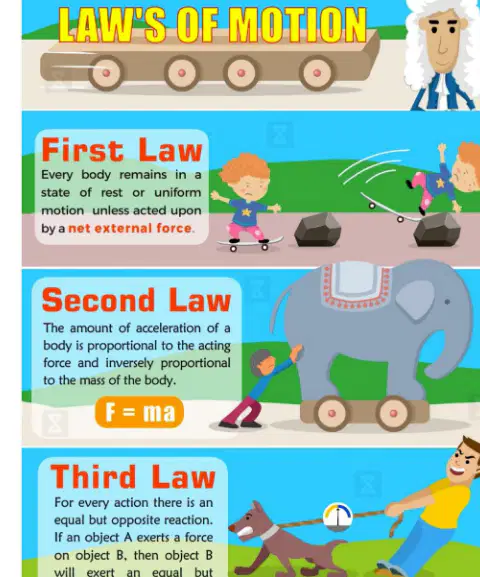
State Newton's First Law of Motion as shown in the image: Every body remains in a state of rest or uniform motion unless acted upon by a ________.
net external force
constant speed
balanced force
gravitational pull
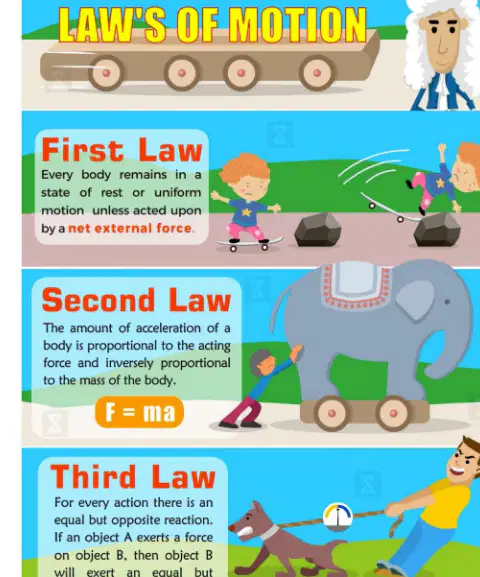
According to Newton's Second Law of Motion, the amount of acceleration of a body is proportional to the acting force and inversely proportional to the ________ of the body.
mass
velocity
temperature
volume

Newton's Third Law of Motion states: For every action, there is an equal but opposite ________.
reaction
force
energy
motion
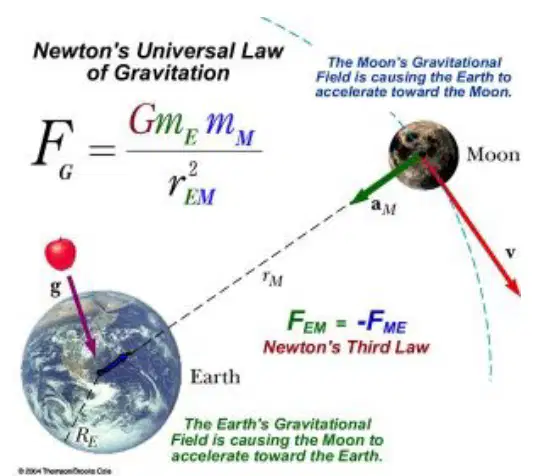
According to Newton's Universal Law of Gravitation, what is the formula for the gravitational force between two masses?
F=m1∗m2/r2
F=G∗m1∗m2/r2
F=G∗m1∗m2∗r2
F=m1⋅m2⋅r2G
The force of gravity is always attractive and acts along the line joining the centers of mass of the two masses.
True
False
According to Newton's third law, the forces on the two masses are ______ in size but ______ in direction.
equal; opposite
unequal; same
equal; same
unequal; opposite

The diagram shows two objects. The gravitational field of which object is causing the other to accelerate toward it?
The larger object
The smaller object
Both objects equally
Neither object
Fill in the blank: Post-Newtonian developments in physics emerged because classical physical descriptions of phenomena are ________.
lacking
universal
complete
irrelevant
Classical physics could not accurately explain which of the following phenomena?
Gravity
Black body radiation
Electromagnetism
Thermodynamics
Fill in the blank: Scientists sought a more accurate, '_______' description of physics.
modern
ancient
fictional
random

According to the diagram, which theory applies to objects that are far larger than 10−9 m and move at speeds far less than 3×10⁸ m/s?
A) Classical Mechanics
B) Relativistic Mechanics
C) Quantum Mechanics
D) Quantum Field Theory

According to the diagram, which theory applies to objects that are far larger than 10−9 m and move at speeds comparable to 3×10⁸ m/s?
Classical Mechanics
Relativistic Mechanics
Quantum Mechanics
Quantum Field Theory

According to the diagram, which theory applies to objects that are near or less than 10−9 m and move at speeds far less than 3×10⁸ m/s?
Classical Mechanics
Relativistic Mechanics
Quantum Mechanics
Quantum Field Theory

According to the diagram, which theory applies to objects that are near or less than 10−9 m and move at speeds comparable to 3×10⁸ m/s?
Classical Mechanics
Relativistic Mechanics
Quantum Mechanics
Quantum Field Theory
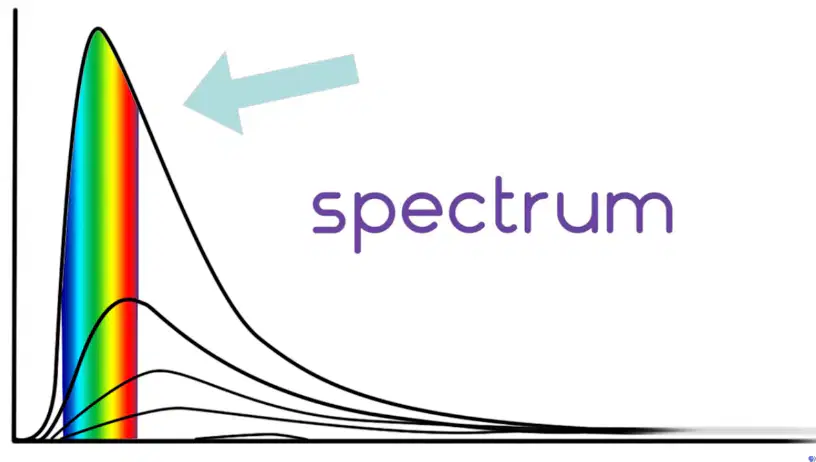
Refer to the diagram labeled 'spectrum' in the Blackbody Radiation slide. What does the diagram represent?
The absorption of light by a blackbody
The emission spectrum of a blackbody at different temperatures
The reflection of light from a surface
The transmission of light through a medium
According to early stage understanding proposed by Rayleigh-Jeans, what did people think caused blackbody radiation?
Chemical reactions
Vibration of the body
Magnetic fields
Electric currents
As the body vibrates more (increase in temperature), more ______ will be emitted (Object glowing).
radiation
sound
water
electricity
What is a blackbody in the context of radiation?
An object that only reflects radiation
An idealized body that only absorbs and emits, but does not reflect radiation
An object that only emits radiation
An object that only absorbs radiation
The emission of light/radiation depends only on the system and not upon the type of radiation which is incident upon it.
True
False
Fill in the blank: The spectrum of wavelengths of blackbody radiation is _______ related to intensity that depends only on the body's temperature.
inversely
directly
randomly
not
As the temperature decreases, the peak of the black-body radiation curve moves to _______ intensities and _______ wavelengths.
lower; longer
higher; shorter
higher; longer
lower; shorter
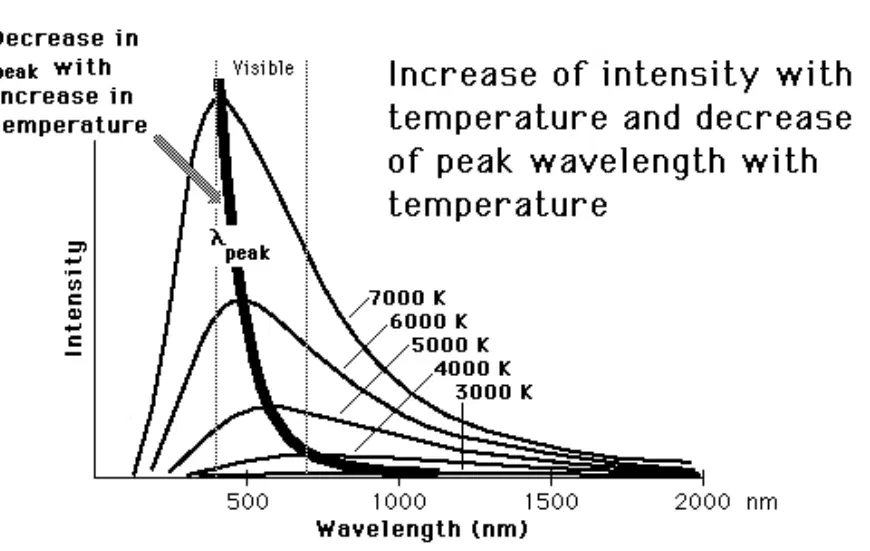
Based on the diagram, what happens to the peak wavelength as the temperature increases?
It increases
It decreases
It remains the same
It fluctuates randomly
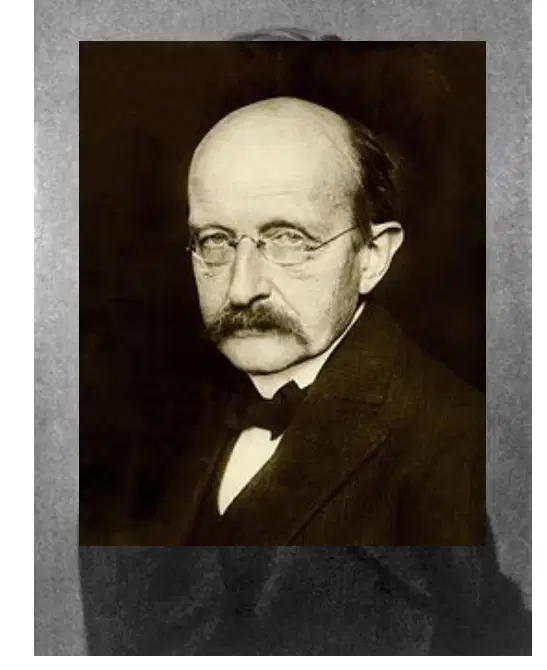
Who is the scientist shown in the image?
Max Planck
Albert Einstein
Niels Bohr
Erwin Schrödinger
What is the equation for the energy of a photon as shown in the image?
E=hv
E=mc2
E=hf2
E=mv2
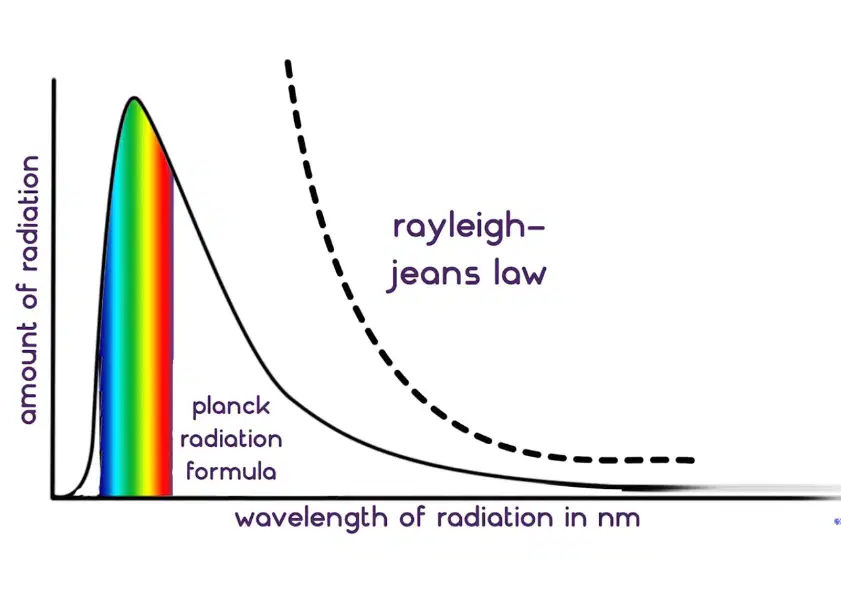
Which law, according to the graph, accurately describes the amount of radiation at short wavelengths?
Planck radiation formula
Rayleigh-Jeans law

Who is considered by some to be the father of quantum mechanics?
Albert Einstein
Max Planck
Isaac Newton
Niels Bohr
Max Planck is known for his initial work on the problem of ________ radiation.
black body
ultraviolet
infrared
microwave
Which constant is associated with Max Planck?
Avogadro's constant
Planck's constant
Boltzmann constant
Faraday constant
True or False: All physicists cite Max Planck as the founder of quantum mechanics.
True
False
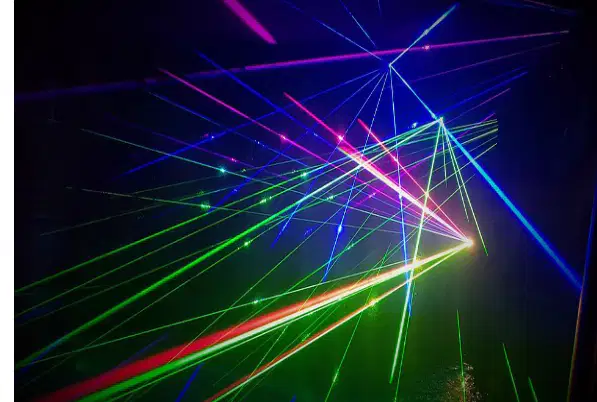
Fill in the blank: One of the contributions to modern society is the invention of the _________.
Laser
Wheel
Steam engine
Abacus
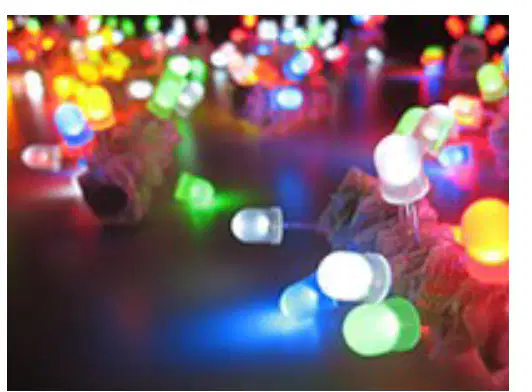
Fill in the blank: One of the contributions to modern society is the invention of the _________.
light emitting diode (LED)
steam engine
printing press
telephone

The image shows drones being targeted by a laser in the sky. What technology might be involved in this scenario?
Laser defense system
Solar power generation
Weather monitoring radar
Satellite communication array
Quantum mechanics involve principles derived from attempts to describe physical nature, or physical systems, at an atomic, or microscopic, scale. From these explorations, physicists observe both ______-like and ______-like behaviors of matter and radiation.
particle; wave
solid; liquid
magnetic; electric
thermal; chemical
Quantum mechanics attempts to describe and account for the properties of which of the following?
Only molecules
Only atoms
Molecules, neutrons, and other esoteric particles and their constituents—electrons, quarks, and gluons
Only electrons
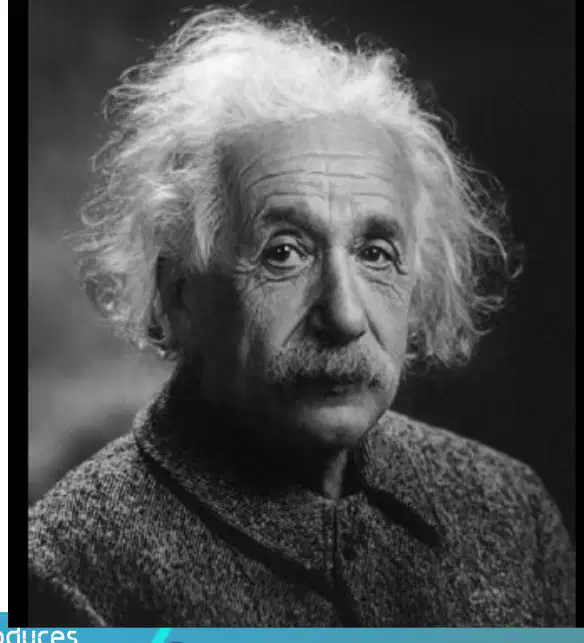
Who is the scientist shown in the image on the left?
A) Isaac Newton
B) Albert Einstein
C) Nikola Tesla
D) Stephen Hawking
What is the famous equation shown in the image on the right that represents the relationship between energy, mass, and the speed of light?
F=ma
E=MC2
V=IR
P=mv
Fill in the blank: The theory discussed in the title is the Theory of _________.
Relativity
Evolution
Gravity
Quantum Mechanics

What is the phenomenon called where electrons are emitted from a material when light shines on it?
Reflection
Refraction
Photoelectric effect
Diffraction
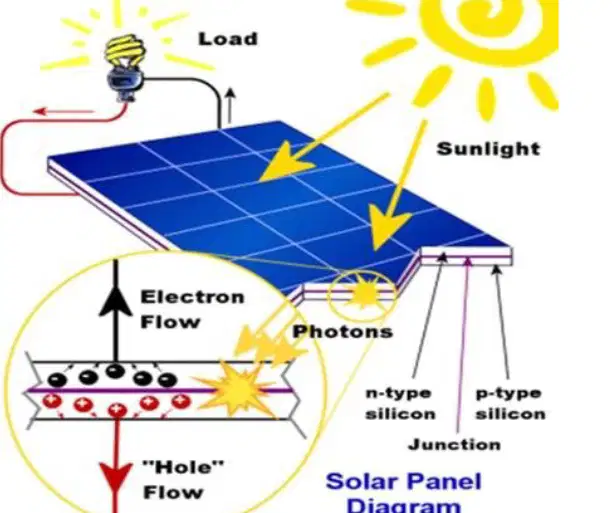
In the solar panel diagram, what is responsible for generating electricity when sunlight hits the panel?
Protons
Neutrons
Photons
Ions

