
Font size
 Worksheets
Mummification Worksheet
Total questions: 13
Worksheet time: 21mins
According to the passage, how long did the process of mummification in ancient Egypt usually take?
About seventy days.
About seven days.
About seven months.
About seventy minutes.
What was the purpose of using natron in the mummification process?
Natron was used to dry out the organs and discourage bacteria from decaying the tissues.
Natron was used to add fragrance to the body.
Natron was used to color the skin of the mummy.
Natron was used to wrap the body in linen.
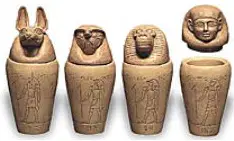
Match the canopic jar deity to the organ it protected:
Stomach
Hapy
Duamutef
Imsety
Qebehsenuef
The ancient Egyptians considered the brain to be very important and preserved it in a canopic jar.
True
False
What was the final ceremony performed at the tomb to prepare the mummy for the afterlife called?
The Opening of the Mouth ceremony.
The Weighing of the Heart ritual.
The Book of the Dead reading.
The Festival of Osiris.
The farmers most likely had which kind of burial?
Simple burial
Royal burial
Cremation
Burial at sea
What was the purpose of natron?
Natron was used to dry out the body during mummification.
Natron was used as a food seasoning in ancient times.
Natron was used to build pyramids.
Natron was used to write on papyrus.
They preserved some organs because:
they believed the organs were needed in the afterlife.
they wanted to study the organs later.
the organs were used as food offerings.
the organs were considered worthless.
What were the canopic jars?
Canopic jars were containers used to store and preserve the internal organs of the deceased.
Canopic jars were used to store grains for the afterlife.
Canopic jars were decorative vases for flowers in tombs.
Canopic jars were containers for perfumes and oils.
Egyptians mourned the dead in which of the following ways?
By holding elaborate funerals and performing rituals
By celebrating with feasts and dances
By ignoring the death and moving on quickly
By sending the body out to sea

Why were tombs filled with art, jewelry, and other treasures?
the tombs served as museums
the tombs were the private storage rooms of the pharaoh
Egyptians believed tombs to be the safest places in the kingdom
Egyptians believed the dead enjoyed such materials in the afterlife

The ancient Egyptian practice of mummification MOST reflected a belief in
healing rituals
an afterlife
technology
education

What is a mummy?
a body that has been wrapped and saved in a special way so it doesn't break down
a halloween costume
a made-up monster
the name of a ruler

