
 Worksheets
Component and Circuit Quiz
Total questions: 25
Worksheet time: 24mins

Identify the component pictured.
LED
Capacitor
Transistor
Push button switch

Identify the component pictured.
Push button switch
Diode
Capacitor
Transistor
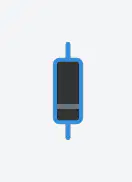
Identify the component pictured.
Push button switch
Diode
Resistor
Transistor
What does a diode do?
Acts like a switch
Only allows current to flow in one direction
Resists the flow of current like a resistor
Supplies current to a circuit
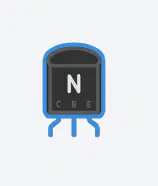
Identify the component pictured.
LED
Diode
Power Supply
Transistor
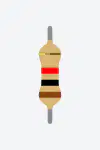
Identify the component pictured.
10kΩ resistor
1kΩ resistor
220Ω resistor
2kΩ resistor

The symbol represents what component?
Transistor
Resistor
Capacitor
Diode

The symbol represents what component?
Power Supply
Resistor
Negative or ground
Wire

The symbol represents what component?
PNP Transistor
Capacitor
Negative or ground
LED

The symbol represents what component?
PNP Transistor
Capacitor
Push button switch
Diode

The symbol represents what component?
NPN Transistor
Capacitor
Push button switch
Power Supply

Which side of the component is the positive side?
Bottom with the shorter line
Either side can be positive
Top side with the longer line
Neither side is positive since this component doesn't have polarity
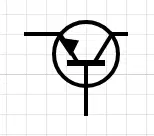
Identify the type of transistor pictured and identify the terminals from left to right.
PNP
E,B,C
NPN
C,B,E
NPN
E,B,C
PNP
C,B,E
What can a transistor be used for in a circuit (choose all that apply)?
switch
current splitter
amplifier
voltage divider
Which of the following correctly describe how to "activate" or "turn on" each type of transistor (choose all that apply)?
Apply positive voltage to the emitter of a pnp transistor
Apply negative or zero voltage to the base of pnp transistor
Apply positive voltage to the base of npn transistor
Short circuit the collector and base in either pnp or npn transistors

Which describes how this circuit will work when power is applied (assume a 5V supply is connected to the positive and negative rails on the breadboard)?
The LED will always be on
The LED will be off and turn on when the button is pushed
The LED will be on and turn off when the button is pushed
The LED will always be off
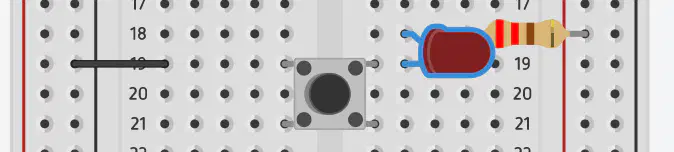
Which describes how this circuit will work when power is applied (assume a 5V supply is connected to the positive and negative rails on the breadboard)?
The LED will always be on
The LED will be off and turn on when the button is pushed
The LED will be on and turn off when the button is pushed
The LED will always be off
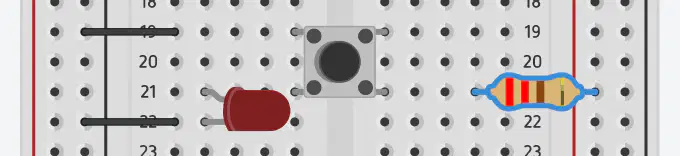
Which describes how this circuit will work when power is applied (assume a 5V supply is connected to the positive and negative rails on the breadboard)?
The LED will always be on
The LED will be off and turn on when the button is pushed
The LED will be on and turn off when the button is pushed
The LED will always be off
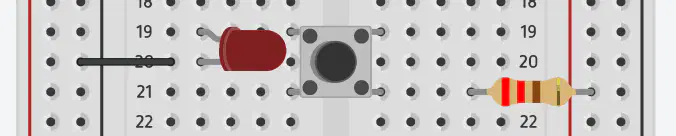
Which describes how this circuit will work when power is applied (assume a 5V supply is connected to the positive and negative rails on the breadboard)?
The LED will always be on
The LED will be off and turn on when the button is pushed
The LED will be on and turn off when the button is pushed
The LED will always be off
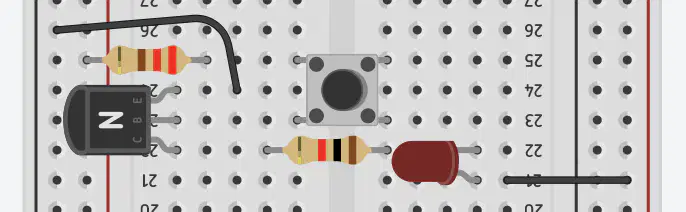
Which describes how this circuit will work when power is applied (assume a 5V supply is connected to the positive and negative rails on the breadboard)?
The LED will always be on
The LED will be off and turn on when the button is pushed
The LED will be on and turn off when the button is pushed
The LED will always be off

Which describes how this circuit will work when power is applied ?
The LED will always be on
The LED will be off and turn on when the button is pushed
The LED will be on and turn off when the button is pushed
The LED will always be off

Which describes how this circuit will work when power is applied?
The LED will always be on
The LED will be off and turn on when the button is pushed
The LED will be on and turn off when the button is pushed
The LED will always be off
Which of the following ways can be used to determine the cathode (negative) lead of an LED (choose all that apply)?
Shorter lead
Longer lead
Flat side on colored casing
Looking inside the colored casing and finding the larger metal piece
What are the two types of transistors we talked about?
Schottky
PNP
NPN
CNN
Which side of a transistor do you have face you when determining which lead is the collector, emitter, and base?
Rounded side
Top
Bottom
Flat side

