
 Worksheets
Skin
Total questions: 70
Worksheet time: 1hrs 11mins

hair follicle
E
F
G
H
sweat gland
E
F
G
H
nerve receptor
E
F
G
H
blood vessels
D
E
F
G
sebaceous gland
I
J
K
L
Epidermis
A
B
C
Dermis
A
B
C
Hypodermis
A
B
C
Which of the following is not a function of the skin?
regulates body temperature
stores water and fat
prevents entry of bacteria
supports body movement
It is the body's __________________ glands that secretes an oily liquid that naturally moisturizes the skin.
sweat gland
eccrine
sebaceous gland
apocrine
Rank the 3 layers in order from the deepest to the outermost
Hypodermis
Dermis
Epidermis
Dermis
Hypodermis
Epidermis
Epidermis
Dermis
Hypodermis
What detects pain?
nerve endings
pacinian corpuscle
Meissner's corpuscle
vein
This layer of skin acts as a physical barrier to water loss.
Hypodermis
Epidermis
Dermis
Skin
Which layer of the skin provides insulation and cushion to the body?
epidermis
dermis
hypodermis
Melanin is responsible for
skin color
skins stretchiness
immune system responses
feeling pain
The most common skin condition in teens is (a) .
A pimple starts when the pores in the skin become clogged with a type of oil called (a) .
(a) is a serious form of skin cancer that can spread to other parts of the body.
Hair is composed of a fibrous protein called (a) which is a nonliving cell.
The function of the (a) gland is to excrete excess water and to assist the cooling of the body by the evaporation of water from the skin.
The (a) is the largest organ of the body.
Inflamation of the skin is called (a) .
Type 1 herpes simplex is a viral infection that causes (a) .
It's important to wear sunscreen even if it's cloudy.
True
False
Athlete's foot is an infection of the skin caused by a fungus.
True
False
Warts are caused by a bacterial infection of the skin.
True
False

What does your skin protect you from?
heat
chemicals, bacteria, the sun
temperature, heat, the sun, chemicals
temperature, chemical, bacteria, and the sun

Sunlight is used to manufacture vitamin what
E
C
D
A

Blood vessels are located in what layer of skin?
epidermis
Dermis
hypodermis

What layer is used to store fat
Epidermis
Dermis
Hypodermis

How many layers is the skin
6
5
1
3

Integumentary system
Hair, skin, nails
hair, skin, sweat glands
hair, nails, acne
Structure in the dermis of the skin from which a strand of hair grows.
Follicle
dermis
vitamin D
melanin
Place the following layers of skin in order, from outermost to innermost: A) Dermis; B) Epidermis; C) Hypodermis
C A B
B A C
A B C
B C A
Where can you find dead skin cells?
Your innermost layer of skin
Your outermost layer of skin
The border between the epidermis and the dermis
The border between the dermis and the hypodermis

What layer of skin is this
Melanin
epidermis
dermis
hypodermis

What layer of skin is this
hypodermis
epidermis
dermis
pore

What layer of skin is this?
epidermis
dermis
hypodermis
melanin
How many stages of decubitus ulcer are there?
4
5
7
2
Decubitus ulcers are caused by __________
not moving a patient every 2-3 hours
having the patient walk too much
wrong medications
What is the main goal of pressure ulcer treatment?
Cause more tissue damage
Promote healing and prevent further tissue damage
Speed up tissue damage
Ignore healing and tissue damage
What is the best position for a bedridden patient to prevent pressure ulcers?
Leaving the patient in the same position all the time
Elevating the legs to reduce pressure
Placing the patient on a hard surface to prevent sinking
Regularly changing their position
What is the most common site for pressure ulcers?
Elbow
Knee
Ankle
Sacrum
Which of the following is not a risk factor for pressure ulcers?
Regular skin assessment
Lack of mobility
Older age
Good nutrition
What is the first stage of pressure ulcers?
Non-blanchable redness
Stage 1 ulceration
Open sore
Blanchable erythema
What is a common complication of pressure ulcers?
Numbness
Infection
Swelling
Bleeding
Which of the following is a risk factor for pressure ulcers?
Frequent position changes
Healthy diet
Regular exercise
Immobility
What is the best way to prevent pressure ulcers?
Keeping the skin moist and dirty
Preventing pressure ulcers involves relieving pressure, keeping the skin clean and dry, and maintaining good nutrition and hydration.
Avoiding proper nutrition and hydration
Applying pressure to the affected area
What are the main causes of pressure ulcers?
Wearing loose clothing
Prolonged pressure on the skin, friction, and shear
Excessive moisture on the skin
Lack of vitamin C in the diet

What stage is this pressure ulcers?
Unstageable
Stage 4
Stage 2
Stage 1
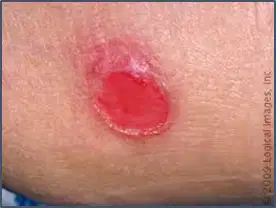
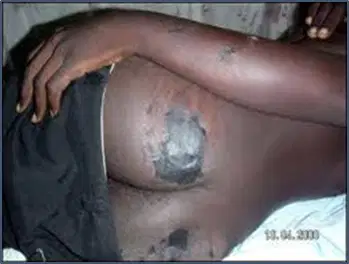
What stage are these pressure ulcers?
Unstageable
Stage 4
Stage 2
Stage 1

What stage are these pressure ulcers?
Deep Tissue Injury
Stage 3
Stage 2
Unstageable
Describe each of the following wound beds as granulation, slough, or eschar:
necrotic eschar (black)
Slough (yellow)
Granulation (red)
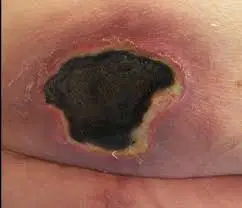
This pressure ulcer is classified as
Stage III
Stage IV
Unstageable
Stage II

Which stage of pressure ulcer includes muscle damage with possible bone exposure?
Stage IV
Stage I
Stage III
Stage II
A pressure ulcer with partial-thickness loss of dermis, that may appear as a red blister is which stage?
Stage II
Stage IV
Stage I
Stage III

Which of the following is not an appropriate nursing intervention for pressure ulcer treatment?
Reposition patient Q 2 hrs
Use a special mattress to reduce pressure
Encourage ambulation
Strict bedrest
Where does the athlete's for affect
Feet, nose, nails and finger
All of the mentioned
Soles, interdigital clefts of toes and nails
Foot, leg
How can ringworm spreads
By human to human
By animal to human and object to human
By soil to human
All of the above
How can Tinea Corporis most commonly be spread from one person to another?
Breathing the same air as someone with a rash
Sharing personal items like towels or clothing with an infected person
Eating food prepared by someone with Tinea Corporis
Drinking from the same water fountain
Which of the following best describes the appearance of Tinea Corporis on the skin?
A solid red patch with no border
A circular, red rash with a raised, scaly edge and a clearer center
Small purple dots scattered randomly
A yellow blister with pus
What type of infection is Tinea Cruris?
Viral
Bacterial
Fungal

Name which infection.
Tinea Ungium
Tinea Cruris
Tinea Capitis

Name which infection.
Tinea Corporis
Impetigo
Staph
70-79.
Answer the questions below after watching the video
What initiates the itch-scratch cycle in chronic eczema?
Applying moisturizer
Using hydrocortisone cream
Exposure to sunlight
Scratching the skin
What is the primary cause of eczema scars?
Cold weather
Scratching the skin
Using fragranced products
Taking long baths
Which type of clothing can exacerbate eczema symptoms?
Linen
Woolen
Silk
Cotton
What is a key component of managing eczema effectively?
Wearing rough clothing
Identifying and avoiding triggers
Exposure to sunlight
Frequent use of bleaching creams
What is NOT a recommended treatment for eczema scars?
Scratching
Oral histamines
Silicone gel sheets
Bleaching creams
Which medicinal plant is mentioned as helpful for treating eczema scars?
Mint
Basil
Aloe Vera
Rosemary
How can one prevent eczema from getting worse?
Wearing woolen clothes
Avoiding scratching altogether
By scratching gently
Applying hot water
What should be avoided to prevent eczema flare-ups?
Taking short baths
Applying irritating components on the skin
Using clean towels
Moisturizing the skin
Which is NOT a part of the skincare routine for eczema?
Cleansing and moisturizing twice daily
Using fragrance-free products
Applying rough textured clothing
Avoiding too hot or cold water
Why is it important to consult a dermatologist for eczema?
Because home remedies are ineffective
To receive a vaccine against eczema
To get a prescription for antibiotics
Skin is sensitive and needs professional care

