
Font size
 Worksheets
EARTH'S SEASONS, MOON PHASES, TIDES
Total questions: 85
Worksheet time: 1hrs 14mins
December, January, February
spring
summer
fall
winter
June, July, August
spring
summer
fall
winter
September, October, November
spring
summer
fall
winter
March, April, May
spring
summer
fall
winter
Each season has ___ months.
one
two
three
four
Describe the significance of the Autumnal Equinox.
It has no significance and is just a regular day.
It marks the beginning of fall in the Northern Hemisphere and spring in the Southern Hemisphere.
It marks the beginning of winter in the Northern Hemisphere and summer in the Southern Hemisphere.
It is a religious holiday celebrated by certain cultures.
What happens during the Winter Solstice?
The Northern Hemisphere is tilted furthest from the sun, resulting in the shortest day and longest night of the year.
There is no change in the length of the day or night.
The Southern Hemisphere is tilted furthest from the sun, resulting in the longest day and shortest night of the year.
The Earth is closest to the sun, resulting in warmer temperatures.
How are the seasons labeled in the Northern Hemisphere?
spring, summer, fall (autumn), and winter
hot, cold, warm, and cool
morning, afternoon, evening, and night
rainy, snowy, windy, and sunny
Explain the relationship between Earth's tilt and the changing seasons.
The Earth's tilt causes different parts of the Earth to receive varying amounts of sunlight throughout the year, leading to the changing seasons.
The Earth's tilt has no effect on the changing seasons
The changing seasons are caused by the Earth's distance from the sun
The tilt of the Earth causes the same amount of sunlight to reach all parts of the Earth
What is the angle of Earth's axial tilt?
45 degrees
10 degrees
30 degrees
23.5 degrees
How does the tilt of the Earth cause different seasons in different hemispheres?
The tilt of the Earth causes the same amount of sunlight to reach both hemispheres at all times of the year.
The tilt of the Earth has no effect on the seasons in different hemispheres.
The tilt of the Earth causes different amounts of sunlight to reach different parts of the Earth at different times of the year.
The tilt of the Earth causes the temperature to be the same in both hemispheres throughout the year.
What are the primary factors that cause the Earth's seasons?
The rotation of the Earth and the position of the North Star
Axial tilt and orbit around the Sun
The amount of rainfall and the direction of the wind
The Earth's distance from the Sun and the Moon's gravitational pull
Explain the concept of equinox and its relation to the Earth's tilt and rotation.
The equinox is related to the Earth's tilt and rotation by causing extreme temperatures due to the axis being perpendicular to the Sun.
The equinox is caused by the Earth's rotation slowing down, resulting in equal day and night.
The equinox occurs when the Earth's axis is tilted towards the Sun, causing longer days and shorter nights.
The equinox is related to the Earth's tilt and rotation by causing equal day and night due to the axis not being tilted towards or away from the Sun.

Which label corresponds with winter?
A
B
C
D

Which label corresponds with summer?
A
B
C
D

Which label corresponds with fall?
D
E
F
G

Why is the Equator warmest?
Because it is closest to the sun.
Because it receives the most direct sunlight
Because no clouds form here.
Because it is far from the sun

The hemisphere where you live:
equator
southern
northern
eastern
Which definition correctly defines an equinox?
Occurs twice a year, during fall and spring, where there is an equal amount of daylight and night time hours.
Occurs twice a year, during summer and winter, where there is an equal amount of daylight and night time hours.
Occurs twice a year, with the most hours of sunlight in the summer and the least hours of sunlight in the winter.
Occurs twice a year, with the most hours of sunlight in the fall and the least hours of sunlight in the spring.
Which definition correctly defines a solstice?
Occurs twice a year, during fall and spring, where there is an equal amount of daylight and night time hours.
Occurs twice a year, during summer and winter, where there is an equal amount of daylight and night time hours.
Occurs twice a year, with the most hours of sunlight in the summer and the least hours of sunlight in the winter.
Occurs twice a year, with the most hours of sunlight in the fall and the least hours of sunlight in the spring.

Which side of earth is experiencing nighttime/darkness?
Side A
Side B

Earth's axis is tilted off of the ecliptic plane by how much?
90 degrees
22.7 degrees
23.5 degrees
25.3 degrees

2 Parts: One complete revolution of Earth around the Sun takes about ______ and one rotation takes about _______.
365 days; 24 hours
1 day; 1 year
24 hours; 365 days
365 hours; 24 days

In the Northern Hemisphere, the summer solstice occurs when the sun is
directly over the equator.
shining directly over the Tropic of Capricorn, the point farthest south it will ever be.
closest to Earth.
shining directly over the Tropic of Cancer, the point farthest north it will ever be.

We experience this season when the Northern Hemisphere is located closest to the Sun?
spring
summer
fall
winter

The Northern Hemisphere experiences the shortest daytime, the longest night time hours, and the sun's angle is lowest? What event is taking place?
summer solstice.
winter solstice.
fall equinox.
spring equinox.

Select the 2 reasons why Earth experiences different seasons
Earth rotates
Earth revolves around the sun
Earth is tilted on its axis
Earth has day and night


How long does it take for Earth to hit a 360?
weeks of practice
time and dedication
24 hours
365 days
What causes the 4 seasons? Earth's _______.
revolution & tilt
rotation & revolution
tilt & rotation
atmosphere & revolution
Earth's tilt causes people in opposite hemispheres to experience _________.
opposites times
opposite lives
opposite seasons
opposite health
When the Northern Hemisphere is tilted towards the sun, people in the Southern Hemisphere experience what?
Winter
Fall
Spring
Summer
When the Moon is directly between the Sun and the Earth, what phase would the Moon be in?
Full Moon
New Moon
Half Moon
Waxing Crescent
What term is associated with the moons that are increasing in size (more light on them) each day?
Waxing moons
Waning moons
Crescent moons
Gibbous moons

What phase of the moon is shown?
waning gibbous
1st quarter
waxing crescent
Waxing gibbous

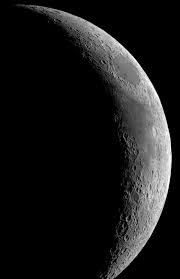
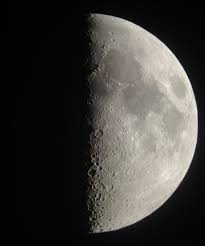
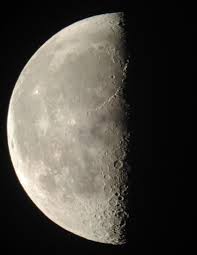
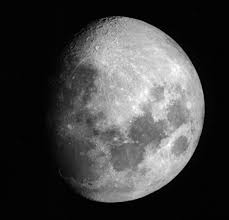
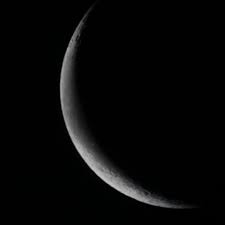

What is the region on the Moon’s far side that is least visible from Earth called?
Dark side
Hidden side
Shadow zone
Maria
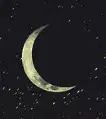
Select the correct phase of the Moon according to the image
Waxing Crescent
Waning Crescent
Waxing Gibbous
Waning Gibbous
Select the correct phase of the Moon according to the image
Waxing Crescent
Waning Crescent
Waxing Gibbous
Waning Gibbous
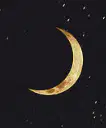
Waxing Crescent
Waning Crescent
Waxing Gibbous
Waning Gibbous

What are Tides?
The rises and fall of the Ocean
Salt Water
Wind
Sand

What is a Low Tide?
Water level exceeding normal
Water level decreasing normal
Water level that is the same on both sides of the Earth
Water level that is really high

What causes Low Tides?
The Moon's force
The Sun's Gravity
The lack of water
The Earth's gravity

What is a High Tide?
Water level decreasing normal
Water level increasing normal
Water level highly increasing normal
Tsunami

What causes High Tides?
The Moon's gravitational force
The Earth's force
The Sun's gravitational force
The Sun's and the Moon's gravitational force

Which of these choices best describes a Neap Tide?
When the Tides are nearly the same
When the Tides have a super high Tide and a super low Tide
When there is an Earthquake
When the Tides are super low

(Quick tip look at the model) How are (Earth, Sun, Moon) aligned to make a Neap Tide?
The Sun and the Earth and the Moon all straight in a line formation
The Sun the Earth are facing each other
The Moon the Earth are facing each other
The Sun and the Earth are facing each and the Moon is on the side

Which of these best describes a Spring Tide?
The highest Low Tide
The highest Neap TIde
The highest High tide
When Spring season starts

How are the Earth the Sun and the Moon aligned to make a Spring Tide?
When the Sun and the Moon are aligned to a right angle
When the Sun and the Moon and the Earth are aligned in a straight line
When the Earth tilts to make the season Spring
When the Sun and the Earth are aligned in a straight line
Slide 5: Select the best description of gravity.
A magnetic force
A type of energy
An electrical energy
An attractive force between two objects

