
 Worksheets
Death Loss and Grief - Intro
Total questions: 26
Worksheet time: 13mins
What is the traditional Christian understanding of death?
The separation of body and soul
The cessation of brain activity
The end of blood circulation
The loss of oxygen in the body
According to the text, what happens when the blood stops circulating in the body?
The body becomes unconscious
All brain functions cease irreversibly
The body starts to heal itself
The soul leaves the body
What does the term 'brain death' describe?
The loss of oxygen in the body
The cessation of heartbeats
The upper brain and brain stem stopping functioning permanently
The inability to move or speak
What is one reason why people may find being in the presence of death frightening and unwelcome?
It is associated with cultural taboos
It is a sign of bad luck
It is a rare occurrence
It is considered disrespectful
What is the significance of Jesus' resurrection for Christians, as mentioned in the text?
It symbolizes the end of suffering
It raises their bodies to new life and reunites them with their souls
It marks the beginning of eternal punishment
It signifies the separation of body and soul
What is one cultural practice mentioned in the text that reflects a taboo associated with death?
Restrictions on food and clothing
Celebrating death anniversaries
Building memorials for the deceased
Writing wills and testaments
Why is it difficult to determine the exact moment of a person’s death?
Death is a process rather than a single event
The heart continues to beat after death
The body can be revived at any time
The soul leaves the body gradually
What does medical knowledge suggest about the beginning of death?
It starts when the brain stops functioning
It begins when the heart stops beating and the blood stops pumping
It occurs when the soul leaves the body
It starts when the body loses consciousness
What is the role of respirators and other technologies in cases of brain death?
They restore brain function
They maintain essential body functions such as heartbeat and breathing
They prevent the body from decomposing
They help the person regain consciousness
What is the Māori term mentioned in the text that reflects hope in the context of death?
Aroha
Tūmanako
Te Atua
Mana
What is one reason why death rituals are steeped in taboos worldwide?
They are considered sacred and untouchable
They involve restrictions on items and people associated with the dead
They are rarely practiced in modern societies
They are based on superstitions
What does the text suggest about the general attitude toward death in Aotearoa New Zealand?
Death is openly discussed and accepted
There is a reluctance to acknowledge what happens to bodies after death
Death is celebrated as a natural part of life
People are indifferent to the presence of death
What is the focus of the section titled 'What is Death?' in the text?
Exploring the medical definition of death
Understanding cultural taboos around death
Discussing the spiritual and physical aspects of death
Analyzing the fear of death in society
What is one way Christians view death, according to the text?
As the end of all existence
As a transition to the fullness of God’s life and love
As a punishment for sins
As a purely biological process
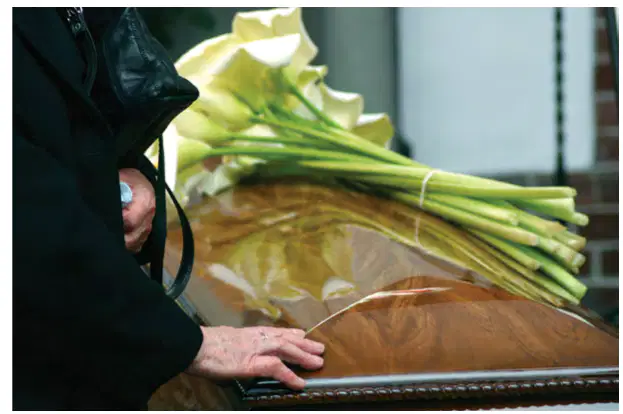
What happens to the cells of the body when deprived of oxygen, as described in the text?
They regenerate and heal
They start breaking down, beginning with the brain cells
They become dormant and inactive
They stop functioning temporarily
What is the legal definition of death in most Australian states?
The irreversible cessation of the circulation of blood in the body or the irreversible cessation of all function of the brain.
The absence of a heartbeat and breathing.
The onset of decay of the flesh.
The flicker of a candle held to the mouth.
In medieval times, how was death determined?
By the absence of a natural heartbeat.
By holding a candle to the mouth and observing for a flicker.
By using artificial respiration.
By monitoring the body in special corpse houses.
Who recommended resuscitation for seemingly lifeless patients in 1740?
Jacques-Benigne.
Pope Pius XII.
The Harvard Medical School committee.
The International Congress of Anaesthesiologists.
What unusual methods were suggested by Jacques-Benigne for resuscitation?
Artificial respiration and stethoscopes.
Juices of onions, garlic, and horse-radish, along with whips and nettles.
Monitoring in corpse houses.
Using a tube to breathe through safety coffins.
What invention in 1819 reduced the need for extreme measures to determine death?
The artificial respirator.
The safety coffin.
The stethoscope.
The heart transplant.
What was the purpose of safety coffins in the 18th and early 19th centuries?
To monitor the body for signs of life.
To allow the 'deceased' to breathe and alert others if they woke up.
To preserve the body for longer periods.
To prevent the onset of decay.
When was the first human heart transplant performed?
1740.
1819.
1957.
1968.
What did the Harvard Medical School committee establish in the 1960s?
The invention of the artificial respirator.
The criteria for brain death.
The use of safety coffins.
The definition of death as the absence of a heartbeat.
According to Pope Pius XII, who is responsible for diagnosing death?
The family of the deceased.
The Church.
The doctor and the anaesthesiologist.
The Harvard Medical School committee.
What does the Church teach about the use of artificial respiration?
It should be used to keep patients alive indefinitely.
It is the responsibility of the family to decide.
It is the responsibility of medicine to determine its use.
It should be avoided in all cases.
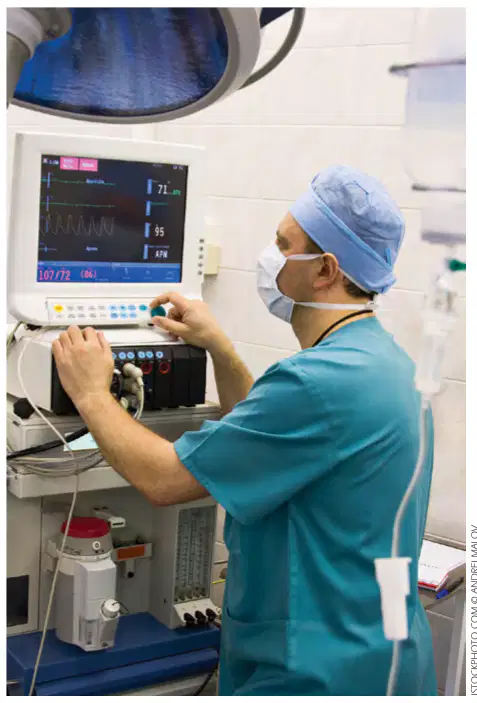
The image shows a medical professional monitoring a patient using which of the following?
Medical equipment
Musical instruments
Sports equipment
Cooking utensils

