
 Worksheets
Gases
Total questions: 54
Worksheet time: 27mins
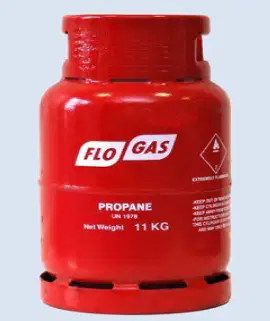
What is the cylinder colour for Propane?
Red
Blue
Yellow
Maroon
What is the thread direction for Oxygen?
Left hand
Right hand
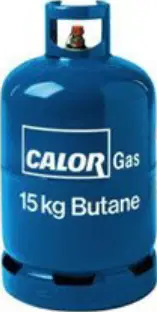
Fill in the blank: The cylinder colour for Butane is _______.
Blue
Red
Green
Yellow
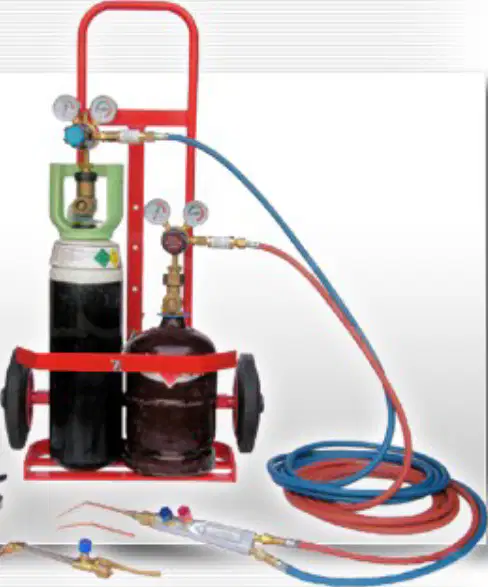
Which part of the Oxyacetylene equipment is responsible for controlling the main flow of gas?
Main control valve
Pressure gauge
Hose connector
Mixer chamber
Which part of the Oxyacetylene equipment is used to regulate the pressure of the gases?
Pressure regulator
Torch handle
Gas hose
Nozzle
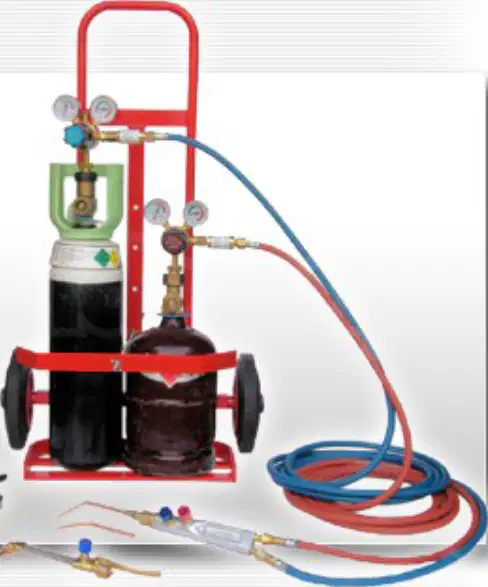
Which part of the Oxyacetylene equipment displays the pressure readings?
Gauges
Hose
Torch
Cylinder
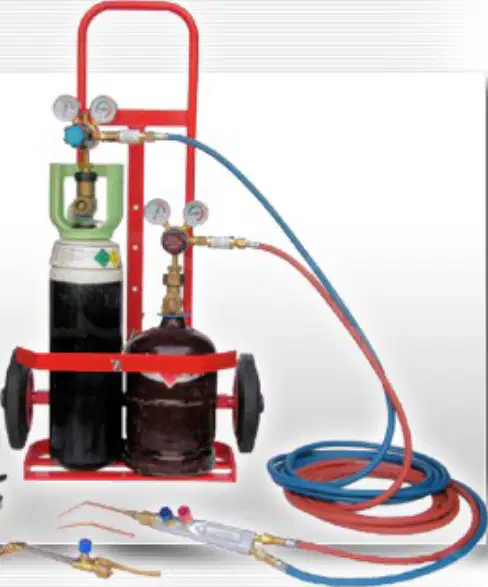
Which safety device in the Oxyacetylene equipment prevents flames from traveling back into the hoses?
Flashback arrestor
Pressure regulator
Check valve
Hose clamp
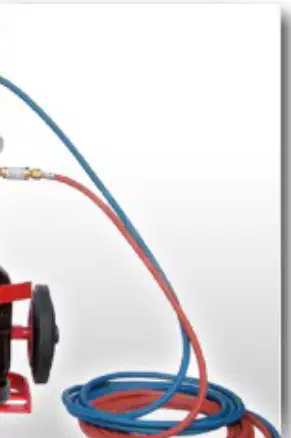
What are the flexible tubes called that carry gases from the cylinders to the torch in Oxyacetylene equipment?
Hoses
Valves
Regulators
Nozzles
Liquefied Petroleum Gas is a group of gases that includes ______ and butane.
propane
methane
ethane
carbon dioxide
LPG is highly flammable when mixed correctly with what?
Water
Air
Oil
Sand
LPG is ______ than air.
heavier
lighter
colder
warmer
At what temperature does propane turn from liquid to gas?
-42ºC
0ºC
-10ºC
-78ºC
If drawn off too quickly, what can happen to the valves of LPG equipment?
The valves can freeze.
The valves can overheat.
The valves can corrode instantly.
The valves can expand excessively.
LPG should be used and stored in what kind of areas?
Well-ventilated and signed areas.
Closed and unventilated spaces.
Near open flames and heat sources.
In damp and dark basements.
CO₂ can build up in confined spaces.
True
False
When LPG is in use, what type of fire extinguisher must be present?
CO₂ fire extinguisher
Water fire extinguisher
Foam fire extinguisher
Dry powder fire extinguisher
When visually inspecting gas equipment, should you check for damage to hoses?
True
False
When visually inspecting gas equipment, should you check for damage to valves?
True
False
When visually inspecting gas equipment, should you check for damage to gauges?
True
False
When visually inspecting gas equipment, should you check for damage to threaded connectors?
True
False
When visually inspecting gas equipment, should you check for leak detection fluid on joints?
True
False
What is the correct way to store a gas cylinder?
Lying down inside a closed room
Upright, outside, in a well-ventilated lockable store, with labels
In a vehicle without ventilation
In a basement without labels
What should you do when transporting gas cylinders in a vehicle?
Lay them flat and keep windows closed
Keep cylinders upright with ventilation and label on outside
Store them in the trunk without labels
Place them under seats
If transporting quantities of gas, the driver must be in possession of a ________.
Tremcard
License Plate
Insurance Policy
Fuel Receipt
Which document must a driver possess when transporting quantities of gas, according to Carriage of Dangerous Goods by Road Regulations?
Driving license
Tremcard
Insurance certificate
Passport
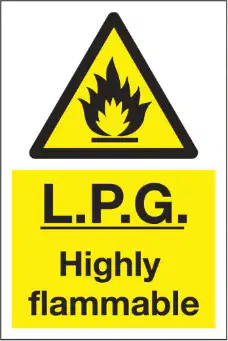
Look at the warning signs shown. What does the yellow triangle sign with 'L.P.G. Highly flammable' indicate?
Non-flammable gas
Highly flammable gas
Toxic gas
Corrosive material
One of the dangers of LPG is its presence in ________.
cellars
kitchens
garages
attics
Fill in the blank: LPG should not be stored near ________ entrances.
drain
main
side
back
LPG is flammable.
True
False
Fill in the blank: Flames in loft areas can be dangerous due to ________ and insulation.
dust
water
metal
paint
Fill in the blank: Build up of ________ or CO in confined spaces is a danger of LPG.
CO2
O2
N2
H2
Fill in the blank: Burns to property and persons can occur from the ________ and component of LPG equipment.
nozzle
valve
pipe
regulator
Fill in the blank: Cold burns can result from the ________ and cylinder of LPG.
valve
hose
regulator
burner
Leaks are a potential danger of LPG.
True
False
What are the three components needed to create fire according to the fire triangle?
Fuel, oxygen, and heat
Water, carbon dioxide, and light
Nitrogen, hydrogen, and electricity
Sand, oil, and wind
Fire is one of the most destructive elements. Combustion is a chemical reaction with oxygen. Which of the following equations correctly represents the process of creating fire?
Fuel + oxygen + heat = fire
Water + oxygen + heat = fire
Fuel + nitrogen + heat = fire
Fuel + oxygen + cold = fire
Fire is one of the most destructive elements. Combustion is a chemical reaction with oxygen. True or False: Propane + oxygen + spark = flame.
True
False
What is combustion?
Combustion is a chemical reaction with oxygen.
Combustion is a physical change in water.
Combustion is the process of freezing gases.
Combustion is the mixing of two solids.
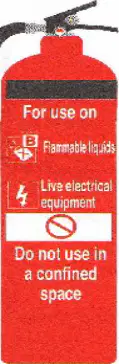
Which type of fire extinguisher should be used on wood, paper, and textiles?
Water
Dry powder
Foam
CO2 (Carbon dioxide)
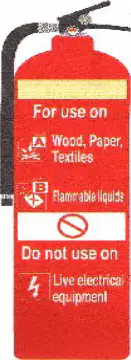
Which type of fire extinguisher should NOT be used on live electrical equipment?
Water
Dry powder
Foam
CO2 (Carbon dioxide)
Fill in the blank: Care should also be taken when using CO2 extinguishers in an enclosed space because of _________
asphyxiation
corrosion
fire spread
electrocution
Foam fire extinguishers can be used on live electrical equipment.
True
False
Which class of fire is a RED (WATER) fire extinguisher used for?
A
B
Elec
A & B
A BLACK fire extinguisher contains _______.
CO₂
Water
Foam
Powder
Which fire extinguisher is suitable for electrical fires?
RED (WATER)
CREAM (FOAM)
BLUE (POWDER)
BLACK (CO₂)
The CREAM fire extinguisher is used for which classes of fire?
A
B
A & B
Elec
What type of extinguisher should you carry when soldering?
A dry powder or CO₂ extinguisher
A water extinguisher
A foam extinguisher
A wet chemical extinguisher
What should you use next to building fabrics when soldering?
A heatproof mat
A plastic sheet
A wooden board
A paper towel
A rubber mat
What should you do with furniture before soldering?
Move furniture away from soldering area
Cover furniture with a wet cloth
Paint the furniture
Polish the furniture
Fires: Should you point a blowtorch directly at combustible material?
True
False
When soldering under a suspended floor, what should you check for?
Anything that could catch fire
Loose floorboards
Electrical outlets
Water pipes
Fires: Should you replace floorboards before inspecting for smouldering under the boards?
True
False
What should you do to the substrate when lead welding on a roof?
Damp off the substrate
Heat the substrate until it glows
Apply oil to the substrate
Paint the substrate with primer
Fires: How long before you leave should you stop soldering?
An hour before you leave
Five minutes before you leave
Right before you leave
Thirty minutes before you leave

