
 Worksheets
French and Indian War Quiz
Total questions: 80
Worksheet time: 40mins
Who attacked Fort Duquesne during the French and Indian War?
George Washington
King Louis XIV
A Spanish general
A Canadian leader
What was the main cause of the French and Indian War?
Competition for land and control of the New World
Religious differences
Trade disagreements
A natural disaster
Which two countries were allies during the French and Indian War?
Spain and France
Great Britain and France
Spain and Great Britain
France and Canada
Under which king was France considered the greatest power during the French and Indian War?
King Louis XIV
King George III
King Ferdinand
King Charles V
Why was Louisiana named Louisiana?
It was named for King Louis XIV
It was named after a river
It was named for a Spanish explorer
It was named after a British general
Which country was described as a "tiny island but next great POWER" during the French and Indian War?
Great Britain
France
Spain
Canada
Although the French and Indian War mainly involved the northern colonies and Canada, who else was affected by its consequences?
The southern colonies
Only France
Only Spain
Only Great Britain
What was one of the strengths of England that helped them win the French and Indian War?
Strong navy
Many native allies
the use of cannons
Strong airforce
Which trade was England involved in that was the most profitable and most cruel?
Spice Trade
Slave Trade
Silk Trade
Tea Trade
Where did England have colonies producing goods for the mother country?
Africa and Asia
North America and Caribbean
Australia and Antarctica
South America and Europe
What was the name of the war in the Americas that lasted from 1754-1763 and was called the Seven Years War in Europe?
Civil War
French and Indian War
Revolutionary War
War of 1812
What was the French and Indian War called in Europe?
The Civil War
The French and Indian War
The Seven Years War
The Hundred Years War
Explain how England benefited from its colonies in North America and the Caribbean.
The colonies produced goods for the mother country.
The colonies provided soldiers for England.
The colonies built ships for England.
The colonies taught England new languages.
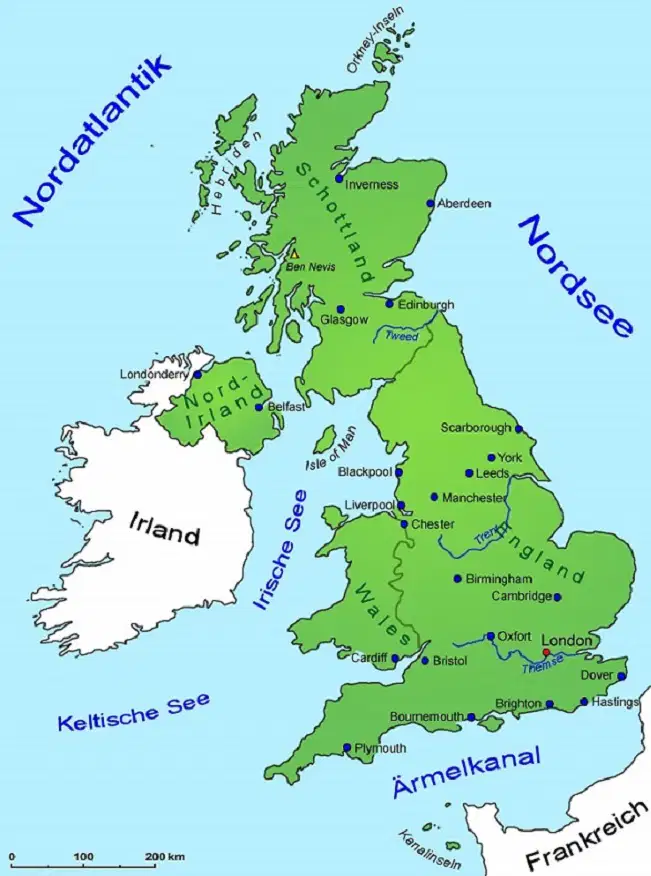
What is the collective name for people from England, Scotland, Wales, and Ireland as shown in the image?
The Americans
The French
The British
The Germans
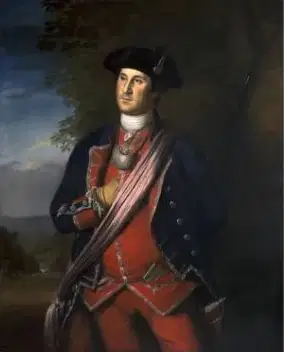
Who fought against the French at the Battle of Jumonville Glen?
George Washington
Benjamin Franklin
Thomas Jefferson
John Adams
How many months after the Battle of Jumonville Glen was a formal war declared between Great Britain and France?
19 months
6 months
12 months
24 months
Which two groups were not always peaceful with each other between the Battle of Jumonville Glen and the formal declaration of war?
English colonists and the French/Native Americans
English colonists and Spanish settlers
French and Spanish settlers
Native Americans and Dutch settlers
What was the name of the battle where George Washington fought the French before the formal war was declared?
The Battle of Jumonville Glen
The Battle of Yorktown
The Battle of Bunker Hill
The Battle of Saratoga
Which Native American tribes helped the French during the war from 1754 to 1763?
Algonquin, Shawnee, Ojibwe, and Lenape
Iroquois and Cherokee
Sioux and Apache
Navajo and Hopi
Which Native American tribes helped the British and Americans during the war?
Iroquois and Cherokee
Algonquin and Shawnee
Ojibwe and Lenape
Sioux and Apache
During which years was the French and Indian War between the British and the French fought?
1754 to 1763
1800 to 1812
1492 to 1500
1607 to 1620
Where were battles fought during the war between the British and the French?
North America, Europe, at sea, and even in India
Only in North America
Only in Europe
Only in Asia
Where was the French and Indian War NOT fought?
Southeastern colonies
Northern colonies
Western colonies
Central colonies
From which regions did soldiers come to fight in the French and Indian War?
Southern and northern colonies
Only the southeastern colonies
Only the western colonies
Only the central colonies
Which of the following battles was influenced by geography during the French and Indian War?
Battle of Monongahela
Battle of Gettysburg
Battle of Yorktown
Battle of Lexington
When did the Treaty of Paris end the war?
February 10, 1763
July 4, 1776
December 25, 1783
May 1, 1750
Which country won as a result of the Treaty of Paris in 1763?
Great Britain
France
Spain
Portugal
Which country sided with France during the Treaty of Paris?
Spain
Germany
Italy
Russia
What land did the French give to the British as a result of the Treaty of Paris?
Canada
Florida
Louisiana
Texas
Which land did Spain give to the British after the Treaty of Paris?
Florida
California
New York
Quebec
What land did Spain take from France as a result of the Treaty of Paris?
Louisiana
Alaska
Mexico
Georgia
Which lands did the British gain between the Appalachian Mountains and the Mississippi River after the Treaty of Paris?
All lands between the Appalachian Mountains and the Mississippi River
Only Florida
Only Louisiana
Only Texas
Which future states could colonists settle in when they moved to the Ohio Country?
Michigan, Illinois, Indiana, and Ohio
California, Texas, Florida, and Georgia
New York, Pennsylvania, Virginia, and Maryland
Arizona, Nevada, Utah, and Colorado
What did British General Jeffrey Amherst do that upset the tribes?
He made new policies
He gave them land
He built new forts
He signed a peace treaty
After fighting with the French, what did many tribes do with the British?
Made peace
Started a new war
Moved to Canada
Built new villages
Who was in charge of the newly acquired land after the Treaty of Paris?
Amherst
Columbus
Washington
Lincoln
What did Amherst restrict trading of with Native Americans?
Gunpowder and weapons
Food and water
Clothing and blankets
Books and paper
What was one result of restricting gunpowder and weapons from Native Americans?
It caused disease and starvation
It improved their health
It made them wealthier
It led to peace and happiness
How did Amherst show disrespect for Native American tribes?
By scorning the practice of trading gifts
By building schools for them
By giving them more land
By learning their language
What did Amherst allow colonists to do in the Ohio Valley?
Settle on tribal land
Build factories
Start new countries
Teach Native American languages
Why might restricting trading of gunpowder and weapons have led to disease and starvation among Native Americans? (DoK Level 2)
Because it made it harder for them to hunt and protect themselves
Because it made them want to move to cities
Because it helped them grow more food
Because it made them wealthier
Who led Pontiac's Rebellion?
Pontiac
George Washington
Sir William
Chief Sitting Bull
What event marked the beginning of Pontiac's Rebellion?
Native forces attacked Fort Detroit on April 27, 1763
The signing of the treaty at Niagara Falls
The Boston Tea Party
The building of Fort Detroit
What was the role of Sir William in the events leading up to Pontiac's Rebellion?
He acted as a liaison between the British and the tribes
He led the British army
He was the leader of the Ottawa tribe
He signed the treaty at Niagara Falls
How did Pontiac's Rebellion end?
With a treaty signed at Niagara Falls in July 1766
With the destruction of Fort Detroit
With the tribes winning all battles
With the British leaving North America
Why did the tribes decide to take matters into their own hands before Pontiac's Rebellion?
The liaison between the British and tribes failed
They wanted to move to a new land
They were offered gold by the British
They wanted to build a new fort
What was the result of the widespread attacks by multiple tribes during Pontiac's Rebellion?
The British took the offensive, forcing tribes to surrender
The tribes captured all British forts
The French joined the tribes
The British left the area
Who issued the Proclamation of 1763?
King George III
George Washington
Abraham Lincoln
Thomas Jefferson
What was the main purpose of the Proclamation of 1763?
To prevent colonial expansion west of the Appalachian Mountains
To start a new war with France
To allow colonists to move anywhere they wanted
To end slavery in the colonies
Which group did the Proclamation of 1763 aim to protect?
Native Americans
British soldiers
French settlers
Spanish explorers
What was created by the Proclamation of 1763 that later became several U.S. states?
The “Indian Reserve”
The Louisiana Purchase
The Oregon Trail
The Mason-Dixon Line
How did many American colonists react to the Proclamation of 1763?
They ignored the boundary and continued westward settlement
They moved back to England
They supported the new law completely
They started trading with France
Who explored Kentucky in 1769?
Daniel Boone
Christopher Columbus
Lewis and Clark
Benjamin Franklin
What region did Daniel Boone discover in Central Kentucky?
Bluegrass region
Great Plains
Rocky Mountains
Piedmont region
What was the purpose of the Wilderness Road created by Daniel Boone?
To provide a route through the Cumberland Gap
To connect New York and Boston
To explore the Mississippi River
To build a railroad
Which settlement did Daniel Boone found that was one of the first English-speaking settlements west of the Appalachians?
Boonesborough
Jamestown
St. Augustine
Plymouth
Who was Daniel Boone?
A famous artist from Kentucky
A veteran of the French and Indian War who explored Kentucky
The first president of the United States
An inventor from Central Kentucky
What happened to Daniel Boone and his travel partner, John Stuart, during their exploration in 1769?
They found gold
Natives captured Boone and killed John Stuart
They built a railroad
They became mayors of Kentucky
What was the War of Regulation mainly about?
Resistance in Colonial North Carolina against the British government
Trade between colonies
Building new settlements in reservations
Resistance in Colonial North Carolina against the French government
Who were the two main groups in conflict during the War of Regulation in colonial North Carolina?
English-speaking settlers vs. British representatives
French settlers vs. Spanish settlers
Native Americans vs. colonists
Farmers vs. merchants
Which religious groups were involved in the War of Regulation conflict?
Protestant Englishmen vs. Scottish and Irish Catholics and Presbyterians
Buddhists vs. Hindus
Quakers vs. Puritans
Jews vs. Muslims
Why were North Carolinians unhappy with the colonial government during the War of Regulation?
They wanted to become a separate country
They felt the government was unfair
They liked paying more taxes
They wanted to move to another colony
Who especially felt exploited and unheard in the backcountry during the War of Regulation?
Wealthy merchants
Poor farmers
Colonial governors
British soldiers
Who were the Regulators?
A group of poor colonists
A group of wealthy merchants
A group of British soldiers
A group of Native Americans
What was one of the main demands of the Regulators?
Fair and honest government
More land for farming
Stronger British rule
Higher taxes
Why did the Regulators rebel?
They were angry at corrupt local officials representing British rulers
They wanted to become British rulers themselves
They wanted to build new cities
They wanted to trade with other countries
What happened if colonists failed to pay their taxes, according to the Regulators?
They went to jail
They received a reward
They became sheriffs
They were given more land
Which of the following was NOT a demand of the Regulators?
Higher taxes
Lower taxes
Fair and honest government
Less corruption
How were taxes collected from the colonists?
By sheriffs
By teachers
By farmers
By soldiers
Who ordered the colonial militia to fight during the Battle of Alamance?
Governor William Tryon
George Washington
King George III
Benjamin Franklin
Why did Governor William Tryon increase taxes in North Carolina?
To build an opulent house in New Bern
To pay for a new army
To buy more land for farming
To build more schools
What was one of Governor Tryon's goals for the colonists?
He wanted colonists to be Anglican
He wanted colonists to move to New York
He wanted colonists to stop farming
He wanted colonists to become French citizens
What happened as a result of the Regulators' protests?
Their protests escalated into fighting
They were given more land
They were sent to England
They became government leaders
Who lost the Battle of Alamance?
Regulators
British Army
Patriots
Native Americans
What happened to seven men after the Battle of Alamance?
They were hanged
They were sent to prison
They escaped
They became leaders
What major event followed the War of Regulation?
The American Revolution
The Civil War
The French and Indian War
The War of 1812
After the Battle of Alamance, what happened to the War of Regulation?
It ended soon
It continued for many years
It moved to another country
It became more violent
Which war helped colonists gain confidence and experience during the period of colonial unrest?
The Civil War
The French and Indian War
The Revolutionary War
The War of 1812
Who is considered the first American novelist, as mentioned in the learning material?
Mark Twain
James Fenimore Cooper
Nathaniel Hawthorne
Louisa May Alcott
Why were colonists angry during the period of colonial unrest?
Because of new inventions
Because of taxes from the King without representation in Parliament
Because of taxes from the King WITH representation in Parliament
Because of friendly relations with natives

