
 Worksheets
Simple Machines and Mechanical Advantage
Total questions: 23
Worksheet time: 12mins
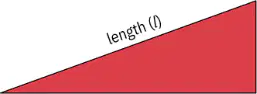
If the length of an inclined plane is 40 and the height is 10, then what is the mechanical advantage?
4
2
10
0.25
A ______ is a device with few or no moving parts that changes the direction and/or magnitude of force.
simple machine
complex circuit
chemical compound
digital sensor
An ______ is a simple machine that uses a slope to raise and lower heavy objects.
inclined plane
pulley
lever
wheel and axle
______ is a change in the magnitude of force required to do work. Simple machines use MA to help minimize the force needed to complete movement.
mechanical advantage (MA)
potential energy
kinetic energy
thermal expansion
______ is the theoretical mechanical advantage based on the assumption that no energy is lost to friction, wear, or other resistance.
ideal mechanical advantage (IMA)
actual mechanical advantage (AMA)
efficiency ratio
input force advantage
______ is the mechanical advantage calculated from measured input and output forces.
actual mechanical advantage (AMA)
ideal mechanical advantage (IMA)
efficiency
power
______ is the force that resists the movement of an object.
friction
gravity
magnetism
electricity
A ______ is a circular object that revolves on an axle.
wheel
box
stick
rope
An ______ is a rod or spindle (either fixed or rotating) passing through the center of a wheel.
axle
gear
lever
pulley
A ______ is a simple machine that uses a rigid bar resting on a pivot point or fulcrum to transmit motion and create mechanical advantage (MA).
lever
pulley
wheel
inclined plane
The ______ is the point on which a lever pivots.
fulcrum
axle
spring
gear
______ is the force used to move an object or where you are interacting with the lever.
effort force
load force
gravitational force
frictional force
______ is the force that opposes the effort force, or where the load is being applied to the lever.
resistance force
applied force
gravitational force
frictional force
A ______ is a simple machine that uses threads wrapped around a cylinder or shaft to create mechanical advantage (MA).
screw
lever
pulley
wedge
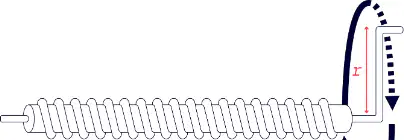
A ______ is a screw that rotates in place and is used to translate rotational motion into linear motion; also known as a power screw.
lead screw
set screw
wood screw
cap screw
What is a gear train?
A single gear used to transfer force
A series of gears connected to transfer force and manipulate mechanical advantage
A machine that does not use gears
A type of engine
Which gear in a gear train is the powered or input gear? Select the correct answer.
Driving gear
Idler gear
Driven gear
Output gear
Fill in the blank: The idler gear is a gear inserted between two other gears to change the direction of rotation or extend the ______ between gears.
distance
speed
torque
friction
Which gear is often connected to mechanical output motion and is turned by the driving gear?
Driving gear
Idler gear
Driven gear
Input gear
What is the formula for gear ratio in a gear train?
Gear ratio = T_driving / T_driven
Gear ratio = T_driven / T_driving
Gear ratio = T_driven x T_driving
Gear ratio = T_driving - T_driven
What does rotational speed measure?
The force that causes rotation
The rate at which a gear or object rotates around an axis, often measured in revolutions per minute (RPM)
The number of teeth on a gear
The distance between gears
What is torque?
The rate at which a gear rotates
A measure of twisting force that causes rotation, often measured in Newton-meters
The number of gears in a gear train
The speed of the driven gear
Identify the driving gear, idler gear, and driven gear in the diagram.
The leftmost gear is the driving gear, the middle gear is the idler gear, and the rightmost large gear is the driven gear.
The rightmost large gear is the driving gear, the middle gear is the idler gear, and the leftmost gear is the driven gear.
The middle gear is the driving gear, the leftmost gear is the idler gear, and the rightmost large gear is the driven gear.
The leftmost gear is the idler gear, the rightmost large gear is the driving gear, and the middle gear is the driven gear.

