
Font size
 Worksheets
Unit 1 Topic 2 - Motor Learning Quiz
Total questions: 90
Worksheet time: 45mins
Which two body systems are specifically mentioned as being studied in the field of motor learning?
Nervous system and musculoskeletal system
Digestive system and respiratory system
Circulatory system and endocrine system
Immune system and integumentary system
What is the main difference between motor skills and motor reflexes?
Motor skills are voluntary, while motor reflexes are involuntary
Motor skills are involuntary, while motor reflexes are voluntary
Motor skills are only present in children, while motor reflexes are only present in adults
Motor skills require no practice, while motor reflexes require practice
According to the introduction, what are two key processes involved in mastering a new movement or skill?
Practice and feedback
Rest and nutrition
Observation and imitation
Competition and reward
Explain why understanding both the nervous system and musculoskeletal system is important in the study of motor learning.
Because both systems work together to control and execute human movement, making them essential for learning and mastering new motor skills.
Because they are the only systems in the body that affect health.
Because they are unrelated to movement but important for other bodily functions.
Because they determine a person's intelligence.
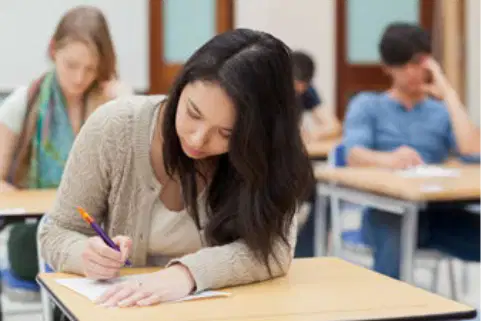
Is writing considered a motor skill or a motor reflex?
Motor skill
Motor reflex
Both a motor skill and a motor reflex
Neither a motor skill nor a motor reflex
Which of the following is an example of a motor skill?
Writing
Sneezing
Blinking in response to bright light
Knee-jerk reaction
Which of the following is an example of a motor reflex?
Catching a ball
Typing on a keyboard
Blinking when something approaches your eye
Drawing a picture
What is a motor program in the context of physical education?
A movement plan containing commands from the brain to muscles for complex motor skills
A type of exercise routine for building muscle strength
A nutritional plan for athletes
A set of rules for team sports
Which of the following best describes a sub-routine in a motor program?
A smaller movement or action that is part of a larger motor skill
A type of warm-up exercise
A rest period between exercises
A dietary supplement for athletes
How does the brain contribute to the execution of a motor program?
By sending commands to the muscles needed for a complex motor skill
By increasing heart rate during exercise
By providing energy for muscle contraction
By controlling breathing patterns
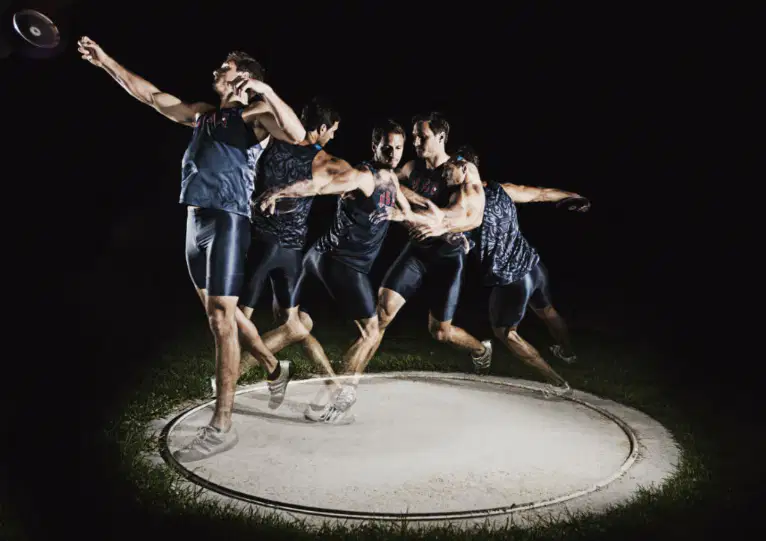
Describe what is happening in the provided photo using motor program terminology.
The athlete is executing a motor program made up of sub-routines to perform a discus throw.
The athlete is practicing meditation techniques.
The athlete is performing a stretching routine.
The athlete is participating in a team sport.
Which of the following best describes fine motor skills?
They are very precise and require the movement and use of smaller muscle groups.
They are less precise and require the movement and use of larger muscle groups.
They are affected by the environment and require adaptation.
They do not have a clearly defined start and finish point.
What distinguishes open motor skills from closed motor skills?
Open motor skills are not affected by the environment, while closed motor skills are.
Open motor skills are performed in stable and predictable environments.
Open motor skills are affected by the environment and require adaptation, while closed motor skills are performed in stable and predictable environments.
Open motor skills have a clearly defined start and finish point.
Which type of motor skill does NOT have a clearly defined start and finish point?
Discrete motor skills
Serial motor skills
Continuous motor skills
Fine motor skills
A gymnast performing a routine that links together several different movements is demonstrating which type of motor skill?
Discrete motor skill
Serial motor skill
Gross motor skill
Open motor skill
Explain how the environment influences the execution of open and closed motor skills, and provide an example of each.
Open motor skills are performed in stable environments, such as running on a treadmill; closed motor skills are performed in unpredictable environments, such as playing soccer.
Open motor skills require adaptation to unpredictable environments, such as playing soccer; closed motor skills are performed in stable environments, such as running on a treadmill.
Both open and closed motor skills are performed in unpredictable environments.
Both open and closed motor skills require adaptation to the environment.
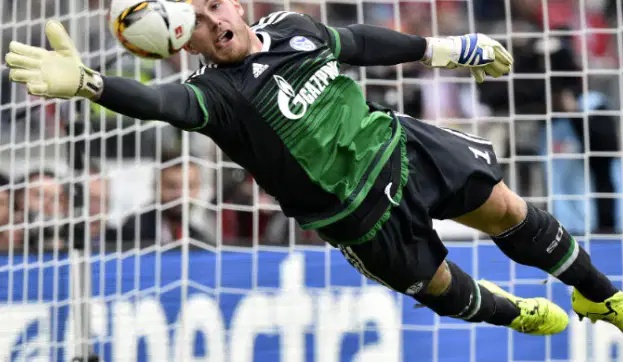
Based on the image, which type of motor skill is most likely being demonstrated by the goalkeeper?
Gross motor skill
Fine motor skill
Verbal skill
Cognitive skill
How might you classify the motor skills required for a goalkeeper making a save in soccer? (Consider the complexity and coordination involved.)
Complex, coordinated gross motor skills
Simple, isolated fine motor skills
Only verbal communication skills
Only mental calculation skills
Which of the following is NOT one of the five characteristics of motor skill learning?
Stability
Persistence
Flexibility
Consistency
What does the characteristic of "persistence" refer to in motor skill learning?
The ability to perform a skill in different situations
The ability to retain and perform a motor skill over time
The ability to control internal and external influences
The ability to perform a skill reliably and dependably
A student is able to perform a basketball free throw accurately in both calm and noisy environments. Which characteristic of motor skill learning does this best demonstrate?
Adaptability
Consistency
Stability
Improvement
If an athlete is able to perform a particular motor skill reliably and dependably over time, which characteristic are they demonstrating?
Improvement
Consistency
Adaptability
Persistence
Which mnemonic can help you remember the five characteristics of motor skill learning?
SPACE
SPICA
SPICE
SCIPA
Explain how "adaptability" as a characteristic of motor skill learning might be important for an athlete during a game.
It allows the athlete to perform a skill in response to changing game situations.
It helps the athlete to perform the skill for a long period of time.
It ensures the athlete can perform the skill without mistakes.
It helps the athlete to remember the skill.
A motor skill is …
the same as a reflex.
an involuntary movement.
a voluntary movement.
a complex movement.
When sub-routines are combined, they create a …
motor program.
motor reflex.
closed motor skill.
discrete skill.
Which of the following motor skills is the most closed?
practicing shooting hoops in basketball
running in a 100 meter relay race
taking a free kick in a soccer match
returning a serve in a tennis final
Skipping rope is a …
continuous motor skill.
discrete motor skill.
serial motor skill.
open motor skill.
What is the main idea behind the cognitive systems approach to motor learning?
The brain works like a computer that controls the body.
The muscles control the brain.
The body works independently of the brain.
The nerves control the brain directly.
Which of the following best describes the hierarchical aspect of the cognitive systems approach?
Higher control centres pass commands down to lower control centres.
Commands are sent randomly throughout the body.
Muscles send commands to the brain.
All commands are processed at the same level.
According to the cognitive systems approach, what does the linear description assume?
Commands are sent from the brain in a predetermined, step-by-step order.
Commands are sent all at once to every part of the body.
The muscles generate their own commands.
The brain receives commands from the nerves.
Which of the following is NOT a characteristic of the cognitive systems approach to motor learning?
It assumes the brain works like a computer.
It describes control as hierarchical or top down.
It assumes commands are sent in a linear, step-by-step order.
It suggests the body controls the brain.
Explain how the hierarchical and linear descriptions of the cognitive systems approach differ in their explanation of how commands are sent in the body.
Hierarchical focuses on levels of control, while linear focuses on the order of commands.
Both focus on the order of commands only.
Hierarchical assumes commands are sent randomly, while linear assumes they are sent all at once.
Both assume the muscles control the brain.
Which of the following is one of the two main models used to explain how we process and learn motor skills within the cognitive systems approach?
The information processing model
The behavioral conditioning model
The reinforcement learning model
The ecological dynamics model
According to the cognitive systems approach to motor learning, what are the two main models used to explain motor skill learning?
The information processing model and Fitts and Posner’s model
The classical conditioning model and the social learning model
The ecological model and the dynamic systems model
The reinforcement model and the feedback model
Which stage is NOT part of Fitts and Posner’s model of motor learning?
Response execution
The cognitive stage
The associative stage
The autonomous stage
Arrange the stages of the information processing model in the correct order.
Stimulus identification, Response selection, Response execution
Response execution, Stimulus identification, Response selection
Response selection, Response execution, Stimulus identification
Response execution, Response selection, Stimulus identification
Which stage in Fitts and Posner’s model is associated with the highest level of skill automation?
The autonomous stage
The cognitive stage
The associative stage
The response selection stage
What is the main function of the central nervous system in the information processing model?
To digest food
To receive, process, and store information from the environment
To produce hormones
To control muscle growth
What is a piece of information received by the body often referred to as?
Impulse
Reaction
Stimulus
Response
Which of the following is an example of an external stimulus?
Hunger
Thirst
Rain
Heartbeat
What is the difference between internal and external stimuli?
Internal stimuli come from outside the body, external stimuli come from inside
Internal stimuli are always visible, external stimuli are not
Internal stimuli come from inside the body, external stimuli come from outside the body
Internal stimuli are only related to emotions, external stimuli are not
According to the information processing model, which system is responsible for processing information received from the environment?
Digestive system
Respiratory system
Central nervous system
Circulatory system
A rugby player feels the rain while playing. According to the information processing model, what type of stimulus is this?
Internal stimulus
Emotional stimulus
External stimulus
Reflex stimulus
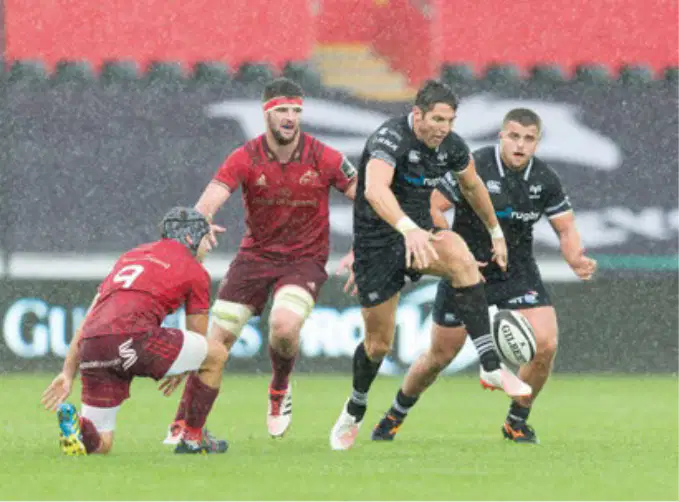
The image shows rugby players playing in the rain, illustrating an example of an external stimulus. What does the image show?
The image shows an example of an internal stimulus.
The image shows an example of a reflex action.
The image shows an example of an external stimulus.
The image shows an example of a learned response.
According to the information processing model, how many stages are involved in performing an action?
Two
Three
Four
Five
What is the main focus of Stage 1 in the information processing model?
Producing a response
Identifying an input, stimuli, or cue
Developing a motor program
Evaluating the outcome
Which stage involves the athlete making a decision or developing a motor program in response to the input?
Stage 1 – Stimulus identification
Stage 2 – Response selection
Stage 3 – Response execution
Stage 4 – Feedback
In the context of motor learning, what happens during Stage 3 – Response execution?
The athlete identifies a cue
The athlete makes a decision
The learner produces or executes a response or action
The learner receives feedback
Why is it important for an athlete to correctly identify the stimulus in Stage 1 of the information processing model?
It allows them to skip the next stages
It ensures they can make an appropriate decision and response
It helps them avoid physical activity
It guarantees a win in the game
According to Fitts and Posner’s stage model of learning, what is the main characteristic of the cognitive stage?
Performer’s movements are slow, inconsistent, and ineffective with many errors.
Learners can perform skills automatically without conscious effort.
Performance becomes more consistent with fewer errors.
Learners have mastered all aspects of the skill.
Which stage in Fitts and Posner’s model is typically the longest for most athletes?
The cognitive stage
The associative stage
The autonomous stage
The feedback stage
What is the primary focus of feedback during the cognitive stage of motor learning?
Demonstration and explanation
Self-reflection and analysis
Peer assessment
Competition results
In which stage do learners perform skills consistently and fluently in different environments without conscious effort?
Cognitive stage
Associative stage
Autonomous stage
Preparatory stage
Why do most skilled performers fluctuate between the associative and autonomous stages?
Because improvement in the autonomous stage is slow and not always maintained
Because feedback is only available in the associative stage
Because the cognitive stage is skipped by skilled performers
Because the associative stage is shorter than the cognitive stage
A student is learning a new sport and their movements are slow and full of errors. According to Fitts and Posner, which stage are they most likely in?
Cognitive stage
Associative stage
Autonomous stage
Expert stage
How does performance typically change as a learner moves from the cognitive stage to the associative stage?
Performance becomes more consistent with fewer errors.
Performance becomes slower and less accurate.
Performance is automatic and requires no thought.
Performance is not affected.
What is a key difference between the associative and autonomous stages in Fitts and Posner’s model?
Associative stage involves practice and improvement; autonomous stage involves automatic performance.
Associative stage is for beginners; autonomous stage is for experts only.
Associative stage requires no feedback; autonomous stage requires constant feedback.
Associative stage is shorter than the cognitive stage; autonomous stage is the longest.
How might the information process model be applied to the scenario depicted in the tennis image?
By analyzing how the player perceives, processes, and responds to the incoming tennis ball
By determining the player’s favorite color
By counting the number of spectators in the background
By identifying the brand of the tennis racket
What does the dynamic systems approach to motor learning view motor learning as?
A complex, unpredictable, and constantly changing process.
A simple, predictable, and static process.
A process controlled only by the brain.
A process that never changes.
According to the dynamic systems approach, how are movements coordinated and controlled?
Through complex, non-linear interactions between all parts of the body.
Exclusively by a single, centralised command centre.
Only by the muscles.
By environmental factors alone.
Which of the following is NOT one of the three types of constraints central to the dynamic systems approach?
Social constraints
Task constraints
Environmental constraints
Individual constraints
Explain how the dynamic systems approach differs from the cognitive systems approach in terms of movement coordination. (DoK Level 2)
The dynamic systems approach suggests movements are coordinated by interactions between all body parts, while the cognitive systems approach suggests coordination by a single command centre.
Both approaches suggest movements are coordinated by the brain only.
The dynamic systems approach ignores environmental factors, while the cognitive systems approach includes them.
Both approaches focus only on individual constraints.
A student is learning a new motor skill in a changing environment. Using the dynamic systems approach, which types of constraints should be considered to understand their learning process? (DoK Level 2)
Task, environmental, and individual constraints
Only environmental constraints
Only individual constraints
Only task constraints
Given a scenario where an athlete adapts their movement in response to weather conditions, which type of constraint from the dynamic systems approach is primarily involved? (DoK Level 3)
Environmental constraint
Task constraint
Individual constraint
Social constraint
If a coach wants to improve a player’s performance by modifying the rules of a game, which type of constraint is being manipulated according to the dynamic systems approach? (DoK Level 3)
Task constraint
Environmental constraint
Individual constraint
Physical constraint
Which of the following best describes "task constraints" in the dynamic systems approach to motor learning?
Aspects of the task that need to be overcome or adapted to, such as rules, equipment, and playing surface
Weather conditions and the number of spectators
Characteristics of the individual, such as skill and motivation
The coach’s instructions during a game
Which of the following is an example of an environmental constraint in motor learning?
The shape and weight of equipment
The height and strength of the athlete
Weather conditions and the condition of the playing surface
The rules of the game
Individual constraints in motor learning refer to which of the following?
The rules of the game
The characteristics of the individual, such as height, skill, and confidence
The shape of the playing surface
The number of spectators
Roger Federer must adjust to all three categories of constraints during a tennis match. Which category would include his motivation and confidence?
Task constraints
Environmental constraints
Individual constraints
Equipment constraints
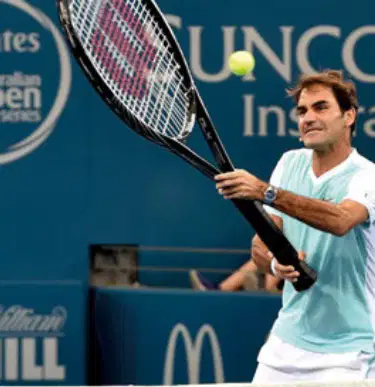
Which constraint would the size and shape of the tennis court fall under?
Task constraint
Environmental constraint
Individual constraint
Social constraint
Explain how Roger Federer might adapt to environmental constraints during a tennis match. Use reasoning and evidence from the dynamic systems approach.
By changing his height and weight
By adjusting his playing style to weather conditions and the number of spectators
By ignoring the rules of the game
By using a different racket for every point
What is a key concept in the dynamic systems approach to motor learning?
Self-organisation
Memorisation
Repetition
Observation
According to the dynamic systems approach, what does self-organisation involve?
Making adjustments in response to constraints without conscious thought or specific instruction
Following strict instructions from a coach
Memorising a set of movements
Practicing the same movement repeatedly
Which of the following best describes how a learner adapts in the dynamic systems approach?
By constantly making adjustments in response to constraints
By copying others exactly
By ignoring feedback
By focusing only on conscious thought
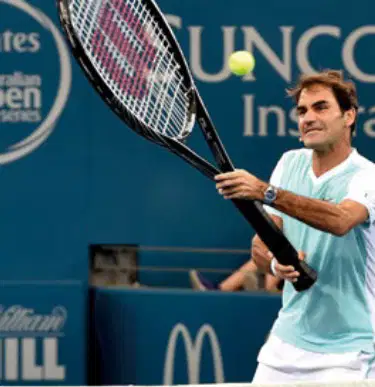
A tennis player is about to return a serve. According to the dynamic systems approach, what process allows the player to adapt to the situation without explicit instructions?
Self-organisation
Deliberate practice
Visualisation
External feedback
What are rate limiters in the context of motor learning?
Factors that have a negative effect on learning processes and restrict performance
Techniques to improve motor skills quickly
Exercises to increase speed and agility
Methods for enhancing memory retention
Rate limiters can be related to which of the following? (Select the most complete answer.)
The individual, the environment, or the task
Only the individual
Only the environment
Only the task
Which of the following is NOT listed as a category of individual rate limiters?
Physical rate limiters
Environmental rate limiters
Psychological rate limiters
Technical rate limiters
Which of the following best describes a technical rate limiter?
A limitation in the knowledge of game strategies
A limitation in the ability to perform specific skills or techniques
A limitation in physical strength
A limitation in motivation or confidence
Imagine you are learning a new sport. How might psychological rate limiters affect your performance, and what could you do to overcome them?
They may cause anxiety or lack of confidence; practicing relaxation techniques and positive self-talk could help overcome them.
They may cause muscle fatigue; taking more rest could help overcome them.
They may cause poor vision; wearing glasses could help overcome them.
They may cause slow reaction time; using better equipment could help overcome them.
Which of the following is NOT listed as one of the main ways practice develops the characteristics of motor skill learning?
Stability
Persistence
Flexibility
Adaptability
Which of the following is a type of practice classified in physical education?
Massed practice
Isolated practice
Passive practice
Theoretical practice
A coach wants to improve an athlete's adaptability and consistency in performance. According to the material, which approach should the coach focus on?
Increasing the number of drills and problem solving activities
Reducing the amount of practice
Focusing only on theoretical knowledge
Avoiding varied practice
Which type of practice involves practising a skill in a continuous constant manner with very short or non-existent rest periods?
Massed practice
Distributed practice
Random practice
Serial practice
What is the main characteristic of distributed practice?
Skills are practised in a set sequence
Skills are practised with periods of rest equal to or longer than training periods
Skills are practised as a whole
Skills are practised in a random order
Which type of practice involves practising a skill as a whole, in its entirety?
Part practice
Whole practice
Serial practice
Blocked practice
If a learner repeats an isolated skill for a set period or number of repetitions, which type of practice are they using?
Random practice
Serial practice
Blocked practice
Distributed practice
How does random practice differ from serial practice?
Random practice involves practising skills in a constantly changing order, while serial practice involves a set sequence.
Random practice involves practising a skill as a whole, while serial practice involves practising in parts.
Random practice has no rest periods, while serial practice has long rest periods.
Random practice is only used for beginners, while serial practice is for advanced learners.
A coach wants athletes to practise several different sets of skills in an order that is constantly changing. Which type of practice should the coach use?
Blocked practice
Serial practice
Random practice
Massed practice

