
 Worksheets
Women's War Work
Total questions: 28
Worksheet time: 14mins
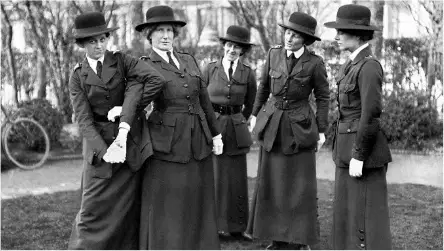
What was one of the main responsibilities of the Women’s Patrols during the First World War?
To fight in battles
To maintain discipline and monitor women’s behaviour
To work in factories
To drive buses
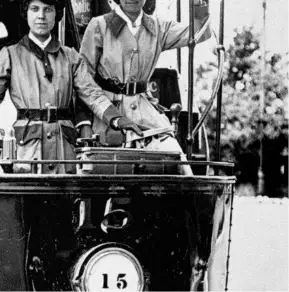
Name two jobs that women took up in transport during the First World War.
Bus conductress, ticket collector
Factory manager, ship captain
Bank teller, police officer
School principal, nurse
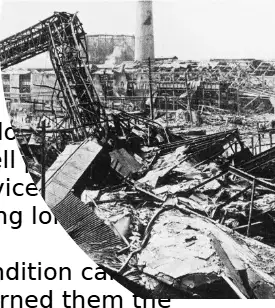
Why were women working in munitions factories during World War I nicknamed 'canaries'?
Because their skin turned yellow from working with TNT, which caused toxic jaundice.
Because they wore yellow uniforms as a safety measure.
Because they sang songs while working to boost morale.
Because they worked in cages similar to canaries.

The main responsibility of the Women’s Patrols was to fight in battles during the First World War.
True
False
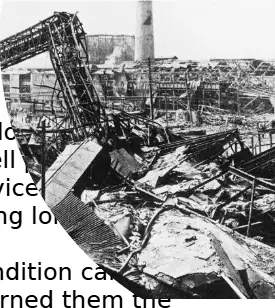
How long was a typical shift for women working in the Gretna cordite factory?
12 hours
6 hours
8 hours
10 hours
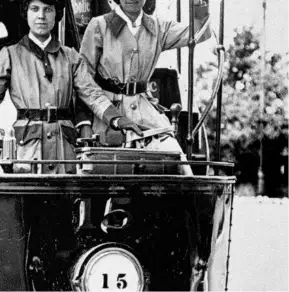
What happened to many of the jobs that women took up in transport after the war ended?
Many of these opportunities were closed to women as servicemen returned to their jobs.
Women were promoted to higher positions in transport.
The number of women in transport jobs increased further.
Women were given permanent contracts in transport roles.
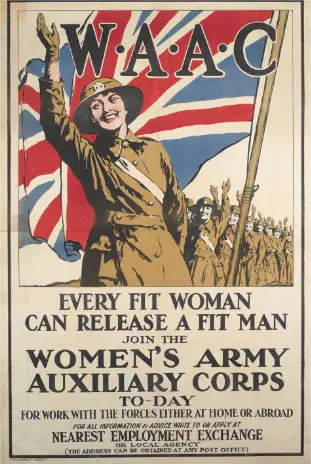
When was the Women's Army Auxiliary Corps (WAAC) established?
August 1914
December 1916
April 1918
November 1917
What was the new name given to the WAAC in April 1918?
Queen Mary's Army Auxiliary Corps
Women's Royal Naval Service
Women's Royal Air Force
Women's Land Army
The WAAC was organised into four units: cookery, mechanical, clerical and _________?
miscellaneous
medical
logistics
supply
Over 100,000 women joined Britain’s armed forces during the war.
True
False
How much were shorthand typists paid per week in the Women's Army Auxiliary Corps?
24 shillings
45 shillings
12 shillings six pence
36 shillings
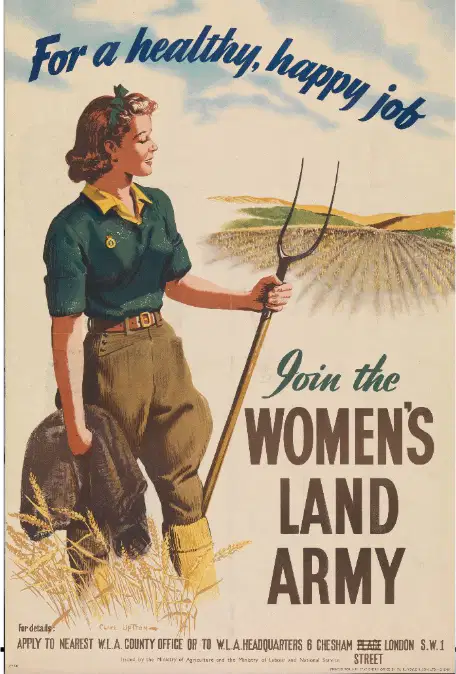
Why was the Women's Land Army formed in Britain?
To provide more soldiers for the war
Because there was only three weeks' worth of food supply left
To train women for clerical work
To organise competitions
Who established the Women's Branch of the Board of Agriculture in January 1917?
Queen Mary
Meriel Talbot
The War Office
The Army Council
What was the minimum age for women to join the Women's Land Army as 'land girls'?
18 years of age
16 years of age
21 years of age
25 years of age
According to the passage, how much were women paid per week for working on farms before passing the efficiency test?
10 shillings
18 shillings
20 shillings
23 shillings
Fill in the blank: By May 1919, ________ women became official full-time members of the Women's Land Army.
23,000
10,000
5,000
50,000
What was the main trained corps of military nurses called during World War I?
Queen Alexandra's Imperial Military Nursing Service (QAIMNS)
Royal Army Medical Corps (RAMC)
Voluntary Aid Detachment (VAD)
Women's Army Auxiliary Corps (WAAC)
At the end of World War I, the Queen Alexandra's Imperial Military Nursing Service numbered over 10,000 nurses.
True
False
What tasks were poorly paid VADs mainly used for during the war?
Domestic labour, cleaning floors, changing bed linen, swilling out bedpans.
Surgical operations and medical diagnosis.
Leading military strategy meetings.
Designing propaganda posters.
According to the passage, what percentage of VAD members in 1914 were women and girls?
One-third
Half
Two-thirds
All
The challenges faced by VADs when trying to serve in overseas military hospitals during World War I included:
Difficult working conditions, language barriers, and limited medical supplies.
Easy access to resources and comfortable accommodations.
Minimal responsibilities and short working hours.
Frequent vacations and high salaries.
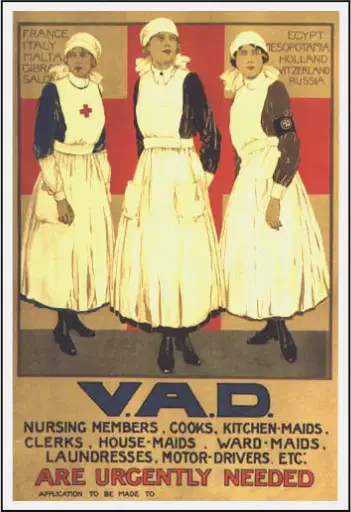
What types of roles were urgently needed for VADs according to the poster?
Nursing members, cooks, kitchen-maids, clerks, house-maids, ward-maids, laundresses, motor drivers, etc.
Doctors, engineers, architects, pilots, and scientists.
Artists, musicians, dancers, actors, and writers.
Teachers, librarians, accountants, bankers, and lawyers.
During four years of war, how many VADs worked in hospitals and served as ambulance drivers and cooks?
38,000
10,000
75,000
5,000
What was the main concern of men working in factories when women started working there during WWI?
They were worried about their loss of status and the threat to their wages.
They were excited to have more help in the factories.
They believed women would work harder than men.
They thought women would only work temporarily and not affect them.
How did fashion change for women during WWI?
Women started wearing trousers, shorter skirts, cutting their hair short, and swearing and smoking in public.
Women began wearing elaborate ball gowns and corsets more frequently.
Women adopted traditional men's suits and top hats as everyday attire.
Women wore only long dresses and avoided any changes in their appearance.
All women in Britain gained the right to vote in 1918 as a result of their work during WWI.
True
False
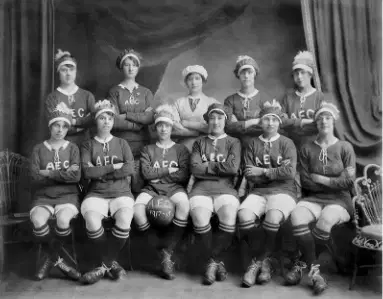
What was the name of the most famous women's football team during WWI, as shown in the photograph?
Dick Kerr’s ladies of Preston
Arsenal Ladies FC
Manchester City Women
Chelsea Ladies
Why did many women stay single after WWI?
Because the war resulted in the deaths of 750,000 young men, and women could also now work in education or medicine, but only if they stayed single.
Because women were not allowed to marry after the war.
Because women preferred to travel abroad instead of settling down.
Because the government encouraged women to remain single to save resources.

