
 Worksheets
2G6 MUSARTS
Total questions: 67
Worksheet time: 34mins
What does the term "rhythm" refer to in music?
The flow or pattern of sound and silence arranged in music
The melody of a song
The lyrics of a musical composition
The instruments used in a musical piece
How does rhythm help in music?
It determines the instruments used
It sets the mood or feel of the music
It decides the lyrics of the song
It creates the melody of the composition
What is rhythm primarily concerned with in a musical composition?
The arrangement of flow and pattern of sounds and silence
The choice of musical instruments
The tempo of the song
The genre of the music
What is the duration of a whole note in beats?
2 beats
4 beats
1 beat
1/2 beat
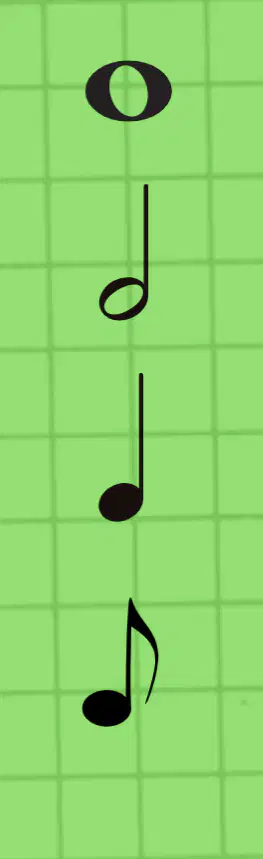
Which symbol represents a half rest?
A filled oval with a stem
A rectangle sitting on the middle line of the staff
A rectangle hanging from the fourth line of the staff
A single vertical line
How many beats of silence does a quarter rest represent?
4 beats
2 beats
1 beat
1/2 beat
Which note has a duration of 1/2 beat?
Whole note
Half note
Eighth note
Quarter note
What is the difference between a whole note and a whole rest?
A whole note represents 4 beats of sound, while a whole rest represents 4 beats of silence.
A whole note represents 2 beats of sound, while a whole rest represents 2 beats of silence.
A whole note represents 1 beat of sound, while a whole rest represents 1 beat of silence.
A whole note represents 1/2 beat of sound, while a whole rest represents 1/2 beat of silence.
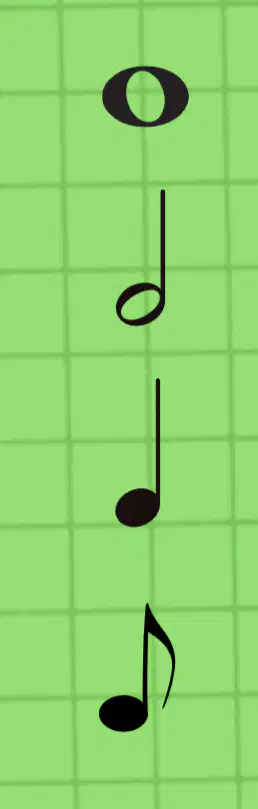
Which of the following symbols represents an eighth note?
A filled oval with a stem and one flag
A filled oval with a stem
A rectangle sitting on the middle line of the staff
A rectangle hanging from the fourth line of the staff
What does each NOTE or REST have that determines its length?
Rhythm
Beat
Tempo
Melody
What does a NOTE indicate in music?
Silence
Pause
Sound
Movement
What does a REST indicate in music?
Sound
Silence
Beat
Tempo
How does the beat help singers, musicians, or dancers?
It helps them create new melodies.
It guides them to sing, play, or move on time.
It teaches them how to play instruments.
It helps them memorize lyrics.
What is the purpose of clapping in the context of "How to Clap the Notes"?
To create random sounds
To follow the number of beats of the notes
To make noise for fun
To distract others
According to the reminder, when should you clap while following the beats of the notes?
On every beat
On the first count/beat only
On the last beat only
On alternate beats
How many claps are associated with a whole note?
1 clap
2 claps
3 claps
4 claps
What is the correct clapping pattern for a half note?
Clap-2-3-4
Clap-2
Clap-Clap-Clap
Clap (faster)
Which note requires clapping faster according to the instructions?
Whole note
Half note
Quarter note
Quarter note (faster)
How many beats does 1 whole note have?
2 beats
4 beats
8 beats
1 beat
1 whole note is equivalent to how many half notes?
1 half note
2 half notes
4 half notes
8 half notes
1 whole note is equivalent to how many quarter notes?
2 quarter notes
4 quarter notes
8 quarter notes
1 quarter note
1 whole note is equivalent to how many eighth notes?
4 eighth notes
6 eighth notes
8 eighth notes
2 eighth notes
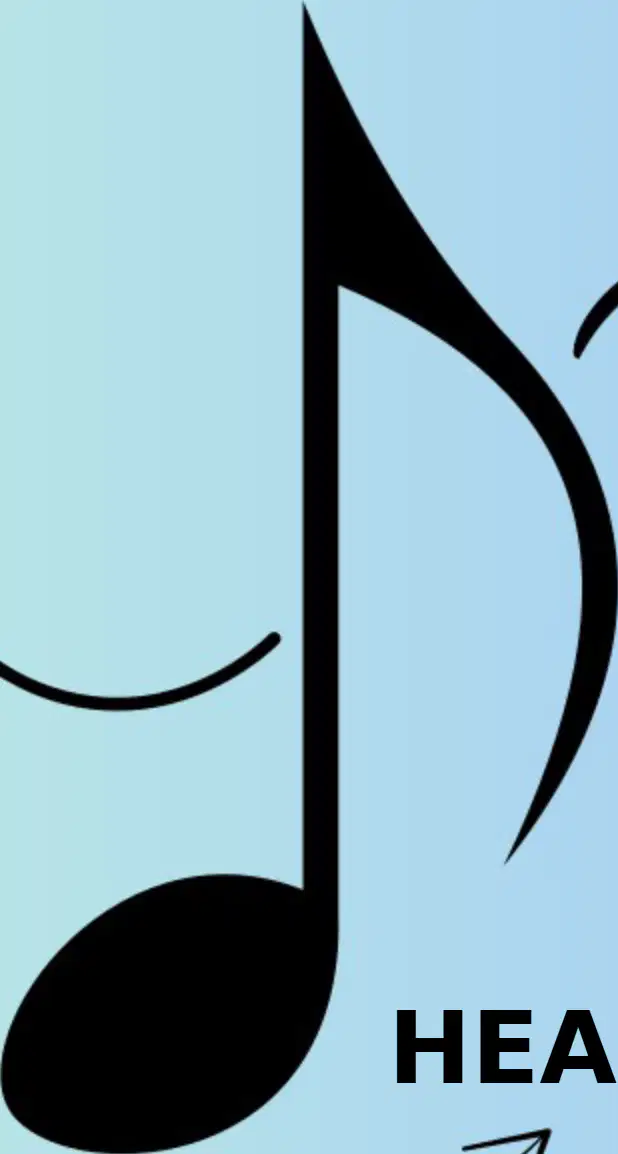
What are the three main parts of a musical note?
Stem, Flag, and Body
Stem, Flag, and Head
Stem, Tail, and Head
Stem, Body, and Flag
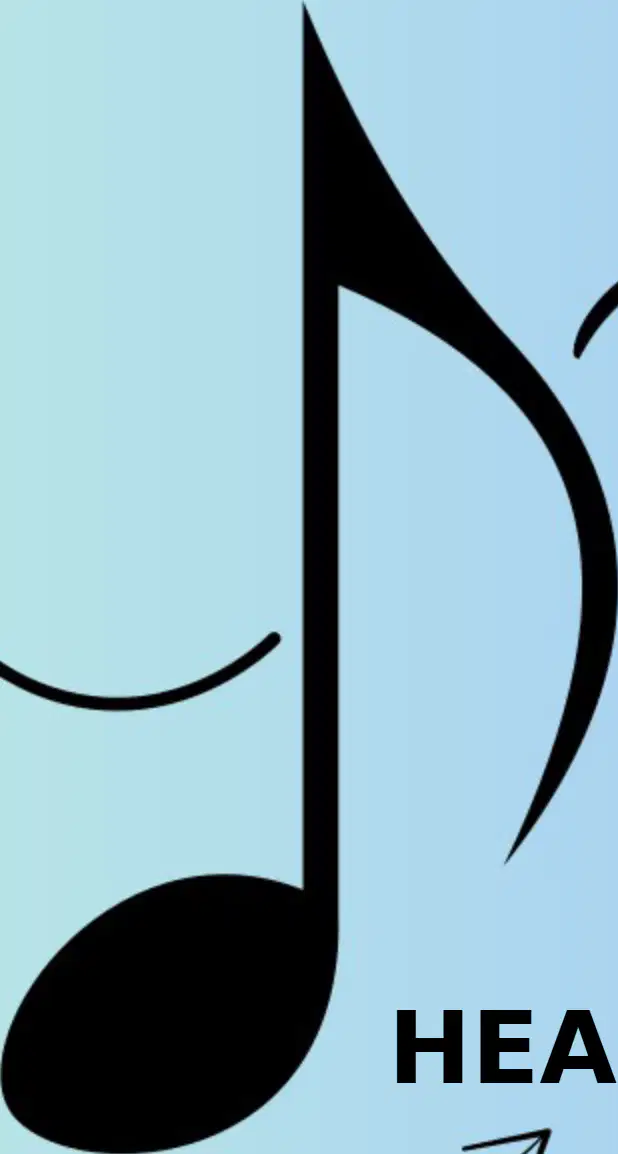
Which part of a musical note is located at the top and curves outward?
Stem
Flag
Head
Body
What is the name of the elongated vertical line in a musical note?
Stem
Flag
Head
Tail

Which part of a musical note is the oval-shaped section at the bottom?
Stem
Flag
Head
Body
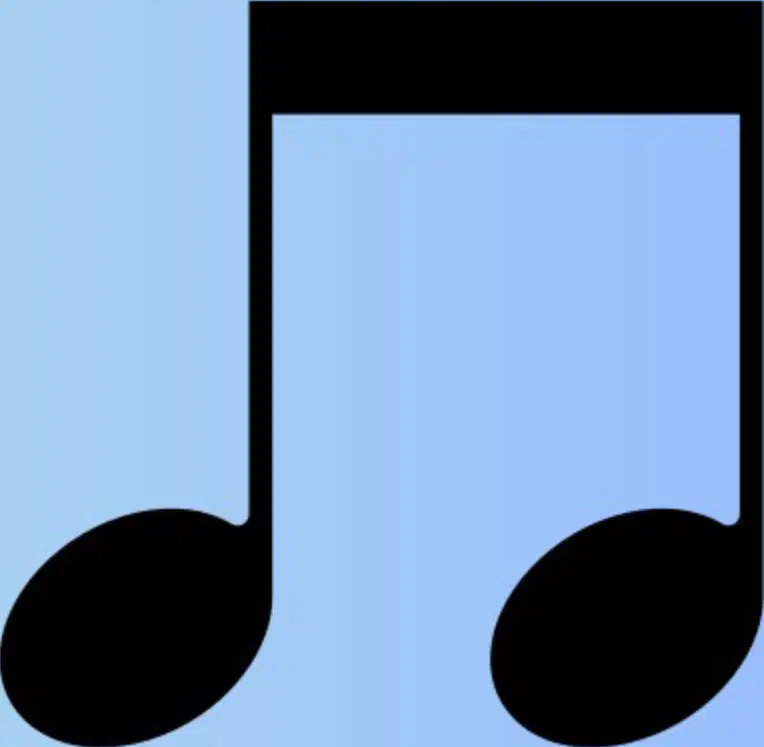
What is a beam in musical notation?
A line used to connect a series of notes and show their grouping
A symbol that replaces the staff in musical notation
A mark used to indicate the tempo of a song
A flag used to represent whole notes
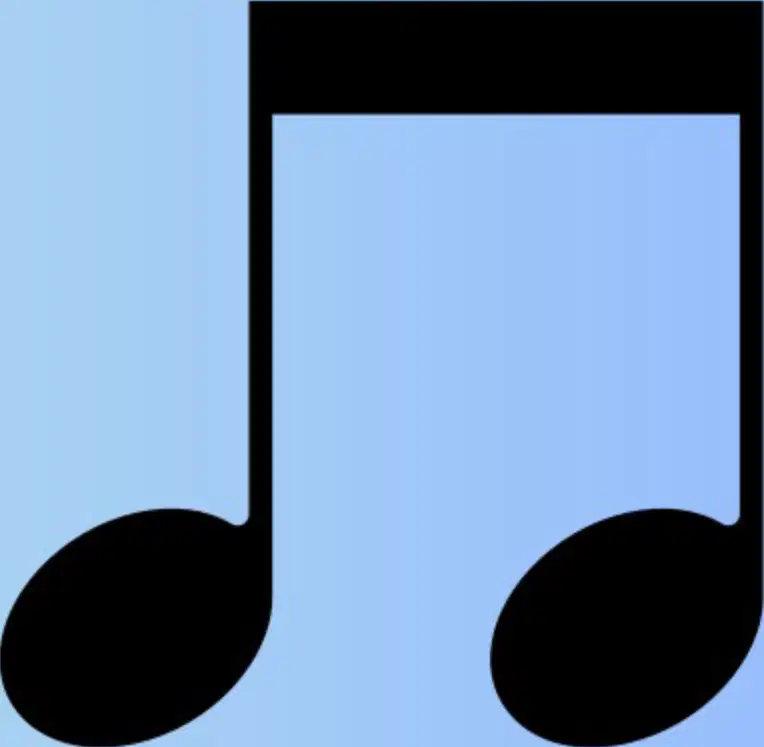
Which types of notes do not use beams in musical notation?
Whole, half, and quarter notes
Eighth and sixteenth notes
Quarter and eighth notes
Half and sixteenth notes
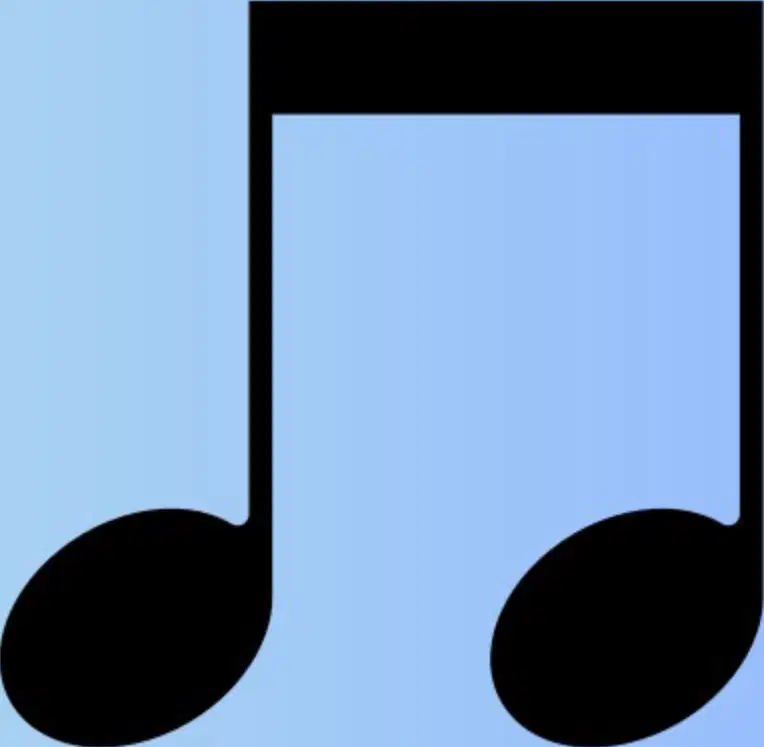
Where is a beam usually written in relation to the notes it connects?
Either below or above the notes
Only above the notes
Only below the notes
In the middle of the notes
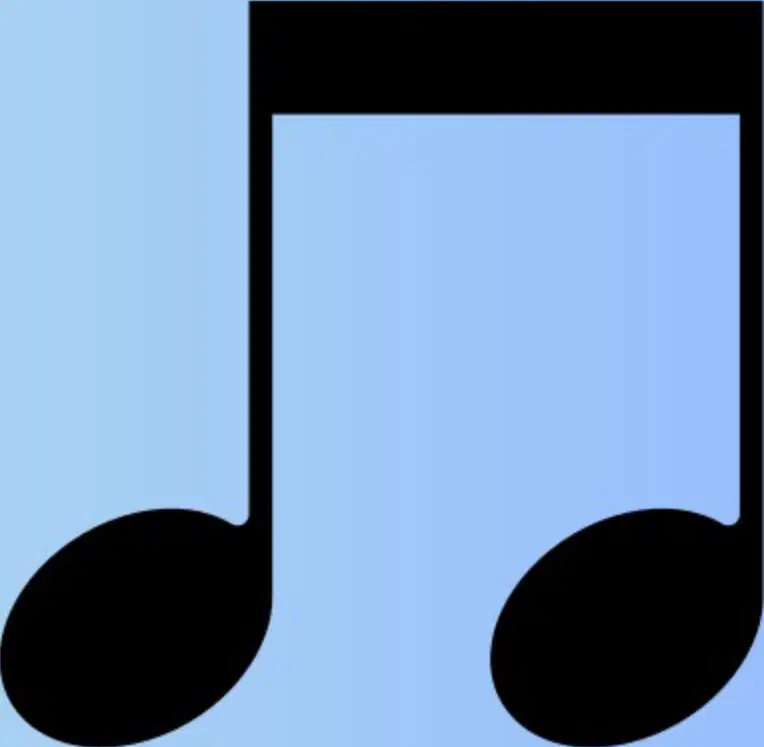
What does a beam replace in musical notation?
The flag
The staff
The clef
The note head
What does a dot (●) placed beside a note indicate in music notation?
It doubles the original value of the note.
It adds half the original value of the note to its duration.
It subtracts half the original value of the note from its duration.
It has no effect on the note's duration.
How many beats does a dotted half note have in total?
2 beats
3 beats
4 beats
1.5 beats
If the original value of a half note is 2 beats, what is the value added by the dot?
1 beat
2 beats
0.5 beats
3 beats
Illustration of a dotted half note and its calculation: 2 beats (original value) + 1 beat (half value) = 3 beats.
3 beats
2 beats
4 beats
2.5 beats
What is the purpose of a bar line in music notation?
To indicate the end of the musical composition
To separate each bar or measure
To represent notes and rests
To create a new section of music
What does a double bar line indicate in music?
The end of the musical composition
A new section of music
The start of a measure
The number of beats in a bar
How is a final bar line different from a double bar line?
It is thinner than a double bar line
It is thicker and indicates the end of the musical composition
It separates measures into equal parts
It represents notes and rests
What is a staff made up of in music notation?
Four lines and five spaces
Five lines and four spaces
Six lines and three spaces
Three lines and six spaces
What is written on a staff in music notation?
Measures and bars
Notes and rests
Bar lines and double bar lines
Beats and rhythms
What is the name of the set of five horizontal lines and four spaces used in music notation?
Staff
Bar Line
Double Bar Line
Final Bar Line

Which part of the music staff is used to separate measures in a piece of music?
Staff
Bar Line
Double Bar Line
Final Bar Line

What is the name of the two vertical lines that indicate the end of a section or piece of music?
Staff
Bar Line
Double Bar Line
Final Bar Line

What is the name of the thick vertical line that marks the end of a piece of music?
Staff
Bar Line
Double Bar Line
Final Bar Line
What does the time signature indicate in music?
The speed of the music
The number of beats in a measure and the kind of note that receives one beat
The pitch of the notes
The volume of the music
How is a time signature written in music notation?
As a single number
As a word
Like a fraction, with two numbers
As a symbol
What does the top number in a time signature represent?
The kind of note that receives one beat
The number of beats in one measure
The tempo of the music
The key of the music
What does the bottom number in a time signature represent?
The number of beats in one measure
The kind of note that receives one beat
The tempo of the music
The pitch of the notes
What is the pronunciation of the time signature 3/4?
Two-Four
Three-Four
Four-Four
One-Four
How many beats are in a measure for the time signature 2/4?
Two
Three
Four
One
Which type of note receives one beat in the time signature 4/4?
Half Note
Quarter Note
Whole Note
Eighth Note
What is the pronunciation of the time signature 4/4?
Two-Four
Three-Four
Four-Four
One-Four
How many beats are in a measure for the time signature 3/4?
Two
Three
Four
One
What is the pattern of beats in a duple meter?
STRONG-WEAK-STRONG-
WEAK-STRONG-WEAK-
STRONG-WEAK-WEAK-
STRONG-STRONG-WEAK-
Which meter has the pattern WEAK-WEAK-STRONG?
Duple
Triple
Quadruple
None of the above
In a quadruple meter, what is the pattern of beats?
STRONG-WEAK-STRONG-
WEAK-WEAK-STRONG-
STRONG-WEAK-WEAK-
STRONG-WEAK-WEAK-WEAK-
To classify the meter, what do you need to listen for?
The tempo of the music
The pitch of the notes
The strong and weak beats
The melody of the song
What does the term "tempo" refer to in music?
The pitch of the music
The speed of the music
The volume of the music
The rhythm of the music
Which language is commonly used for musical terms like "tempo"?
French
German
Italian
Spanish
What is the meaning of the term "Adagio" in music?
Happy and quick
Moderate pace
Slow and relaxed
Loud and strong
If a piece of music is described as "Moderato," how should it be played?
At a slow and relaxed pace
At a moderate pace
At a happy and quick pace
At a very loud pace
What does the term "Allegro" mean in music?
Slow and relaxed
Moderate pace
Happy and quick
Soft and gentle
What is the historical significance of the Sarsuwela during the first decade of American rule in the Philippines?
It was a form of entertainment for American soldiers.
It served as a powerful tool for inspiring nationalism.
It was used to teach English to Filipinos.
It was a celebration of American culture.
Where are zarzuelas or sarsuwelas still performed today?
Cultural Center of the Philippines (CCP), Meralco Theater, and UP Theater
National Museum of the Philippines
Philippine Arena and Mall of Asia Arena
Local barangay halls and schools
A theatrical performance of a Sarsuwela with actors in traditional Filipino attire.
A modern dance competition
A rock concert
A Sarsuwela play
A puppet show

What was the original name of the theater that was later renamed as "Bodabil" in the Philippines?
Broadway
Vaudeville
Kabuki
Operetta
What is one of the main characteristics of Bodabil performances?
Traditional Filipino folk dances
American popular dances, songs, and comedy acting
Opera singing and classical music
Martial arts demonstrations
What type of shows featured Bodabil performances?
Variety shows
Puppet shows
Magic shows
Circus acts

