
NEW
Font size
 Worksheets
Static Electricity and Charging Methods Quiz
Total questions: 20
Worksheet time: 10mins

A student observes that after rubbing a plastic ruler, it can attract small paper scraps. Using strategic reasoning, explain what type of force is responsible for this phenomenon and why it occurs.
Magnetic force, because the ruler becomes magnetized.
Gravitational force, because the ruler pulls the paper down.
Electric force, because rubbing transfers charges that attract the paper.
Nuclear force, because the ruler affects the atomic nuclei in the paper.
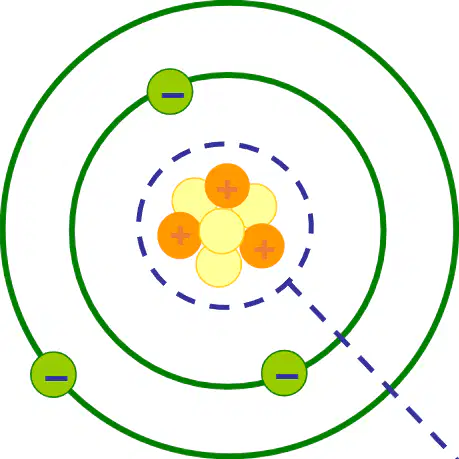
Given the information that atoms are made of protons, neutrons, and electrons, reason how the overall charge of an atom is determined and explain what would happen to the charge of an atom if it gained an extra electron.
The overall charge of an atom is always positive, and gaining an extra electron makes it more positive.
The overall charge of an atom depends on the balance between protons and electrons; gaining an extra electron makes the atom negatively charged.
The overall charge of an atom is always neutral, and gaining an extra electron does not affect it.
The overall charge of an atom depends only on the number of neutrons; gaining an extra electron makes no difference.
Given that protons have a positive charge, analyze the interaction between two protons and explain why they behave in that way.
They repel each other because like charges repel.
They attract each other because opposite charges attract.
They remain neutral and do not interact.
They combine to form a neutron.
Using your understanding of charge transfer, explain why rubbing a plastic strip on your skin results in the plastic acquiring a negative charge. What reasoning supports this outcome?
Electrons move from the skin to the plastic, making the plastic negatively charged.
Protons move from the skin to the plastic, making the plastic negatively charged.
Electrons move from the plastic to the skin, making the plastic negatively charged.
Neutrons move from the skin to the plastic, making the plastic negatively charged.
Strategically analyze what happens when a negatively charged plastic strip is brought near a desk. How does this interaction lead to attraction between the plastic and the desk?
Electrons in the desk are repelled, leaving a positive area that attracts the negative plastic.
Protons in the desk are attracted, leaving a negative area that attracts the negative plastic.
Electrons in the desk are attracted, leaving a negative area that repels the negative plastic.
Neutrons in the desk are repelled, leaving a positive area that attracts the negative plastic.
Explain, using reasoning and evidence, how a positively charged rod can attract a neutral object even though the object itself is not charged.
The positively charged rod induces a negative charge on the side of the neutral object closest to it, and a positive charge on the side farther away. The attraction between the rod and the induced negative charge is stronger than the repulsion between the rod and the induced positive charge, resulting in a net attraction.
The positively charged rod transfers its charge to the neutral object, making it positively charged and causing attraction.
The neutral object becomes completely negatively charged, which causes it to be attracted to the positively charged rod.
The positively charged rod repels all charges in the neutral object, causing it to move away.
Given the information about conductors, reason how the ability of outer electrons to drift away from the nucleus affects the electrical properties of materials, and why this is important for static electricity.
The drifting of outer electrons allows conductors to form a free electron cloud, enabling the flow of electric charge.
The drifting of protons allows conductors to form a free proton cloud.
The inability of electrons to move makes conductors poor at transferring charge.
The drifting of neutrons increases the conductivity of materials.

Strategically analyze how the concept of "action at a distance" applies to gravitational force, and provide an example of how this principle is observed in the solar system.
Gravitational force is an "action at a distance" because it can pull objects toward Earth without physical contact; for example, the Sun's gravity keeps planets in orbit even though they are millions of kilometers away.
Gravitational force requires direct contact between objects, so planets only orbit the Sun when they touch its surface.
Gravitational force only works within Earth's atmosphere, so planets outside the atmosphere are not affected.
Gravitational force is an "action at a distance" only for objects made of iron, such as meteorites.
Suppose you have two charges of different magnitudes. Using your understanding of electric field lines, describe how the number of field lines would differ between the two charges and explain the reasoning behind it.
The charge with greater magnitude will have more field lines because the number of field lines is directly proportional to the magnitude of the charge.
Both charges will have the same number of field lines because field lines are imaginary.
The charge with lesser magnitude will have more field lines because it is weaker.
The number of field lines does not depend on the magnitude of the charge.
Evaluate why electric field lines are always perpendicular to the surface of a charge and discuss what would happen if they were not.
Because if they were not perpendicular, there would be a component of the electric field along the surface, causing charges to move.
Because electric field lines are always parallel to the surface.
Because electric field lines are only present inside the charge.
Because the surface of the charge is always neutral.

Given the definition of an electric field as a vector field describing the electric force per unit charge, explain how the presence of multiple charges affects the shape and direction of the electric field in the surrounding space. Use reasoning to describe the differences between the field around a single charge and the field around two charges of opposite or like sign.
The field around multiple charges is simply the sum of the fields around each charge, with no interaction or disturbance.
The field around two charges of opposite sign shows field lines connecting the charges, indicating attraction, while like charges show field lines repelling and not connecting, indicating repulsion.
The field around two charges of opposite sign shows field lines repelling, while like charges show field lines connecting, indicating attraction.
The field around multiple charges is always uniform and does not depend on the arrangement or type of charges.
A charged particle experiences a force of 10 Newtons in an electric field. If the test charge is 2 Coulombs, use the formula for electric field strength to determine the magnitude of the electric field. Show your reasoning.
5 N/C
20 N/C
0.2 N/C
12 N/C
Given a charge of 3μC is used to test the electric field of a central charge of 6C, and the force experienced is 800N, explain the reasoning and steps you would use to determine the magnitude of the electric field. Which charge should be used in the calculation, and why?
Use the 3μC charge because it is the test charge; calculate E = F/q using q = 3μC.
Use the 6C charge because it is the central charge; calculate E = F/q using q = 6C.
Use both charges together; calculate E = F/(q1 + q2).
Use the force only; electric field is independent of charge.
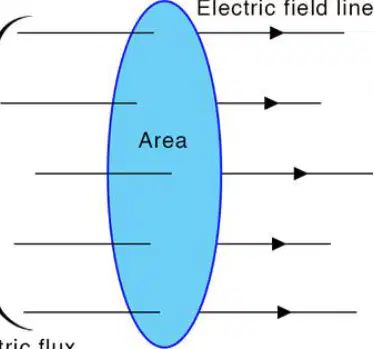
Given the definition of electric flux, how would you strategically determine the electric field strength in a region using the concept of electric flux and the number of electric field lines passing through a surface?
By counting the total number of electric field lines in the entire space.
By measuring the number of electric field lines passing per unit area through the surface.
By calculating the total area of the surface only.
By considering only the medium in which the area is present.
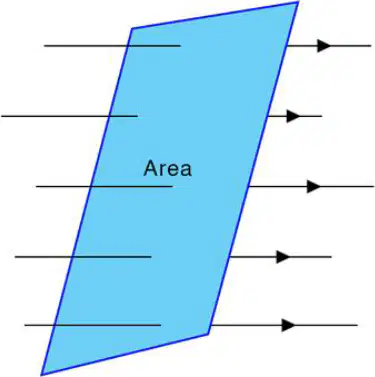
If you are given a solid conductor and asked to analyze the electric flux, what strategic steps would you take to determine whether to consider the inside or the surface of the conductor, and why?
Only consider the inside, because electric flux cannot pass through the surface.
Consider both the inside and the surface, since electric flux can be defined for either region.
Only consider the surface, because electric flux is only meaningful there.
Ignore both, as electric flux is independent of the conductor.
Using Coulomb's Law, F = k * (q₁q₂) / r², how would you plan an experiment to determine the value of Coulomb’s constant (k) if you can measure force, charge, and distance? What evidence would you use to support your result?
Measure force for different charges and distances, plot F versus (q₁q₂)/r², and use the slope to find k.
Measure only the charges and use their product to find k.
Measure only the distance and use its square to find k.
Measure force for different charges and distances, plot F versus r, and use the intercept to find k.
Two charges of 3 μC each are placed 50 cm apart. Using Coulomb's Law, calculate the electric force between the two charges. Show your reasoning and select the correct answer.
3.24 N
0.324 N
32.4 N
324 N
Given the formula for the electrostatic force between two charges, FE=kr2q1q2 , suppose you have two charges of 3×10⁻⁶ C each, separated by a distance of 0.5 m. Using the value k=9.0×10⁹ Nm²/C², strategically plan and calculate the force between them. Which of the following is the correct answer?
0.324 N
0.162 N
2.92 N
0.009 N
Given the formula for Coulomb's Law, F = (q₁q₂) / (4πε₀r²), analyze how the force between two charges would change if the distance between them is doubled. Explain your reasoning.
The force would become four times greater.
The force would become half as great.
The force would become one-fourth as great.
The force would remain the same.
What is the magnitude of the electric force between two protons five meters apart?
9.2 × 10⁻²⁹ N
5.8 × 10⁻²⁷ N
2.3 × 10⁻²⁸ N
1.0 × 10⁻²⁶ N

