
 Worksheets
Cardiovascular System
Total questions: 76
Worksheet time: 38mins
Which of the following is NOT a component of the cardiovascular system?
Heart
Blood vessels
Blood
Lungs
Blood cells
Fill in the blank: Arteries carry blood ______ from the heart.
away
towards
inside
around
Fill in the blank: Veins carry blood ______ to the heart.
back
away
around
through
Which of the following statements is true?
Arteries carry blood to the heart
Veins carry blood away from the heart
Arteries carry blood away from the heart
Veins carry blood to the lungs
What is the main function of red blood cells?
Transport oxygen
Fight infections
Produce hormones
Store fat
Red blood cells help remove ________ to prevent a buildup of waste in body tissues.
carbon dioxide
oxygen
glucose
nitrogen
What is the main function of white blood cells?
To defend your body from infection and disease
To transport oxygen throughout the body
To help in blood clotting
To provide energy to cells
What do platelets aid in?
Blood clotting
Oxygen transport
Hormone production
Nerve impulse transmission
Fill in the blank: The primary function of the cardiovascular system is to circulate ________ throughout the body.
oxygen-rich blood
carbon dioxide
nutrients only
hormones only
What type of organ is the heart?
A hollow, muscular, contractile organ situated in the thoracic cavity
A solid, non-muscular organ
A gland
A bone
Fill in the blank: The heart produces a rhythmic cycle of _______ and relaxing.
contracting
expanding
pumping
beating
What is the apex of the heart?
The highest part of the heart
The lowest part of the exterior of the heart
The middle part of the heart
The left side of the heart
How is the apical pulse detected?
With a thermometer
With a stethoscope
By feeling the wrist
By X-ray
Layers of the heart: The ________ encloses the heart in a fibrous sac.
Pericardium
Endocardium
Myocardium
Epicardium
Layers of the heart: The ________ is the space between the pericardium and epicardium.
Pericardial cavity
Myocardium
Endocardium
Epicardial space
Which layer of the heart is a serous watery layer that forms the innermost layer of the pericardium?
Epicardium
Myocardium
Endocardium
Pericardial cavity
Which layer of the heart makes up the middle of the heart?
Myocardium
Endocardium
Epicardium
Pericardium
Which layer of the heart lines the four chambers?
Endocardium
Epicardium
Myocardium
Pericardium
Which layer is labeled as the innermost layer lining the chambers of the heart?
Endocardium
Epicardium
Myocardium
Pericardium
Which of the following is NOT a muscular layer of the heart?
Epicardium
Myocardium
Endocardium
Pericardial cavity
How many chambers does the heart have?
2
3
4
5
Which chambers of the heart are located on the top?
Right and left ventricle
Right and left atrium
Septum
Aorta
The right and left atrium receive blood from the ______ of the body.
veins
arteries
capillaries
nerves
Which chambers of the heart are located on the bottom?
Right and left atrium
Right and left ventricle
Septum
Pulmonary artery
The right and left ventricle receive blood from the ______ and then pump it into systemic circulation.
atria
veins
arteries
capillaries
What is the name of the thick muscle that separates the heart into left and right chambers?
Atrium
Ventricle
Septum
Valve
Blood travels in one direction throughout the heart because the ______ close in order for blood to continue in the correct direction.
valves
arteries
veins
chambers
What prevents the backflow of blood in the heart?
Open valves
Muscular contractions generating pressure that causes the flaps to close
Blood pressure only
Heartbeat sound
Where is the Tricuspid valve located?
Between the right atrium and ventricle
Between the left atrium and ventricle
Between the right ventricle and pulmonary artery
Between the left ventricle and aorta
Where is the Bicuspid valve located?
Between the left atrium and ventricle
Between the right atrium and ventricle
Between the left ventricle and aorta
Between the right ventricle and pulmonary artery
Where is the Pulmonary valve located?
In the pulmonary artery
In the left ventricle
In the aorta
In the right atrium
Where is the Aortic valve located?
In the aorta
In the left atrium
In the pulmonary artery
In the right ventricle
Match the following valves to their locations:
Tricuspid
Located in the pulmonary artery
Bicuspid
Located in the aorta
Pulmonary
Located between the right atrium and ventricle
Aortic
Located between the left atrium and ventricle
Flow of blood through the heart: Oxygen-poor blood returns to the heart via the superior and inferior vena cava and enters the first chamber, the _________?
right atrium
left atrium
right ventricle
left ventricle
When the atria relaxes, the valves open and the blood enters the second chamber, the _________?
right ventricle
left atrium
left ventricle
right atrium
As the ventricles contract, the blood is pushed into the _________ and into the lungs.
pulmonary artery
aorta
vena cava
left atrium
At this point oxygen rich blood returns to the heart via the _______ vein into the left atrium.
pulmonary
jugular
hepatic
renal
As the heart relaxes, the valves open and the blood enters the final chamber, the _______ ventricle.
left
right
upper
lower
When the heart contracts blood is pushed to the _______ and is distributed throughout the body.
aorta
vein
atrium
ventricle
What is the meaning of 'Systole' in the context of the conduction of the heart?
Contraction of the ventricles
Relaxation of the ventricles
Opening of the atrioventricular valves
Closure of the semilunar valves
What is the meaning of 'Diastole' in the context of the conduction of the heart?
Relaxation of the ventricles
Contraction of the ventricles
Closure of the heart valves
Opening of the coronary arteries
As the ventricles contract and relax, the rhythmic sound of a heart beat is produced. Which of the following terms refers to the contraction of the ventricles?
Systole
Diastole
Both
None
As the ventricles contract and relax, the rhythmic sound of a heart beat is produced. The relaxation of the ventricles is called ________.
Diastole
Systole
Atrial contraction
Ventricular ejection
What is blood pressure?
The pressure exerted by the blood against the wall of an artery.
The amount of oxygen present in the blood.
The rate at which blood flows through veins.
The temperature of the blood in the body.
What is the normal systolic blood pressure value?
120 mmHg
140 mmHg
100 mmHg
160 mmHg
What is the normal diastolic blood pressure value?
80 mmHg
60 mmHg
90 mmHg
100 mmHg
What is systolic pressure?
Measurement of pressure while the heart ventricles are contracting
Measurement of blood pressure between beats
Measurement of pressure in the arteries
Measurement of pressure in the veins
Fill in the blank: Diastolic pressure is the measurement of blood pressure _________.
between beats
during exercise
after eating
while sleeping
What is a sphygmomanometer?
Instrument used to measure blood pressure
Type of blood cell
Medicine for high blood pressure
Part of the heart
Fill in the blank: The normal range for systolic blood pressure is ______ mmHg.
90-120
120-150
60-80
150-180
Fill in the blank: The normal range for diastolic blood pressure is ______ mmHg.
60-80
80-100
40-60
100-120
What is an aneurysm? Fill in the blank: An aneurysm is a ________, balloon-like dilation of an artery.
localized
generalized
diffuse
narrowed
What is angina? Fill in the blank: Angina is a condition characterized by severe, constricting pain or pressure in the ________.
chest
leg
arm
abdomen
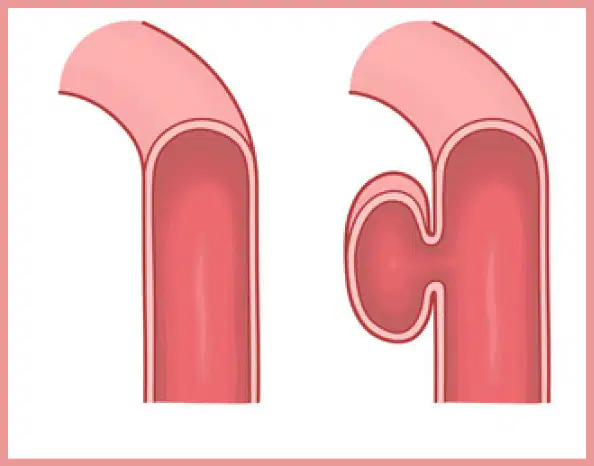
The image shows a normal artery and an artery with a balloon-like dilation. What condition does this diagram represent?
Angina
Aneurysm
Hypertension
Stroke
What is the term for a slow heart rate?
Bradycardia
Tachycardia
Arrhythmia
Hypertension
Which arrhythmia is characterized by rapid, spontaneous contractions of the muscle fibers in the atria or ventricles?
Fibrillation
Bradycardia
Tachycardia
Flutter
What is the condition in which the atria beat more rapidly than the ventricles called?
Flutter
Fibrillation
Bradycardia
Tachycardia
What is the term for a fast heart rate?
Tachycardia
Bradycardia
Arrhythmia
Hypotension
What is Arteriosclerosis? Fill in the blank: Arteriosclerosis is the condition of __________ in the arterial walls.
thickening, hardening, and loss of elasticity
increased flexibility and softness
decreased blood flow and oxygenation
thinning and weakening
What is Atherosclerosis? Fill in the blank: Atherosclerosis is the condition of __________ in the arteries.
plaque buildup
blood thinning
muscle loss
nerve damage
What is Cardiomyopathy? Fill in the blank: Cardiomyopathy is the condition of __________.
diseased heart muscle
healthy heart valves
blocked arteries
high blood pressure
What is Congestive Heart Failure (CHF)?
Disease resulting from reduced blood flow from the heart, characterized by weakness, breathlessness, abdominal discomfort and edema.
A condition where the heart beats abnormally fast, causing dizziness and fainting.
A disease caused by blockage in the lungs, leading to persistent cough and chest pain.
A disorder resulting from high blood sugar levels, causing frequent urination and increased thirst.
What is Coronary artery disease?
Narrowing of the coronary arteries resulting in an insufficient blood supply to the heart.
Inflammation of the heart valves causing irregular heartbeat.
Blockage of the pulmonary veins leading to lung congestion.
Swelling of the aorta resulting in high blood pressure.
What is an embolus?
Inflammation of the inner layer of the heart muscle
Mass of solid, liquid, or gas that travels through the bloodstream, causing occlusion of a blood vessel
A type of heart valve
A blood clot that forms in the heart
Fill in the blank: Endocarditis is ___________.
inflammation of the inner layer of the heart muscle
inflammation of the outer layer of the heart muscle
inflammation of the heart valves
inflammation of the pericardium
What is the condition called where an abnormal sound is heard during auscultation of the heart, described as a whooshing sound created by a valve not completely closing?
Heart Murmur
Arrhythmia
Hypertension
Pericarditis
What is the condition of higher than normal blood pressure called?
Hypertension
Hypotension
Anemia
Diabetes
What is the condition of lower than normal blood pressure called?
Hypotension
Hypertension
Anemia
Bradycardia
What is the condition called that involves tissue death in the heart muscle resulting from an occluded coronary artery?
Myocardial infarction
Angina pectoris
Pericarditis
Arrhythmia
What is the inflammation of the myocardium called?
Myocarditis
Endocarditis
Pericarditis
Cardiomyopathy
What is the inflammation of the pericardium called?
Pericarditis
Endocarditis
Myocarditis
Pleuritis
Peripheral Artery Disease (PAD): ______ is a disease in which narrowing of the arteries result in decreased blood flow to the extremities, causing intermittent calf pain during walking or exercise. Fill in the blank.
Peripheral Artery Disease (PAD)
Coronary Artery Disease (CAD)
Deep Vein Thrombosis (DVT)
Varicose Veins
Shock: ______ is a clinical syndrome in which peripheral blood flow is insufficient to return blood to the heart for normal function. Fill in the blank.
Shock
Hypertension
Arrhythmia
Embolism
What is Thrombophlebitis? Fill in the blank: Thrombophlebitis is ____________.
Inflammation of a vein caused by the formation of a thrombus
A bacterial infection of the arteries
A genetic disorder affecting blood pressure
A condition characterized by low platelet count
What is a Thrombus? Fill in the blank: A Thrombus is ____________.
A blood clot that forms on the wall of a blood vessel and stays attached to the site in which it developed
A type of white blood cell involved in immune response
A hormone that regulates blood pressure
A protein that helps in oxygen transport
What are Varicose veins? Fill in the blank: Varicose veins are ____________.
Enlarge, twisted, superficial veins
Narrow, straight, deep arteries
Small, healthy, capillaries
Blocked, inflamed, lymph nodes

