
 Worksheets
SLTech- Chapter 27 Dermatology
Total questions: 97
Worksheet time: 51mins
What is the term for the following definition? Commonly known as pimples, acne occurs when the skin pores clog with oil or bacteria.
Acne vulgaris
Eczema
Psoriasis
Rosacea
What is the term for the following definition? Partial or complete absence of hair from body areas where it usually grows; baldness.
Alopecia
Eczema
Psoriasis
Vitiligo
What is the term for the following definition? Against infection, substances that slow or stop microorganism growth on surfaces such as skin.
Antiseptics
Analgesics
Vaccines
Antibiotics
What is the term for the following definition? Blackheads; plugs of keratin and sebum in hair follicles blackened at the surface.
Comedones
Papules
Pustules
Macules
What is the term for the following definition? A thick layer of connective tissue that contains collagen.
Dermis
Epidermis
Hypodermis
Adipose tissue
What is the term for the following definition? A condition in which patches of skin become rough and inflamed.
Eczema
Psoriasis
Vitiligo
Rosacea
What is the term for the following definition? A preparation that softens the skin.
Emollient
Astringent
Antiseptic
Humectant
What is the term for the following definition? Outer skin, the outermost skin layer composed of the stratum corneum, or horny layer; the keratinocytes (squamous cells); and the basal layer. It also contains melanin, a pigment that contributes to skin and hair color.
Epidermis
Dermis
Hypodermis
Sebaceous gland
What is the term for the following definition? A slough produced by a thermal burn, by application of a corrosive agent, or by gangrene.
Eschar
Keloid
Ulcer
Fistula
What is the term for the following definition? The peeling off of dead skin.
Exfoliation
Osmosis
Photosynthesis
Fermentation
What is the term for the following definition? A thick layer of connective tissue that contains collagen.
Dermis
Epidermis
Hypodermis
Periosteum
Fill in the blank: A louse that infests the scalp and hair of the human head is called _________.
Head louse
Body louse
Pubic louse
Flea
Fill in the blank: Abnormal growth of hair on a person's face and body is known as _________
Hirsutism
Alopecia
Vitiligo
Eczema
Fill in the blank: Below + skin, subcutaneous tissue is referred to as _________
Hypodermis
Epidermis
Dermis
Endodermis
Fill in the blank: Drugs that cause shedding of the outer layer of the skin are called _________.
Keratolytics
Antiseptics
Emollients
Antifungals
Fill in the blank: A dark brown to black pigment found in the hair, skin, and iris of the eye is called _________.
Melanin
Keratin
Hemoglobin
Collagen
Fill in the blank: With regard to cancer, to spread from the place of origin as a primary tumor to distant locations in the body is called _________.
Metastasize
Ossification
Regeneration
Inflammation
Fill in the blank: Small swellings or aggregations of cells in the body are called _________.
Nodules
Cysts
Plaques
Papillae
Fill in the blank: Nail + fungus + disease, a fungal infection of the fingernails or toenails is called _________.
Onychomycosis
Dermatitis
Psoriasis
Eczema
Fill in the blank: Small, raised, solid pimples on the skin are called _________.
Papules
Vesicles
Pustules
Macules
Fill in the blank: The process of sweating is called _________.
Perspiration
Respiration
Transpiration
Evaporation
Match the following terms to their correct definitions:
A louse that infests the scalp and hair of the human head
A louse that infests the scalp and hair of the human head
Abnormal growth of hair on a person's face and body
Abnormal growth of hair on a person's face and body
Below + skin, subcutaneous tissue
Below + skin, subcutaneous tissue
Drugs that cause shedding of the outer layer of the skin
Drugs that cause shedding of the outer layer of the skin
A dark brown to black pigment found in the hair, skin, and iris of the eye
A dark brown to black pigment found in the hair, skin, and iris of the eye
What is the meaning of Pruritus?
Itching
Swelling
Bleeding
Numbness
What are small blisters or pimples on the skin containing pus called?
Pustules
Papules
Macules
Vesicles
Which skin glands are responsible for the secretion of oil called sebum?
Sebaceous glands
Sweat glands
Mammary glands
Ceruminous glands
What is the excessive discharge of sebum from the sebaceous glands called?
Seborrhea
Alopecia
Eczema
Psoriasis
What is the oily/waxy substance that lubricates the skin and retains water to provide moisture?
Sebum
Keratin
Collagen
Melanin
What is the deepest layer of the skin, consisting of fat cells and collagen, that protects the body and conserves heat?
Subcutaneous layer
Epidermis
Dermis
Stratum corneum
Which glands in the dermis are activated by an increase in body temperature to cool the body?
Sweat glands
Sebaceous glands
Mammary glands
Pineal glands
What are red welts that arise on the surface of the skin, often attributable to an allergic reaction but may have nonallergic causes, also known as hives?
Urticaria
Eczema
Psoriasis
Rosacea
What is the term for abnormal dryness of the skin, eyes, or mucous membranes?
Xerosis
Edema
Erythema
Cyanosis
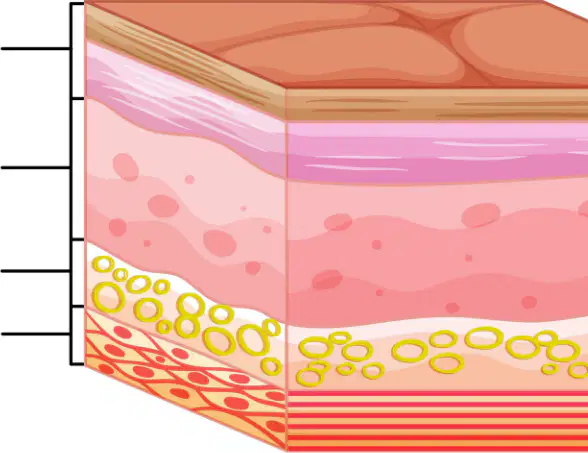
Which layer of the skin contains melanocytes that produce melanin (skin pigment)?
A) Dermis
B) Epidermis
C) Subcutaneous Layer (Hypodermis)
D) Muscle
What is the main function of the skin?
To store energy
To protect the body from temperature changes, light, dehydration, and infection
To produce melanin
To provide strength and flexibility
Fill in the blank: The ______ is the thick connective tissue layer beneath the epidermis that contains collagen, blood vessels, glands, and nerves.
dermis
epidermis
hypodermis
stratum corneum
Match the following layers of the skin with their descriptions:
The outermost layer; contains melanocytes and lacks blood vessels
Epidermis
The thick connective tissue layer beneath the epidermis; contains collagen, blood vessels, glands, and nerves
Dermis
The deepest layer; made of fat cells that insulate, cushion, and store energy
Subcutaneous Layer (Hypodermis)
The subcutaneous layer (hypodermis) is made of fat cells that insulate, cushion, and store energy.
True
False
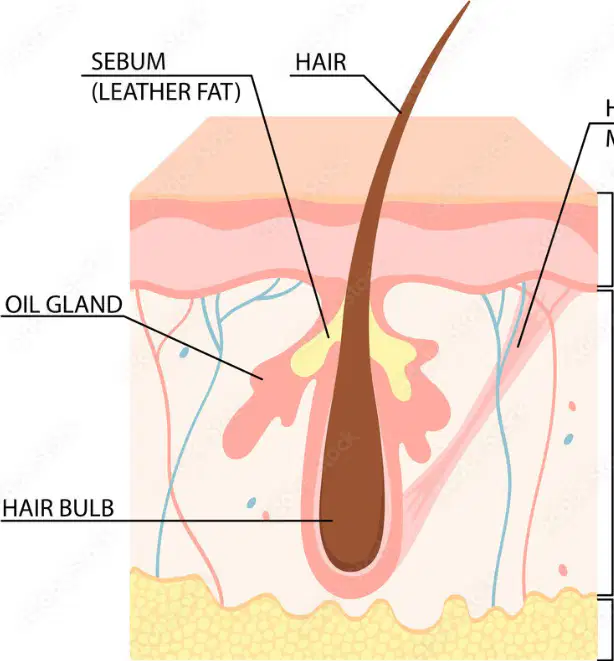
Match the following hair-related terms to their correct description or location in the diagram:
Sebum (leather fat)
Fatty substance produced by glands
Hair
The actual strand growing from the skin
Oil gland
Gland that secretes oil
Hair bulb
Structure that produces hair
Hair erector muscle
Muscle that causes hair to stand up
Hair is made of ______ and rooted in the ______.
keratin, dermis
collagen, epidermis
melanin, hypodermis
elastin, subcutaneous tissue
What determines hair color according to the passage?
Loss of melanin causes graying of hair.
True
False
Which of the following conditions is associated with excess hair?
A. Alopecia
B. Hirsutism
C. Melanocytes
D. Sebum
Alopecia refers to:
Excess hair
Hair loss
Hair color
Oil production
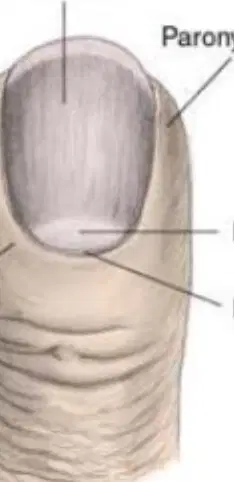
Refer to the diagram of the nail. Which part is labeled as the 'Lunula'?
The white crescent-shaped area at the base of the nail is the Lunula.
The pinkish area in the middle of the nail is the Lunula.
The tip of the nail that extends beyond the finger is the Lunula.
The skin fold that overlaps the sides of the nail is the Lunula.
What is the main function of nails as described in the passage?
Nails are dense keratin structures protecting fingertips and toes.
Nails help in the production of sweat.
Nails are responsible for skin pigmentation.
Nails regulate body temperature.
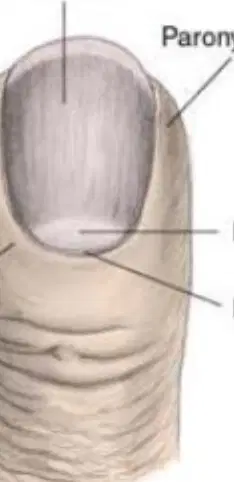
Match the following nail parts to their descriptions:
Nail root
Base of the nail
Lunula
White crescent
Cuticle
Protective layer at the edge of the nail
Paronychium
Soft surrounding tissue
Which of the following is NOT a key part of the nail mentioned in the passage?
A. Nail root
B. Lunula
C. Cuticle
D. Epidermis
The paronychium is the white crescent-shaped area at the base of the nail.
True
False
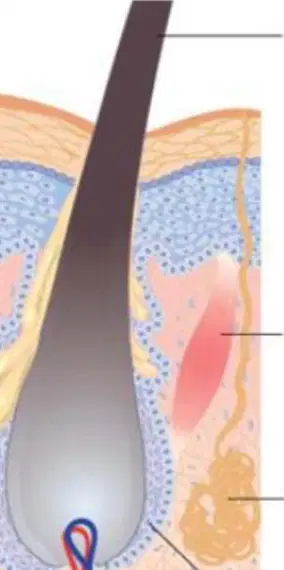
Which of the following substances is produced by sebaceous glands?
Sweat
Sebum
Water
Salt
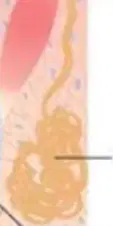
Where are sweat glands mainly concentrated?
Everywhere except palms and soles
Only on the scalp
Palms and soles
Under the nails
Sebaceous glands produce ________, an oily substance that lubricates and prevents dryness.
sebum
keratin
melanin
collagen
Sweat glands help regulate temperature through ________.
evaporation
condensation
filtration
absorption
What is Acne Vulgaris?
A) A type of bacterial infection
B) A common skin condition characterized by seborrhea, comedones (blackheads/whiteheads), papules, pustules, nodules, and possible scarring
C) A viral disease
D) A genetic disorder
Which hormone is primarily responsible for enlarging sebaceous glands and increasing sebum production in acne vulgaris?
Estrogen
Androgens
Insulin
Cortisol
Fill in the blank: Acne vulgaris primarily affects areas with many ______ glands, such as the face, chest, and back.
sebaceous
sweat
salivary
endocrine
Acne vulgaris may continue into adulthood, although it is common in adolescence due to hormonal changes.
True
False
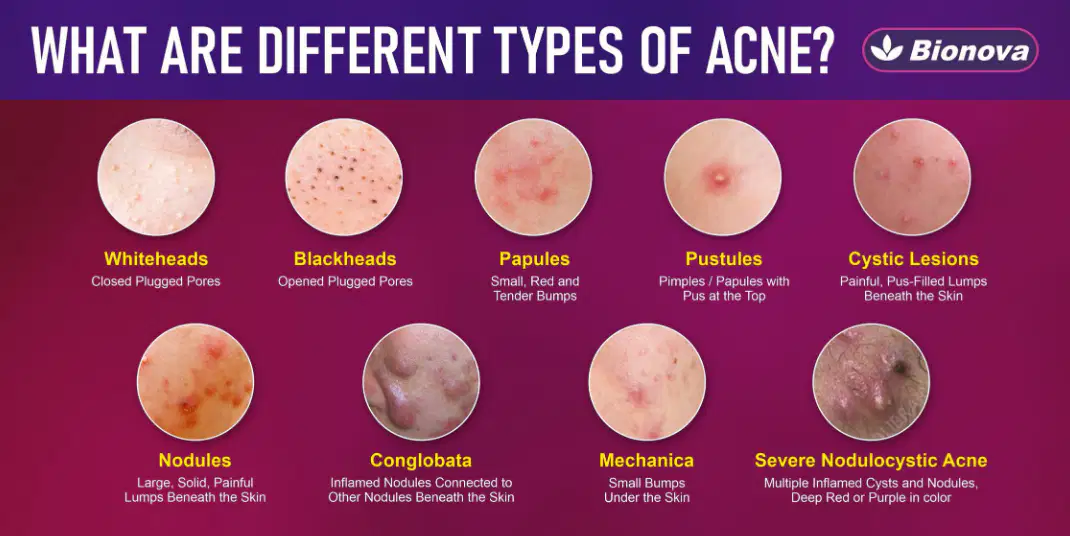
Match the following types of acne with their descriptions:
Whiteheads
Closed plugged pores
Blackheads
Opened plugged pores
Papules
Small, red and tender bumps
Pustules
Pimples/Papules with pus at the top
Cystic Lesions
Painful, pus-filled lumps beneath the skin
Which of the following is NOT a type of acne listed in the image?
Nodules
Conglobata
Mechanica
Psoriasis
Fill in the blank: Excess ______ traps bacteria and dead skin cells within hair follicles, causing blockages and inflammation.
sebum
melanin
keratin
collagen
Which bacteria is mentioned as multiplying and releasing irritants that cause redness and swelling in acne vulgaris?
Staphylococcus aureus
Cutibacterium acnes
Escherichia coli
Streptococcus pyogenes
Severe cases of acne may result in permanent scarring.
True
False
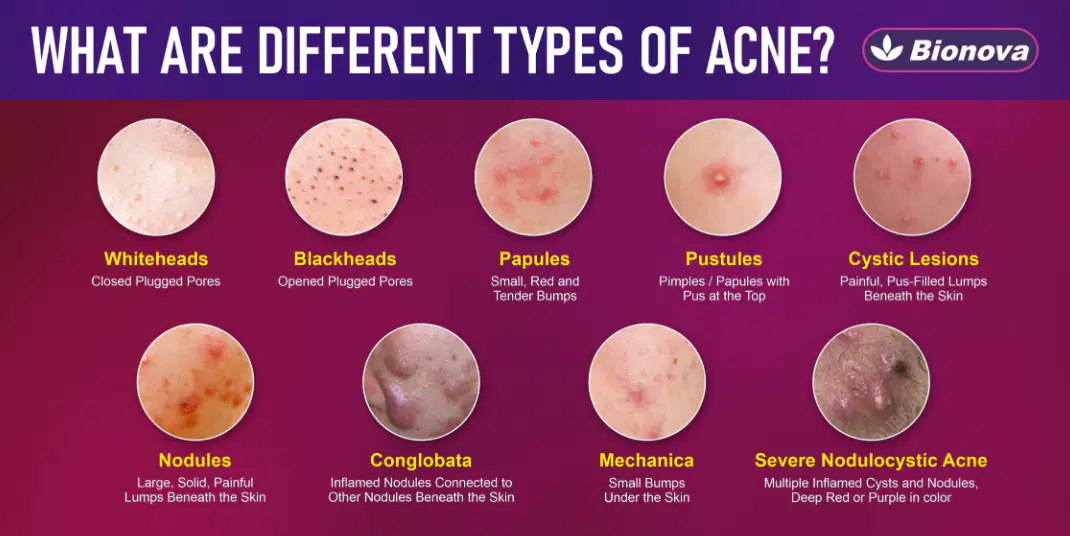
What type of acne is described as 'Large, solid, painful lumps beneath the skin'?
Nodules
Papules
Whiteheads
Blackheads
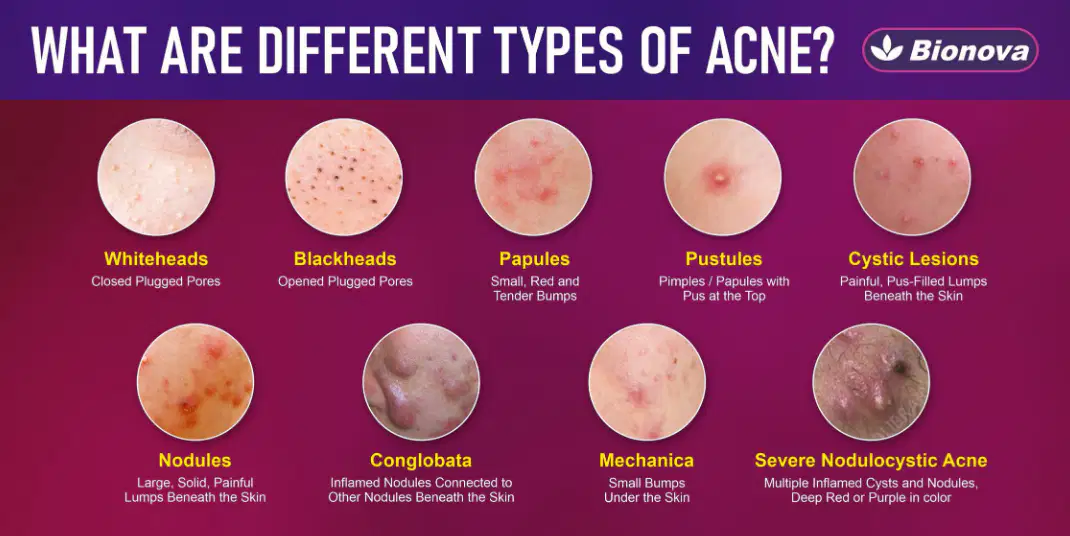
What type of acne is described as 'Multiple inflamed cysts and nodules, deep red or purple in color'?
Severe Nodulocystic Acne
Mild Comedonal Acne
Papulopustular Acne
Acne Mechanica
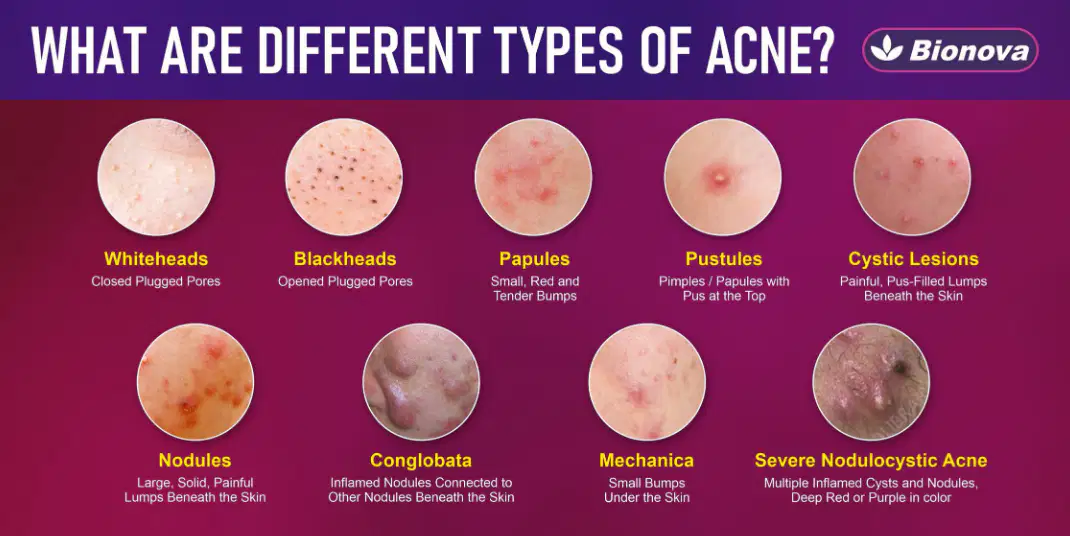
What type of acne is described as 'Small bumps under the skin'?
Mechanica
Cystic
Nodular
Comedonal
Which of the following is a non-drug treatment for acne vulgaris?
Benzoyl peroxide
Gentle cleansing
Oral antibiotics
Oral retinoids
Which agent helps remove dead skin cells in non-drug treatments for acne vulgaris?
Exfoliating agents
Oral antibiotics
Topical retinoids
Azelaic acid
Light-based therapies may help with acne vulgaris but remain under _______.
study
treatment
observation
control
Which topical treatment is used for mild acne to dry skin and reduce bacteria?
Salicylic acid
Benzoyl peroxide
Azelaic acid
Oral antibiotics
Topical retinoids (e.g., tretinoin, adapalene) are used to _______ and prevent clogged pores in mild acne.
increase exfoliation
reduce oil production
kill bacteria
moisturize the skin
Which topical antibiotics are mentioned for mild acne treatment?
Clindamycin and erythromycin
Benzoyl peroxide and salicylic acid
Oral retinoids and oral antibiotics
Azelaic acid and dapsone
Oral antibiotics are used for moderate to severe acne to reduce _______ and bacterial load.
inflammation
pigmentation
scarring
oil production
Oral retinoids (isotretinoin) are used for severe, resistant acne and decrease _______ production and gland size.
sebum
melanin
collagen
keratin
Enrollment in the iPLEDGE program is required for which acne medication due to risk of birth defects?
Oral antibiotics
Benzoyl peroxide
Isotretinoin
Salicylic acid
Combination therapy is often used for better _______ in acne treatment.
efficacy
duration
color
taste
Most acne medications, especially retinoids and antibiotics, increase photosensitivity, so _______ use is essential.
sunscreen
moisturizer
antibiotic
retinoid
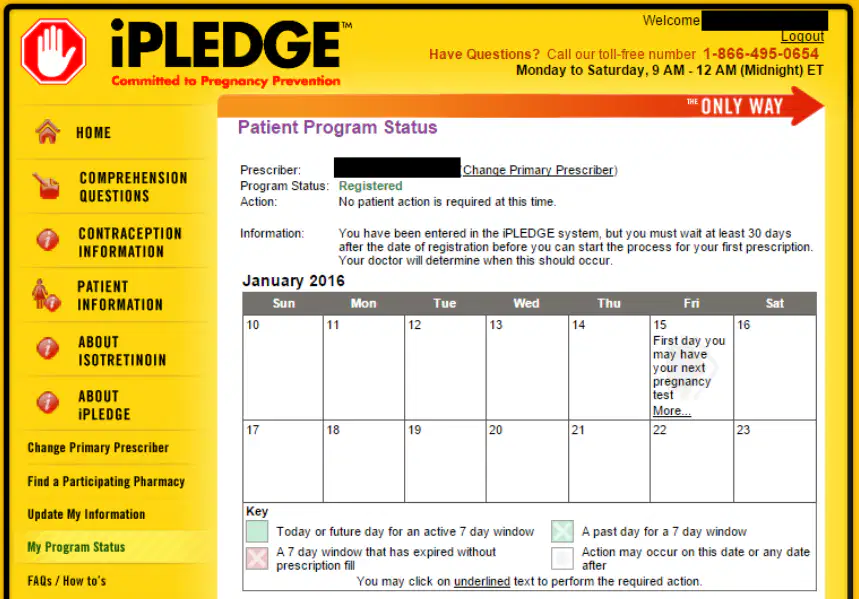
What is the main goal of the iPLEDGE Risk Evaluation and Mitigation Strategy (REMS)?
To prevent fetal exposure to isotretinoin
To increase sales of isotretinoin
To reduce acne in adults
To inform prescribers about antibiotics
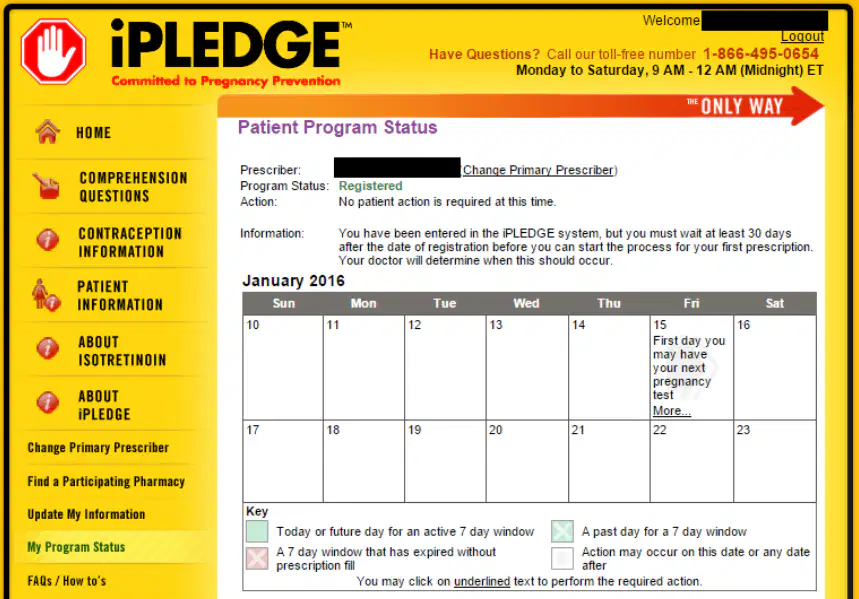
Isotretinoin is teratogenic.
True
False
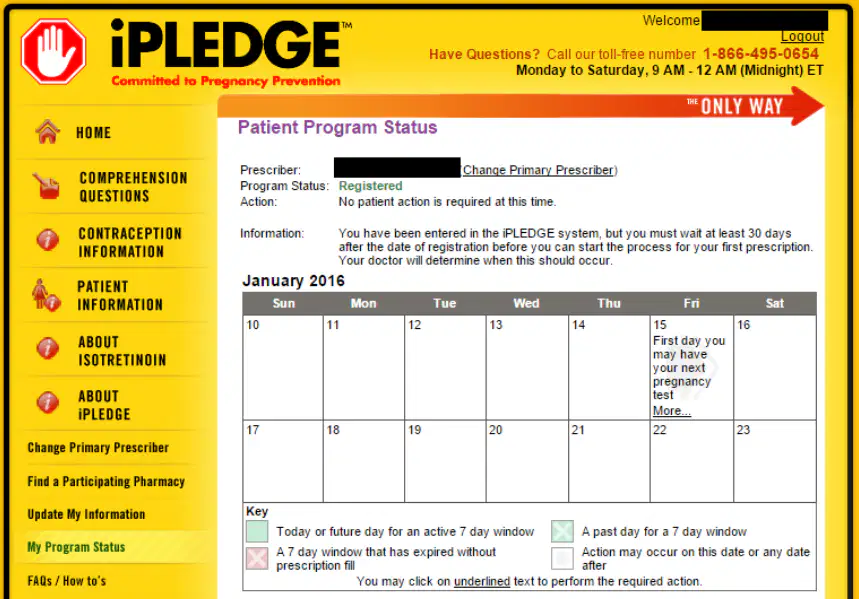
Fill in the blank: The iPLEDGE REMS program is designed to prevent _______ exposure to isotretinoin.
fetal
ocular
dermal
respiratory
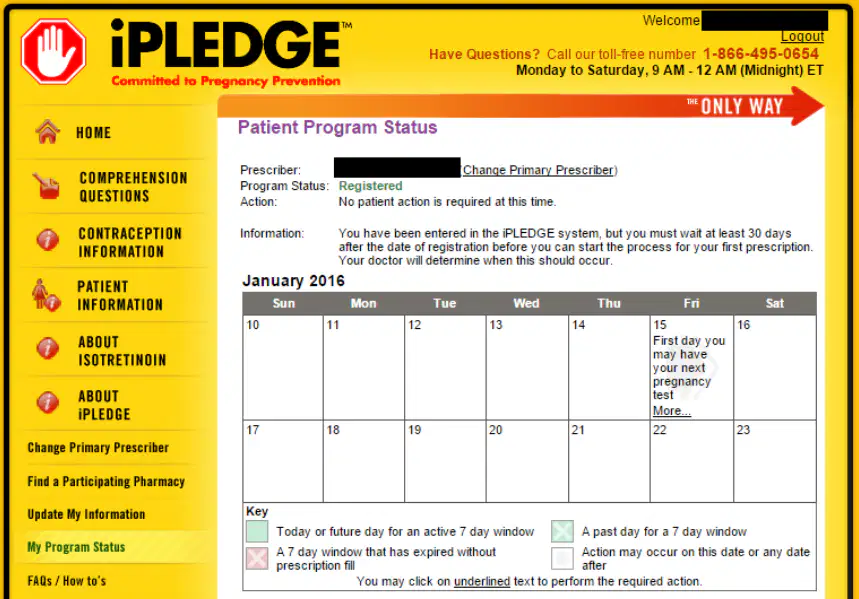
Which of the following drugs are included as isotretinoin drugs in the iPLEDGE program?
Amnesteem
All of the above
Myorisan
Claravis
Absorica
Which medication class does Benzoyl Peroxide belong to?
Topical Antibiotic
Topical Antibacterial / Keratolytic
Oral Retinoid
Hormonal Therapy
Fill in the blank: The mechanism of action of Tretinoin is to increase cell turnover and reduce formation of _________
comedones
melanin
keratinocytes
sebaceous glands
Match the following generic names to their brand names:
Differin
Adapalene
Oracea, Vibramycin
Doxycycline
Clindagel, Cleocin T, ClindaMax
Clindamycin
Which medication is associated with the counseling label: 'iPLEDGE required (risk of birth defects)'?
Isotretinoin
Spironolactone
Dapsone
Azelaic Acid
Erythromycin can be used both as a topical and oral antibiotic for acne treatment.
True
False
What is a common side effect of Azelaic Acid?
Nausea
Burning, stinging, hypopigmentation
Breast tenderness
Tooth discoloration
Fill in the blank: The route of administration for Minocycline is _______.
Oral
Intravenous
Topical
Subcutaneous
Which medication is suitable for sensitive skin and may lighten dark spots?
Benzoyl Peroxide
Azelaic Acid
Tretinoin
Dapsone
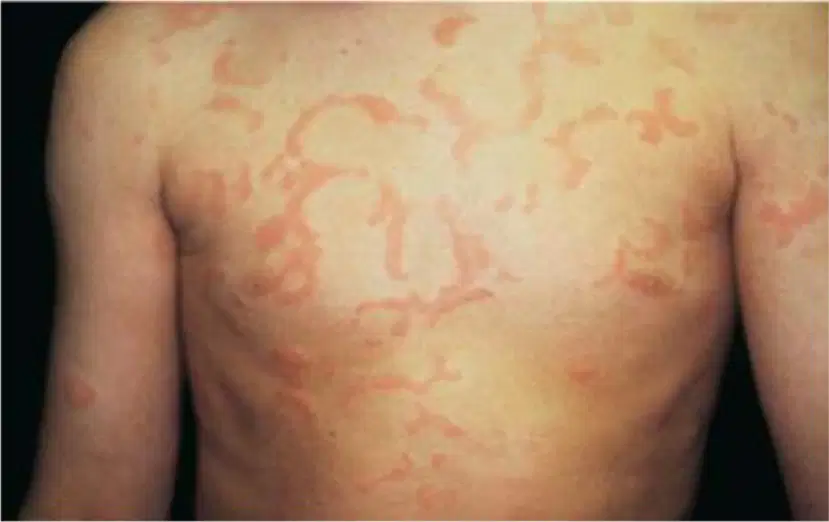
What is Urticaria commonly known as?
Eczema
Hives
Psoriasis
Acne
Which of the following is NOT a cause of Urticaria?
Allergic reactions to foods
Physical triggers (cold, heat, pressure)
Idiopathic (unknown origin)
Bacterial infection
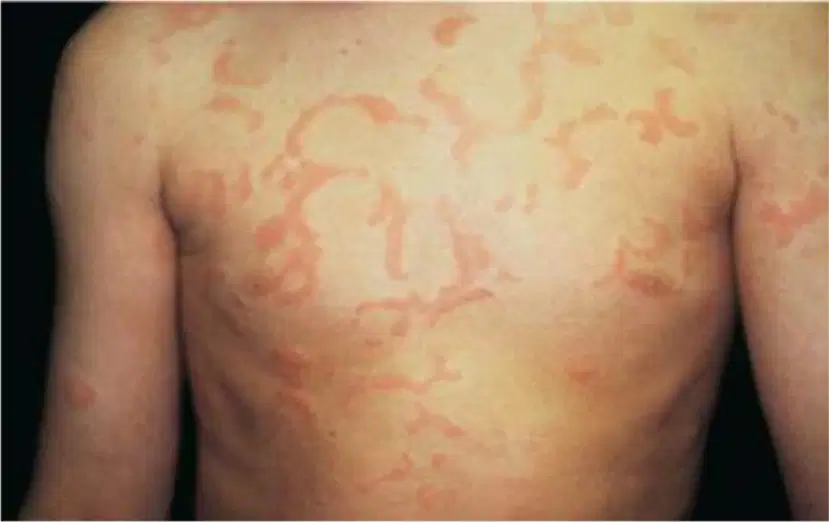
Fill in the blank: Urticaria is marked by itchy, raised, red or flesh-colored _______ that can appear anywhere on the body.
welts
scales
blisters
patches
Urticaria lesions often result from hypersensitivity (allergic) reactions to foods, medications, or environmental triggers.
True
False
Which of the following is a physical trigger for Urticaria?
Sunlight
Cold
Exercise
Pollution
Fill in the blank: Many cases of Urticaria resolve spontaneously within _______.
hours
days
weeks
months
Identifying and removing the triggering allergen is key for long-term control of Urticaria.
True
False
Which of the following is a non-drug treatment for urticaria?
Apply a cold, wet compress to reduce itching and discomfort
Take antihistamines
Use topical anesthetics
Take antibiotics
Which medication is used orally or topically to relieve hives and itching in urticaria?
Calamine
Diphenhydramine (Benadryl Allergy)
Pramoxine HCl
Ibuprofen
Fill in the blank: Topical diphenhydramine is available OTC but not recommended for regular use due to low efficacy and risk of _________.
skin sensitivity
systemic toxicity
addiction
photosensitivity
Which combination of topical anesthetics can relieve itching in urticaria?
Calamine 8% + Pramoxine HCl 1% (Caladryl, Calagesic)
Diphenhydramine + Ibuprofen
Calamine + Diphenhydramine
Pramoxine HCl + Ibuprofen

