
Font size
 Worksheets
How Is Heat Transferred? (Part 1)
Total questions: 12
Worksheet time: 22mins
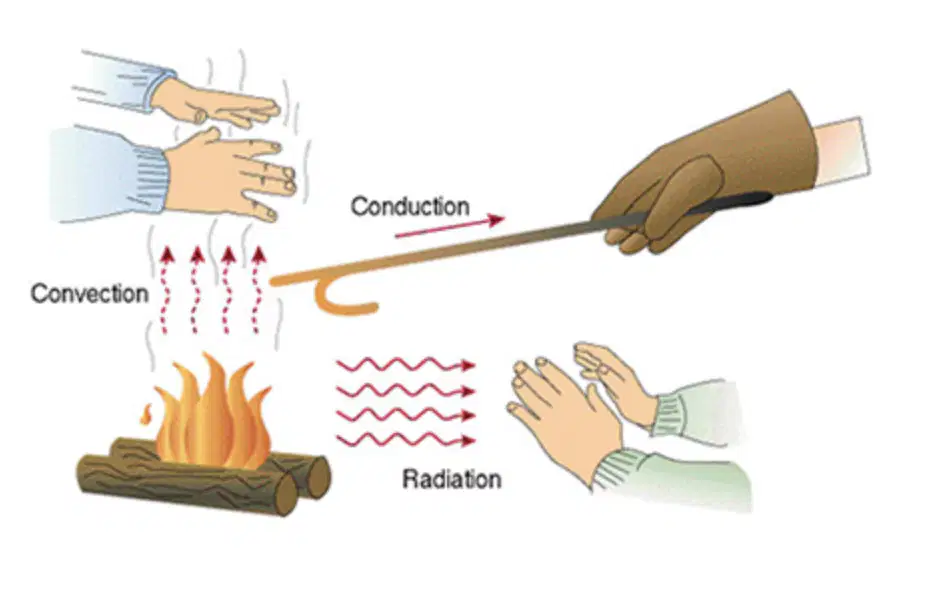
Though heat travels in only one direction, there are three processes by which heat can travel from one object or area to another.
The three forms of heat transfer are conduction, convection, and radiation. Click to the next page to explore more about conduction.
What are the three forms of heat transfer mentioned in the passage?
Conduction, Convection, Radiation
Conduction, Evaporation, Radiation
Convection, Radiation, Evaporation
Conduction, Convection, Evaporation
Which process of heat transfer involves the movement of heat through a solid material?
Conduction
Convection
Radiation
Evaporation
What does the illustration in the passage depict?
Heat transfer methods: conduction through a metal rod, convection from rising hot air, and radiation from a fire
The process of evaporation and condensation
The movement of heat in liquids only
The cooling effect of heat transfer

Though heat travels in only one direction, there are three processes by which heat can travel from one object or area to another.
The three forms of heat transfer are conduction, convection, and radiation. Click to the next page to explore more about conduction.
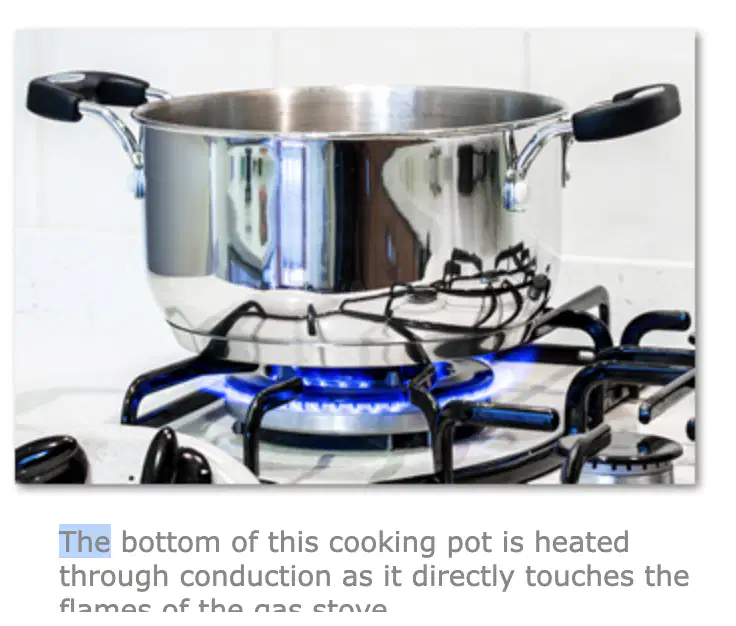
Examples of conduction include using a heated blanket to get warm, heating a pan on a stove-top, and picking up a hot or warm object.
What are the three forms of heat transfer mentioned in the passage?
Conduction, Convection, and Radiation
Conduction, Evaporation, and Radiation
Convection, Radiation, and Evaporation
Conduction, Convection, and Evaporation
Which of the following is an example of conduction as described in the passage?
Heating a pan on a stove-top
Boiling water in a kettle
Sunlight warming the ground
Air circulating in a room
How does conduction occur between the woman's hands and the ice cubes?
Heat transfers from the woman's hands to the ice cubes, causing them to melt
The ice cubes absorb heat from the surrounding air
The woman's hands cool down the ice cubes
The ice cubes release cold energy to the woman's hands

True or False: Conduction can occur even if the particles in two objects are not in contact with each other.
True
False
Objects must be in (a) in order for (b) to occur. When objects touch and their particles collide, kinetic energy is transferred from particles in the (c) object to particles in the (d) object. If the objects are not touching, then their particles cannot collide, and no transfer of kinetic energy is possible in the form of conduction.
Conduction can also occur between different parts of the same object.

What is conduction as described in the passage?
The transfer of heat between particles of the same object at different temperatures.
The transfer of heat through electromagnetic waves.
The transfer of heat through the movement of fluids.
The transfer of heat through chemical reactions.
Why does the handle of the spoon eventually reach the same temperature as the round end?
Because particles in the round end transfer kinetic energy to the cooler handle.
Because the handle is made of a special material that absorbs heat.
Because the tea heats the entire spoon evenly.
Because the spoon is insulated.
What happens when particles in the round end of the spoon collide with particles in the hot tea?
The particles in the round end gain kinetic energy.
The particles in the round end lose kinetic energy.
The particles in the tea cool down immediately.
The particles in the tea stop moving.
What are the two different ways in which conduction can occur?
(a) can occur between particles in the same object if those particles are (b) to different temperatures. Kinetic energy is transferred to the (c) part of the object from the (d) part of the object.
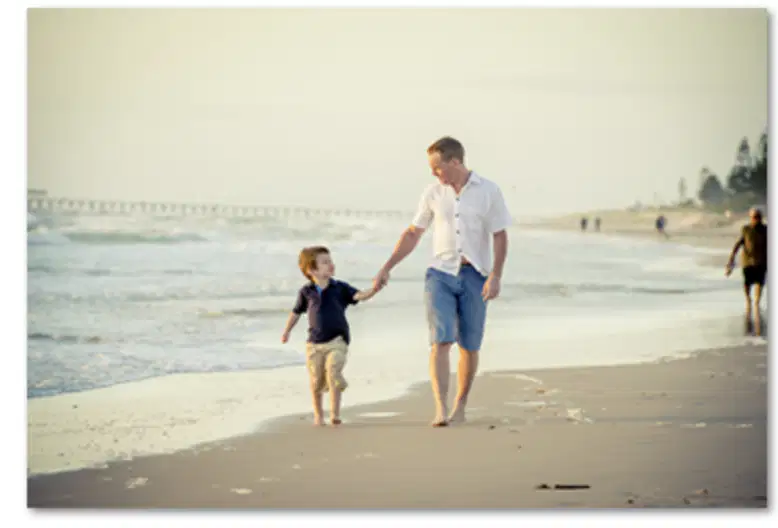
Matthew and his dad are walking along the beach. Matthew runs toward the water and dips his hands in the cool ocean. Then, he walks back to his dad and grabs his hand.
“Matthew, your hands are so cold now!” his dad exclaims.
Where did conduction occur during this scenario? Choose all that are true!
between Matthew’s hand and his father’s hand
between Matthew’s warmer body and his now cooler hand
between Matthew's father's hand and the cooler water
(a) travels from (b) areas to (c) areas. There are three forms of heat transfer: conduction, convection, and (d) .
_____________ is the transfer of heat between objects that are touching.
Convection is the second form of heat transfer. Convection is the flow of energy through a liquid or gas caused by hot particles rising and cool particles sinking. Convection occurs in liquids and gases as particles flow through the fluid and cool particles replace the rising warm particles.
Liquids and gases are both considered fluids. When fluids heat up, they expand and become less dense. When fluids cool down, they contract and become denser. As warm fluid expands and rises upward, cool fluid replaces it. When the warm fluid rises, it cools down once more, sinks downward, and the cycle continues. This circular motion of liquids or gases that occurs during convection is called a convection current.
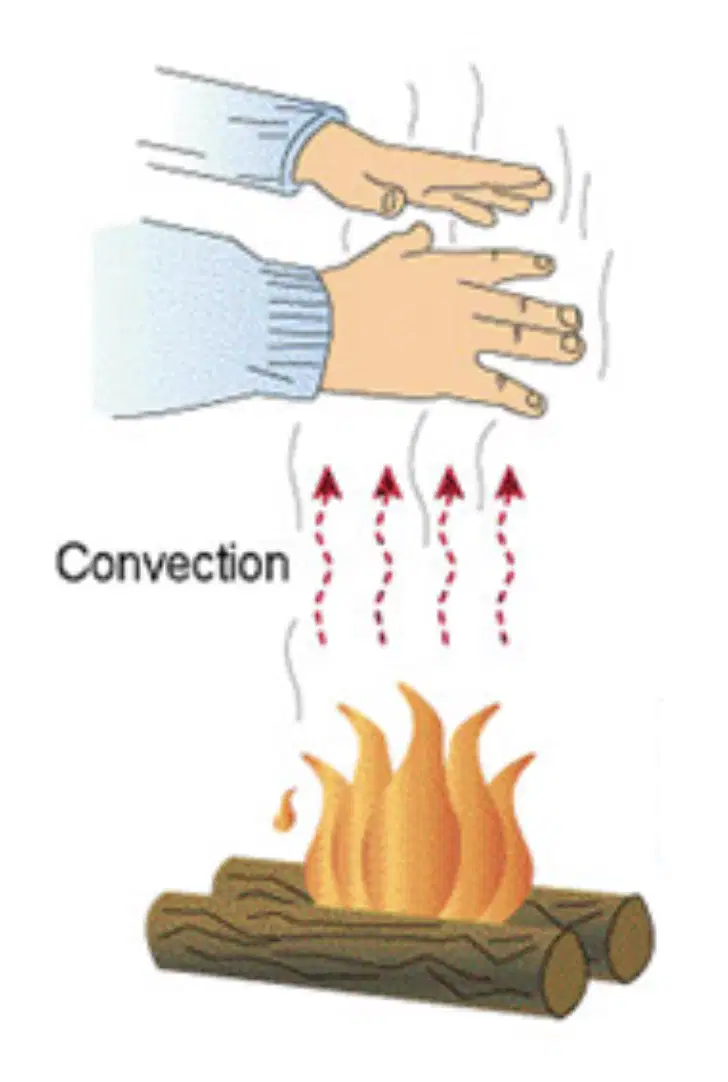
This image shows how a convection current flows through the atmosphere. As warm air rises, cooled air sinks to replace it.
What is convection?
The flow of energy through a liquid or gas caused by hot particles rising and cool particles sinking.
The transfer of heat through direct contact between objects.
The emission of energy as electromagnetic waves.
The process of heat transfer through empty space.
What happens to fluids when they heat up?
They expand and become less dense.
They contract and become denser.
They remain unchanged.
They solidify.
What is the circular motion of liquids or gases during convection called?
Convection current
Thermal expansion
Heat wave
Radiation cycle

