
 Worksheets
Spindle Speeds For Drilling
Total questions: 10
Worksheet time: 11mins
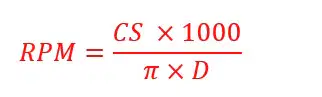
For the Spindle Speed formula shown, match the variables to what they represent
Spindle speed (rev/min)
RPM
Cutting Speed (m/min)
CS
Diameter of drill bit (mm)
D
Match the materials to their correct CS value range
80 to 150
Aluminium
40 to 80
Brass
15 to 30
Cast Iron
20 to 40
Copper
20 to 30
Mild Steel
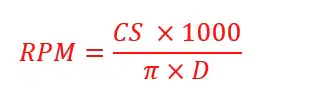
Using the Spindle Speed Formula shown, determine the approx. spindle speed needing for:
Drilling a 6 mm hole in an aluminium workpiece.
4,000 rev/min
8,000 rev/min
2,000 rev/min
6,000 rev/min
Using the Spindle Speed Formula shown, determine the approx. spindle speed needing for:
Drilling a 12 mm hole in a copper workpiece.
550 rev/min
1,000 rev/min
250 rev/min
125 rev/min
Using the Spindle Speed Formula shown, determine the approx. spindle speed needing for:
Drilling a 3.5 mm hole in a mild steel workpiece.
2000 rev/min
1,000 rev/min
3000 rev/min
500 rev/min
Using the Spindle Speed Formula shown, determine the approx. spindle speed needing for:
Drilling a 13 mm hole in a cast iron workpiece.
470 rev/min
175 rev/min
350 rev/min
650 rev/min
Using the Spindle Speed Formula shown, determine the approx. spindle speed needing for:
Drilling a 5.1 mm hole in a brass workpiece.
500 rev/min
1,500 rev/min
3,500 rev/min
2,500 rev/min
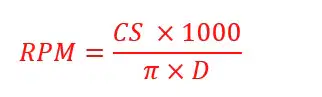
Calculate the spindle speed required to drill a 6.2 mm hole in a mild steel plate with CS value of 20.
Give your answer to one decimal place.
Generally, for smaller drill bit sizes you should set the pillar drill to (a) spindle speeds, whereas for bigger drill bit sizes you should use a (b) spindle speed.
Generally, when drilling on harder metals with lower CS values, you should set the pillar drill to (a) spindle speeds, whereas when drilling on softer metals with higher CS values you should use a (b) spindle speed.

