
 Worksheets
Viruses and Hepatitis
Total questions: 55
Worksheet time: 28mins
Viruses are much smaller than ________.
bacteria
plants
animals
fungi
What is the special area within microbiology called that deals with viruses?
Bacteriology
Virology
Pathology
Immunology
A virus invades a host cell, replicates (produces copies of itself), and then destroys the host cell so the viruses are released into the body.
True
False
It is important for dental assistants to be knowledgeable about viruses, as it relates to dentistry, because:
they need to prevent the spread of infections in the dental office.
they need to diagnose viral diseases in patients.
they are responsible for creating vaccines for viruses.
they must treat patients with antiviral medications.
Some viruses establish a ______ (dormant) state in host cells. Fill in the blank.
latent
acute
lytic
chronic
A latent virus can be reactivated in the future and produce more infectious viral particles, followed by signs and symptoms of the disease.
True
False
Hepatitis C is known to have a latency period of 15 to 25 years.
True
False
What does it mean when a person is described as ASYMPTOMATIC?
The person is showing symptoms of a disease
The person is not showing symptoms and may not know they are infected
The person is immune to the virus
The person is cured of the virus
Fill in the blank: In many instances, when a human is infected with a virus and the virus remains dormant, the individual is considered ___________.
ASYMPTOMATIC
CONTAGIOUS
IMMUNE
FATAL
A person who is asymptomatic can be a carrier of the virus and infect others without realizing it.
True
False
Viruses are easily destroyed in the external environment.
True
False
Which of the following statements is true about viruses?
Viruses do not cause diseases in humans.
Viruses cause many clinically significant diseases in human beings.
Viruses can be treated easily with antibiotics.
Viruses cannot mutate.
Fill in the blank: General antibiotics are __________ in preventing or curtailing viral infections.
ineffective
effective
essential
recommended
Viruses are capable of mutation.
True
False
It is very difficult to develop vaccines against viruses because:
viruses mutate rapidly, making it hard to target them effectively
viruses are larger than bacteria
viruses do not cause diseases in humans
vaccines are only effective against bacteria
What virus causes Hepatitis A?
Hepatitis A virus (HAV)
Hepatitis B virus (HBV)
Hepatitis C virus (HCV)
Epstein-Barr virus (EBV)
What virus causes Hepatitis B?
Hepatitis B virus (HBV)
Hepatitis C virus (HCV)
Human Immunodeficiency Virus (HIV)
Epstein-Barr virus (EBV)
What virus causes Hepatitis C?
Hepatitis C virus (HCV)
Hepatitis A virus (HAV)
Hepatitis B virus (HBV)
Epstein-Barr virus (EBV)
What virus causes Hepatitis D?
Hepatitis D virus (HDV)
Hepatitis B virus (HBV)
Hepatitis C virus (HCV)
Epstein-Barr virus (EBV)
What virus causes Hepatitis E?
Hepatitis E virus (HEV)
Hepatitis A virus (HAV)
Hepatitis B virus (HBV)
Hepatitis C virus (HCV)
ALL forms of Hepatitis destroy liver cells.
True
False
How is Hepatitis A (HAV) spread from person to person?
Through the air
By contaminated water
By putting something in the mouth that has been contaminated with the stool of a person with hepatitis A
By animal bites
What is the type of transmission called when Hepatitis A is spread by contaminated stool?
Airborne
Fecal-oral
Waterborne
Bloodborne
Good personal hygiene and proper sanitation can help prevent _______.
hepatitis A
diabetes
asthma
fractures
Hepatitis A can affect anyone.
True
False
What should you always do after changing a diaper or using the bathroom to prevent Hepatitis A?
Take medicine
Wash your hands
Wear gloves
Avoid eating
Which form of viral hepatitis is the least serious?
Hepatitis B
Hepatitis C
Hepatitis A
Hepatitis D
A vaccine is available that provides long-term prevention of Hepatitis A in persons older than 2 years.
True
False
Hepatitis B is a very serious disease that may result in prolonged illness, liver cancer, cirrhosis of the liver, liver failure, and even death. What is one possible consequence of Hepatitis B?
Liver cancer
Diabetes
Asthma
Arthritis
Hepatitis B is a ________ disease that may also be transmitted by other body fluids, including saliva.
bloodborne
airborne
waterborne
foodborne
Anyone who has ever had Hepatitis B, and some persons who have been exposed but have not been actually ill, may be carriers of HBV and may actually be spreading the infection to others.
True
False
Why does Hepatitis B present a high risk for dental personnel?
Because dental treatment brings them into contact with saliva and blood.
Because dental personnel are more likely to have poor hygiene.
Because dental personnel do not use gloves.
Because dental personnel are vaccinated against Hepatitis B.
How is HBV spread?
By sharing food
By using contaminated needles or syringes at the time of inject
By drinking clean water
By exercising regularly
How is HBV spread?
By sharing razors or toothbrushes contaminated with infected blood
By reading books
By washing hands
By eating fruits
How is HBV spread?
Through an open wound
By listening to music
By wearing clean clothes
By swimming
How is HBV spread?
By having an unprotected sex
By playing sports
By using a computer
By sleeping
Fill in the blank: HBV can be spread from ______ to baby.
mother
father
sister
friend
How many days can HBV survive on environmental surfaces in blood or body fluid? Fill in the blank: HBV can survive for ______ days.
seven days
one day
thirty days
ten days
Which of the following household items can HBV be present on due to dried blood?
Nail clippers
Tooth brushes
Metal nail files
Pierced body jewelry
All of the above
HBV can survive on environmental surfaces for seven days in blood or body fluid.
True
False

Which of the following is a symptom of Hepatitis B?
Jaundice
Sore throat
Rash
Cough

Fill in the blank: Dark urine and pale poop are symptoms of ________.
Hepatitis B
Diabetes
Asthma
Hypertension

Losing your appetite is a symptom of Hepatitis B.
True
False

Fill in the blank: ________ and fatigue are symptoms of Hepatitis B.
Weakness
Headache
Rash
Cough

Which of the following symptoms is associated with Hepatitis B?
Hives
Sore throat
Runny nose
Sneezing
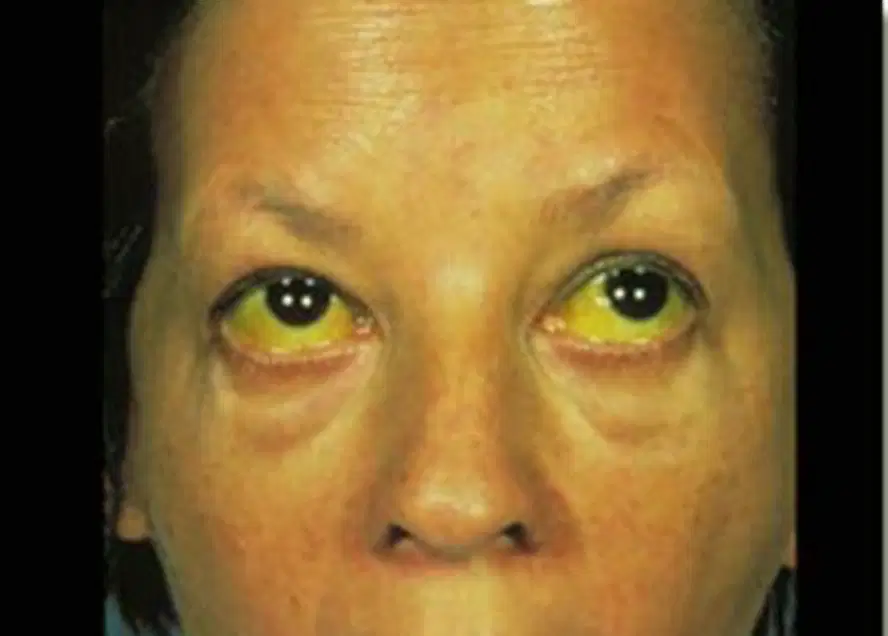
What is a common symptom of jaundice?
Yellowing of the skin and eyes
Itchy scalp
Blue lips
Swollen ankles
Which of the following statements is true about the Hepatitis B vaccine?
It is not effective in preventing hepatitis B.
It is highly effective in preventing hepatitis B.
It is only available for children.
It is not available for dental personnel.
All dental personnel with a chance of occupational exposure can be vaccinated against hepatitis B.
True
False
According to the OSHA Bloodborne Pathogen Standard, who is required to offer the hepatitis B vaccination to employees at risk of exposure?
The employee
The employer
The government
The patient's family
Fill in the blank: The OSHA Bloodborne Pathogen Standard requires that the employer offer the hepatitis B vaccination at no cost to the employee, within ___ days of initial assignment to a position in which there is chance of occupational exposure to blood or other body fluids.
10
30
7
21
An employee can refuse the offer of hepatitis B vaccination but must sign a release form indicating that the vaccine was offered and that they understand the risks of contracting hepatitis B.
True
False
What is the most common vaccination schedule for the Hepatitis B vaccine?
0, 2, and 4 months
0, 1, and 6 months
1, 3, and 6 months
0, 3, and 9 months
What is the preferred injection site for the Hepatitis B vaccine?
Thigh muscle
Deltoid muscle (on the arm)
Buttocks
Abdomen
According to the CDC, pregnancy should be considered a contraindication to the HBV vaccine.
True
False
According to CDC recommendations, individuals who do not respond to the second 3-dose series of the vaccine should be counseled regarding their susceptibility to HBV infection and precautions to take.
True
False

