
 Worksheets
Área urbana e Rural
Total questions: 74
Worksheet time: 37mins
Fill in the blank: One of the keywords mentioned in the article is ________, which refers to changes and advancements in agricultural practices and rural life.
Modernization processes in the field
Traditional farming methods
Urbanization trends
Industrial revolution
Fill in the blank: The article discusses ________, which refers to the interactions and changes between countryside and city environments.
Rural-urban dynamic
Urban sprawl
Industrial revolution
Agricultural surplus
Fill in the blank: The study focuses on two cities located in ________, a state in Brazil.
Rio Grande do Sul
São Paulo
Minas Gerais
Bahia
According to the abstract, the methodology used in the study to analyze the transformations and dynamics in the cities of Canguçu and Horizontina was:
A qualitative approach based on document analysis and field research
A laboratory experiment with controlled variables
A quantitative survey distributed to all residents
A simulation model using computer software
Some of the new perspectives inserted in the rural world as mentioned in the abstract are:
Modernization of agricultural techniques
Decline in rural population
Increase in traditional farming methods
Reduction in technological advancements
According to the passage, what was the rural space primarily seen as in the past?
The place of agriculture and livestock (agropecuária).
A center for technological innovation.
A hub for international trade.
The main site for urban development.
What event led to significant changes in the forms of production in the city and countryside, as mentioned in the passage?
The Industrial Revolution.
The French Revolution.
The Renaissance.
The Age of Exploration.
The passage states that the relationship between rural and urban spaces has always been the same and has not changed over time.
True
False
Which two municipalities in the state of Rio Grande do Sul are mentioned as the focus of the study in the passage?
Horizontina and Canguçu.
Porto Alegre and Pelotas.
Santa Maria and Uruguaiana.
Bagé and Passo Fundo.
According to the passage, what is the main task of the researcher in studying the transformation of rural and urban spaces?
To discover the logic of this process from the perspective of spatial analysis.
To promote urbanization in rural areas.
To compare the economic growth of cities and villages.
To implement government policies in both areas.
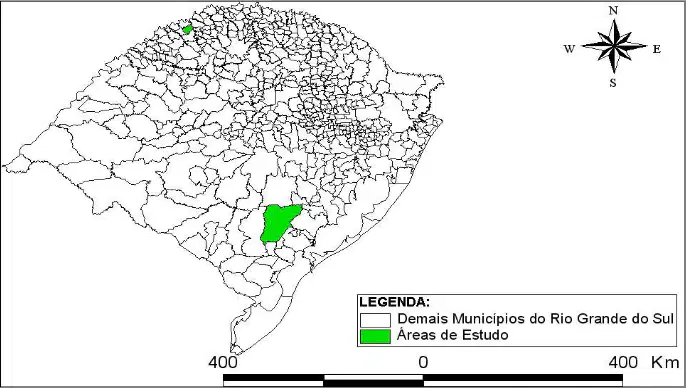
Which municipalities are highlighted as areas of study in the map of Rio Grande do Sul?
Porto Alegre and Pelotas
Horizontina and Canguçu
Santa Maria and Uruguaiana
Passo Fundo and Bagé
According to the methodology described, which method was used for the analysis in the research?
Inductive method
Deductive method
Experimental method
Quantitative method
Fill in the blank: The research adopted a _______ approach to operationalize the chosen method, as described in the methodology section.
qualitative
mechanical
randomized
commercial
According to Triviños (2010), what does qualitative research provide?
Objective descriptions of phenomena
Interpretations that affect perception in a given context
Statistical analysis of data
Quantitative results
What are the main qualitative instruments used in the research described in the passage?
Interview and non-participant observation
Survey and experiment
Questionnaire and statistical analysis
Focus group and content analysis
According to Creswell (2010), interviews provide indirect information filtered by the interviewees' points of view.
True
False
What is the main characteristic of a simple random sample according to Almeida (1989)?
All members of the population have an equal and independent chance of being included in the sample.
The sample is chosen based on the researcher's preference.
Only members with specific characteristics are included in the sample.
The sample is selected from a pre-determined subgroup of the population.
In the research, what percentage of the sample was taken from rural districts in both municipalities?
25%
50%
75%
100%
Fill in the blank: In sampling theory, a distinction is made between the target population and the ________ population.
accessible
general
random
sampled
What method of analysis was used for presenting the results in the research?
Deductive analysis method
Inductive reasoning approach
Statistical correlation method
Experimental simulation technique
Agriculture as a productive activity altered the way of life of the human population by:
leading to settled communities and a shift from nomadic lifestyles.
causing humans to rely solely on hunting and gathering.
making people travel more frequently in search of food.
reducing the importance of food production in daily life.
Fill in the blank: The efficiency of agriculture allowed part of the productive force to dedicate itself to other activities, such as ______ and ______.
commerce; crafts (or trade and crafts/artisan work)
hunting; gathering
mining; fishing
warfare; poetry
According to the passage, the three main objectives of the immigration policy to Brazil at the end of the 18th and beginning of the 19th century were:
to populate the territory, stimulate agriculture, and promote Europeanization
to restrict foreign influence, limit population growth, and encourage isolationism
to increase industrialization, promote urbanization, and reduce agricultural activities
to maintain indigenous cultures, discourage immigration, and preserve traditional practices
Fill in the blank: The family production system introduced in Brazil was characterized by the predominance of ______ and ______ properties with intensive use of family labor.
small; medium
large; urban
industrial; commercial
public; collective
The immigrant groups that mainly influenced the form of production in southern Brazil and the system they introduced were:
Germans and Italians, who introduced the smallholding system.
Portuguese and Spanish, who introduced the plantation system.
Japanese and Chinese, who introduced the collective farming system.
French and English, who introduced the feudal system.
According to the passage, how did the structure of agricultural production in Rio Grande do Sul change after the 1940s?
The structure of agricultural production changed with the adoption of new technologies, increased mechanization, and the influence of global development policies, especially after the Second World War.
There was a complete abandonment of agriculture in favor of industrialization after the 1940s.
Agricultural production remained entirely traditional and unchanged after the 1940s.
The region shifted exclusively to livestock farming, abandoning crop cultivation after the 1940s.
What was the main goal of the Green Revolution as described in the passage?
The main goal was to increase productivity indices through modernization of agriculture, using agrochemicals and intensive use of new technologies.
The main goal was to reduce the use of technology in agriculture and promote traditional farming methods.
The main goal was to decrease agricultural output to protect the environment.
The main goal was to focus solely on organic farming without any modernization.
The mechanization of agriculture in Rio Grande do Sul led to an increase in rural population.
True
False
Explain how industrialization and the migration of diversified crops for commodity production affected rural areas in Rio Grande do Sul.
Industrialization and migration of diversified crops for commodity production led to further reduction in demand for rural labor, contributing to population decline and economic stagnation in rural areas.
Industrialization and migration of diversified crops for commodity production resulted in increased rural employment and rapid population growth in rural areas.
Industrialization and migration of diversified crops for commodity production caused a shift towards subsistence farming and revitalized traditional rural communities.
Industrialization and migration of diversified crops for commodity production led to greater investment in rural infrastructure and improved living standards for all rural residents.
What are the main social relations affected by industrialization according to the section 'Relações e Processos'?
Social relations affected include the allocation of labor, material conditions, and especially the use of machinery in production processes.
Only the relations between rural and urban populations are affected, with no impact on production processes.
Industrialization only changes political relations, not social or economic ones.
The main effect is on international trade relations, not on labor or production methods.
According to the passage, what played an important role in increasing the productivity of land for food production in Brazil?
Traditional farming methods
Technological packages, including mechanization and chemical inputs
Decrease in industrialization
Reduction of urban occupations
Fill in the blank: The transformation in agriculture during the period discussed in the passage led to significant changes in the relationship between _______ and _______ spaces.
urban and rural
public and private
domestic and international
coastal and mountainous
The occupation of land for agricultural practices in the northeast of Rio Grande do Sul mainly involved migration from old German and Italian colonies.
True
False
One of the main reasons for the migration to the northwest region of Rio Grande do Sul for agricultural occupation, according to the passage, was:
the search for fertile land
the expansion of urban centers
the development of mining activities
the construction of large factories
According to the passage, what was one of the main effects of the mechanization of agriculture in Brazil during the period discussed?
Increase in manual labor demand
Reduction in the demand for agricultural labor
Decrease in industrial activity
Growth of small family farms
Fill in the blank: The modernization of agriculture and the incorporation of mechanization in the countryside were results of the technological packages of the _________
Green Revolution
Industrial Revolution
Digital Revolution
Scientific Revolution
A consequence of the reduction of investments from urban to rural areas during the period of economic recession described in the passage was:
an increase in rural unemployment
a rise in urban population
improvement in rural infrastructure
growth in rural industries
According to the passage, what characterizes the 'Típico' type of rural inhabitant?
Basically constituted by agricultural producers.
Mainly involved in urban trade activities.
Primarily engaged in industrial work.
Known for their nomadic lifestyle.
According to the passage, who are considered 'Atores diversificados' among rural inhabitants?
Individuals who produce in not very large land areas and are mainly family farmers who seek innovations and offer differentiated products for alternative markets.
Large-scale landowners who focus solely on traditional crops for export.
Urban professionals who have recently moved to rural areas for retirement.
Government officials responsible for rural development policies.
According to the passage, who are 'Rentistas e beneficiários' among rural inhabitants?
Inhabitants who remain in rural areas but whose income comes from rents (investments, rentals, or social security benefits).
Inhabitants who work exclusively in agriculture and livestock.
Inhabitants who migrate to urban areas for employment.
Inhabitants who rely solely on government subsidies for survival.
According to the passage, what defines the 'Plurativos de gênero' type of rural inhabitant?
Family units in which one individual works in urban activities and the partner is involved in typically rural work.
Individuals who exclusively work in agriculture without any urban employment.
Rural inhabitants who migrate seasonally to urban areas for work.
Families where all members are involved in the same type of rural occupation.
According to the passage, what was one of the main consequences for medium and large industries that faced difficulties in adapting to the globalized economy?
They had to close their activities due to the impossibility of producing under such complex and unsustainable conditions.
They expanded their operations to new international markets.
They received increased government subsidies to support their growth.
They shifted their focus entirely to small-scale local production.
What happened to many family producers after the de-structuring of the canning chain and the decrease in demand for fruit?
They were left out of the process and excluded, as they depended on fruit growing for their families' survival.
They shifted to large-scale industrial farming and prospered.
They diversified into technology and became successful entrepreneurs.
They received government subsidies and expanded their operations.
The immediate result of the de-structuring of the canning chain in rural areas was that many farmers abandoned the countryside.
True
False
What was the main characteristic of tobacco production in Canguçu before the 1990s?
It was produced on a small scale, mainly for local markets, using rudimentary techniques.
It was produced on a large scale for international export, using advanced machinery.
It was primarily a government-controlled industry with strict regulations.
It was mainly cultivated in urban areas using hydroponic methods.
From the 1990s onwards, what change occurred in tobacco cultivation in Canguçu and neighboring municipalities?
Tobacco cultivation expanded, with more areas being dedicated to it, and agricultural income increased for many families.
Tobacco cultivation was completely banned and replaced by soybean farming.
Tobacco cultivation decreased significantly due to government restrictions.
Tobacco cultivation remained unchanged, with no significant impact on agricultural income.
According to the passage, what led to the increased demand for specialized services in rural areas such as Canguçu?
The increase in rural income, largely generated by family farming, led to the increased demand for specialized services.
The migration of urban workers to rural areas led to the increased demand for specialized services.
Government subsidies for rural businesses led to the increased demand for specialized services.
The expansion of transportation networks led to the increased demand for specialized services.
The opening of new offices for advocacy, engineering, architecture, and medical clinics in Canguçu was a result of the increased demand for specialized services.
True
False
What is the main factor that contributed to the changes in the agrarian structure of Rio Grande do Sul, as mentioned in the passage?
The elements presented by the Green Revolution (Revolução Verde) and technological packages.
The increase in urban population due to industrialization.
The decline of international agricultural markets.
The implementation of land redistribution policies.
Which municipalities are mentioned as having undergone gradual changes in their rural realities due to technological and social transformations?
Horizontina and Canguçu
Porto Alegre and Pelotas
Santa Maria and Uruguaiana
Bagé and Santana do Livramento
According to the passage, what is the main factor that allows the rotation of capital in rural areas under capitalist production?
Subsidized credit
Traditional farming methods
High labor costs
Limited market access
What unique system represented the dominant mode of production in Brazil after colonial slavery?
Capitalism and its system of relations
Feudalism and serfdom
Subsistence agriculture
Mercantilism
According to Gerban and Fioravante (1978), what is the mode of production?
A single structure
A combination of various structures and practices
Only related to agriculture
A temporary phenomenon
The passage states that the existence of plural activities in rural areas is a new phenomenon in Brazil.
True
False
In Horizontina, what is the main focus of the typical producers' rural production?
Soy production
Cattle ranching
Coffee cultivation
Fruit orchards
What is the main difference between small and large landowners in Horizontina, according to the passage?
The type of crop produced
The extension of their properties
The use of technology
The number of workers employed
According to the passage, what distinguishes family farmers from other rural producers?
Family farmers are distinguished by their income being centered on agricultural production and their ability to innovate through diversification and new crops due to land limitations.
Family farmers are distinguished by owning the largest plots of land in rural areas.
Family farmers are distinguished by relying solely on government subsidies for their income.
Family farmers are distinguished by producing only a single crop throughout the year.
What is a key factor in the economic viability of agricultural activity, as mentioned in the passage?
The diversity of strategies and markets, and the greater expectation of successors (children or relatives who remain in rural areas).
The use of advanced machinery and technology only.
The reduction of labor costs by hiring seasonal workers exclusively.
The focus on monoculture farming for higher yields.
Who are considered 'rentistas' and beneficiaries in the rural context, according to the passage?
Individuals who live in rural areas and have income from investments, rents, or social security benefits, but do not actively participate in agricultural production.
Farmers who own large tracts of land and actively cultivate crops for commercial purposes.
Seasonal laborers who migrate to urban areas for temporary work during the off-season.
Individuals who are employed by the government to manage rural development projects.
Explain the concept of 'pluriatividade' as described in the passage.
Pluriatividade refers to family units where members have occupations in both urban and rural activities, or where all family members are engaged in non-agricultural occupations in the secondary or tertiary sectors.
Pluriatividade refers to the exclusive practice of agriculture by all family members in rural areas.
Pluriatividade is the migration of rural families to urban centers for employment.
Pluriatividade means the specialization of family members in a single occupation within the agricultural sector.
What historical process affected the municipality of Horizontina, as described in the passage?
The process of rural exodus, which led to the restructuring of the local rural space, the emergence of new activities, and a reduction in economic importance and occupation in the rural nucleus.
The process of rapid industrialization, which resulted in the expansion of urban centers and increased population density in the city.
The process of agricultural intensification, which led to the growth of large-scale farming and increased rural employment.
The process of urban migration, which caused a significant increase in the rural population and the development of new rural settlements.
Based on the passage, what is a common feature in the rural family structure described?
The father does all the work
Tasks are distributed among family members
Only women work in agriculture
Children do not participate in rural activities
According to the text, what is the main source of income in rural properties where tobacco is grown?
Tobacco is considered the principal source of income.
Corn is considered the principal source of income.
Livestock is considered the principal source of income.
Soybeans are considered the principal source of income.
Retirees play what role in the composition of rural family income, as described in the passage?
They contribute a significant portion of the income.
They have no impact on family income.
They are the sole earners in rural families.
They reduce the overall family income.
The interaction between urban and rural areas is described as a new reality that intensifies the relationship between these spaces.
True
False
The passage suggests that the modernization process in rural areas of southern Brazil is:
gradually transforming traditional lifestyles.
completely replacing all traditional practices.
not affecting rural communities at all.
making rural areas more isolated.
According to the passage, what are some common characteristics identified in the reality of the 'campo gaúcho'?
Aging population and rural exodus, especially in the late years of the last century.
Rapid urbanization and technological advancement in rural areas.
High birth rates and increasing youth population in the countryside.
Significant influx of immigrants revitalizing rural communities.
What impact did the demand from the international market have on the northwest region of the 'campo gaúcho'?
It led to the cultivation of soybeans and the involvement of multinational agricultural implement companies, changing the region's relationship with the world and increasing the need for interconnection between transport, financial, and commercial networks.
It resulted in a decline in agricultural production and a shift towards mining activities in the region.
It caused the abandonment of traditional farming methods in favor of exclusive cattle ranching.
It led to the isolation of the region from global markets and reduced investment in infrastructure.
The modernization of the countryside and its insertion into modernity directly impacts rural areas, transforming and (re)dimensioning their logic.
True
False
Which of the following is NOT mentioned as a new activity in the rural world according to the passage?
Part-time agricultural work
Service activities
Installation of small agro-industries
Large-scale urbanization
What do the modern dynamics described in the passage indicate about the possibilities for rural areas?
They indicate trends and possibilities for a rural vision that goes beyond the traditional view of a space limited to agricultural production, showing the impact of modernization and global processes.
They suggest that rural areas are becoming increasingly isolated from global processes.
They show that rural areas are returning to traditional agricultural practices only.
They indicate that modernization has had no impact on rural areas.
The book 'Introdução à pesquisa em ciências sociais' was authored by _________.
A. N. Triviños
B. Gilberto Freyre
C. Sérgio Buarque de Holanda
D. Florestan Fernandes
The monograph 'Do campo à cidade' discusses the economic activities of the rural population in the municipality of _________.
Horizontina-RS
Santa Maria-RS
Passo Fundo-RS
Pelotas-RS
Fill in the blank: The book 'Mercados e comercialização de produtos agrícolas' was published by _________.
Ed. UFRGS
Editora Atlas
Editora Saraiva
Editora FGV
Editora Manole

