
 Worksheets
chapt 3 exam
Total questions: 135
Worksheet time: 2hrs 32mins
Which of the statements below accurately describe(s) alkanes?
A) Alkanes are hydrocarbons which contain only single bonds.
B) Alkanes belong to the class of unsaturated hydrocarbons.
C) Alkanes are the simplest and least reactive class of organic compounds.
D) both A and B
E) both A and C
Which of the following types of hydrocarbons is(are) saturated?
alkanes
alkenes
alkynes
aromatics
All of the above are saturated.
If a hydrocarbon has no double or triple bonds, it is said to be (a) .
Straight-chain alkanes are also called (a) .
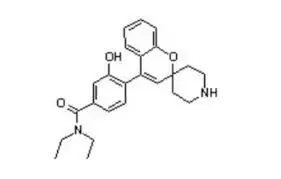
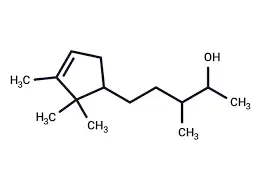
The structure below is a potent analgesic agent (pain reliever) (J. Med. Chem., 2009, 5685).
How many secondary carbons are in this structure?
2
4
6
12
If an acyclic alkane hydrocarbon contains n carbon atoms, how many hydrogen atoms must it
also contain?
n
2n
n + 2
2n + 2
n - 2
A series of compounds, like the n-alkanes, that differ only by the number of -CH2- groups, is
called a(n) (a) series.
A bicyclic alkane contains 12 carbon atoms. How many hydrogen atoms does it contain?
20
22
24
26
28
How many methylene groups are present in 2,4-dimethylhexane?
0
1
2
6
8
Triacontane is an unbranched alkane that contains 30 carbon atoms in each molecule. How
many hydrogen atoms are present in each molecule of triacontane?
30
32
58
60
62
How many secondary (2°) carbons are found in 5-ethyl-3,3,4-trimethylheptane?
1
4
3
2
6
Provide an acceptable name for (CH3CH2CH2)3CH
(a)
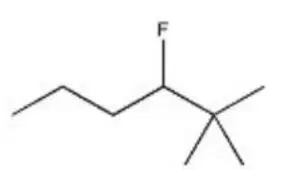
Provide the name of the compound below.
(a)
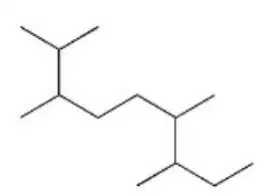
Provide the name of the compound below.
(a)
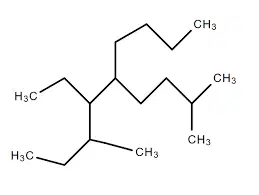
Provide an acceptable name for the alkane shown below.
CH3CH2CH2CH2CH2CH3
(a)
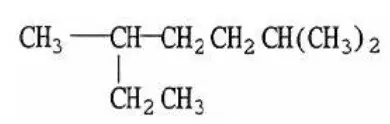
Provide an acceptable name for the alkane shown below.
(a)
Draw an acceptable structure for 4-tert-butyloctane
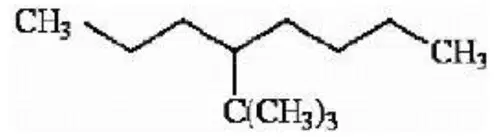


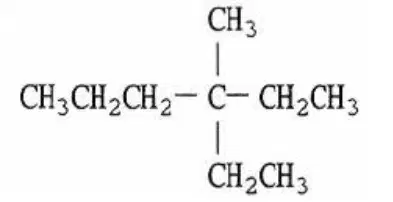
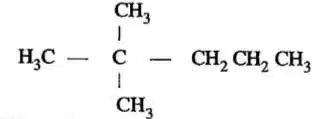
Draw an acceptable structure for 3-ethyl-3-methylhexane
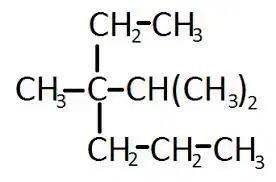

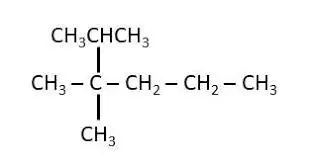
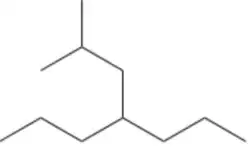
A student named the following molecule "4-isobutylheptane." Why is this incorrect? What is the correct name?
(a)
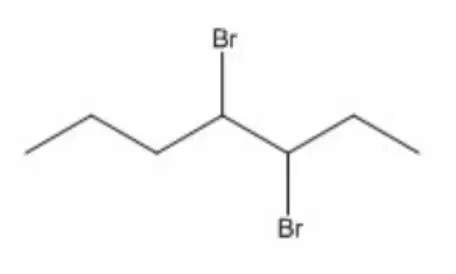
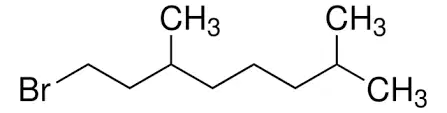
Name the haloalkane shown
(a)
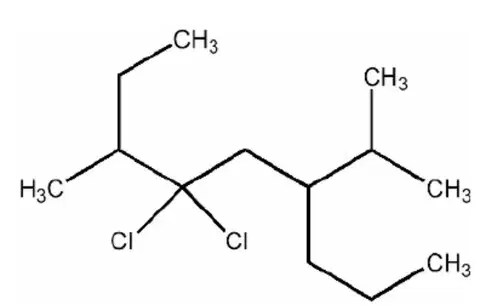
Provide an acceptable name for the following compound
(a)
Provide an acceptable name for [(CH3)3C]2CHCH3
(a)
Provide the IUPAC name of (CH3CH2)3CH
(a)
Provide the IUPAC name of (CH3)2CHCH2CH2C(CH3)3
(a)
Predict the molecular formula of 4-ethyl-5,5-dimethyldodecane
(a)
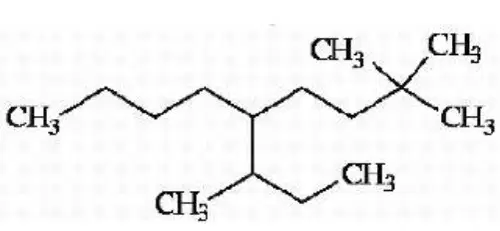
Provide an acceptable name for the alkane shown below
(a)
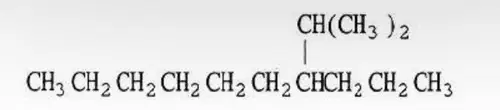
Provide an acceptable name for the alkane shown below
(a)
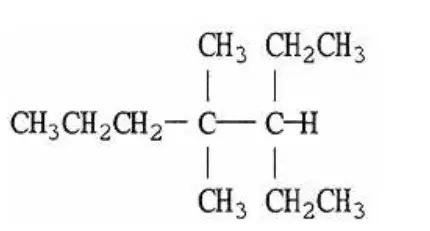
Provide an acceptable name for the alkane shown below
(a)
Draw an acceptable structure for 6-ethyl-2,6,7-trimethyl-5-propylnonane.
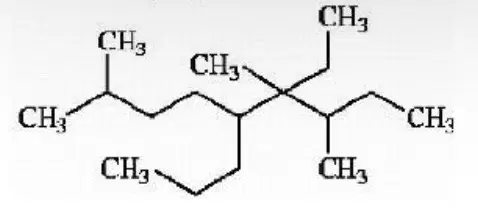

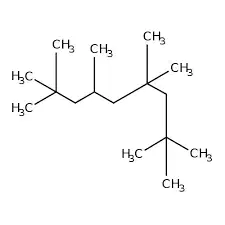
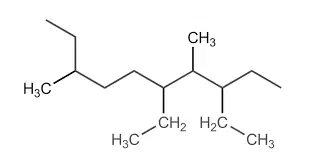
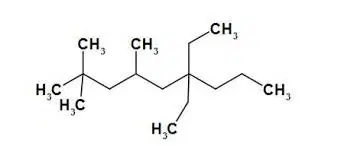
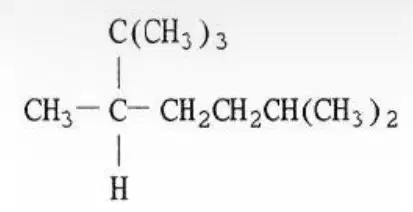
Provide an acceptable name for the alkane shown below.
(a)
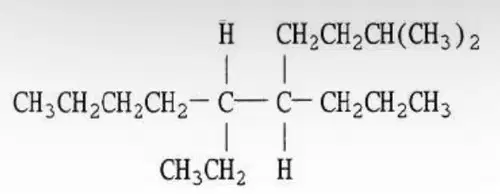
Provide an acceptable name for the alkane shown below.
(a)
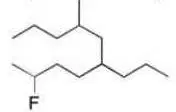
Provide an acceptable name for the alkane shown below
(a)
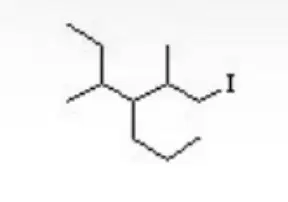
Identify the correct IUPAC name for the following structures.
4-(2-iodo-1-methylethyl)-3-methylheptane
3-s-butyl-1-iodo-2-methylhexane
1-iodo-2,4-dimethyl-3-propylhexane
2,4-dimethyl-1-iodo-3-propylhexane
Name the haloalkane shown.
CH3CH2C(CH3)2CH2CH2I
(a)
Name the alkane shown.
[(CH3)2CH]2CHCH3
(a)
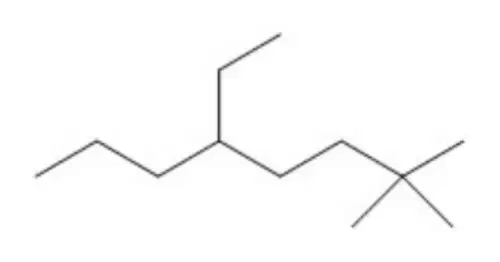
Name the alkane shown
(a)
How many methyl groups are present in 2,4-dimethylhexane?
0
2
4
6
8
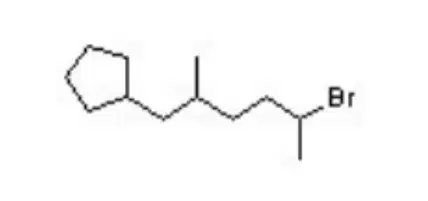
Identify the correct IUPAC name for the following structure.
6-bromo-1-cyclopentyl-3,6-dimethylhexane
1-bromo-5-cyclopentyl-1,4-dimethylpentane
2-bromo-6-cyclopentyl-5-methylhexane
5-bromo-1-cyclopentyl-2-methylhexane
none of the above
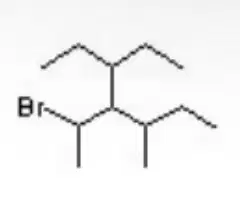
Identify the correct IUPAC name for each compound shown below
2-bromo-3-sec-butyl-4-ethylhexane
2-bromo-4-ethyl-3-sec-butylhexane
3-(1-bromoethyl)-2,4-diethylhexane
4-(1-bromoethyl)-3-ethyl-5-methylheptane
4-(1-bromoethyl)-5-ethyl-3-methylheptane
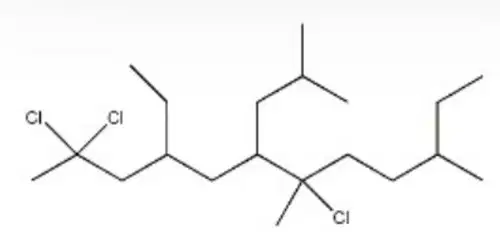
Provide the name of the compound shown.v
(a)

Give structures for the three isomers with molecular formula C5H12 and provide the
common name of each
1. pentane or n-pentane
2. isopentane
3. neopentane
1. n-hexane or hexane
2. isohexane
3. neopentane isomer
1. butane or n-butane
2. isopentane3. 2-methylbutane
1. pentane or n-pentane
2. isopentane
3. neopentane isomer
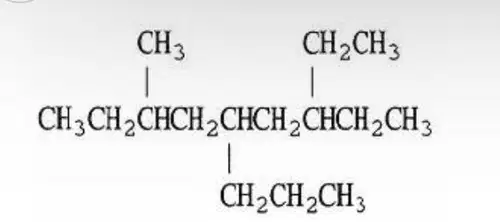
Provide an acceptable name for the alkane shown below.
(a)
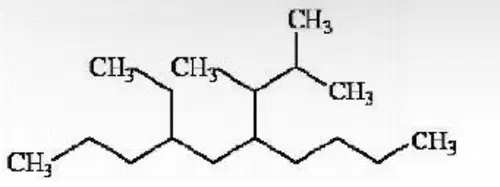
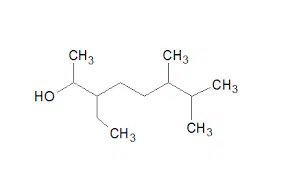
Draw an acceptable structure for 4-ethyl-6-(1,2-dimethylpropyl)decane

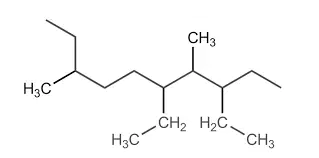
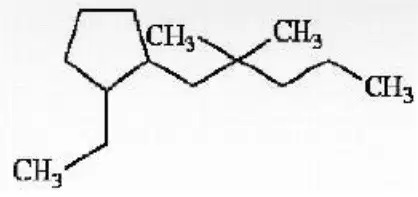
Draw an acceptable structure for 1-ethyl-2-(2,2-dimethylpentyl)cyclopentane
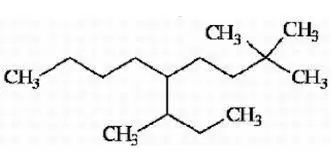
When one compares the densities of n-hexane and water, one finds ________.
that n-hexane is less dense than water
that n-hexane is more dense than water
that these two compounds have the same density
that the relative densities of two immiscible compounds cannot be measure
A branched alkane has ________ boiling point relative to the isomeric linear alkane. There
are ________ London force interactions in the branched alkane.
a higher; stronger
a higher; weaker
a lower, stronger
a lower; weaker
the same; similar
Consider the three isomeric alkanes n-hexane, 2,3-dimethylbutane, and 2-methylpentane.
Which of the following correctly lists these compounds in order of increasing boiling point?
2,3-dimethylbutane < 2-methylpentane < n-hexane
2-methylpentane < n-hexane < 2,3-dimethylbutane
2-methylpentane < 2,3-dimethylbutane < n-hexane
n-hexane < 2-methylpentane < 2,3-dimethylbutane
n-hexane < 2,3-dimethylbutane < 2-methylpentane
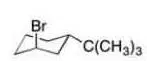
Name the following compound and use the appropriate cis/trans designation
(a)
(a) is the n-alkane of greatest molecular weight which is a gas at room temperature
and pressure
Place the following alkanes in order of increasing boiling point:
CH3(CH2)6CH3, CH3(CH2)5CH3, (CH3)3CCH2CH2CH3
(a)
Why are alkanes described as hydrophobic?
(a)
Which intermolecular force is primarily responsible for the interactions among alkane
molecules?
(a)
What is the major constituent of natural gas?
octane
butane
propane
ethane
methane
Within the context of commercial uses of alkanes, explain what "knocking" is
(a)
Explain why the lowest energy conformation of decane is an extended, or zig-zag
conformation.
(a)
Which alkanes have largely replaced Freons as propellants in aerosol cans?
methane and ethane
propane and butane
pentane and hexane
nonane and decane
none of the above
How many carbons do the primary alkane constituents of gasoline contain?
C1—C2
C3—C4
C5—C8
C8—C12
C12—C16
(a) is the reaction process through which long-chain alkanes are converted into a
mixture of short-chain alkanes and alkenes.
List three commercial products which are composed primarily of alkanes.
(a)
Linear alkanes generally have higher phase transitions than their branched isomers.
However, the melting point of cyclohexane is 6° C while the melting point of hexane is -95° C.
Briefly suggest a reason why this is.
(a)
In the complete combustion of heptane, how many moles of water are produced?
(a)
By using the appropriate molecular formulas, write a balanced equation which describes the
complete combustion of cyclohexane.
(a)
When a mole of decane undergoes complete combustion, how many moles of water are
formed?
1
10
11
15.5
22
By using the appropriate molecular formulas, write a balanced equation which describes the
complete combustion of nonane.
(a)
The energy barrier for carbon-carbon bond rotation in propane is mainly due to ________.
angle strain
bond strain
muscle strain
steric strain
torsion strain
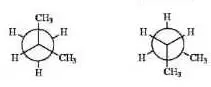
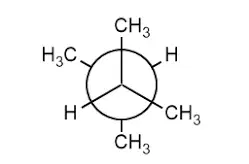
The structures below are ________
not isomers
conformational isomers
cis-trans isomers
structural isomers
both B and D
Which of the following best describes the molecules of a sample of ethane gas at room
temperature?
Almost all of the molecules are frozen or locked in the eclipsed conformation.
Almost all of the molecules are frozen or locked in the staggered conformation.
The molecules are rapidly interconverting between the eclipsed and staggered conformations,
but at any one time slightly more of them are present in the eclipsed conformation.
The molecules are rapidly interconverting between the eclipsed and staggered conformations,
but at any one time slightly more of them are present in the staggered conformation.
Draw a Newman projection of the most stable conformation of 2-methylpropane.
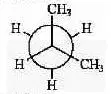
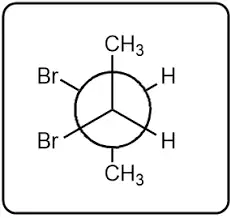
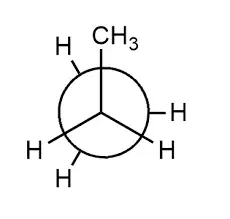
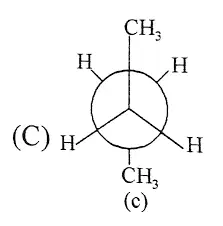
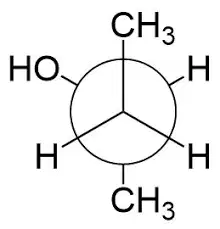
Define the term conformation.
(a)
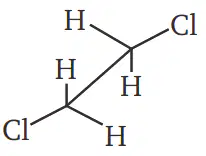
Use a sawhorse structure to depict the eclipsed conformer of ethane
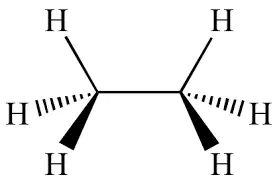
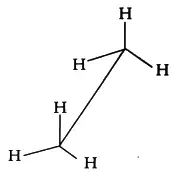

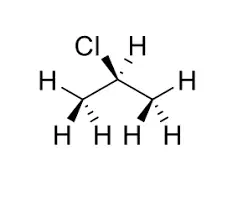
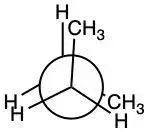
Draw the Newman projection of the highest energy conformation that results from rotation
about the C2-C3 bond of 2,2-dimethylbutane.

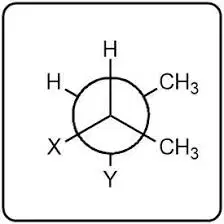
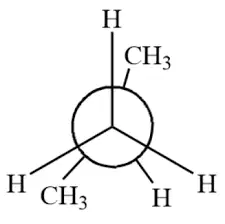
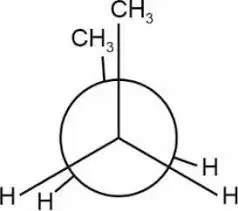
Which of the following statements concerning the conformers of butane is true?
Unlike ethane, all butane conformers are classified as eclipsed.
The lowest energy conformer of butane is the gauche conformer.
There is more torsional strain in the anti conformer than in the totally eclipsed conformer.
The eclipsed and totally eclipsed conformers have the same amount of nonbonded strain.
The gauche and anti conformers differ primarily in the amount of nonbonded strain present.

Convert the Newman structure below to the equivalent line-angle structure
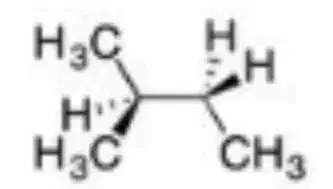
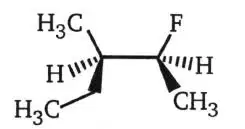
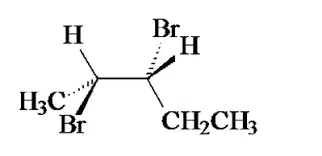

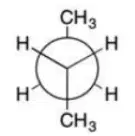
Draw the Newman projection of the anti conformation of butane.

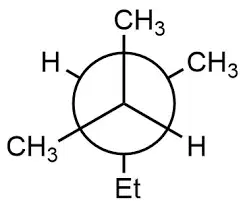
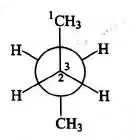
Draw the Newman projection of the highest energy conformation that results from rotation
about the C2-C3 bond of 2-methylbutane.
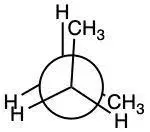
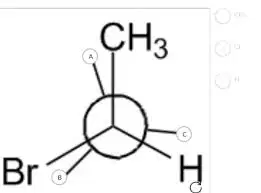
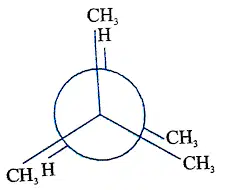
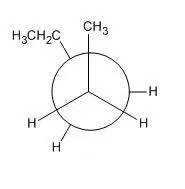
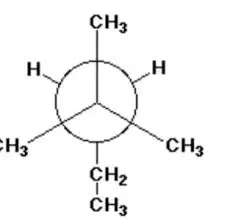
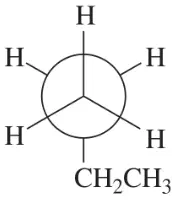
Consider rotation about the C3-C4 bond of hexane, and draw the Newman projection for the
most stable conformation.
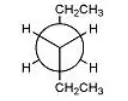
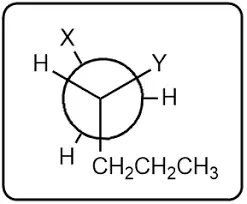
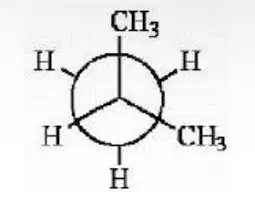
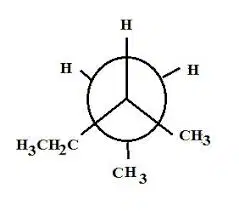
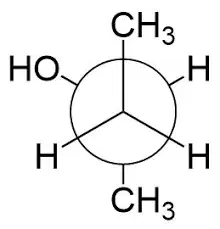
Arrange the following conformers of butane in order of energy, lowest to highest: eclipsed,
totally eclipsed, gauche, and anti
(a)
Among the butane conformers, which occur at energy minima on a graph of potential energy
versus dihedral angle?
gauche only
eclipsed and totally eclipsed
gauche and anti
eclipsed only
anti only
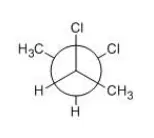
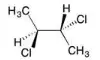
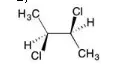
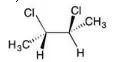
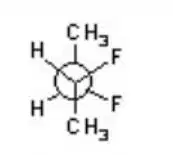
Which line angle drawing best represents the Newman Projection shown below?

Without any change in conformation, translate the Newman projection shown below to a
perspective structure



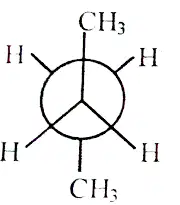
View a butane molecule along the C2—C3 bond and provide a Newman projection of the
lowest energy conformer.

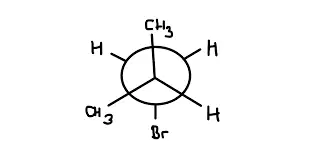
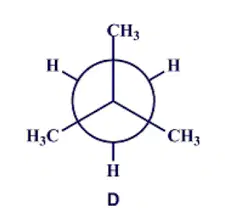

Provide a Newman Projection of the gauche conformer of butane

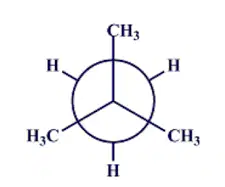
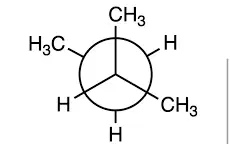

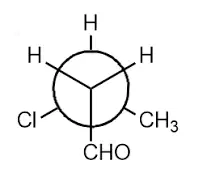
From the perspective of viewing down the C2—C3 bond, draw the Newman projection of
the most stable conformation of 2,3-dimethylbutane.
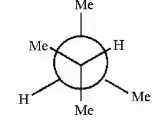
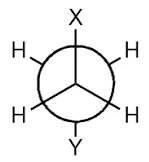
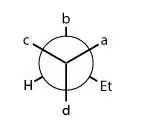
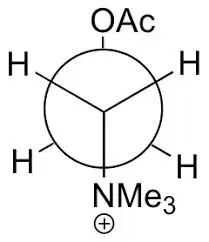

From the perspective of viewing down the C2-C3 bond, draw the Newman projection of the
least stable conformation of 2,3-dimethylbutane.
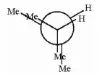

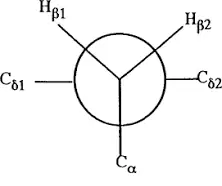

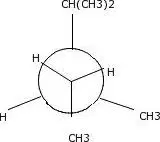

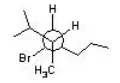
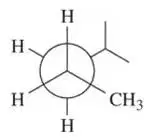
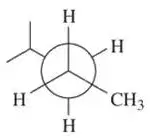
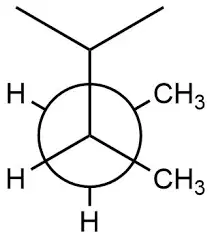
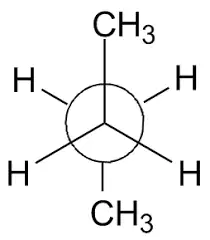
In a Newman projection, siting down the C3-C4 bond, draw the structure below in its most
stable conformation.
If a monocyclic alkane hydrocarbon contains n carbon atoms, how many hydrogen atoms
must it also contain?
n
2n
n + 2
2n + 2
n - 2
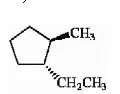
Give the IUPAC name for the cycloalkane shown below
(a)
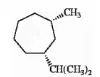
Give the IUPAC name for the cycloalkane shown below
(a)
What element of ring strain exists in cyclooctane but not in cyclopropane?
(a)
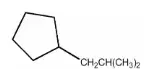
Provide an acceptable name for the following compound.
(a)

Provide the name of the compound below
(a)

Identify the correct IUPAC name for the structure shown below.
1-tert-butyl-2-chloro-5-bromocycloheptane
5-bromo-1-tert-butyl-2-chlorocycloheptane
1-bromo-4-chloro-5-tertbutylcycloheptane
1-bromo-4-tert-butyl-5-chlorocycloheptane
1-tert-butyl-4-bromo-7-chlorocycloheptane
Given the following heats of combustion per CH2 group within the structure, which cyclic
alkane has essentially no angle strain? (Ref: long-chain Alkane = 659 kJ/mol)
cyclobutane = 686 kJ/mol
cyclopentane = 664 kJ/mol
cyclohexane = 659 kJ/mol
cycloheptane = 662 kJ/mol
cyclooctane = 663 kJ/mol
Which of the following cycloalkanes exhibits the greatest molar heat of combustion?
cyclooctane
cycloheptane
cyclohexane
cyclobutane
cyclopropane
Which of the following correctly ranks the cycloalkanes in order of increasing ring strain per
methylene?
cyclopropane < cyclobutane < cyclohexane < cyclopentane
cyclohexane < cyclopentane < cyclobutane < cyclopropane
cyclohexane < cyclobutane < cyclopentane < cyclopropane
cyclopentane < cyclopropane < cyclobutane < cyclohexane
cyclopropane < cyclopentane < cyclobutane < cyclohexane
Which of the following cycloalkanes has the smallest heat of combustion per CH2 group?
cyclopropane
cyclobutane
cyclopentane
cyclohexane
cycloheptane
Which of the following statements regarding cyclobutane is correct?
The lowest energy conformation of cyclobutane is a planar one in which all of the bond
angles is 90°.
The lowest energy conformation of cyclobutane is known as the chair conformation.
The lowest energy conformation is one in which the bond angles are slightly less than 90°
even though this increases angle strain.
The lowest energy conformation is one in which the bond angles are greater than 90° so that
angle strain is significantly reduced.
None of the above statements is correct
Which has the greatest molar heat of combustion?
trans-1,2-dimethylcyclopentane
cis-1,2-dimethylcyclopentane
trans-1,3-dimethylcyclopentane
methylcyclohexane
cycloheptane
Describe the sources of angle strain and torsional strain present in cyclopropane
(a)
The twisted boat conformation of cyclohexane is actually a slightly lower energy
conformation than the boat conformation. Which of the following accurately describes one
factor involved in this structural behavior?
lower angle strain in the boat
higher torsional strain in the twisted boat
fewer unfavorable steric factors in the twisted boat
increased rotational freedom in the boat
lower bond strain in the boat
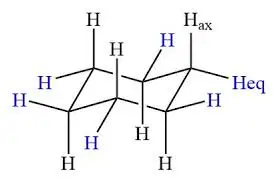
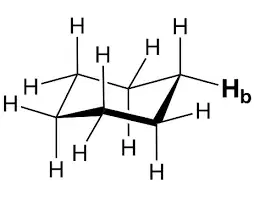
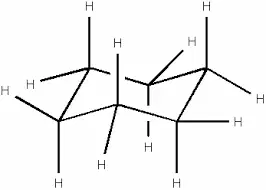
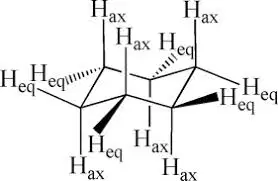
Draw the chair conformer of cyclohexane. Label the axial hydrogens (Ha) and the
equatorial hydrogens (He).
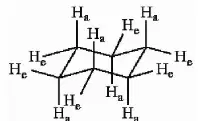
In the boat conformation of cyclohexane, the "flagpole" hydrogens are located ________.
on the same carbon
on adjacent carbons
on C-1 and C-3
on C-1 and C-4
none of the above
Which of the following correctly lists the conformations of cyclohexane in order of
increasing energy?
chair < boat < twist < half-chair
half-chair < boat < twist < chair
chair < twist < half-chair < boat
chair < twist < boat < half-chair
half-chair < twist < boat < chair
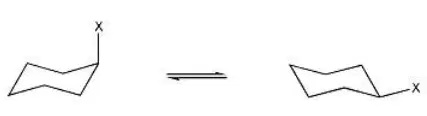
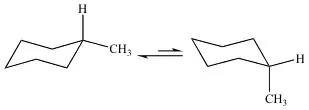
Consider the equilibrium shown below. When one looks at the equilibrium where X = CH3
and the one where X = CH(CH3)2, how do the values of the equilibrium constants (Ks)
compare?
The Ks are equal.
The K where X = CH3 is greater.
The K where X = CH(CH3)2 is greater.
The Ks differ only slightly and are both less than 1.
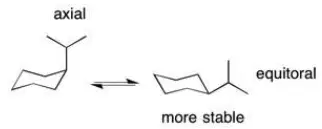
Draw isopropylcyclohexane in a chair conformation and then draw its ring flipped isomer.
Label the substituent as either axial or equitorial. Indicate which of the conformers is more
stable
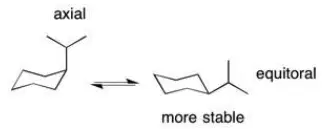
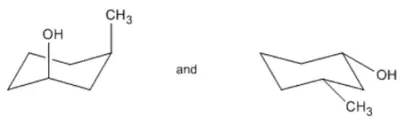

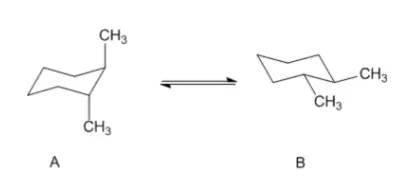
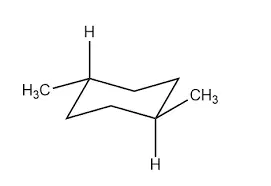
In the lowest energy chair conformation of cis-1,3-dimethylcyclohexane, how many axial
positions are occupied by hydrogen atoms?
2
3
4
5
6
Which of the following statements is a correct description of the most stable conformation
of 1,1,3-trimethylcyclohexane?
The methyl group at C-3 is equatorial.
C-1 is a tertiary carbon and C-3 is a primary carbon.
C-1 is a quaternary carbon and C-3 is a secondary carbon.
C-1 is a tertiary carbon and C-3 is a secondary carbon.
Both methyl groups at C-1 are equatorial.
Which of the statements below correctly describes the chair conformations of trans-1,4-dimethylcyclohexane?
The two chair conformations are of equal energy.
The higher energy chair conformation contains one axial methyl group and one equatorial
methyl group.
The lower energy chair conformation contains one axial methyl group and one equatorial
methyl group.
The higher energy chair conformation contains two axial methyl groups.
The lower energy chair conformation contains two axial methyl groups.
Which of the statements below correctly describes the chair conformations of trans-1,3-diethylcyclohexane?
The two chair conformations are equal in energy.
The higher energy chair conformation contains two axial ethyl groups.
The higher energy chair conformation contains two equatorial ethyl groups.
The lower energy chair conformation contains two axial ethyl groups.
The lower energy chair conformation contains two equatorial ethyl groups
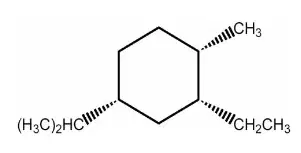
In the lowest energy conformation of the compound below, how many alkyl substituents are
equatorial?
0
1
2
3
6
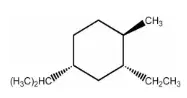
In the lowest energy conformation of the compound below, how many alkyl substituents are
axial?
0
1
2
3
6
Assuming a chair conformation, which of the following configurations will always have
both methyl groups in relative axial/equatorial positions?
trans-1,3-dimethylcyclohexane
cis-1,3-dimethylcyclohexane
cis-1,2-dimethylcyclohexane
trans-1,2-dimethylcyclohexane
Both A and C are correct.
Draw the most stable conformation of cis-1-t-butyl-4-methylcyclohexane.
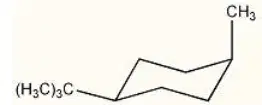
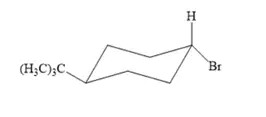
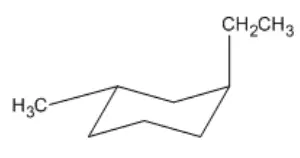
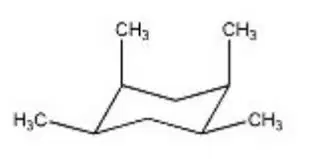


Draw the chair conformation of the cyclohexane derivative shown.
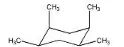
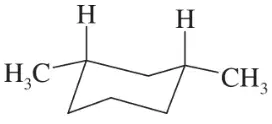


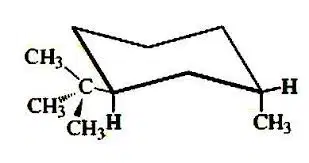
Draw the most stable conformation of cis-1,4-dipropylcyclohexane
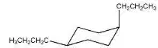
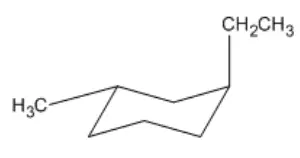
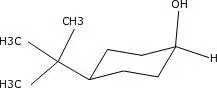
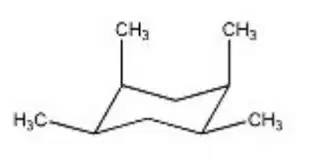
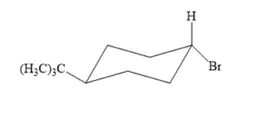
Draw the most stable conformation of trans-1,4-dipropylcyclohexane

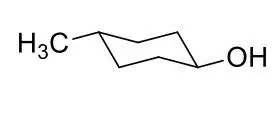
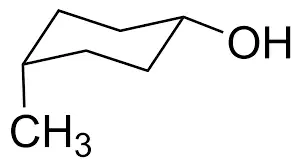
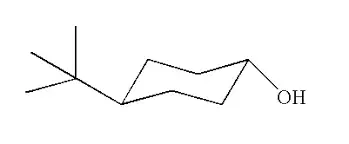
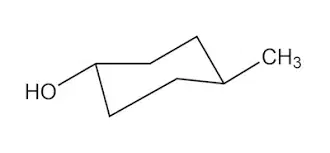
Draw the most stable conformation of trans-1,2-dimethylcyclohexane

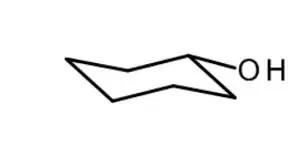
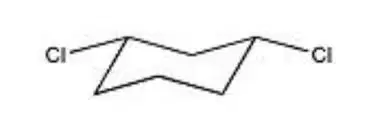
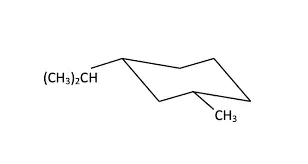
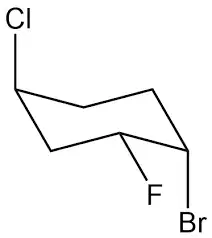
Draw the most stable conformation of cis-1,2-dimethylcyclohexane

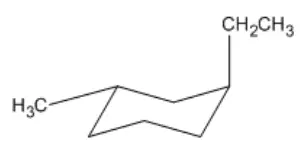
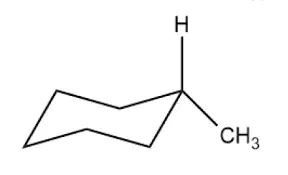
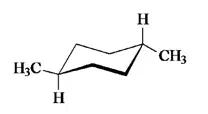
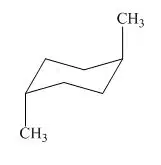
Draw the most stable conformation of trans-1-tert-butyl-3-ethylcyclohexane


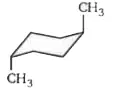

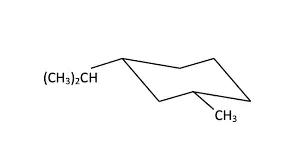
Draw the most stable conformation of cis-1-ethyl-3-methylcyclohexane.
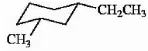
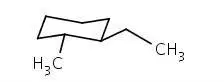
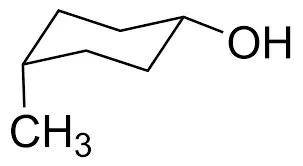

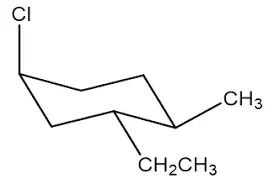
Which of the following difluorocyclohexane isomers has the greatest molecular dipole in its
least stable chair conformation?
cis 1,2-difluorocyclohexane
trans 1,2-difluorocyclohexane
cis 1,3-difluorocyclohexane
trans 1,3-difluorocyclohexane
Draw the most stable conformation of cis-1-ethyl-4-isopropylcyclohexane

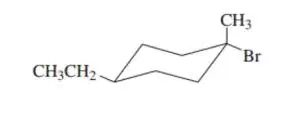
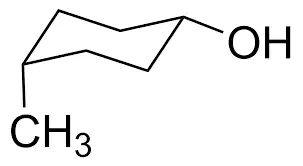
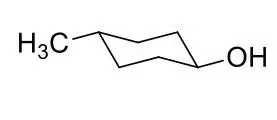

Which of the following correctly lists the conformations of cis-1,4-di-t-butylcylcohexane in
order of increasing energy?
chair < boat < twist boat < half-chair
twist boat < boat < chair < half-chair
chair < twist boat < half-chair < boat
boat < chair < twisted boat < half-chair
half-chair < chair < boat < twisted boat
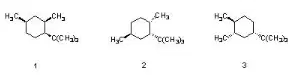
With each structure below drawn in its most stable chair conformation, identify the
sequence that ranks the structures in order of increasing stability
1 < 2 < 3
2 < 3 < 1
3 < 1 < 2
2 < 1 < 3
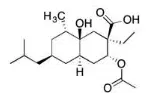
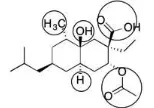
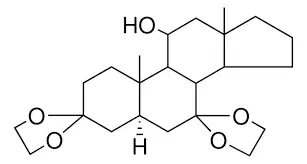
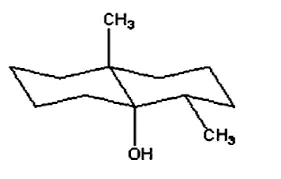
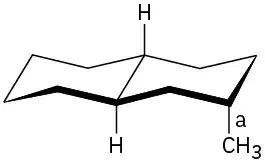
Circle all substituents that would be expected to occupy an axial position in the fused
bicyclic structure below.



Which of the following is a bridged bicyclic alkane?
cis-decalin
bicyclo[2.2.1]heptane
bicyclo[3.2.0]heptane
bicyclo[4.1.0]heptane
none of the above

Which of the following describes the compound below?
bridged bicyclic
fused bicyclic
spiro bicyclic
bridged tricyclic

Provide an acceptable name for the compound below.
(a)
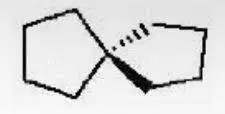
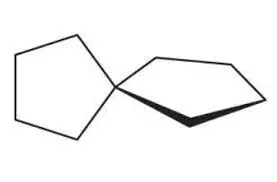
Provide an acceptable structure for spiro [4.4]nonane


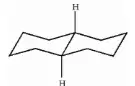
Draw the most stable conformation of trans-decalin.
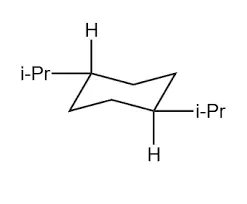
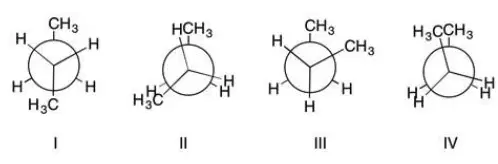
Arrange the following Newman projections of butane in order of energy.
I<III<II<IV
IV<II<III<I
III<I<IV<II
II<IV<I<III
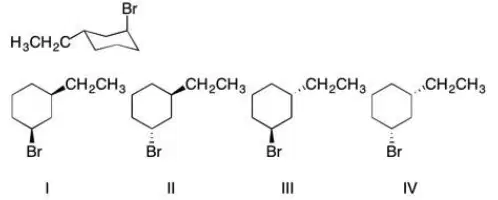
Which line-angle formula corresponds to the chair conformation shown below?
I
II
III
IV

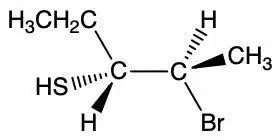
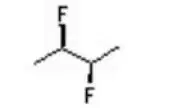
Draw a Newman Projection along the C3-C4 for the molecule shown below. (C3 should be
in front.)
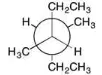

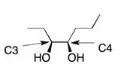
Draw a Newman Projection along the C3-C4 for the molecule shown below. (C3 should be
in front.)
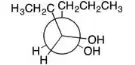
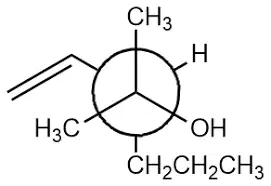
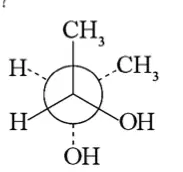
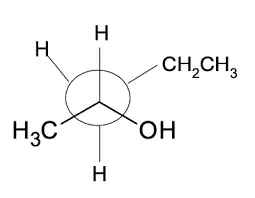

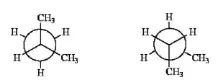
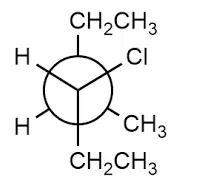
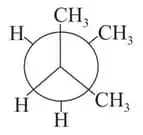
The structures below are the same
True
False

