
 Worksheets
The Hidden Dimension by Edward Hall. Part 3-Midterm Mock Exam
Total questions: 92
Worksheet time: 46mins
What does the Arab-English dictionary author imply about the Arabic language in relation to the English word 'rape'?
Arabic has a direct equivalent for the word 'rape'.
Arabic sources can only approximate the meaning of the word 'rape'.
Arabic has multiple words that express the meaning of 'rape'.
Arabic does not have any words related to the concept of 'rape'.
What is one cultural adaptation of Arabs to high population density according to the text?
Building larger homes to accommodate more people.
Tucking the ego down inside the body to permit higher population densities.
Avoiding communication with others to reduce stress.
Adopting European communication patterns.
What is a characteristic of Arab communication compared to European communication patterns?
Arab communication is less intense than European communication.
Arab communication involves a higher sensory input level.
Arab communication is based on written language only.
Arab communication avoids physical contact.
What is the Arab dream for living space as described in the text?
To live in large, luxurious homes similar to American homes.
To live in homes that hold the family together inside a single protective shell.
To live in homes with partitions to ensure privacy.
To live in homes that are isolated from others.
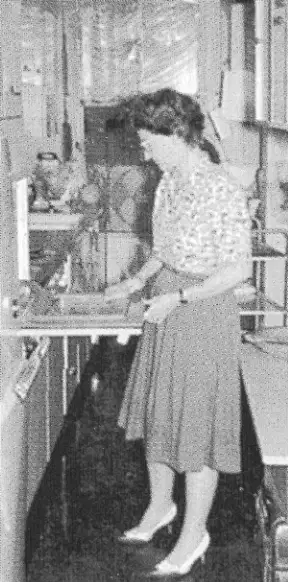
What do Plates 15 and 16 illustrate about fixed-feature space?
Fixed-feature space is irrelevant to human behavior.
Fixed-feature space governs human behavior through material objects and design.
Fixed-feature space is only applicable to outdoor environments.
Fixed-feature space is unrelated to modern building design.
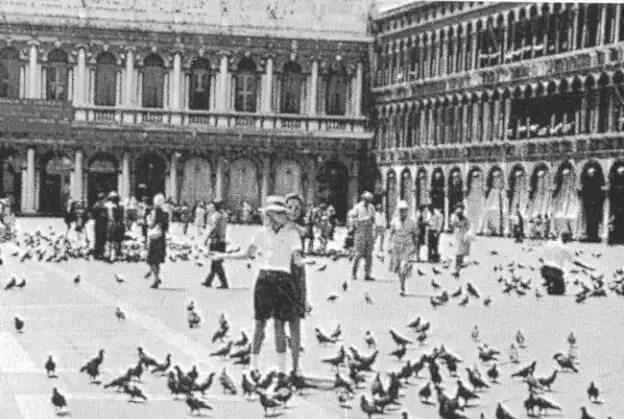
What is San Marco Square in Venice widely recognized as?
An example of unsuccessful enclosure of a large space.
An ideal example of the successful enclosure of a large space.
A poorly designed public space.
A space known for its lack of freedom and relaxation.
How does sculpture add a dimension to space according to the text?
By being visually appealing only.
By being placed in inaccessible areas.
By being felt, rubbed, patted, leaned against, or climbed upon.
By being used solely for decoration.
What do the proxemic patterns in French culture, as depicted in Plates 19 and 20, suggest about their social behavior?
Preference for solitude and personal space
High sensory involvement and close social interaction
Avoidance of crowded spaces
Minimal interaction in public settings
What does the arrangement of space in the fifteenth-century Zen monastery garden of Ryoanji reflect about Japanese culture?
A preference for crowded and busy environments
A tendency to lead individuals to discover something for themselves
A focus on high sensory involvement in social settings
A disregard for spatial arrangement and aesthetics
How do French proxemic patterns differ from those of northern Europeans, English, and Americans?
French people prefer more personal space than others
French people tend to pack together more closely
French people avoid crowded spaces
French people have no distinct proxemic patterns
What is the significance of the fifteen rocks in the Zen monastery garden of Ryoanji?
They symbolize the crowded nature of Japanese cities
They represent the Japanese focus on individual discovery and perception
They are randomly placed without any cultural significance
They depict the French tendency for high sensory involvement
What is the primary reason the "spite house" in Beirut was built?
To provide affordable housing for low-income groups
To punish a neighbor by denying him a view of the Mediterranean
To serve as a model for modern architectural design
To create a public space for community gatherings
What is a common issue with public housing constructed for low-income groups, as mentioned in the text?
They are visually unappealing
They fail to solve many basic human problems
They are located far from urban centers
They are too expensive for low-income groups
How are high-rise apartment buildings described in comparison to slums?
They are more visually appealing but less comfortable to live in
They are less visually appealing but more comfortable to live in
They are equally distressing to look at and live in
They are more affordable and better to live in than slums
What cultural sensitivity is highlighted about Arabs in the text?
A preference for high-rise buildings
A sensitivity to architectural crowding and a need for unobstructed views
A desire for enclosed spaces with no windows
A preference for living in slums over high-rise apartments
What is the primary purpose of Bertrand Goldberg's circular apartment towers in Marina City, Chicago?
To provide luxurious living spaces for the wealthy.
To offer protection from weather and traffic disturbances.
To create a space for cultural and artistic exhibitions.
To serve as a historical landmark for the city.
What is a key feature of the southwest Washington apartments designed by Chloethiel Smith?
They are built entirely underground.
They focus on solving problems of urban renewal.
They are designed exclusively for single families.
They are made of entirely recycled materials.
What does the Arab saying "Paradise without people should not be entered because it is Hell" imply?
Arabs value solitude over social interaction.
Arabs believe that paradise is a lonely place.
Arabs place high importance on human warmth and contact.
Arabs prefer to live in isolation from others.
How do Arabs typically indicate a need for privacy, according to the text?
By leaving the house for a walk.
By stopping all communication and withdrawing.
By locking themselves in a separate room.
By writing a note to their family members.
What is a significant aspect of olfaction in Arab personal distances?
It is considered irrelevant in their behavior patterns.
It is a vital part of their complex system of behavior.
It is avoided as it is seen as intrusive.
It is only important in formal settings.
What is considered impolite in Arab culture when interacting with friends?
Standing back-to-back
Maintaining eye contact
Speaking softly
Smiling too much
What is the significance of the olfactory boundary in Arab life?
It helps Arabs maintain a sense of personal space.
It is used to keep track of emotional changes in relationships.
It is a way to avoid physical contact.
It is a method to avoid unpleasant smells.
Why do Arabs emphasize the sense of smell in their culture?
To enhance human relationships and assess emotions
To avoid unpleasant odors in public spaces
To maintain a sense of personal hygiene
To distinguish between friends and strangers
What is a common misconception Americans have about Arab social interactions?
Arabs prefer to sit close to each other during conversations.
Arabs conduct all conversations at close distances.
Arabs avoid eye contact during conversations.
Arabs do not value personal space.
How do Arabs typically interact with others in their homes?
They avoid looking at each other directly.
They look at each other intensely, which may feel uncomfortable to Americans.
They maintain a professional distance.
They prefer to sit in silence.
What is the role of smell in Arab matchmaking?
It is used to determine compatibility between families.
It is used to assess the emotional state of the couple.
It is used to evaluate the physical health of the individuals.
It is used to determine if the girl "smells nice."
Why might an Arab feel crowded in a social situation?
If they are surrounded by too many people.
If they smell something unpleasant.
If they are forced to maintain eye contact.
If they are required to sit too close to others.
What is one reason Arabs might avoid walking and talking at the same time?
It is considered disrespectful to multitask.
It is seen as impolite to face forward while talking.
It is a sign of disinterest in the conversation.
It is a way to maintain personal space.
What did an Arab informant report about his interactions with Americans?
He often felt uncomfortable due to their lack of eye contact.
He was in constant conflict because of the way he looked at them.
He found Americans to be overly formal in their behavior.
He felt that Americans were too distant in their interactions.
What is the "Bruce effect" mentioned in the text?
A phenomenon where smell affects emotional states.
A phenomenon where smell suppresses pregnancies in mice.
A phenomenon where smell enhances human relationships.
A phenomenon where smell causes discomfort in social situations.
What is the cultural perspective of Arabs regarding privacy in public places?
Privacy is highly valued and strictly maintained in public places.
Privacy in public places is foreign to Arabs, and involvement is expressed at many levels.
Arabs avoid public places to maintain their privacy.
Privacy is considered a sign of weakness in Arab culture.
What action is expected in Arab culture when a grownup sees a boy breaking a window?
Ignore the situation unless the boy is known to them.
Call the authorities immediately.
Intervene and stop the boy, even if he is a stranger.
Report the incident to the community leader.
What does the term "tomb" signify in Arab culture regarding enclosed spaces?
A place of burial and mourning.
A metaphor for architectural crowding and lack of space.
A sacred space for religious practices.
A term used to describe large open spaces.
What are the three requirements for enclosed spaces to satisfy Arabs, as mentioned in the text?
High ceilings, unobstructed space, and a thousand square feet of area.
Low ceilings, crowded spaces, and minimal architectural design.
High ceilings, unobstructed space, and visual openness.
Small spaces, privacy, and architectural simplicity.
How do Arabs view trespass in relation to their concept of boundaries?
Trespass is strictly defined by legal property lines.
Trespass is an extension of their approach to the body and relationships.
Trespass is considered a minor offense in Arab culture.
Trespass is only applicable to strangers and enemies.
What is the primary loyalty hierarchy in Arab culture?
Loyalty to one's self, followed by strangers and enemies.
Loyalty to one's self, followed by kinsman, tribesman, and co-religionist.
Loyalty to one's self, followed by the government and community leaders.
Loyalty to one's self, followed by property and land ownership.
What is the significance of examining proxemic patterns in Arab culture?
To understand the legal framework of property ownership.
To identify cultural norms that determine relationships and boundaries.
To analyze architectural designs in Arab regions.
To study the economic impact of spatial arrangements.
What is the main focus of the book "The Hidden Dimension" as mentioned in the text?
The history of urban renewal in England
The synthesis of sensory inputs and their cultural impact
The importance of preserving green belts in cities
The role of airplane cockpit gauges in planning
According to the text, what is emphasized about the English urban renewal plans?
They are perfect and applicable everywhere
They demonstrate courage and coordination
They focus on the preservation of historical buildings
They prioritize the use of airplane cockpit gauges
What does the text suggest is necessary to avoid complete chaos in urban planning?
Eliminating green belts
Avoiding sensory inputs
Coordinated and courageous planning
Research programs that are adequately staffed and financed
What does the text say about the relationship between culture and sensory perception?
Sensory perception is independent of culture
Culture molds and patterns sensory perception
Sensory perception is only visual and auditory
Culture has no impact on sensory perception
What does the study of culture in the proxemic sense aim to investigate?
The use of airplane cockpit gauges
The preservation of green belts
People's use of sensory apparatus in different contexts
The history of urban renewal in the United States
What does the author emphasize as a key question in their research?
"How?"
"Why?"
"Where?"
"What?"
What is the primary issue with overemphasizing content over structure in cultural understanding, as discussed in the text?
It leads to a deeper understanding of cultural nuances.
It results in distortion and failure to understand situations.
It enhances communication between different cultural groups.
It simplifies the process of cultural integration.
According to the text, why is the belief that American Negroes have no culture of their own problematic?
It ignores the visible explicit content of their culture.
It assumes they share the same culture as Anglo-Americans.
It fails to recognize their unique communication systems and values.
It overemphasizes their cultural differences.
What does the author suggest is the danger of focusing too much on content in communication?
It leads to better understanding of cultural differences.
It minimizes the importance of structure and form.
It enhances the ability to resolve controversies.
It improves emotional commitment in communication.
What is the significance of proxemic patterns in distinguishing cultural groups, as mentioned in the text?
They highlight the similarities between different groups.
They are a key factor in understanding cultural differences.
They simplify communication between groups.
They eliminate misunderstandings in cultural interactions.
What does the author identify as a common cause of misunderstanding in non-verbal communication between lower-class Negroes and lower middle-class whites?
Differences in handling time, space, and body language.
Prejudice against one another's cultural practices.
Lack of awareness of verbal communication styles.
Overemphasis on explicit cultural content.
What does the author mean by "a-cultural bias" in the context of American attitudes toward cultural differences?
A belief that all cultures are fundamentally the same.
A tendency to focus only on superficial differences between people.
An assumption that cultural differences are unimportant.
A rejection of cultural diversity in communication.
What is the consequence of preoccupation with the content of communications, as described in the text?
It leads to better understanding of cultural differences.
It blinds us to the forewarning of future communication issues.
It enhances emotional commitment in communication.
It simplifies the process of resolving controversies.
What is one of the chief differences between man and animals, as mentioned in the text?
Animals have a higher resistance to diseases.
Man has domesticated himself by developing extensions to screen his senses.
Animals are immune to circulatory disorders.
Man has a natural resistance to overcrowding.
What was the cause of the population reduction in Europe during the period of the Black Death?
Overcrowding in urban areas.
A specific organism called Bacillus pestis transmitted by fleas from rats to humans.
Lack of food and resources.
Poor architectural planning.
What is one of the consequences of overcrowding in animals, as described in the text?
Increased immunity to diseases.
Development of new territories.
Stress leading to circulatory disorders, heart attacks, and lowered resistance to disease.
Enhanced social relationships.
What does the text suggest about the relationship between population density and the flight distance in humans?
Higher population density increases the flight distance.
Lower population density decreases the flight distance.
Keeping distance between oneself and the enemy is a successful way of coping with high population densities.
Flight distance is irrelevant to population density.
What is the significance of the endocrine servomechanism in regulating population, as mentioned in the text?
It regulates the thermostat in the house.
It regulates population instead of the thermostat.
It controls architectural planning.
It reduces stress in urban living.
What did the studies at the Philadelphia Zoo's Penrose Laboratory reveal about animals suffering from overcrowding?
Animals thrive in overcrowded environments.
Animals suffer from the same diseases as humans, such as high blood pressure, circulatory diseases, and heart disease.
Animals develop immunity to diseases in overcrowded environments.
Animals develop new territories to cope with overcrowding.
What does the text suggest about screening in urban environments?
Screening reduces overcrowding and prevents population collapse.
Screening increases the stress of urban living.
Screening is irrelevant to population density.
Screening leads to architectural advancements.
What is the central message of the book "The Hidden Dimension" regarding culture?
Culture is easily shed and replaced by individuals.
Culture is deeply rooted in human existence and cannot be divested.
Culture is a voluntary aspect of human life.
Culture is irrelevant to human interaction.
Why is it difficult for people to change even small fragments of their culture?
Because culture is irrelevant to human behavior.
Because culture is a voluntary choice.
Because culture is personally experienced and deeply ingrained.
Because culture is easily replaceable.
What does the relationship between man and his extensions signify?
A separation between man and his environment.
A continuation and specialized form of the relationship of organisms to their environment.
A rejection of technological advancements.
A voluntary disconnection from culture.
What did Norbert Wiener foresee regarding extensions of man's brain?
The rejection of feedback in interethnic relations.
The rise of automation and specialized extensions like computers.
The elimination of cultural dimensions.
The simplification of human interactions.
What are the three crises mentioned in the text that are interrelated?
Ethnic crisis, urban crisis, and education crisis.
Political crisis, economic crisis, and social crisis.
Environmental crisis, technological crisis, and cultural crisis.
Health crisis, urban crisis, and technological crisis.
What is the consequence of failing to appreciate the intimate relationship of man to his environment, as reported by Marc Fried and Chester Hartman?
Increased urban development and prosperity
Deep depression and grief due to the destruction of urban villages
Improved relationships between people and their environment
Enhanced integration of urban and rural communities
According to Ian McHarg in "Man and His Environment," what is essential for a species to survive?
Exclusive creation of its environment
Non-disruptive membership in an ecological community
Isolation from other members of the community
Unlimited space for growth
What did Plato conclude over two thousand years ago regarding the most difficult task for man?
Understanding the environment
Knowing one's self
Building urban villages
Developing cultural frontiers
What is the error repeatedly stressed by transactional psychologists regarding man's relationship to his environment?
Assuming man and environment are separate systems
Overestimating the importance of urban development
Ignoring the role of cultural diversity
Focusing solely on individual relationships
What is one of the challenges Americans must master, according to the text?
Developing urban infrastructure
Requiring brains rather than brawn
Increasing detachment from life
Expanding rural communities
What is a key factor in computing people's involvement ratios, as mentioned in the text?
The number of urban villages destroyed
The sensory involvement of different cultural groups
The amount of money spent on urban development
The historical significance of cultural frontiers
According to James Gibson, what is necessary for the perception of space?
A continuous background surface
A fragmented background surface
A lack of sensory shifts
A focus on vowels and consonants
What does Gibson identify as the foundation for perceptions of 'here and now'?
Future expectations
Memory or past stimulation
Continuous background surface
Sensory shifts
What are Gibson's 'sensory shifts' analogous to?
The perception of depth
The large classes of contrasting sounds like vowels and consonants
The perception of parallax
The perception of position
What is the primary purpose of Gibson's analysis of the scene and stimulus variables?
To describe unrelated parts of a system
To provide information for effective movement on the surface of the globe
To focus on the perception of parallax
To eliminate sensory shifts
Into how many classes does Gibson divide sensory shifts and varieties of perspective?
Two
Three
Four
Five
What is texture perspective?
The gradual increase in the density of the texture of a surface as it recedes in the distance.
The decrease in size of objects as they get farther away.
The incorporation of parallel lines meeting at a vanishing point.
The separation of images perceived by each eye.
Which type of perspective is most commonly known from Renaissance art?
Texture perspective
Size perspective
Linear perspective
Motion perspective
What does binocular perspective rely on?
The gradual increase in texture density.
The separation of images perceived by each eye.
The decrease in size of objects as they get farther away.
The blurring of objects in the background.
What is aerial perspective influenced by?
The density of texture as it recedes.
The separation of images perceived by each eye.
Increased haziness and changes in color due to intervening atmosphere.
The incorporation of parallel lines meeting at a vanishing point.
What happens in motion perspective as one moves forward in space?
Objects appear to decrease in size.
Objects appear to move faster as they are approached.
Objects appear to blur in the background.
Objects appear to shift texture.
What is the perspective of blur primarily used for?
To focus on objects far away.
To focus on objects held out in front of the face.
To measure the size of objects.
To determine the density of texture.
What does relative upward location in the visual field describe?
The blurring of objects in the background.
The separation of images perceived by each eye.
The effect of looking down at close objects and up at far objects.
The gradual increase in texture density.
What does a steep gradient in the shift of double imagery indicate in terms of distance perception?
The object is very close.
The object is very far away.
The object is moving rapidly.
The object is stationary.
What is one of the most consistent ways of sensing depth in the visual field?
The color of the object.
The differential movement of objects.
The size of the object.
The brightness of the object.
What happens when two objects are seen as overlapping and do not shift positions relative to each other?
They appear to be moving at different speeds.
They are perceived as being on the same plane or far away.
They are perceived as being closer to the viewer.
They are perceived as being stationary.
What feature of depth perception is exploited during wartime to deceive viewers?
Shift in the rate of motion.
Continuity of outline.
Gradual transitions in brightness.
Abrupt changes in texture.
What does an abrupt shift in brightness in the visual field signal?
A gradual transition.
A cliff or an edge.
A moving object.
A stationary object.
How does gradual transitions in brightness help in visual perception?
They help perceive motion.
They help perceive molding or roundness.
They help perceive distance.
They help perceive color.
What determines whether an object is seen as behind another or not in the absence of double imagery and motion shift?
The brightness of the object.
The continuity of the outline.
The size of the object.
The texture of the object.
What was Edward T. Hall's primary mission as the director of the State Department's Point Four Training Program in the 1950s?
To study the Pueblo cultures of the American Southwest
To teach foreign-bound technicians and administrators how to communicate effectively across cultural boundaries
To conduct research on the Middle East
To develop new architectural designs for government agencies
Where was Edward T. Hall born?
Santa Fe, New Mexico
Denver, Colorado
Webster Groves, Missouri
Tucson, Arizona
Which university awarded Edward T. Hall his Ph.D. in anthropology?
University of Denver
University of Arizona
Columbia University
Harvard University
Which of the following institutions did Edward T. Hall teach at during his career?
University of Denver, Bennington College, and Harvard Business School
University of Arizona, Columbia University, and Northwestern University
University of Denver, Harvard University, and Santa Fe College
University of Denver, Washington School of Psychiatry, and University of New Mexico
Where does Edward T. Hall spend part of the year writing and conducting research?
Denver, Colorado
Santa Fe, New Mexico
Webster Groves, Missouri
Tucson, Arizona

