
Font size
 Worksheets
Chapter 5 Test: Absolute Monarchs in Europe
Total questions: 37
Worksheet time: 26mins
Part 1: Main Ideas — Write the letter of the best answer. What concept was the belief in “divine right” used to support?
absolute rule
freedom of religion
separation of church and state
waging war for religious purposes
Part 1: Main Ideas — Write the letter of the best answer. Which war was sparked by religious conflict and resulted in the increased power of France, the weakening of Spain and Austria, and the devastation of Germany?
the Seven Years’ War
the Thirty Years’ War
the War of the Spanish Succession
the War of the Austrian Succession
Part 1: Main Ideas — Write the letter of the best answer. Who inherited the Austrian throne only after Charles VI had the other European powers sign an agreement declaring they would recognize the heir?
Anastasia Romanov
William of Orange
Maria Theresa
Part 1: Main Ideas — Write the letter of the best answer. Which of the following did the Glorious Revolution bring to England’s throne?
James I
Charles I
James II
William and Mary
Part 1: Main Ideas — Write the letter of the best answer. By the end of the 1600s, what had England’s system of government become?
an absolute monarchy
a military dictatorship
a constitutional monarchy
Part 1: Main Ideas — Write the letter of the best answer. During the reign of Ivan the Terrible, which of the following groups suffered the greatest loss of power?
the serfs
the boyars
the monarchy
the Russian Orthodox church
Part 1: Main Ideas — Write the letter of the best answer. What were some of Philip II’s accomplishments as king of Spain?
He won territory in the Seven Years’ War.
He defended Roman Catholicism and helped stimulate the arts.
Part 1: Main Ideas — Write the letter of the best answer. What was the main cause of the eight civil wars that were fought in France between 1562 and 1598?
religious differences
the lack of a clear heir to the throne
Part 1: Main Ideas — Write the letter of the best answer. What king became France’s most powerful ruler and boasted “I am the state”?
Henry II
Henry IV
Louis XIV
Part 1: Main Ideas — Write the letter of the best answer. Why did Peter the Great build the city of St. Petersburg?
He wanted a city named after himself so that he would be remembered.
He wanted a city on a seaport that would make it easier to travel to the West.
He didn’t like Moscow, so he decided to build a new city.
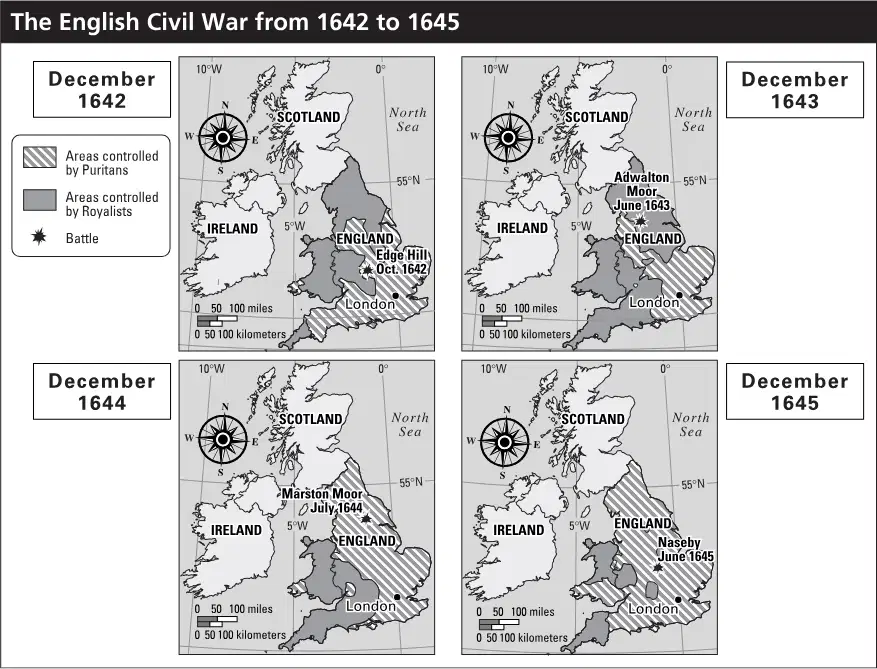
Part 2: Map Skills — Use the maps to answer the questions. In which year did the Royalists control the most land?
1642
1643
1644
1645
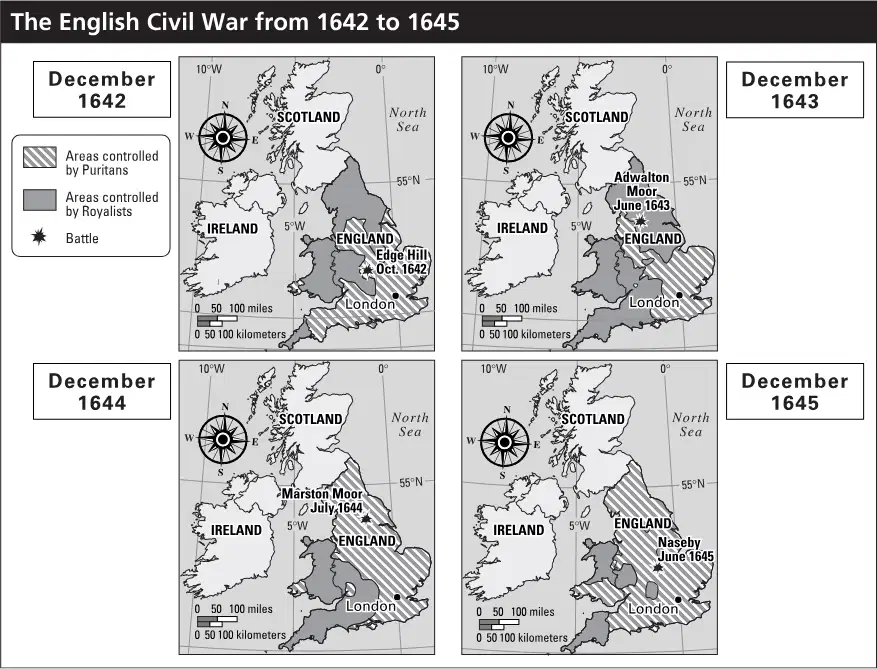
Part 2: Map Skills — Use the maps to answer the questions. Which part of England did the Royalists control during all four years?
the northern part
the southwest peninsula
central
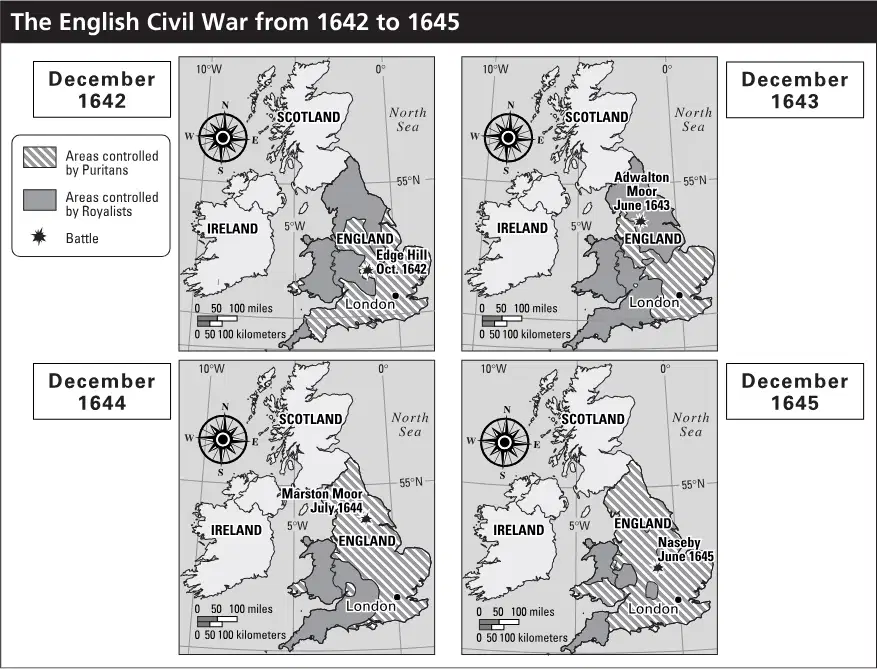
Part 2: Map Skills — Use the maps to answer the questions. During which years did the Puritans control the capital city of London?
1642–1643
1643–1644
1643–1645
1642–1645
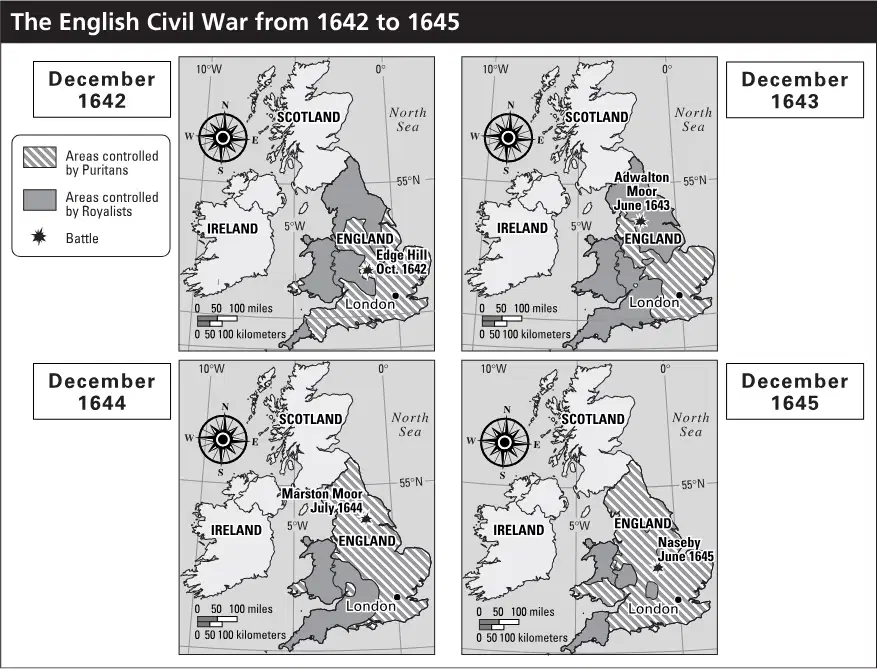
Part 2: Map Skills — Use the maps to answer the questions. Which battle was closest to the capital city of London?
Adwalton Moor
Marston Moor
Naseby
Edge Hill
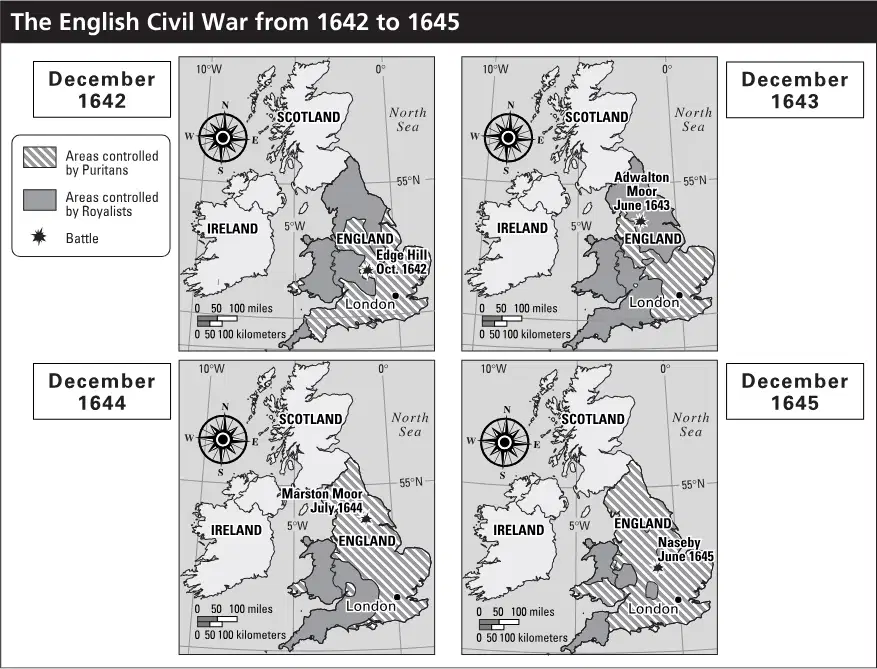
Part 2: Map Skills — Use the maps to answer the questions. In which year did the Puritans control most of England?
1642
1643
1644
1645
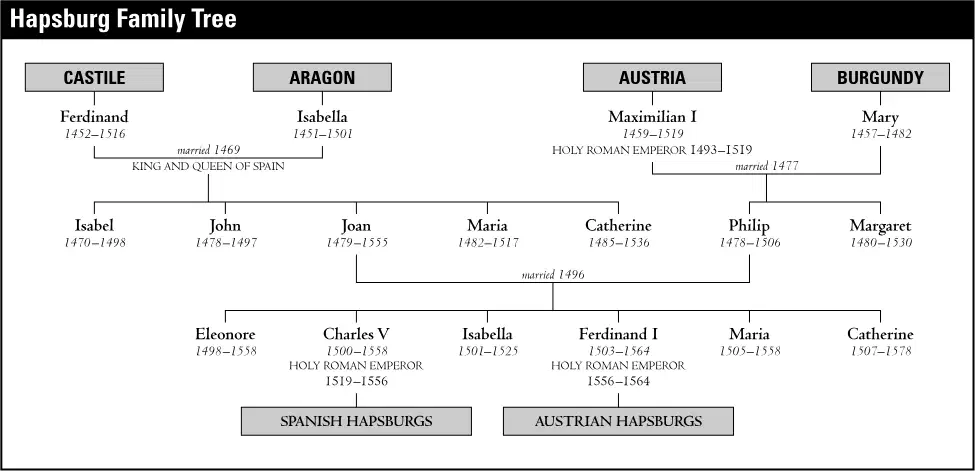
Part 3: Interpreting Charts — Use the chart to answer the questions. How many descendants of Isabella and Ferdinand are shown?
5
2
11
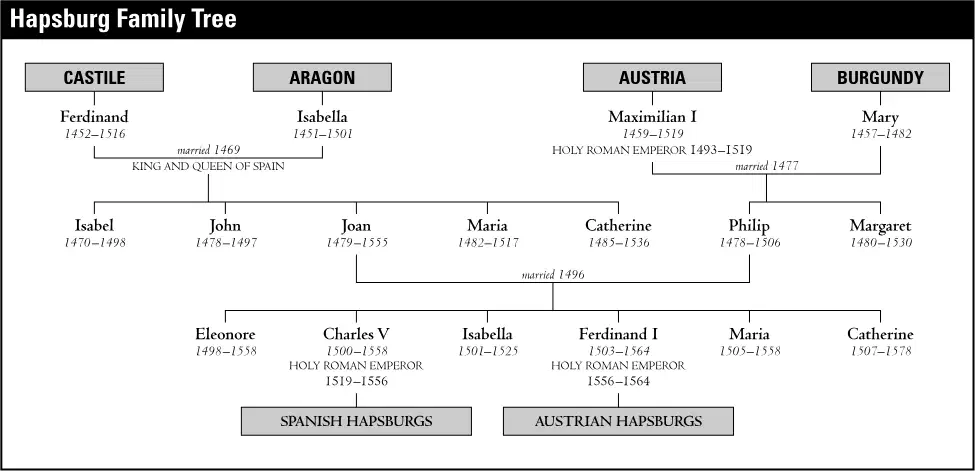
Part 3: Interpreting Charts — Use the chart to answer the questions. What was the relationship between Joan and Philip?
They were cousins.
They were brother and sister.
They were husband and wife.
They were mother and son.
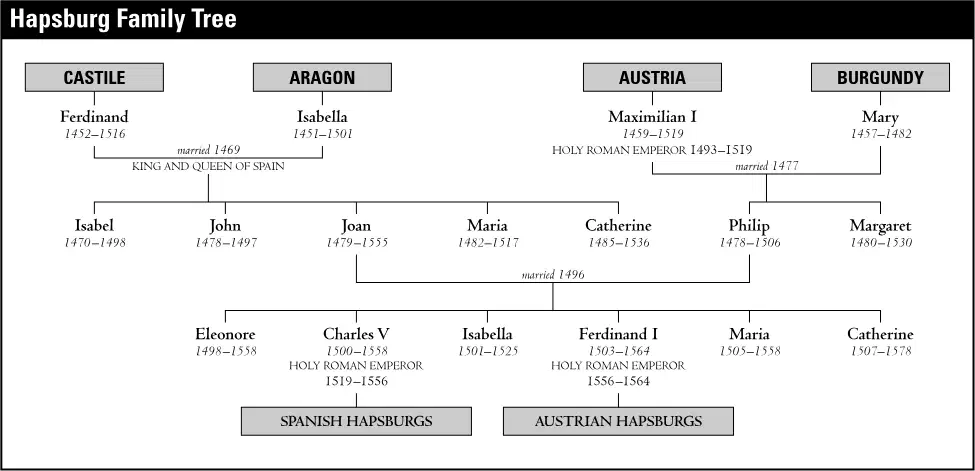
Part 3: Interpreting Charts — Use the chart to answer the questions. Who was the founder of the Spanish Hapsburgs and also was Holy Roman Emperor?
Maximilian I
Charles V
Ferdinand I
Ferdinand
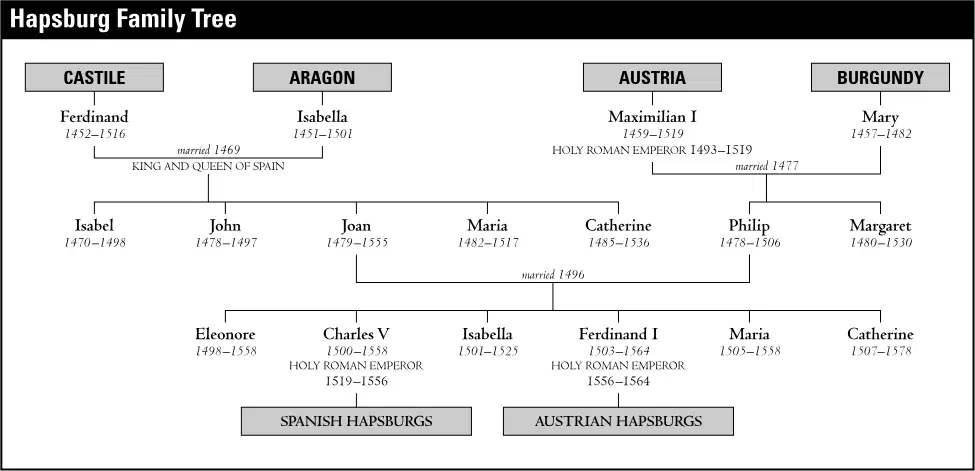
Part 3: Interpreting Charts — Use the chart to answer the questions. How many grandchildren did Maximilian I and Mary have?
2
5
6
0
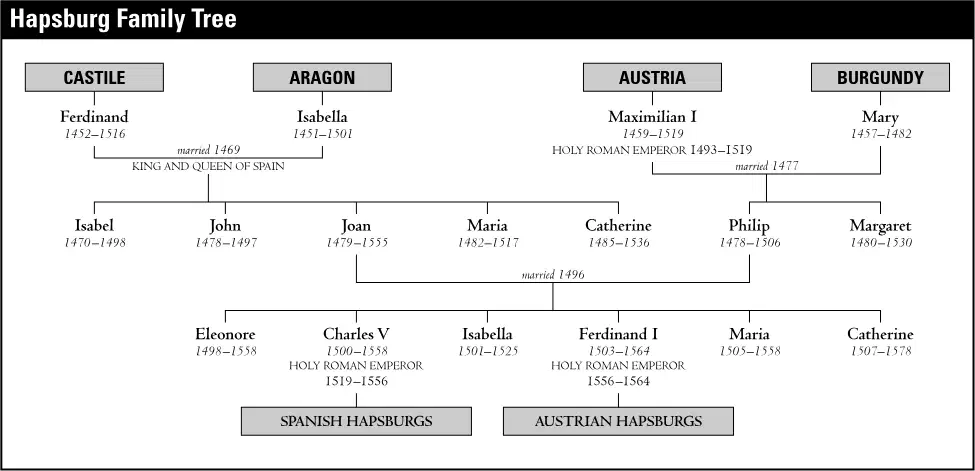
Part 3: Interpreting Charts — Use the chart to answer the questions. How old was the king of Spain when he died?
64
47
60
58
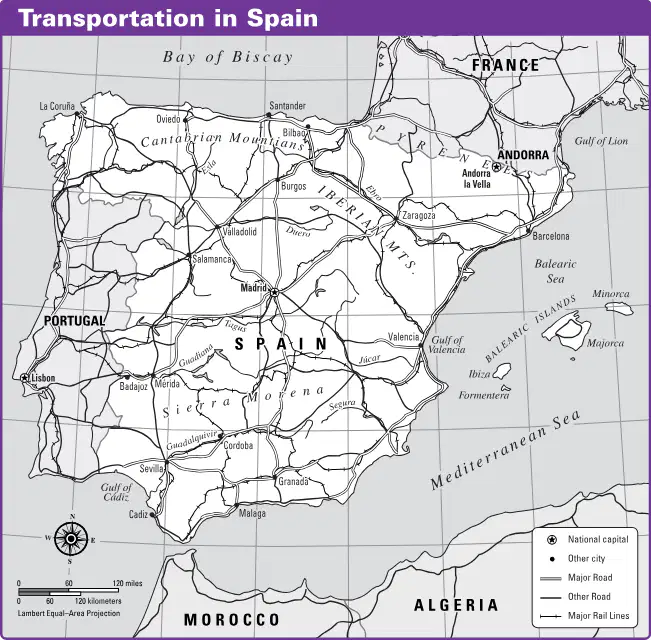
Directions: Use the map to answer the questions. What geographical advantage does Madrid have for a government site?
It is on the coast.
It is in the mountains above the surrounding countryside.
It is near the French border.
It is approximately in the center of the country.
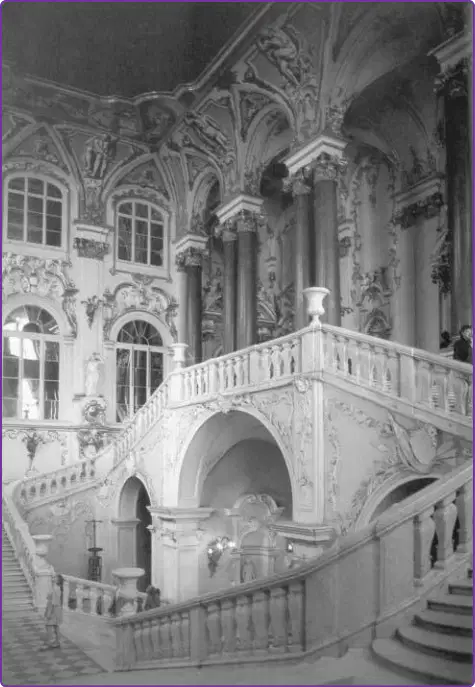
Picture: Hermitage Palace of Peter the Great St. Petersburg
Use the picture and your knowledge of world history to answer the questions below. What architectural features of the palace interior show Western influence?
the classical columns and arches
the onion-shaped domes
the wooden beams and thatched roof
the tables scattered about the room
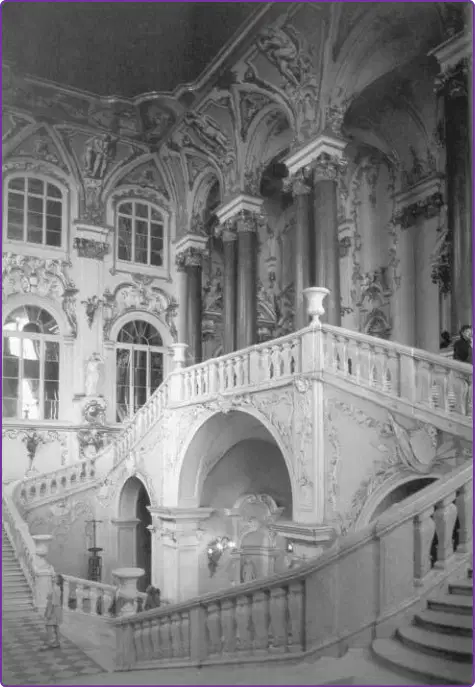
Picture: Hermitage Palace of Peter the Great St. Petersburg
Use the picture and your knowledge of world history to answer the questions below. For what members of society was the Hermitage built?
royalty
peasants
artisans and merchants
serfs
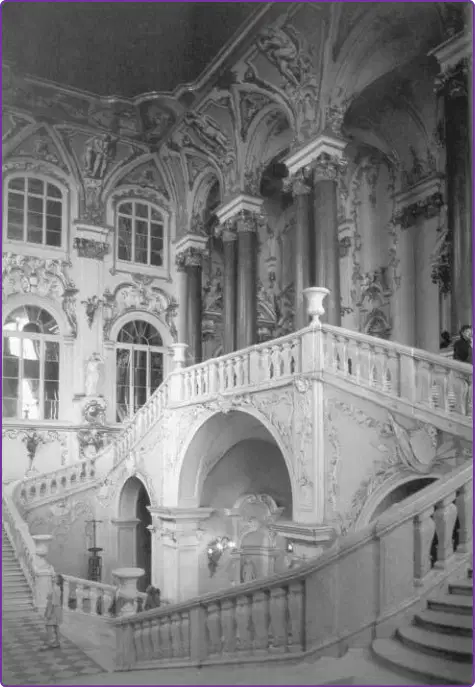
Use the picture and your knowledge of world history to answer the questions below. What general impression of the owner does this hall give the viewer? (I) The owner must have wealth and power to have it built. (II) The owner wishes to preserve Russian artistic traditions. (III) The owner is refined and cultured. (IV) The owner was probably reared in another country.
I and II
I and III
II and III
II and IV
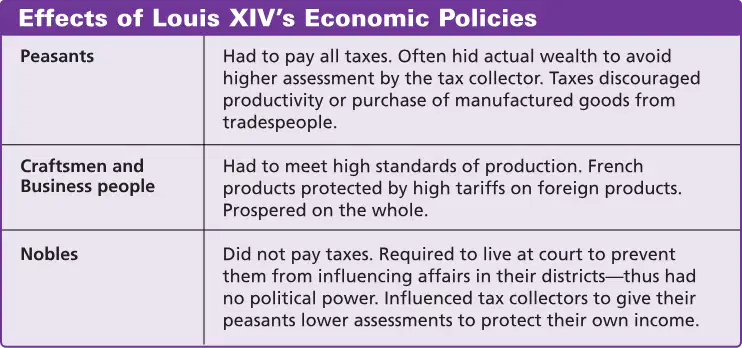
Read the table: Effects of Louis XIV's Economic Policies. Peasants: Had to pay all taxes. Often hid actual wealth to avoid higher assessment by the tax collector. Taxes discouraged productivity or purchase of manufactured goods from tradespeople. Craftsmen and Business people: Had to meet high standards of production. French products protected by high tariffs on foreign products. Prospered on the whole. Nobles: Did not pay taxes. Required to live at court to prevent them from influencing affairs in their districts—thus had no political power. Influenced tax collectors to give their peasants lower assessments to protect their own income. Using this information and your knowledge, answer the questions that follow.

Absolute monarchs believed that all power within their states' boundaries rested in their hands. How do you think the craftsmen and business people would react to absolutist rule after the death of Louis XIV?
Well, They Loved Louis XIV
Not Well, they didn't like making money

After the death of Louis XIV, were peasants more likely to prefer rule by an absolute ruler or by the nobles to whom they owed allegiance?
prefer rule by an absolute monarch
by nobles to whom they owed allegiance

How do you think nobles would look upon continued government by an absolute monarch after the death of Louis XIV?
Well, they loved being restricted by an absolute monarch
Not well, they wanted power back

Louis the XIV of (a) built the (b) to (c) his (d) rule.

This is the _____ in the Palace of Versailles
Hall of Mirrors
Kings Chambers
Theater
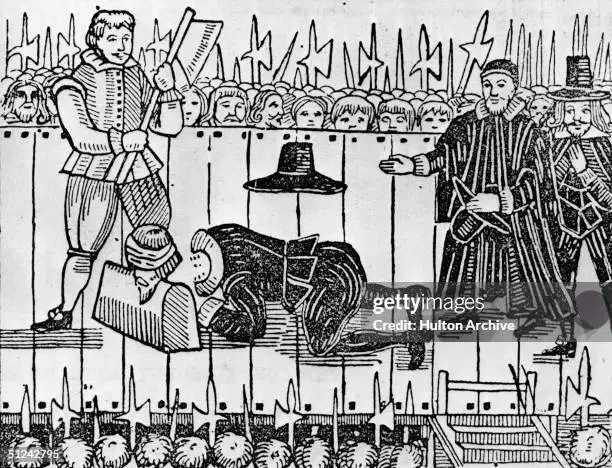
This King of England was executed during the English Civil War
James I
Charles I
Charles II
James II

This man became Lord Protector during the Commonwealth error in England
Charles II
James II
Oliver Cromwell
Frederick the Great

Charles II came to power during the
English Civil War
The Glorious Revolution
The Restoration
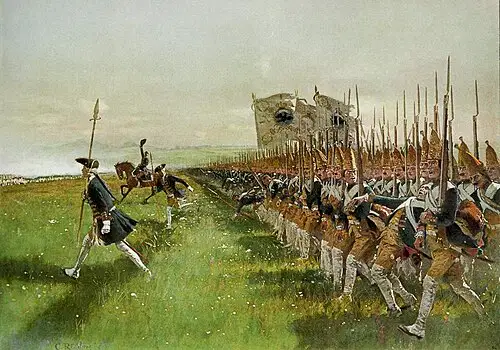
"_____ is not a state with an army, but an army with a state,"
Russia
France
England
Prussia

Which of the following is illegal?
restricting parliamentary elections
raising an army
having a monarch
speach

The English Bill of Rights was passed to
Limit Parliaments Power
Increase the Kings Power
Limit the Kings Power
Increase the power of the people
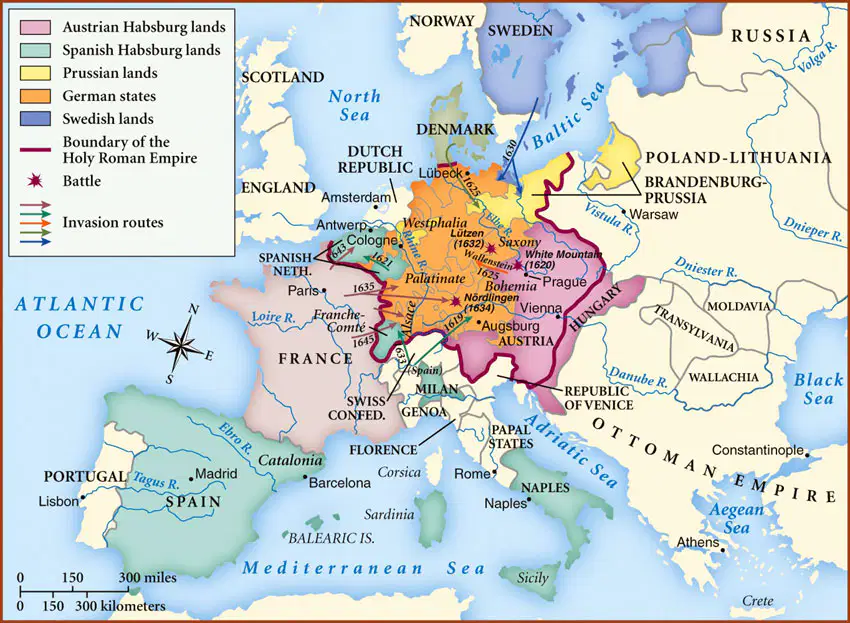
This is a Map of the ______ war
World War II
The Fronde
Spanish Succession
30 Years
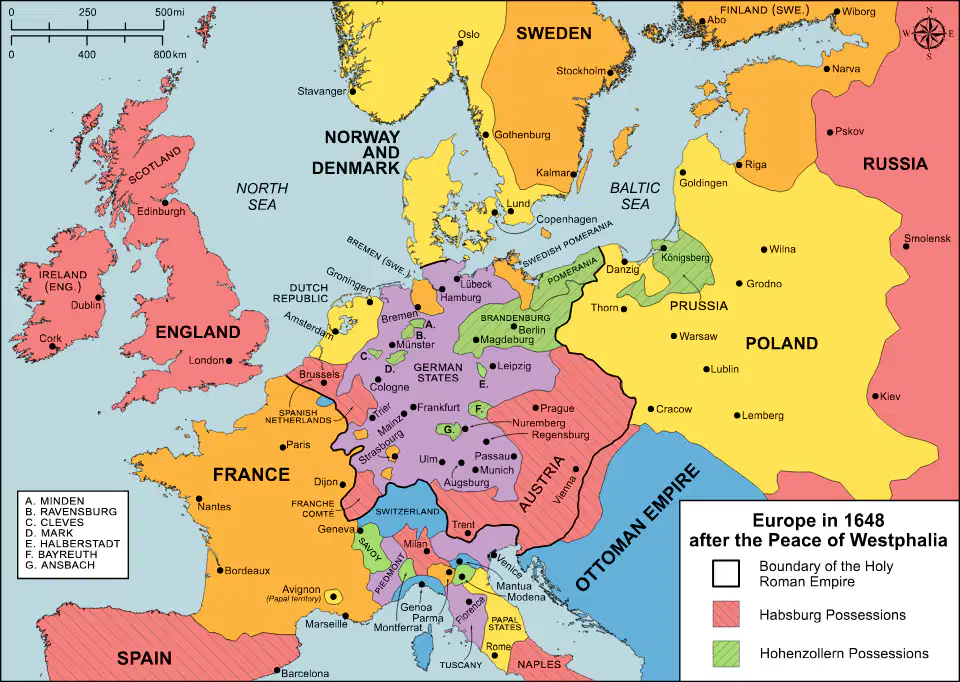
The 30 Years War ended with the Treaty of Westphalia that changed the map of Europe. Who is the new Central European Power controlled by the Hohenzollerns?
Poland
France
Prussia
Russia

