
 Worksheets
Lesson 5 & 6, DNA Structure Quiz, and History
Total questions: 35
Worksheet time: 18mins
Name
Class
Date
1.
1.Refers to the combination of alleles
a)
Phenotype
b)
Allele
c)
Genotype
d)
Gene
2.
2.___________is where the chromosomes are located in a cell
a)
Phenotype
b)
Sex Cell
c)
Nucleus
d)
Body Cell
3.
3.___________refers to the physical appearance or what we see of a trait in an individual
a)
Phenotype
b)
Karyotype
c)
Sexual Reproduction
d)
Pedigree
4.
4.Sperm and egg cells are considered __________________ cells
a)
Phenotype
b)
Sex
c)
Nucleus
d)
Body
5.
5._____________refers to a way to organize and keep track of the biological relationship between parents and offspring
a)
Phenotype
b)
Karyotype
c)
Sexual Reproduction
d)
Pedigree
6.
6. A human offspring receives_____________ chromosomes from mom and the same amount from dad and has ____________ chromosomes in their body cells.
a)
23/46
b)
30/60
c)
46/23
d)
60/30
7.
7.____________refers to a method of organizing chromosomes to help show the contribution of one chromosome from each parent to an offspring
a)
Phenotype
b)
Karyotype
c)
Sexual Reproduction
d)
Pedigree
8.
8.____________refers to the threadlike structures found in every organism that are passed from parents to offspring in egg and sperm cells
a)
Phenotype
b)
Chromosomes
c)
Nucleus
d)
Karyotype
9.
9._______________ refers to a section of DNA codes for a protein.
a)
phosphate
b)
deoxyribose sugar
c)
gene
d)
histone
10.
10.A calf receives _____chromosomes from each parent, and has _________chromosomes in it's body/muscle cells.
a)
23/46
b)
30/60
c)
46/23
d)
60/30
11.
11.Refers to the different versions of a gene
a)
Phenotype
b)
Allele
c)
Genotype
d)
Gene
12.
12.Who was the first person to PHOTOGRAPH the structure of DNA?
a)
Franklin
b)
Meischer
c)
Watson & Crick
d)
Levene
13.
13.Chromosomes are passed from __________ to ___________.
a)
parents/ offspring
b)
offspring/ parents
c)
male/female
d)
female/male
14.
14.Human sex cells have how many chromosomes?
a)
60
b)
30
c)
23
d)
46
15.
15.Offspring that have typical muscles have both parents that are _____________ muscled.
a)
heavily
b)
typical
c)
medium
16.
16._________ determine the sex of the offspring.
a)
Male
b)
Female
c)
It's not controlled. It's completely random.
17.
17. What are the sex chromosomes for male and female?
a)
XY female and XX male
b)
XY male and XX female
c)
They are both XY
d)
They are both XX
18.
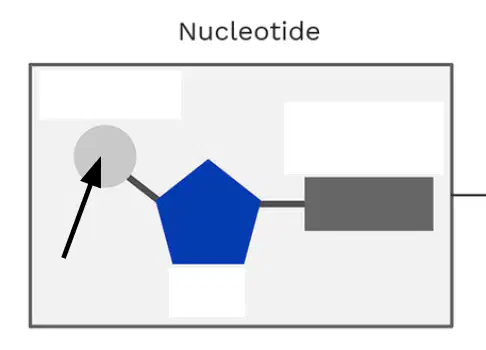
18.What part of the nucleotide is the arrow pointing to?
a)
Nitrogen Base
b)
Phosphate
c)
Deoxyribose Sugar
d)
Double Helix
19.
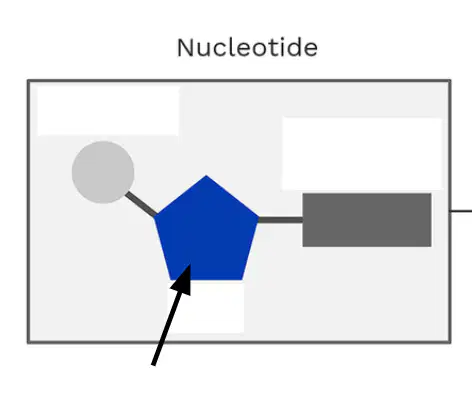
19.What part of the nucleotide is the arrow pointing to?
a)
Nitrogen Base
b)
Phosphate
c)
Deoxyribose Sugar
d)
Double Helix
20.
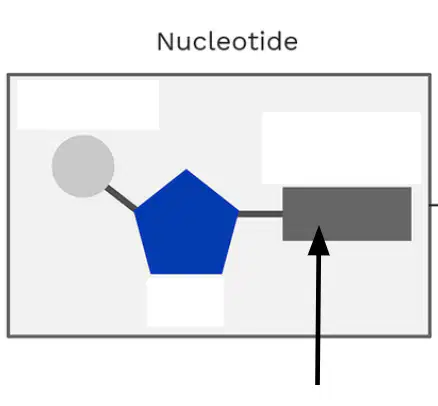
20.What part of the nucleotide is the arrow pointing to?
a)
Nitrogen Base
b)
Phosphate
c)
Deoxyribose Sugar
d)
Double Helix
21.
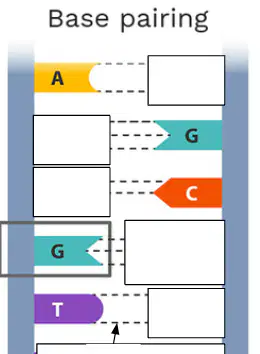
21. What base pairs with A (adenine)?
a)
Adenine
b)
Thymine
c)
Guanine
d)
Cytosine
22.
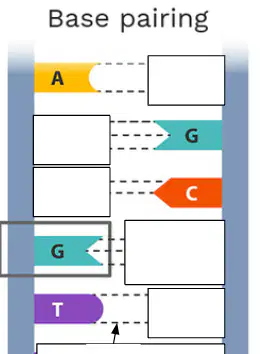
22. What base pairs with G (guanine)?
a)
Adenine
b)
Thymine
c)
Guanine
d)
Cytosine
23.
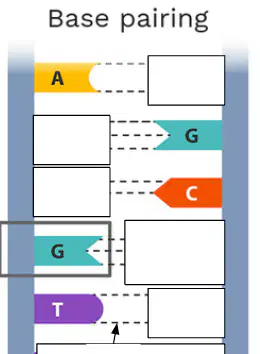
23. What base pairs with C (cytosine)?
a)
Adenine
b)
Thymine
c)
Guanine
d)
Cytosine
24.
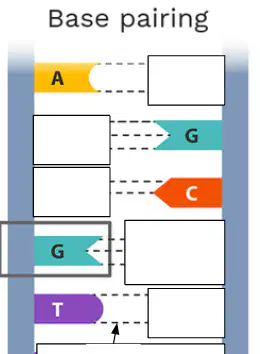
24. What base pairs with T (thymine)?
a)
Adenine
b)
Thymine
c)
Guanine
d)
Cytosine
25.
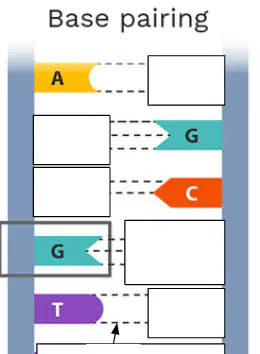
25. What holds the bases together? _____________________ bonds.
a)
Chromosome
b)
Nitrogen
c)
Hydrogen
d)
Nucleus
26.
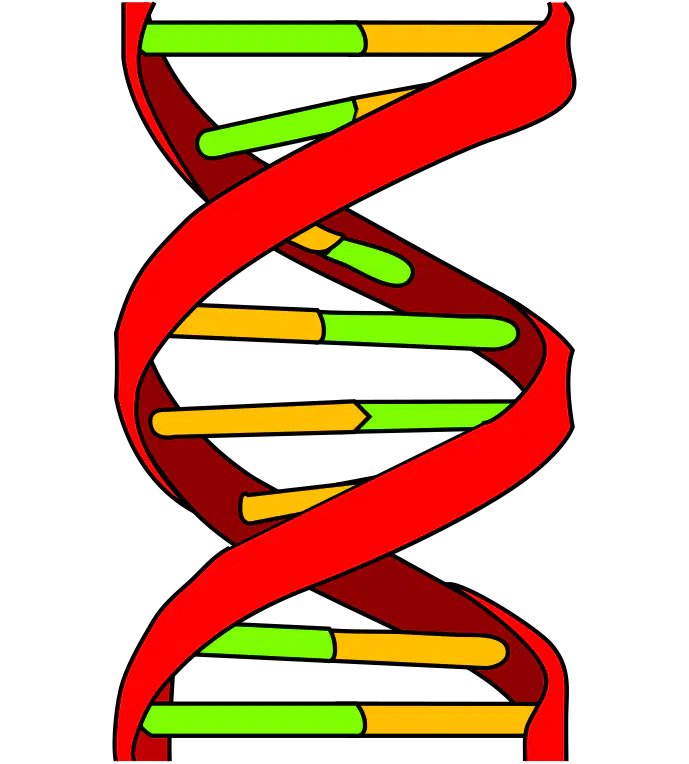
26. What is the twisted ladder shape of the DNA molecule called?
a)
Chromosome
b)
Nitrogen
c)
Hydrogen
d)
Double Helix
27.
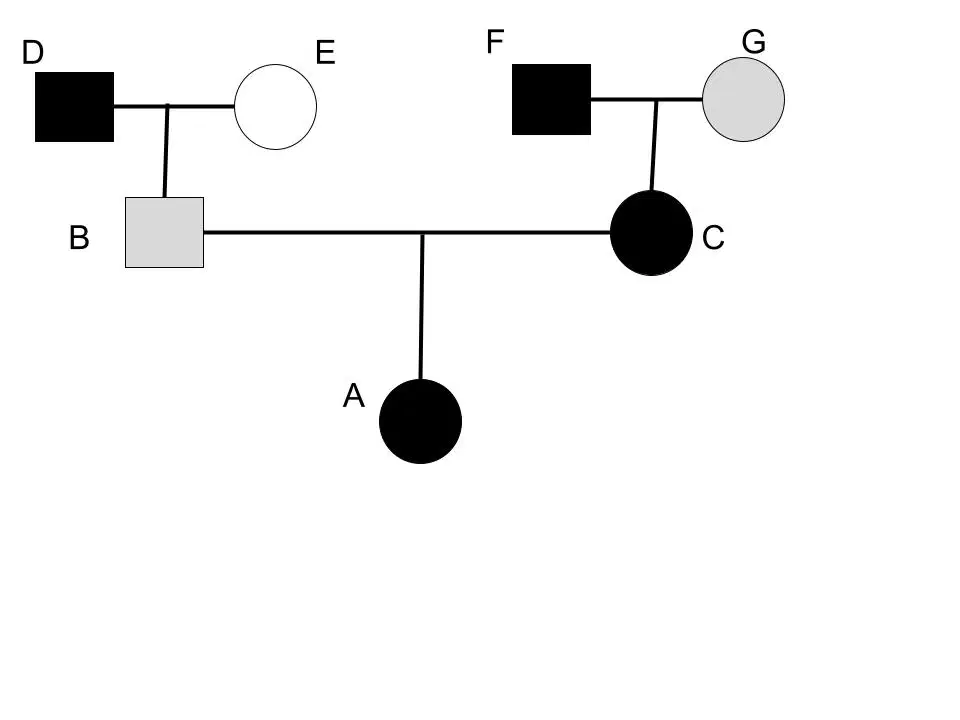
27.What letter(s) show a heavily muscled female?
a)
D and F
b)
D,F,A, and C
c)
C
d)
A and C
28.
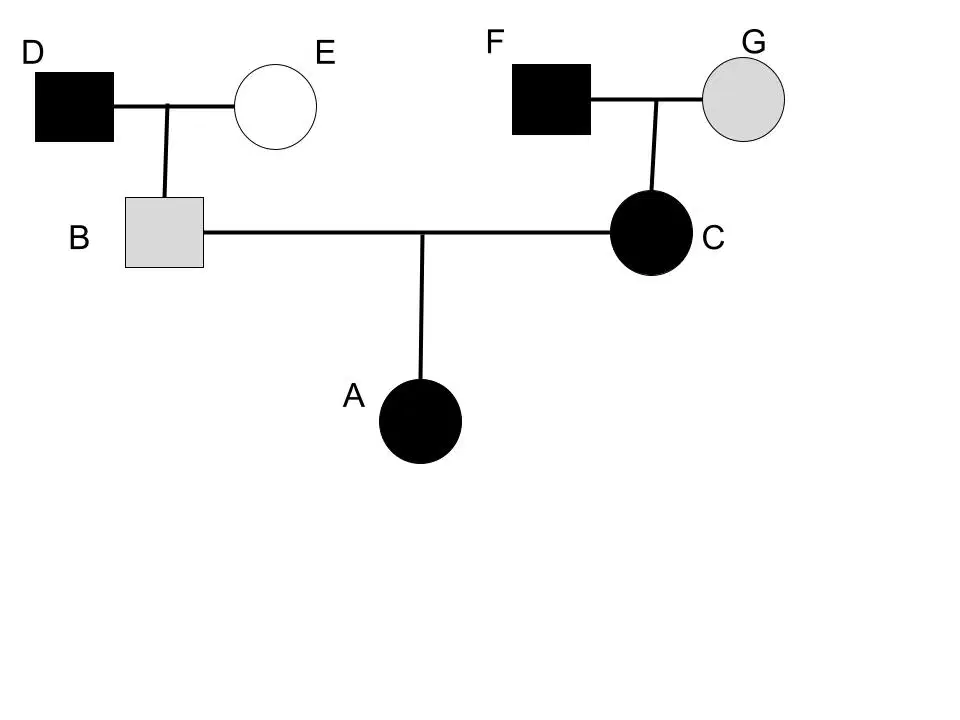
28.What letter(s) show a typically muscled male?
a)
B and G
b)
D, F, and B
c)
E
d)
None
29.

29.What letter(s) show a medium muscled cow?
a)
B and G
b)
G
c)
E
d)
B
30.

30.Does this pedigree show offspring with a phenotype we would expect? Why or why not?
a)
No, because a heavily muscled calf needs both parents to be heavily muscled.
b)
No, because parents with that phenotype should have an offspring that is medium muscled.
c)
Yes, because a heavily muscled calf will have at least one parent that is typically muscled.
d)
Yes, because a heavily muscled calf will have at least one parent that is heavily muscled.
31.
31.What chromosome shapes (alleles) and protein types were found with the extra-big muscled cattle?
a)
1 star and 1 circle, and 1 partial and 1 full protein
b)
2 circles and 2 full proteins
c)
2 stars and 2 partial proteins
32.
32.What chromosome shapes (alleles) and protein types were found with the typically muscled cattle?
a)
2 circles and 2 full proteins
b)
1 star and 1 circle, and 1 partial and 1 full protein
c)
2 stars and 2 partial proteins
33.
33. What chromosome shapes (alleles) and protein types were found with the medium muscled cattle?
a)
1 star and 1 circle, and 1 partial and 1 full protein
b)
2 circles and 2 full proteins
c)
2 stars and 2 partial proteins
34.
34.How did the alleles (different versions of the MSTN gene) impact the muscle size of the cows?
a)
The alleles directly sent a message to the muscle cells.
b)
They coded for the different versions of the protein.
35.
35. How did the different versions of the myostatin protein impact the muscle size of the cows?
a)
Full version of the protein fit in a receptor to send a message to the cell to make typical muscle.
b)
Both versions of the protein could fit in a receptor to send a message to the cell to make typical muscle cells.
100 %

