
 Worksheets
Chem A Study Guide
Total questions: 197
Worksheet time: 99hrs 30mins
What particle view below is a mixture?


What is the best classification for this substance?
An element
A compound
A mixture

Is this a pure substance?
Yes
No
What is an example of a physical property?
Silver is shiny
Alcohols are flammable
Alkali metals are reactive with water
Acids are sometimes corrosive
What is an example of a chemical change?
Tearing paper
Dissolving salt in water
Melting ice
Burning wood

Is this image showing a homogeneous or a heterogeneous mixture? Image: Cesar salad
homogeneous
heterogeneous

Does this image represent a chemical or a physical change?
Chemical change
Physical change
Which below shows a CHEMICAL change?


What is a pure substance that cannot be broken down into any other substance by physical or chemical means. Ex: Gold, Silver, Oxygen, & Nitrogen
element
compound
mixture
salad
What is an atom which has gained or last electrons called?
isotope
atom
ion
balanced
What type of property can only be observed by changing the substance into a new substance. Ex: Flammability, oxidation
chemical
physical
Air is an example of a(n)
element
compound
heterogenous mixture
homogenous mixture
Phase changes (going from a solid to a liquid to a gas) are what types of changes?
chemical
physical
On the Periodic Table each element increases by one _________
electron
proton
neutron
letter
A row across the Periodic Table where each element has the same number of energy shells
column
family
period
In a family or column, the elements have similar properties because they all have the same number of
protons
neutrons
valence electrons
electrons
What is the octet rule? How many valence electrons can the first three periods hold?
8
2
2 8 8
2 8 16
Whether or not bonds form is due to the ?????
valence electron configurations
protons
atomic mass
chance
When heat is added to matter, the molecules tend to
move faster and farther apart
slow down
nothing, heat has no impact on the state of matter
freeze

What is the volume in this graduated cylinder?
5.8 mL
50.8 mL
53.0 mL
58.0 mL
What is a unit that could be used to measure the MASS of an object?
milliliter (mL)
centigram (cg)
kilometer (km)
centimeter cubed (cm3)
The formula for density is D = Vm , what is this equation rearranged for m ?
m = VD
m = DV
m = V×D
m = D+V
Volume is....
The amount of matter in an object.
measured with a balance or scale.
The same as mass.
How much space an object takes up.
Find the density of an object that has a mass of 40.5 g and a volume of 2.8 mL
D = Vm
14.5 g/mL
0.07 g/mL
113.4 g/mL
37.7 g/mL
What is the volume of a block of aluminum (density = 2.7 g/cm3) if it has a mass of 93.4 g?
90.7 cm3
34.6 cm3
0.03 cm3
252.2 cm3

Use the image below to find the volume of the object. A is before the rock is added, B is after the rock is added.
30 mL
60 mL
90 mL
150 mL

What is the volume of liquid in this graduated cylinder?
30.7 mL
31.7 mL
32.0 mL
37.0 mL

What is the volume of liquid in this graduated cylinder?
4.7 mL
5.7 mL
5.4 mL
4.2 mL
The type of bond formed when electrons are shared between atoms is a
ionic bond
covalent bond
hydrogen bond
peptide bond
The electrons in the outermost energy level are called
valence
ions
covalent
farthest out

This reaction is showing energy being _____________
Absorbed
Released
There is no change in energy shown
Chemical reactions start with _____________ and end with _______________
Reactants, Products
Products, Reactants
Substances, Chemicals
Chemicals, Compounds
If an atom has 2 valence electrons, what kind of bond will it most likely form
ionic
covalent
hydrogen
peptide
A molecule with an uneven distribution of charge over the molecule is called
lopsided
bonded
negative
polar
What is a property you would expect a metal to have?
It will not conduct electricity.
It is dull.
It is brittle.
It is malleable.
What pair of elements are in the same PERIOD?
Scandium (21) and Bromine (35)
Scandium (21) and Yttrium (39)
Helium (2) and Neon (10)
Iodine (53) and Astatine (85)
What element below is in the same GROUP as Aluminum (13)
Sodium (11)
Thallium (81)
Silicon (14)
Argon (18)
What statement below is true about the periodic table?
The heavier the element, the more likely it is to be a gas.
Elements in the same PERIOD share similar properties.
Elements in the same GROUP share similar properties.
Elements are arranged by date of discovery, from earliest to most recent.
Selenium has atomic number of 34, what does this tell us?
It has a mass of 34.
It has 34 protons.
It has 34 neutrons.
It was the 34th element discovered.
How many electrons are in a NEUTRAL atom of boron?
5
6
10
11
What particles are found in the nucleus of an atom?
Protons and electrons
Electrons and neutrons
Protons and neutrons
Protons, neutrons and electrons
Carbon and Sulfur are examples of...
Metals
Nonmetals
Metalloids
Gases
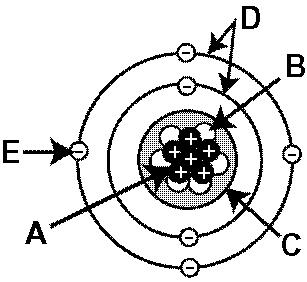
In the atom diagram shown, A is pointing to the darker particles, these are known as
electrons
protons
neutrons
the nucleus
In the atom diagram shown, E is pointing to
An electron
a proton
a neutron
the nucleus
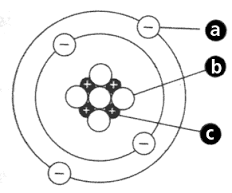
B and C are found in the ______ of an atom.
electron cloud
Space
Nucleus
Outside
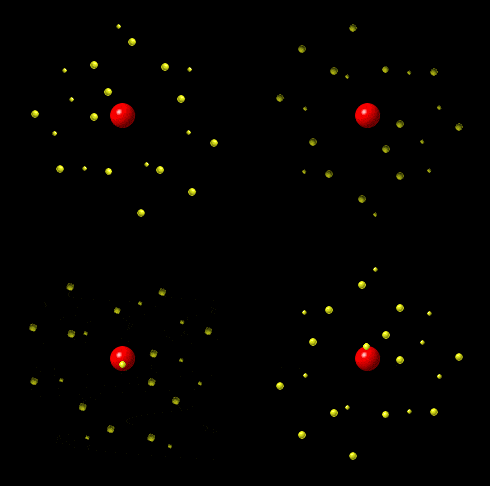
What charge does an electron have?
Negative
Positive
Neutral
Contrated
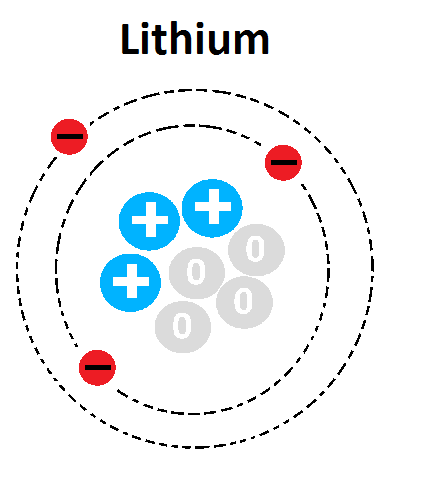
What is the atomic mass of this atom?
1
3
4
7
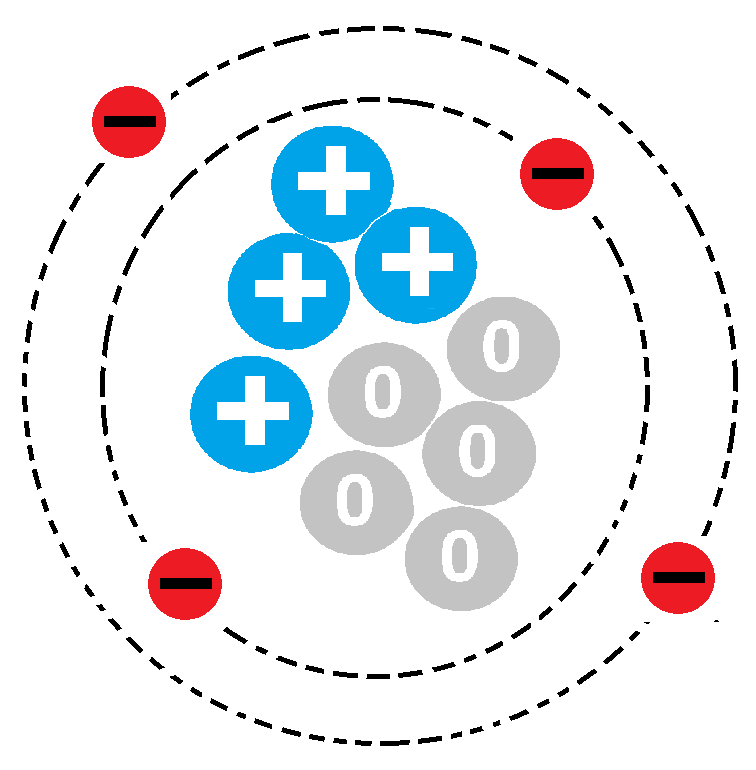
What is the atomic number of this atom?
4
5
9
none of the above
What is a valence electron?
an electron that is found in the outermost orbital of an atom.
an electron found in the innermost orbital of an atom.
an electron found in the middle orbital.
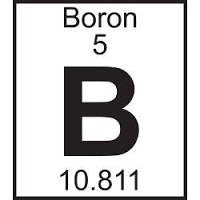
Using the information provided, determine how many electrons the a Boron atom contains.
2.5
5
6
10.81
The atomic number of an element is determined by the _________ of ________ in the nucleus.
protons, neutrons
number, electrons
electrons, protons
number, protons

Elements are _________ 1 type of atom.
Made of
Tiny
chemical formula

How many Carbon atoms are in this compound
6
7
3


(9.4 x 10⁶)(3.2 x 10⁵)
A student inflates a balloon with helium then places it in the freezer. The student should expect
the balloon's volume to increase
the balloon's volume to decrease
the balloon's moles to increase
the balloon's moles to decrease
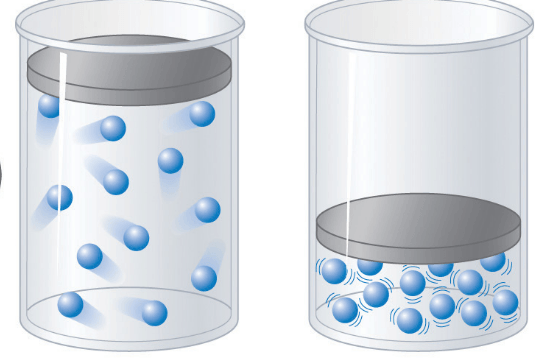
What three variables are in the Ideal Gas Law?
Pressure, Temperature, Volume
Pressure, Kelvin, # of moles
# of moles, Temperature, Volume
Volume, Heat, and Greenhouse Gases
Decreasing the pressure of a gas causes
increased volume
decreased volume


Which container will have higher pressure?
First container
second container
The change of one state of matter to another is called
Osmosis
Phase Change
Matter
Energy
Transition from a liquid to a gas
Condensation
Freezing
Evaporation
Melting

Three containers with the same amount of the same material are shown below. Which container has the substance with the highest amount of energy?
The container on the left
The middle container
The container on the right
All have an equal amount of energy
Three containers with the same amount of the same material are shown below. Which container has the substance with the lowest amount of energy?
The container on the left
The middle container
The container on the right
All have an equal amount of energy
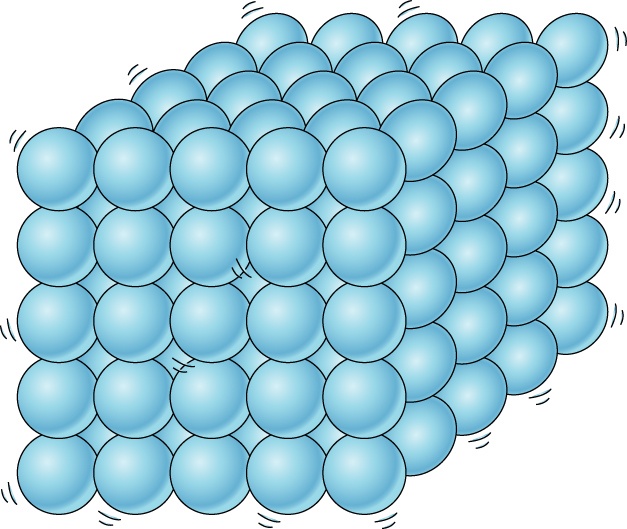
What state of matter?
Solid
Liquid
Gas
Plasma!!!
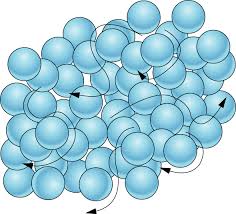
What state of matter?
Solid
Liquid
Gas

Based on this photo, when liquid turning to gas is which of the following down below?
Consensation
Freezing
Evaporation
Melting

What is the freezing temperature of the material?
0oC
100oC
-25oC
225oC

What is the boiling temperature of the material?
0oC
100oC
-25oC
225oC

At what TIME does the material enter the phase change from solid to liquid
~5min
~10 MIN
~15min
~25min

At what TIME does the material enter the phase change from liquid to gas
~5min
~15 min
~25min
~35min

As time increases, what is happening to the motion of molecules in the material?
increasing
decreasing

In region B, identify the state(s) of matter
gas
liquid
solid
In region D, identify the state(s) of matter
gas
liquid
solid
In region A, identify the state(s) of matter
gas
liquid
solid
In region E, identify the state(s) of matter
gas
liquid
solid
In region C, identify the state(s) of matter
gas
liquid
solid
In order to convert 25 km to miles using dimensional analysis, which conversion factor should be used?
5280 ft1 mi
0.62137 mi1 km
1 km0.62137 mi
Which conversion factor would you use to convert from cm to inches?
2.54 cm1 in
1 in2.54 cm
1 cm2.54 in
Which conversion factor would you use to convert 819 mL to L?
1000 mL1 L
1 mL1000 L
1 L1000 mL
Choose the correct conversion factor and answer for this conversion:
8,203 mL × 1000 mL1 L × ? = ?
1 L3.7854 gal = 31.05 gal
1 gal3.7854 L = 31.05 gal
3.7854 L1 gal = 2.167 gal


If the same amount of heat is added to each sample, the smallest change in temperature will occur in the
Iron
Dry Air
Granite
Water

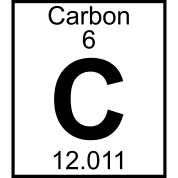
element symbol
Subatomic particles with a negative charge
Electrons
Neutrons
Protons
Quarks


element symbol
Which of the following determines the identity of an element?
number of protons
atomic mass
number of neutrons
number of shells

Is this the correct Bohr model for carbon (C) if carbon has 6 protons?
Yes
No
An atom has a full first energy level (electron shell) and 5 electrons in its second level (shell). How many electrons does this atom have?
2
7
9
Need more information

Is this the correct Bohr model for helium (He) if helium has 2 electrons?
Yes
No

How many electrons will be in the 1st shell, 2nd shell, 3rd shell, and or 4th shell? (electrons = 20)
2, 8, 8, 3
2, 8, 8, 0
2, 8, 8, 1
2, 8, 8, 2
What subatomic particle determines the name of the element?
Electron
Proton
Neutron
Boson


What is the mass of this atom?
9
10
19
28

How many electron shells does this element have
7
5
3
2
If the element, Silicon, had a mass of 30.22 amu and had 16 protons,
how many neutrons would it have?
15 neutrons
14 neutrons
16 neutrons
13 neutrons
If the atomic number of sodium (Na) is 11 and sodium (Na) has 10 neutrons and 11 electrons,
what is the mass of sodium (Na) ? _ amu
(a)
Which of the following is true about subatomic particles?
The mass of a neutron is much lighter than the mass of a proton.
Electrons are negatively charged and are the lightest subatomic particle.
Protons are positively charged and the lightest subatomic particle.
Neutrons have no charge and are the lightest subatomic particle.
What is the mass number of an atom that has 20 protons, 20 neutrons, and 20 electrons?
20
40
60
80

Which scientist's model is referred to as the Plum Pudding Model?
Democritus
John Dalton
Ernest Rutherford
J.J. Thomson
Niels Bohr

Which scientist was the first person responsible for proposing the idea of atoms?
Democritus
John Dalton
Ernest Rutherford
J.J. Thomson
Niels Bohr

Which scientist's model is referred to as the Planetary model?
Democritus
John Dalton
Ernest Rutherford
J.J. Thomson
Niels Bohr

Which model of the atom is the most up to date model?
The Billiard Ball Model
The Plum Pudding Model
The Planetary Model
The Wave Mechanical Model
The Nuclear Model
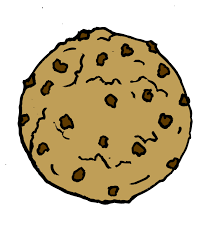
In the atomic model nicknamed the "plum pudding" model, what do the plums represent?
the nucleus
the atom
the electrons
the positive material


What element has this electron configuration?
hydrogen
helium
lithium
beryllium

What element has this orbital notation?
lithium
beryllium
boron
carbon

What element has this electron configuration?
helium
lithium
beryllium
boron

What element has this electron configuration?
boron
carbon
nitrogen
oxygen

Which element is represented by this orbital notation?
carbon
nitrogen
oxygen
fluorine

Which element is represented by this electron configuration?
neon
sodium
magnesium
aluminum

Which element is represented by this orbital notation?
neon
sodium
magnesium
aluminum
Which of the following is the electron configuration for Fluorine


Which of the following is the electron configuration for neon?


Which of the following is the electron configuration for silicon?


Which of the following is the orbital notation for oxygen?


What is the element?
Neon
Chlorine
Aluminum
Argon

What is the element?
sulfur
chlorine
phosphorus
silicon
Which is the electron configuration for beryllium?


What is the amount of energy required to remove an electron from an atom?
atomic energy
ionization energy
ionic energy
electron energy


The rings around the nucleus of an atom are
target rings
sound waves
energy levels

When we did the flame tests, we saw light and color in the form of fire. This happened because...
The atom was absorbing energy.
The atom was releasing energy.
The atom was exploding.
Consider the following data:
Cu - blue, green, teal
Na - yellow-orange
K - yellow, orange, pink/lavender
Li - red, light red
Sr - deep red
If the unknown color was yellow-orange, which element is most likely the unknown?
Cu
Na
K
Li
Consider the following data:
Cu - blue, green, teal
Na - yellow-orange
K - yellow, orange, pink/lavender
Li - red, light red
Sr - deep red
If the unknown color was yellow,orange with some pink, which element is most likely the unknown?
Cu
Na
K
Li
An atomic emission spectrum is...
unique to the element
a complete rainbow
both of these are correct
neither of these are correct
The location electrons are found most of the time is called
electron cloud
atomic emission spectrum
wavelength
all of these
A practical application of atomic emission spectra is ....
neon lights
fireworks
identifying unknown substances
all of these
How many electrons can fit on the 1st energy level (orbital) for any Bohr Model?
2
6
8
10
How many electrons can fit on the 2nd energy level (orbital) for any Bohr Model?
2
6
8
10
How many electrons can fit on the 3rd energy level (orbital) for any Bohr Model?
2
6
8
10

What is a valence electron?
Electrons in the first energy shell
Electrons in the second energy shell
Electrons in the outer shell
Total number of electrons
When an electron moves away from the nucleus, it
moves to the ground state
moves to an excited state
gives off specific frequencies of light
never returns
When an electron is in the ground state
It has fallen into the nucleus.
It is in its normal orbit.
It has absorbed energy to move it away from the nucleus.
It is no longer part of an atom
When electrons fall from an excited state to their ground state,
They absorb energy from the environment.
They wobble back and forth.
They emit specific frequencies of light.
They spin out of orbit.
What is a positive ion called?
anion
cation
isotope
covalent
What is a negative ion called?
anion
cation
covalent
isotope
How many electrons would a Nitrogen ion gain/lose? If it has 5 valence electrons.
lose 5
gain 5
lose 3
gain 3
If an atom loses electrons, the charge will be positive.
true
false
A Bromine ion gains 1 electron, which of the following is the correct symbol for a Bromine ion?
Br-1
Br+1
Br+7
Br-7
An atom with 2 protons, 3 neutrons, and 4 electrons has a charge of ____.
+2
-2
+3
0

This atom is considered a
Cation
Anion

This atom is considered a
Cation
Anion
What is the ionic charge of this atom?
-2
-1
+1
+2
What is the ionic charge of this atom?
-2
-1
+1
+2