
 Worksheets
Baroque: Genuis and Birth
Total questions: 61
Worksheet time: 31mins
Some characteristics of music in the Baroque Era include:
Use of ornamentation and contrast
Minimal use of instruments
Focus on electronic sounds
Absence of harmony
Fill in the blank: During the Middle Ages (500-1400), music was mostly vocal, church-dominated with simple harmonies and limited instruments. __________ chant ruled the sacred spaces.
Gregorian
Byzantine
Baroque
Renaissance
Which musical period is described as the 'rebirth' of music with richer polyphony, invention of music printing, and growing secular influence?
Middle Ages
Renaissance
Baroque
Which era is known as the 'oddly shaped pearl' era, characterized by ornate, emotional music and the dawn of instrumental virtuosity, where music became spectacle?
Middle Ages
Renaissance
Baroque
Fill in the blank: The term "Baroque" comes from Portuguese ________, meaning a misshapen pearl – irregular and uniquely beautiful.
barroco
barraco
barroso
barroca
Which group thought Baroque music was overly decorated and exaggerated, dismissing its ornate complexity?
19th-century critics
Modern composers
Portuguese musicians
Film score writers
Today, Baroque music is celebrated as one of the richest, most diverse musical periods ever, influencing everything from classical to film scores.
True
False
Who is known as the 'father of opera' who scandalized courts with his dramatic works and revolutionary harmonies?
Antonio Vivaldi
J.S. Bach
Claudio Monteverdi
Henry Purcell
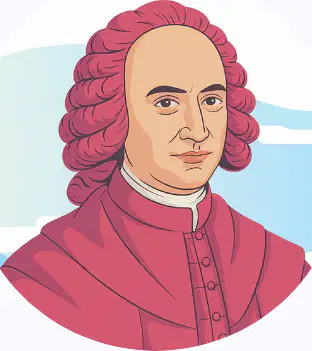
Which country is Antonio Vivaldi from?
Germany
England
Italy
France
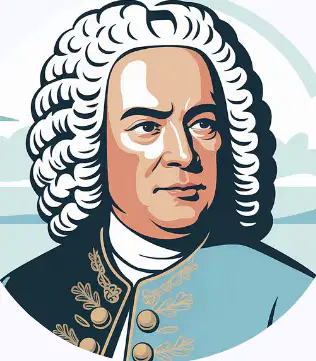
J.S. Bach was a master of counterpoint and keyboard wizardry who fathered how many children?
20
10
7
15
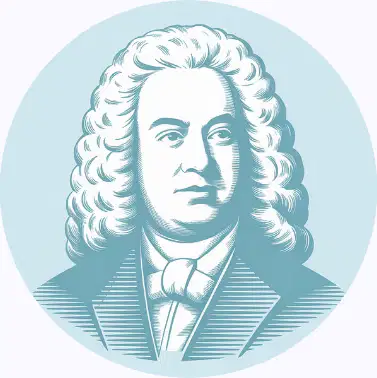
G.F. Handel was a composer and impresario associated with which two countries?
Italy and France
Germany and England
England and Italy
Germany and France
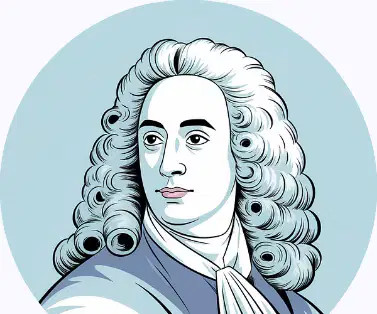
Henry Purcell was a Baroque genius from which country?
England
France
Italy
Germany
Match the following Baroque composers to their descriptions:
Claudio Monteverdi
The 'Red Priest' known for fiery violin concertos like The Four Seasons and teaching orphan girls.
Antonio Vivaldi
The 'father of opera' who scandalized courts with his dramatic works and revolutionary harmonies.
J.S. Bach
The master of counterpoint and keyboard wizardry who fathered 20 children and composed endlessly.
G.F. Handel
Opera impresario and composer of the iconic Messiah, a London celebrity entrepreneur.
Henry Purcell
England's Baroque genius who blended French and Italian styles, dying tragically young at 36.
What was one way Monteverdi's operas shocked audiences?
By using traditional harmonies
By showing raw emotion and daring harmonies that broke every traditional rule
By following every musical rule
By avoiding emotional expression
What criticism did Monteverdi face from conservative musicians?
They praised his style as innovative
They called his style 'madness' and 'a corruption of music.'
They ignored his music
They copied his style
Who was Monteverdi's famous rival in debates about musical rules versus emotional expression?
Giovanni Artusi
Wolfgang Amadeus Mozart
Ludwig van Beethoven
Antonio Vivaldi
Which Baroque musical concept is described as: 'Clear melody with chordal accompaniment replaces Renaissance polyphony – one voice leads while others support.'?
Rise of Homophony
Fugue
Counterpoint
Atonality
Which Baroque musical concept is described as: 'A continuous bass line played by harpsichord, cello, or lute forms the harmonic foundation of all Baroque music.'?
Basso Continuo
Figured Bass
Counterpoint
Terraced Dynamics
Which Baroque musical concept is described as: 'Sudden shifts between loud and soft create drama, unlike the gradual crescendos of later eras.'?
Terraced Dynamics
Polyphonic Texture
Figured Bass
Basso Continuo
Which Baroque musical concept is described as: 'Use of major and minor keys replaces the modal system of earlier periods, establishing modern tonal harmony.'?
Major/Minor System
Polyphonic Texture
Gregorian Chant
Atonality
What is Opera?
A) A dramatic fusion of music, theater, and poetry, born in Italy around 1600. Complete emotional storytelling through song.
B) Showcases contrast between soloist(s) and orchestra, popularized by Vivaldi.
C) Complex, interwoven melodies exemplified by Bach's masterpieces.
Which genre showcases contrast between soloist(s) and orchestra, popularized by Vivaldi?
Opera
Concerto
Fugue
Which genre is described as complex, interwoven melodies exemplified by Bach's masterpieces, with multiple voices dancing in mathematical precision?
Opera
Concerto
Fugue
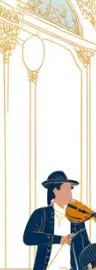
Baroque concerts were spectacles of ______ and sight, held in gilded halls where music and architecture merged into one magnificent experience.
sound
color
taste
motion
Which musical period is characterized by the rise of instrumental music and homophony with clear melody?
Renaissance
Baroque
The major/minor tonal system was established during the ______ period.
Baroque
Classical
Romantic
Medieval
Smooth, flowing rhythms without strong beats are a characteristic of Baroque music.
True
False
Which period featured word painting in vocal music and subtle expression?
Renaissance
Baroque
Public concerts emerged alongside court performances during the ______ period.
Baroque
Classical
Romantic
Medieval
Which of the following best describes music in the Middle Ages?
Complex polyphony and instrumental virtuosity
Monophonic chant, limited instruments, strict church control over all musical expression
Mass-produced instruments and music printing
Secular courts as patrons alongside religious institutions
Which period is characterized by complex polyphony, instrumental virtuosity, and secular courts as patrons alongside religious institutions?
Middle Ages
Baroque
Technological Revolution
Renaissance
Fill in the blank: The technological revolution in music involved ___, which spread new styles rapidly across Europe, democratizing access to sophisticated music for the first time in history.
mass-produced instruments and music printing
the invention of the piano
the rise of electronic synthesizers
the development of opera houses

Before equal temperament, keyboard instruments could only play well in certain ____.
keys
octaves
chords
tempos

Bach's collection of ____ preludes and fugues proved the new 'equal temperament' tuning worked beautifully.
48
12
24
36
What did equal temperament allow keyboard instruments to do?
Play only in certain keys
Play in all keys without sounding off
Only play out of tune
Only play jazz music
What was the lasting impact of the tuning revolution described in the passage?
It limited musical possibilities
It paved the way for modern Western music, from Mozart to jazz to contemporary compositions
It made music less popular
It only affected Bach's music
What formed the core of the Baroque Orchestra?
Standardized groups of violins, violas, cellos, and basses
Oboes, flutes, trumpets, and horns
Harpsichord with cello or bassoon
Ad hoc groupings of instruments
Which section in the Baroque Orchestra provided the harmonic backbone?
String Foundation
Wind Additions
Continuo Section
Renaissance Ensembles
Fill in the blank: In the Baroque Orchestra, oboes, flutes, trumpets, and horns added ______ and brilliance.
color
rhythm
melody
harmony
Renaissance Ensembles differed from Baroque Orchestras in terms of instrument grouping by:
Grouping instruments by family was not common in Renaissance Ensembles, while Baroque Orchestras grouped instruments by family.
Renaissance Ensembles used only string instruments, while Baroque Orchestras used only wind instruments.
Baroque Orchestras did not use any percussion instruments, while Renaissance Ensembles did.
Renaissance Ensembles had larger sections of brass instruments compared to Baroque Orchestras.
Match the following sections of the Baroque Orchestra with their roles:
Provided harmonic backbone
B
Formed the core
A
Added color and brilliance
C
Baroque Innovation enabled composers to explore richer textures and dramatic effects with predictable instrumental combinations.
True
False
Who thrived in London's public opera scene, becoming a celebrity entrepreneur?
George Frideric Handel
Johann Sebastian Bach
Antonio Vivaldi
Wolfgang Amadeus Mozart
Who composed the oratorio Messiah in just 24 days?
George Frideric Handel
Johann Sebastian Bach
Antonio Vivaldi
Joseph Haydn
Who wrote operas for paying audiences, not just nobles?
George Frideric Handel
Johann Sebastian Bach
Antonio Vivaldi
Wolfgang Amadeus Mozart
Who was wealthy, famous, and socially connected during his lifetime?
George Frideric Handel
Ludwig van Beethoven
Johann Sebastian Bach
Franz Schubert
Who worked mostly in churches and courts, composing for worship and nobility?
Johann Sebastian Bach
Wolfgang Amadeus Mozart
Ludwig van Beethoven
Frédéric Chopin
Who created complex sacred and instrumental works in relative obscurity?
Johann Sebastian Bach
Wolfgang Amadeus Mozart
Ludwig van Beethoven
Antonio Vivaldi
Whose music was functional, used for Sunday services and court entertainment?
Johann Sebastian Bach
Wolfgang Amadeus Mozart
Ludwig van Beethoven
Antonio Vivaldi
Who died with little fame and was rediscovered decades later?
Johann Sebastian Bach
Wolfgang Amadeus Mozart
Ludwig van Beethoven
Antonio Vivaldi
Both Handel and Bach were born in the same year.
True
False
Which composer became a celebrity entrepreneur in London?
Johann Sebastian Bach
George Frideric Handel
Which composer was rediscovered decades after his death?
George Frideric Handel
Johann Sebastian Bach
The paradox between Handel and Bach's careers and reputations can be explained by which of the following statements?
Handel was famous during his lifetime, while Bach gained fame posthumously.
Both Handel and Bach were equally famous during their lifetimes.
Bach was more famous than Handel during their lifetimes.
Neither Handel nor Bach achieved fame during their lifetimes.
What did Baroque music lay the foundation for?
Jazz and Blues
Classical and Romantic eras
Modern Pop Music
Electronic Music
Which composers built on Baroque innovations?
Mozart, Beethoven, and Brahms
Chopin, Liszt, and Debussy
Tchaikovsky, Rachmaninoff, and Stravinsky
Gershwin, Copland, and Bernstein
Baroque music's emotional expressiveness and formal innovations still inspire musicians today.
True
False
Name one famous Baroque piece mentioned in the text that remains beloved and is performed worldwide.
Vivaldi's Four Seasons or Bach's Brandenburg Concertos
Beethoven's Moonlight Sonata
Mozart's Eine kleine Nachtmusik
Tchaikovsky's Swan Lake
According to the fun fact, Baroque music is scientifically proven to enhance concentration and reduce stress.
True
False
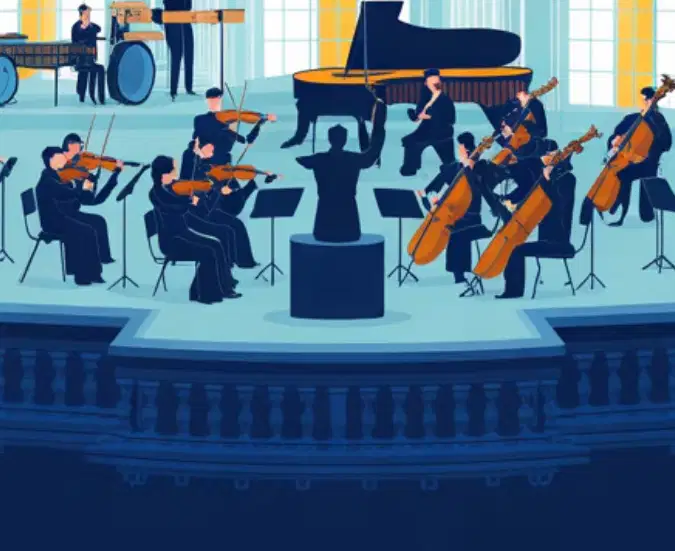
Fill in the blank: Baroque music's blend of order and emotion created ______ masterpieces.
timeless
temporary
chaotic
forgettable
Fill in the blank: Dive in, listen closely, and discover the ______ behind the notes.
drama
color
weather
flavor

