
 Worksheets
BTEC Engineering Lvl2 Unit7 Theory
Total questions: 25
Worksheet time: 13mins
Turning is...
Adding a long spiral groove, allowing a bolt to slide on
Forming a deep groove to split a workpiece
Reducing the diameter of a workpiece
Removing material from the end of a workpiece, creating a flat surface
Threading is...
Adding a long spiral groove, allowing a bolt to slide on
Forming a deep groove to split a workpiece
Reducing the diameter of a workpiece
Removing material from the end of a workpiece, creating a flat surface
Parting is...
Adding a long spiral groove, allowing a bolt to slide on
Forming a deep groove to split a workpiece
Reducing the diameter of a workpiece
Removing material from the end of a workpiece, creating a flat surface
RPM stands for...
Rotgen Particulate Material
Revolutions Per Minute
Rectangular Perpendicular Multiplexes
Risks Per Minute
Which of these is a simple feature?
Parallel Diameters
Bored Holes
External Threads
Stepped Diameters
Which of these is a simple feature?
Countersunk Holes
Tapped Holes
Flat-Bottomed Holes
Blind Holes
Which of these is a simple feature?
Tee Slots
Serrations
Square Faces
Angular Faces
Which machine can create only round features?
Lathe
Kiln
Milling Machine
Bandsaw
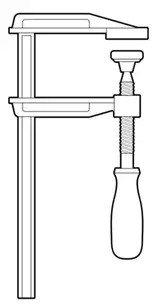
Which is the F Clamp?


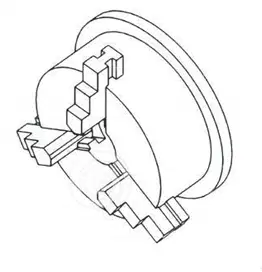
Which is the Chuck?


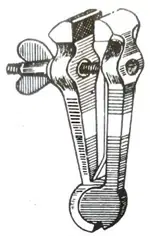
Which is the Vee Block & Clamp?
Which is the Angle Plate?
Aggressive knurling is...
Deep cross-hatching creating better grip
Decorative light patterning on the outside of a rod
A super tight thread for stiff bolts
Creating smooth holes for axels and precision
To add a flat surface to the edge of a round bar, you'll use...
Lathe
Drill
Milling Machine
Microwave
Tapping (in the workshop) is...
Adding a thread to the outside of a bar
Adding a thread to the inside of a hole
Repetitive percussion
Smoothing the inside of a hole
Reaming is...
Adding a thread to the outside of a bar
Adding a thread to the inside of a hole
Repetitive percussion
Smoothing the inside of a hole
Which machine can you use a drill bit on?
Lathe
Milling Machine
Pillar Drill
All three!
Which of these is the parting tool?




Roughing is...
Creating smooth faces fast
Removing lots of material quick but leaving a rough surface
Getting rid of a rough surface left behind from other process
Throwing your work around the workshop
Countersinking is...
Installing a water source in the food prep area
Creating space for a head of a screw in your workpiece
Creating space for a head of a bolt in your workpiece
Creating space for a washer in your workpiece
Counterboring is...
Arguing with someone you don't find interesting
Creating space for a head of a screw in your workpiece
Creating space for a head of a bolt in your workpiece
Creating space for a washer in your workpiece
Which is the toughest tool material?
Tungesten Carbide
Diamond
Cobalt Steel
High-Speed Steel
Which is the cheapest tool material?
Tungesten Carbide
Diamond
Cobalt Steel
High-Speed Steel
Why can't we use diamond tools on steel?
It's too soft
Diamond leaves a rough finish
Diamond reacts with iron and breaks
People steal the diamonds for jewellery
What degree did Mr Stevens do?
Mechanical Engineering
Electrical Engineering
Civil Engineering
Material Engineering

