
Font size
 Worksheets
Functions of the Judiciary
Total questions: 25
Worksheet time: 13mins
Read the following situation and answer the question: Sid and Sam inherited their father's property. Sid came to know that Sam had taken the larger share of the property by getting their father's will changed. Matters became worse between the two brothers when Sam started constructing his house on what was rightfully Sid's land. What type of dispute is described in this situation?
Property dispute between family members
Dispute over water sharing
Dispute over government rules
Dispute over temple entry
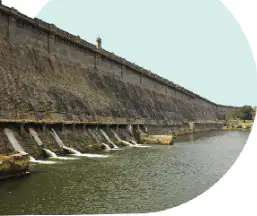
Karnataka and Tamil Nadu have been in a dispute over sharing the waters of the River Kaveri which passes through both states. Tamil Nadu depends on river water for different purposes including irrigation. It is only when Karnataka releases water from a dam that Tamil Nadu can receive water. This has led to tension between both the states. What is the main issue in this dispute?
Property inheritance
Water sharing between states
Electricity supply
Temple entry
Read the following situation and answer the question: A few years ago, the Government of India passed a rule that those people who did not have electricity in their houses could buy foodgrains and kerosene at a very low price. The state government of Kerala did not agree with this rule because there were many people in Kerala who lived in houses with electricity but who earned less than one lakh rupees a year. These people should also be considered poor and receive the benefits of cheap foodgrains and kerosene. The rules fixed by the Center were unacceptable to Kerala. What is the main reason for the dispute in this situation?
a) Disagreement over property
b) Disagreement over water sharing
c) Disagreement over government rules
d) Disagreement over temple entry
Some people in a village were not allowed by the local priests to enter a temple. The priests stopped them because these people belonged to an underprivileged caste. This led to a dispute between the priests and the people from the underprivileged caste. What is the main issue in this dispute?
Property inheritance
Water sharing
Discrimination based on caste
Electricity supply
Which of the following would have been different if we did not have the judiciary in our country?
There would be no system to resolve disputes fairly.
Laws would be enforced more strictly by the police only.
The government would have more unchecked power.
Citizens would have no way to challenge unfair laws.
Himachal Pradesh and Haryana are involved in a border dispute over Parwanoo. Should the states approach the court to resolve the issue?
Yes, because courts can provide a legal resolution to inter-state disputes.
No, because border disputes should be resolved through violence.
No, because only the central government can resolve such disputes.
Yes, because courts are the only way to change state boundaries.
Read the examples of different disputes and state the type of dispute in each case. One has been done for you.
Example of Dispute: Kerala and Tamil Nadu have been in a dispute over controlling the Mullaperiyar Dam on the River Periyar.
Type of Dispute: ____________
Dispute between two states
Dispute between two countries
Dispute between a state and the central government
Dispute between two cities
Read the examples of different disputes and state the type of dispute in each case. One has been done for you. Example of Dispute: West Bengal and the central government were in a dispute in 1962 over the government’s decision to take over some areas that were rich in coal in West Bengal. Type of Dispute: ____________
Dispute between state and central government
Dispute between two states
Dispute between two countries
Dispute between citizens and government
The judiciary can help protect the rights of these labourers because:
it can interpret and enforce laws that safeguard their rights.
it can create new jobs for labourers.
it can increase wages directly for all workers.
it can replace trade unions in negotiations.
We have different levels of courts in India because:
They handle cases of varying importance and allow appeals to higher courts.
They are all located in different cities only.
They only deal with international cases.
They are divided based on the language spoken.
Jim Namchu was found guilty of fraud by the High Court. Jim is unhappy with the court’s verdict. What can he do now? Whose decision will be binding on Jim Namchu and why?
Jim Namchu can appeal to the Supreme Court, and the Supreme Court's decision will be binding on him because it is the highest court.
Jim Namchu can request the High Court to reconsider its verdict, and the High Court's decision will be binding because it is the original court.
Jim Namchu can approach the District Court, and the District Court's decision will be binding because it is a lower court.
Jim Namchu can appeal to the President of India, and the President's decision will be binding because he is the head of state.

Fill in the pyramid with the 3 levels of courts in India – from the highest court at the top of the pyramid to the lowest at the bottom.
Top: Supreme Court, Middle: High Court, Bottom: District Court
Top: District Court, Middle: High Court, Bottom: Supreme Court
Top: High Court, Middle: Supreme Court, Bottom: District Court
Top: Supreme Court, Middle: District Court, Bottom: High Court
Which of the following is an example of an impartial judiciary?
Sumeet Raj, a judge in the High Court, sentenced the accused to jail even though he was personally known to the accused.
Sam Kumar, a judge in the High Court, passed a verdict in favour of the accused because the accused was his best friend.
Impartial judiciary is necessary for a democracy because:
It ensures fair and unbiased justice for all citizens.
It allows the government to control court decisions.
It prevents citizens from accessing legal rights.
It supports only the interests of powerful groups.
A Member of Parliament (MP) has stopped some people from celebrating their festival in his locality. This MP also has the power to appoint and dismiss a judge from office. If the people take the matter to court, can they expect the verdict to be impartial? Give reasons for your answer.
No, because the MP can influence the judge's decision.
Yes, because judges are always impartial.
Yes, because the MP has no influence over the judiciary.
No, because the people have no legal rights.
Why is it important for the judiciary to be impartial and independent?
Because it ensures fair and unbiased decisions.
Because it allows judges to make laws.
Because it helps the government control the courts.
Because it prevents the judiciary from being abolished.
Who will find it more difficult to access the court and why? What common problem could they both face after filing a court case?
People with limited financial resources will find it more difficult to access the court due to high costs; both may face delays after filing a case.
People with legal expertise will find it more difficult to access the court due to lack of knowledge; both may face immediate resolution after filing a case.
People with strong social connections will find it more difficult to access the court due to bias; both may face no issues after filing a case.
People with government support will find it more difficult to access the court due to restrictions; both may face quick judgments after filing a case.
Which of these would need the court to resolve the dispute? Choose the correct options.
Sam’s family doesn’t approve of his marriage to Sara.
Assam and Mizoram are involved in a border dispute.
Jose is the main accused in a bank robbery.
Joe’s teacher doesn’t approve of the clothes he wears to school.

Why does Rita say that it is not easy for people like her to go to court? Write any 3 reasons.
Because it is expensive, time-consuming, and complicated for people like her.
Because the court is always far away, judges are not available, and there is no paperwork.
Because people like her do not have any problems, courts are easy to access, and lawyers are free.
Because the process is very quick, everyone gets justice easily, and there are no fees.
Sabina Ali filed a case in the District Court against her employer for non-payment of salary for 6 months. Why did Sabina Ali approach the court? What can she do if she is unhappy with the District Court’s verdict?
Sabina Ali approached the court for non-payment of salary for 6 months, and if unhappy with the District Court’s verdict, she can appeal to a higher court.
Sabina Ali approached the court to resolve a property dispute, and if unhappy, she can file a police complaint.
Sabina Ali approached the court for workplace harassment, and if unhappy, she can resign from her job.
Sabina Ali approached the court for unpaid taxes, and if unhappy, she can contact the labor union.
Which of these appointments of a judge can ensure that the court is impartial? Choose the logical option.
If the judge is appointed based on how good they are at their work
If a judge is appointed based on their relationship with senior officers of the government
If a person has been harmed by a senior minister, will it be easy for that person to get justice in court if the judges are appointed by the same minister and depend on the minister to remain in office as a judge?
It will not be easy for the person to get justice.
It will be very easy for the person to get justice.
The person will definitely get justice without any issues.
The judges will always act independently regardless of appointments.
What has the Supreme Court done to make access to courts easy for the common people? Explain using an example.
The Supreme Court has allowed Public Interest Litigations (PILs) to be filed, making it easier for common people to seek justice.
The Supreme Court has increased court fees for all cases.
The Supreme Court has restricted access to legal aid for the poor.
The Supreme Court has made all hearings private and inaccessible to the public.
Arjun Reddy, a senior government official, encroached on the land owned by Ravi Rao, who runs a small grocery shop. Will it be easy for Ravi Rao to approach the court and expect justice?
Yes, Ravi Rao can easily approach the court and expect justice.
No, Ravi Rao may face difficulties in approaching the court and getting justice.
Ravi Rao cannot approach the court at all.
Only government officials can approach the court in such cases.
What does the sentence 'Justice delayed is justice denied' mean?
It means that if justice is not served promptly, it loses its value and people suffer.
It means justice should always be given in favor of the rich.
It means justice is only for those who wait patiently.
It means justice is always denied in courts.

