
 Worksheets
3D Art and Clay Study Questions
Total questions: 60
Worksheet time: 34mins
Which of the following lists the correct order of clay stages from wettest to most finished?
Slip, Plastic, Leather-hard, Bone-dry, Bisqueware, Glazeware
Wet, Damp, Moist, Tacky, Dry, Fired
Liquid, Soft, Firm, Hard, Dry, Fired
Dark, Medium, Light, White, Colored, Glazed
What was the main goal of the surrealist movement in art?
To depict realistic scenes from everyday life.
To focus on technical precision and detail.
To explore the imagination and unconscious mind through creative expression.
To represent historical events accurately.
Which term refers to an art form that involves creating three-dimensional objects, often by carving, modeling, or assembling materials?
Sculpture
Engraving
Painting
Photography
Which of the following is NOT a stage of clay?
Plastic
Glazeware
Wet
Bisqueware
Which of the following is an example of a three-dimensional artwork?
Sketch
Watercolor
Statue
Which of the following is NOT a technique for creating texture in clay?
Drawing
Scratching
Glazing
Stamping
Which art movement aimed to explore dreams and the subconscious in its works?
Cubism
Surrealism
Impressionism
Realism
Which of the following is a physical dimension of a sculpture?
Texture
Height
Material
Color
What is an important feature of a mobile in art?
It is always made of metal
It hangs and can move
It is painted on a wall
It is used for cooking
What is the term for an artwork that combines materials such as fabric, paper, and paint in its creation?
Mixed media
Single medium
Unified art
Simple media
An artwork that occupies space and can be viewed from multiple angles is known as a ________________.
Relief
Sculpture
Pattern
Texture
Which material is most commonly used for creating sculptures using the additive method?
Wood
Clay
Marble
Glass
Which method is used to shape clay by hand rather than using a pottery wheel?
Hand building
Glazing
Firing
Slip casting
Which type of paint uses water as a solvent and produces a translucent effect, often applied to paper?
Acrylic
Tempera
Watercolor
Gouache
A vessel designed primarily for visual appeal rather than practical use is called a _______________ vessel.
Decorative
Functional
Industrial
Ordinary
Which term describes a decorative design that is created by repeating shapes, lines, or colors?
Balance
Pattern
Contrast
Emphasis
Which term refers to objects like jars, cups, and sculptures that are crafted from clay and then baked at high temperatures?
Pottery
Glassware
Metalwork
Ceramics
Which of the following is applied to ceramics to form a smooth, glass-like surface after firing?
Glaze
Paint
Varnish
Finish
What is the main purpose of an architect?
To design graphics
To design buildings
To create pottery
To sculpt

Which art career designs clothing?
Graphic Designer
Animator
Fashion Design
Comic book artist
What is sculpture?
2D art
Clay
3D art
Plaster
Examples of form are
Circle, square, triangle
Oval, rectangle, octagon
Sphere, pyramid, cube
What do you call the key components that make up an artwork?
the mediums of art
the elements of art
the principles of art
The most basic kind of line that describes a shape is
outline
vertical line
diagonal line
horizontal line
What materials can be used to build a sculpture?
Wire
Wood
Clay
Pencil drawing
Flat shapes are ___________.
two dimensional
three dimensional
sculptural
ceramics
Forms are___________________ (height, width, and depth).
two dimensional
symmetrical
three dimensional
patterned
Shapes that have curved and irregular edges are called _______________.
organic
geometric
colorful
radial
An artist should handle and demonstrate an understanding of their ________________or supplies and tools.
medium/media
sticks
canvas
_______________________ is when an artist applies materials and techniques with great skill.
penmanship
craftsmanship
Sculpting
Brainstorming ideas for sculptures always begin with the creation of a drawing called a ________.
wedge
pinch
slip
sketch
Which of the following is NOT a sculptural art form?
statue
architecture
photograph
basket weaving
A mobile is an example of a kinetic sculpture.
true
false
Subtractive sculpture involves removing material, as in wood carving or stone,
to create a finished work.
True
False
Which of the following is not an element of art?
Balance
Texture
Color
Line
What's the word for the feeling of harmony between all parts within a work of art?
Repetition
Unity
Rhythm
Variety
Select all the Principles of Art
Form
Emphasis
Space
Proportion
Composition
Select the Elements of Art
Contrast
Color
Value
Shape
Pattern

This is an example of three-dimensional art
True
False
Make or represent (a form) by carving, casting, or other shaping techniques.
Modeling
Sculpture
Collage
Installation
Sculptural methods done by carving, or taking away material
Additive
Manipulation
Subtractive
Chisel
An oven for firing clay
hot plate
stove
toaster
kiln
Sculptural methods that build upon material
Subtractive
Score
Additive
Slip
Art that is intended for a specific use.
kinetic
mobile
functional
aesthetic
The materials that are used to create a work of art
value
paint
Media
Sculpture is
A 3 dimensional work of art, could be additive or subtractive
A 2 dimensional work of art, like works on paper
A clay piece that has been fired once
A type of stone used for carving
Which of the following textures is most likely to be found in a rocky sculpture?
Rough
Smooth
Hairy
Viscous
What is the term for the use of light and darkness in art to create depth and volume?
Emphasis
Harmony
Movement
Contrast
In sculpture, what is the most popular modeling material?
Leather
Clay
Marble
Wood
Gold
What kinds of materials can someone use to create a sculpture?
Clay
Wire
Cardboard
All of the above
Which of the following is NOT geometric shape?


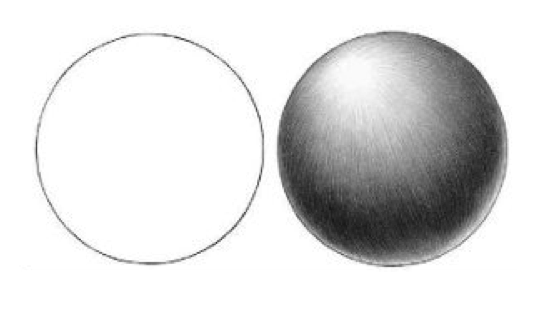
What is the difference between a shape and a form?
A shape is 2d, and a form is 3d
A shape shows texture and a form does not
A shape is made up of lines that are left open and a form is made up of lines that are closed
A shape is colorful and a form is plain.

A line that goes straight up and down is called what?
horizontal
vertical
broken
curvy

A line that goes left to right is:
Analogous
Emphasis
Horizontal
Movement
Which of the following is NOT an element of art?
line
space
shape
perspective
Line, shape, form, color, value, texture and space are the ______.
Principles of design
Elements of art

