wayground logo

Free Printable Worksheets

Font size

S
M
L
XL
Worksheets

Chapter 20 Practice Test

Total questions: 34

Worksheet time: 34mins

Name
Class
Date
1.
The Earth rotates in what direction?
a)
Clockwise
b)
Counter-clockwise
2.
What caused the craters (the dents and holes) on the Moon?
a)
A. Volcanic activity on the moon
b)
B. The Moon’s lack of wind, water, and plate tectonics
c)
C. Ancient asteroid impacts
d)
D. Accumulation of lunar dust over time
3.
During which phase is the Moon closest to the Sun?
a)
A. Waning Crescent
b)
B. First Quarter
c)
C. Full Moon
d)
D. New Moon
4.
When the moon is in its waxing phases, which side will be illuminated?
a)
A. Right side
b)
B. Left side
5.
What is the difference between a gibbous and a crescent phase?
a)
A. Gibbous phases are when the Moon is closer to Earth, while crescent phases occur when it is farther away.
b)
B. Gibbous phases are when more than half of the Moon is illuminated, while crescent phases are when less than half of the Moon is illuminated.
c)
C. Gibbous phases have a thin, curved shape, while crescent phases are round and full.
d)
D. Gibbous phases always happen during a lunar eclipse, while crescent phases occur during a solar eclipse.
6.
What type of eclipse is this?
a)
A. Solar eclipse
b)
B. Lunar eclipse
7.
Lunar eclipses can only be seen during which phase of the Moon?
a)
A. New Moon
b)
B. First Quarter
c)
C. Full Moon
d)
D. Third Quarter
8.
The Moon is visible during the day as often as it is at night.
a)
A. True
b)
B. False
9.
How much of the moon is always illuminated?
a)
The phase we can see from Earth is what is illuminated.
b)
The side of the moon we can see from Earth is always illuminated.
c)
Half of the moon is always illuminated.
d)
The entire moon is always illuminated.
10.
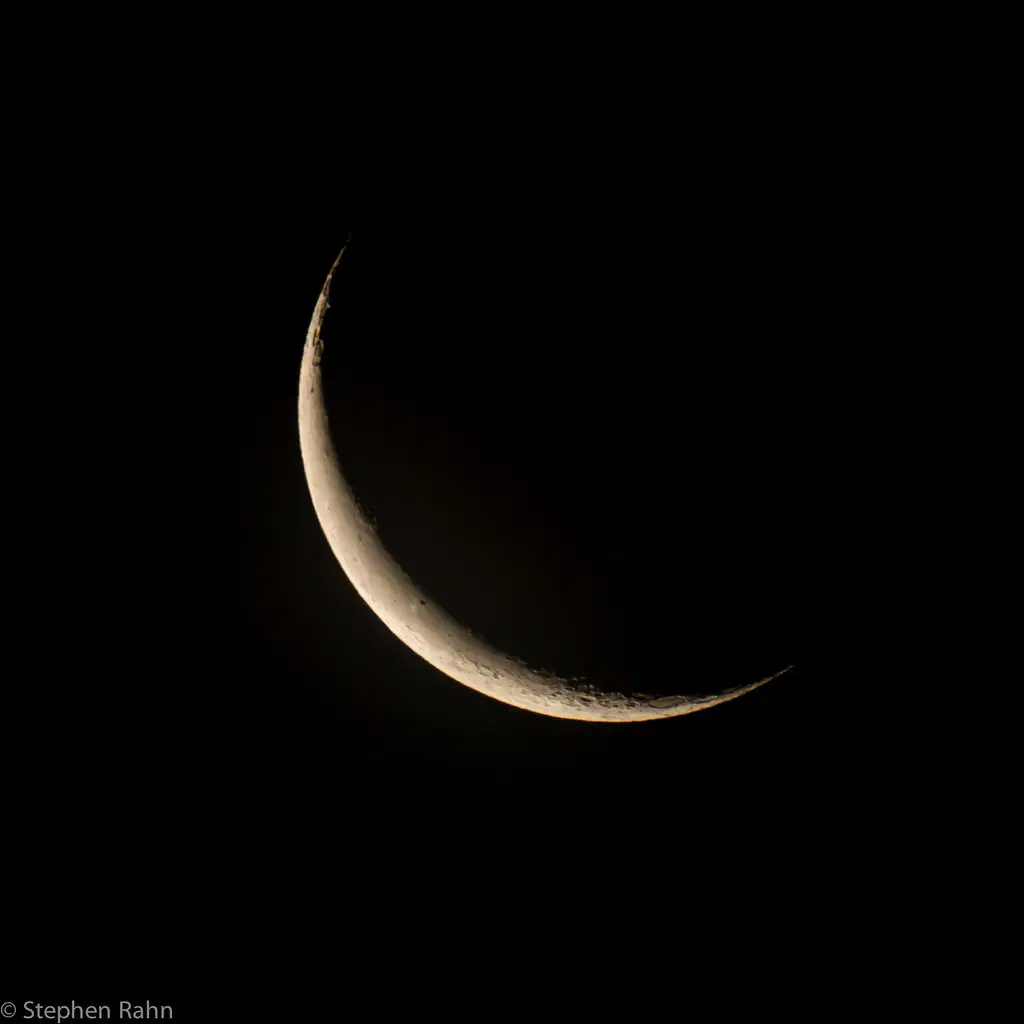
What phase of the Moon is this?
a)
A. Waxing gibbous
b)
B. Full moon
c)
C. Waning gibbous
d)
D. Waning crescent
11.
The Moon is in _____________ phase. The next phase it will enter is _________________.
a)
Waxing crescent / New Moon
b)
Waning crescent / New Moon
c)
Waxing crescent / First quarter
d)
Waning crescent / Third quarter
12.
How long does it take the moon to make one full revolution around the Earth?
a)
A. About one month
b)
B. 24 hours
c)
C. Every 4 years
d)
D. Every 365.24 days
13.
_________________ orbit stars. ____________________ orbit planets.
a)
A. Moons / Planets
b)
B. Planets / Stars
c)
C. Planets / Moons
d)
D. Stars / Moons
14.

Correctly label the Moon Phases on this diagram.

15.

When the Earth is rotating on its axis, it creates ​ (a)   .

Choose from the below words
day and night
the seasons
a full year
one month
16.

The sun rises in the ​ (a)   and

sets in the ​ (b)   .

Choose from the below words
east
west
north
south
17.

Label the picture correctly showing Earth's rotation and revolution.

18.

The Earth ​ (a)   on its axis every ​ (b)   , causing ​ (c)   . It also ​ (d)   around the Sun every ​ (e)   .

Choose from the below words
24 hours
rotates
revolves
365.25 days
day and night
19.

How long does it take the earth to make one rotation on it's axis?

​ (a)  

Choose from the below words
24 hours
365 hours
365 days
29 days
20.
  1. 2. The Earth revolves around the Sun every ​ (a)   . This, along with Earth's tilt, causes the Earth's ​​ (b)   .

Choose from the below words
365 days
seasons
30 days
24 hours
day/night cycle
21.

How fast does the Earth spin in MPH (miles per hour)?

(a)  

Choose from the below words
1,000 MPH
24 MPH
100 MPH
360 MPH
22.

The phase that occurs 3-4 days after this phase is ​ ​ (a)  

Choose from the below words
waxing crescent
full moon
third quarter
first quarter
waxing gibbous
23.
Question Image

NAME THAT PHASE!

a)

1.

waxing crescent

b)

2.

last quarter

c)

3.

new moon

d)

4.

waxing gibbous

24.

Which phase of the moon is this?

(if the light is on the right, its waxing)

25.

Click on the two crescent moons

26.

In the diagram, a ​​ (a)   is  occurring.

Choose from the below words
solar eclipse
lunar eclipse
27.

Label 'A' is the ​ (a)  

Label 'B' is the ​ (b)  

Choose from the below words
penumbra
umbra
Space Ship
Solar Eclipse
28.

In the diagram above, a ​ (a)   is occurring.

Choose from the below words
lunar eclipse
solar eclipse
29.

If a celestial body like a planet or a moon is covered completely from receiving the Sun’s light, and the body is perfectly in line with the Sun, a ​ (a)   occurs.

Choose from the below words

total eclipse

partial eclipse

solar eclipse

lunar eclipse

new moon

30.

A ​ (a)   is when only part of the Sun or the Moon is covered by a shadow, almost as if it looks like a cook​ie with a bite taken out of it.

Choose from the below words

partial eclipse

total eclipse

fool's eclipse

blood moon

gibbous moon

31.

This picture represents​ ​ (a)  

Choose from the below words

Lunar Eclipse

Solar Eclipse

32.

When the moon goes between the Earth and Sun, it is called (a)   .

Choose from the below words
neap tide
spring tide
solar eclipse
lunar eclipse
33.

An eclipse is when one ​ (a)   object casts a ​ (b)   on ​ (c)   object.

Choose from the below words
celestial
shadow
another
space
darkness
no
a big
34.
We do NOT have a solar or lunar eclipse each month because...
a)
The tilt of the moon's orbit is at 5 degrees
b)
The moon is too small
c)
The moon's orbital distance changes
d)
All choices