
 Worksheets
Portfolio Management
Total questions: 40
Worksheet time: 20mins
You are advising a conservative investor who wants minimum risk while still aiming for reasonable returns. Based on the concept of portfolio management presented, which action best aligns with this goal?
Concentrating all funds in the single stock with the highest recent return
Selecting a mix of investment tools that fits the individual’s investment policy for minimum risk and maximum return
Keeping all money as cash to avoid market fluctuations
Purchasing only real assets such as a car and a house
Which scenario best demonstrates the art of portfolio management as defined in the material?
Randomly buying securities at different times to average prices
Selecting and balancing financial and real assets to match an individual’s policy aiming for minimum risk and maximum return
Copying a famous investor’s latest trades without analysis
Holding only cash until markets become risk-free
You are advising a new investor who wants to follow a disciplined portfolio management process. Which sequence best reflects the stages from initial research to ongoing oversight?
Portfolio selection → Portfolio analysis → Security analysis → Portfolio evaluation → Portfolio revision
Security analysis → Portfolio analysis → Portfolio selection → Portfolio revision → Portfolio evaluation
Security analysis → Portfolio selection → Portfolio analysis → Portfolio evaluation → Portfolio revision
Portfolio analysis → Security analysis → Portfolio revision → Portfolio selection → Portfolio evaluation
Which portfolio type best fits an investor who prioritizes safety and is risk averse in the short run?
Aggressive Portfolio
Conservative Portfolio
Efficient Portfolio
Patient Portfolio
An investor wants high return at a certain level of risk by balancing risk and return to make an optimal portfolio. Which type matches this description?
Patient Portfolio
Aggressive Portfolio
Conservative Portfolio
Efficient Portfolio
Which statement best captures Harry Markowitz’s key contribution to finance as presented?
He introduced interest rate parity to explain currency markets.
He quantified portfolio risk and developed a methodology to determine the optimal portfolio using diversification.
He created technical indicators for day trading momentum.
He proved that risk-free assets always dominate risky assets.
An investor wants to reduce risk without lowering expected return. Based on the material, which strategy aligns with Markowitz’s theory?
Concentrate all capital in the single highest-return asset.
Allocate only to government bonds regardless of correlation.
Combine assets considering their correlations to build a diversified portfolio.
Use leverage to amplify exposure to one asset class.
The Markowitz Model is also known by which name in the material?
Single-Index Model
Full Covariance Model
Binomial Model
Arbitrage Pricing Model
According to the Markowitz approach, which three variables determine an efficient set of portfolios?
Beta, alpha, and skewness
Return, standard deviation, and coefficient of correlation
Sharpe ratio, Treynor ratio, and Jensen’s alpha
Price, volume, and momentum
A portfolio manager is comparing two assets with identical expected returns and standard deviations. Which additional factor must be assessed to apply the Markowitz model to construct an efficient portfolio?
Their market capitalizations
Their dividend yields
The coefficient of correlation between the assets
Their historical price levels
In constructing efficient portfolios and selecting the optimal portfolio, which principle is central?
Timing markets precisely using macroeconomic forecasts
Diversification based on asset correlation to lower risk
Minimizing the number of assets to reduce complexity
Preferring only assets with the lowest standard deviation
According to the material, what does a zero correlation between two assets imply?
They move in exactly opposite directions
They have no linear relationship or predictive relationship
They move together in the same direction
One asset always leads the other by one period
Historically, which combination has been cited as examples of two uncorrelated asset classes that can aid diversification?
Growth stocks and value stocks
Stocks and bonds
Domestic stocks and international stocks
Real estate and commodities

A portfolio holds three assets with weights and expected returns as follows: A (35%, 6%), B (25%, 7%), and C (40%, 10%). Using the weighted average approach, what is the expected return of the portfolio?
6.95%
7.85%
8.25%
9.10%
10.00%
An investor holds two assets with perfectly positive correlation between their returns. What is the most accurate implication for diversification benefits?
Diversification benefits are maximized because movements cancel out.
There is no advantage of diversification; portfolio risk equals the weighted standard deviation of the individual securities.
Risk is completely eliminated because returns move together.
Diversification reduces risk only if expected returns are equal.
Which statement about a zero correlation between two assets is correct?
The assets have a predictable linear relationship.
The assets move in exactly opposite directions.
There is no linear relationship; movements are not predictively related.
The assets must both have the same expected return.
Historically, which combination is cited as an example of two uncorrelated asset classes for diversification purposes?
Stocks and commodities
Stocks and bonds
Bonds and cash
Real estate and commodities
A portfolio includes a risk-free asset, what is the standard deviation of returns for this risk-free asset?
Positive but low
Equal to the market’s standard deviation
Zero because there is no variance in return
Undefined because returns are guaranteed
Given wA = 0.6, wB = 0.4, σA = 20%, σB = 10%, and ρAB = 0, what is the portfolio standard deviation σp? Show strategic reasoning by selecting the result that matches the formula for uncorrelated assets.
14.4%
17.9%
12.0%
10.8%
Which definition matches ρAB in the two-asset portfolio risk formula?
Variance of asset A
Covariance between asset A and B
Correlation of asset A and asset B
Weight of asset B
Which formula correctly expresses the variance of a two-security portfolio using covariance?
σp2=σx2wx2+σy2wy2+2wxwyCovxy
σp2=wxσx+wyσy
σp^2 = σx2+σy2−2wxwyCovxy
σp2=(wx+wy)2σxσy
What is the specific component of total risk that cannot be eliminated through diversification?
(a)
What specific action, by allowing negative portfolio weights, expands the efficient frontier into a hyperbola?
(a)
According to the Single Index Model, what is the only common factor that causes any two stocks to co-move?
(a)
What line represents the optimal combinations of a risk-free asset and the market portfolio, assuming homogeneous expectations?
(a)
An aggressive investor who wants a return higher than the market portfolio will (a) at the risk-free rate and invest more than 100% of their capital into the market portfolio.
The formula for CAPM is
The stocks lay above the SML is are called
(a)
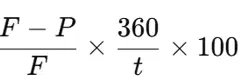
This formula will be used to find out
Discount Yeild
Risk Free rate of TB
Risk Premium
Dicounted Risk Premium
According to CAPM, In the case of a stock with negative beta, the required rate of return will be be
More than risk free rate
Less than Rf
Higher expected rate of return
Zero return and zero risk
In the below options, which is not the assumption of CAPM ?
Perfect Capital Market
Market premium will get only for systematic risk
Homogenous Expectation
Rf should be greater than Rm
E(Rp)=Rf+β1f1+β2f2+…+βnfn is the representation of
Arbitrage Pricing Model
Markowitz Model
Dividend Discount Model
CAPM
If Rf=5%Rf = 5%, Rm=11%, and β=1.5, then expected return Ri = ?
13%
14%
15%
16%
The Sharpe Ratio uses the portfolio's Standard Deviation as the measure of risk, making it a "Reward to..................................... Ratio
Variability
Volatality
Sensitivity
Market sentiment
If two assets have a correlation coefficient of -1, then
Diversification provides no benefit
The combined portfolio risk will always be higher than individual risks
The portfolio can achieve a risk-free combination
Expected return becomes zero
In the Markowitz mean-variance framework, if the correlation between all assets becomes +1, the efficient frontier will:
Expand outward, allowing better diversification.
Collapse into a straight line.
Become a horizontal line.
Be unaffected, as correlations don’t change the frontier.
A portfolio lies below the efficient frontier.
What does this indicate about its risk-return characteristics?
It offers higher return for the same risk.
It is efficient.
It offers lower return for the same risk.
It lies on the Capital Market Line.
If a portfolio has a Treynor Ratio higher than the Sharpe Ratio, this suggests
The portfolio has high unsystematic risk.
The portfolio is perfectly diversified.
The market portfolio is inefficient.
There’s no diversification benefit.
If a portfolio’s Sharpe Ratio equals the market’s Sharpe Ratio, then the portfolio:
Lies on the Capital Market Line (CML)
Lies below the Security Market Line (SML)
Has negative alpha
Has a Treynor Ratio less than the market’s
The Security Market Line (SML) differs from the CML mainly because:
SML applies to all portfolios and individual securities, while CML applies only to efficient portfolios
SML uses total risk, while CML uses systematic risk
SML assumes all investors hold the same risky portfolio
SML has a different intercept than the CML

