
 Worksheets
DC Reviewer
Total questions: 110
Worksheet time: 1hrs 10mins
These are electrical machines that are widely used for the purpose of converting energy from one form to another.
(a)
Source-to-work conversion machine.
(a)
It converts electrical energy into mechanical energy. This rotating machine is commonly identified as?
(a)
It converts mechanical energy into electrical energy. This rotating machine is commonly identified as?
(a)
It acts as a mechanical rectifier, inverter or frequency converter. This rotating machine is known as?
(a)
The scientist who discovered electromagnetic induction in the 1830s.
(a)
This law states that "The induced voltage in a coil is proportional to the product of the number of loops and rate at which the magnetic field changes within the loops."
Faraday's Law
Lenz's Law
Kirchhoff's law
Shawty got law law law
It measures how much magnetic field passes through a given area?
(a)
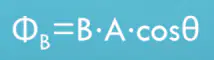
From the equation for magnetic flux. B denotes what?
(a)
What is the unit for Flux Density?
Newton (N)
Tesla (T)
Henry (H)
Mesina (M)
The law that states that induced current opposes the change in magnetic flux that produced it.
Faraday's Law
Tesler's Law
Navarro's Law
Lenz's Law
Lenz's Law formula:
E = −𝑁 𝑑Φ/𝑑𝑡
E = mc^2
Φ = 𝐵𝐴cos(𝜃)
a^2 + b^2 = c^2
The principle that governs the generation of electromotive force (emf) in a conductor due to motion in a magnetic field.
(a)
The component that provides motion or mechanical input to a generator is called the?
(a)
What is the unit of Magnetic Flux?
Henry (H)
Maxwell (Mx)
Bejino (B)
Weber (Wb)
The formula F = BIL/10 is used to calculate (a) .
Force (F) multiplied by the radius of the armature (r) is used to find what?
(a)
1 G (Gauss) is equal to ______.
1 Mx
1 Mx/cm^2
10⁻⁸ Wb
778 lbf-ft
1 Mx (Maxwell) is equal to ______.
10⁻⁸ Wb
1 G
9.81 m/s^2
1 atm
1 T (Tesla) is equal to _____.
1 Mx/cm²
10⁻⁸ Wb
10⁴ G
32.174 ft/s^2
Which of the following best describes rotating electrical machines?
A. Devices that convert chemical energy to mechanical energy
B. Machines that convert energy from one form to another using rotation
C. Static devices that control current
D. Tools used for storing electrical energy
A prime mover is a device that:
A. Converts electrical energy into heat energy
B. Serves as a power source driving a generator
C. Controls the current in a circuit
D. Measures mechanical torque
The direction of induced current in a conductor can be found using:
A. Fleming’s Left-Hand Rule
B. Fleming’s Right-Hand Rule
C. Fleming's Over-hand Rule
D. Faraday’s Force Rule
Which of the following is not a rotating machine?
A. Motor
B. Generator
C. Transformer
D. Rotary Converter
According to Faraday’s Law, increasing the speed of motion of a magnet through a coil will:
A. Decrease the induced emf
B. Have no effect on emf
C. Increase the induced emf
D. Reverse current direction
The negative sign in Lenz’s Law equation E =−NdΦ/dt indicates:
A. Voltage polarity
B. The opposition to the change in magnetic flux
C. Current direction reversal
D. Power loss
In the equation F=(BIL)/10, the unit of B is:
A. Volt
B. Ampere
C. Gauss or Tesla
D. Weber
The torque produced in a rotating machine is given by:
A. T = F x r
B. T = BIL
C. T = VI
D. T = -N dΦ/dt
The rotating part of a DC machine that carries the armature winding.
(a)
The stationary part of a DC machine that produces the magnetic field.
(a)
The component that delivers current from the external circuit to the armature winding.
(a)
The device that reverses current direction in the armature to maintain unidirectional torque.
(a)
The winding used to energize the rotor and interact with the magnetic field.
(a)
The winding mounted on the stator to produce the magnetic flux.
(a)
The part of the stator that supports the poles and provides a low reluctance path for magnetic flux.
(a)
The parts of the stator that carry the field windings and spread magnetic flux.
(a)
The part of a DC generator that provides mechanical input to produce electricity.
(a)
In a DC motor, the device responsible for producing mechanical rotation by interacting magnetic fields.
(a)
Which component of a DC machine is stationary?
A. Rotor
B. Armature
C. Stator
D. Commutator
What is the main function of brushes in a DC machine?
A. To generate voltage
B. To conduct current between the external circuit and armature
C. To maintain insulation
D. To produce magnetic field
The commutator in a DC machine acts as a:
A. Step-up transformer
B. Rectifier and current reverser
C. Magnetic field sensor
D. Cooling device
The field winding of a DC machine is mounted on:
A. Armature
B. Commutator
C. Poles
D. Shaft
The yoke in a DC machine primarily serves as:
A. A current collector
B. A magnetic shield and mechanical support
C. A commutation device
D. A power controller
In a DC machine, which rule determines the direction of force, magnetic field, and current in the wire?
A. Fleming’s Right-Hand Rule
B. Lenz’s Law
C. Fleming’s Left-Hand Rule
D. Ohm’s Law
In DC generators, electrical output is produced when:
A. Magnetic field rotates with the armature
B. There is relative motion between conductor and magnetic field
C. Current is supplied externally
D. Voltage is constant
Which type of DC generator has its field coils connected in parallel with the armature?
A. Series Generator
B. Shunt Generator
C. Compound Generator
D. Permanent Magnet Generator
The series wound generator connects its field winding in:
A. Parallel with the load
B. Series with the armature
C. Across the commutator
D. Between poles
A compound wound generator combines which two types of connections?
A. Shunt and Series
B. Series and Differential
C. Lap and Wave
D. Series and Cumulative
The rotor of a DC machine is the stationary magnetic field part.
True
False
The armature winding is placed on the rotor of a DC machine.
True
False
The commutator maintains a constant direction of current in the external circuit.
True
False
Permanent magnet DC generators do not require field windings.
True
False
Self-excited DC generators derive their field current from an external power source.
True
False
In a shunt motor, field winding is connected in parallel with the armature.
True
False
Series DC motors are ideal for applications requiring high starting torque such as cranes and traction systems.
True
False
The stator poles guide magnetic flux through the air gap to the rotor.
True
False
The yoke protects the internal parts and provides a path for magnetic flux.
True
False
A DC motor converts mechanical energy into electrical energy.
True
False
It supports pole shoe and concentrates magnetic flux
Magnetic Core
Concentrated Energy
Pole Core
Magneto
It spreads flux across air gap to reduce reluctance; has slots for windings.
Pole Shoe
Rapid Boots
Pole Core
Yoke/Frame
A DC Generator works on the principle that a voltage is induced when a conductor moves within a magnetic field. This principle is known as:
A. Electromagnetic Induction
B. Magnetomotive Force
C. Mutual Inductance
D. Magnetic Saturation
A DC Motor operates on the principle that a current-carrying conductor placed in a magnetic field experiences a force that causes rotation. This is known as:
A. Lenz’s Law
B. Motor Effect
C. Electromagnetic Induction
D. Electrostatic Attraction
In a Permanent Magnet DC Generator, the magnetic field is produced by:
A. Field coils powered by the armature
B. External DC excitation
C. Permanent magnets
D. Alternating current
A Separately Excited DC Generator obtains its field current from:
A. Its own output
B. An external DC source
C. Alternating current supply
D. Permanent magnets
In a Self-Excited DC Generator, the field winding is powered by:
A. A battery
B. The generator itself
C. An external power line
D. A permanent magnet
In a Series Wound DC Generator, the field winding is connected:
A. In parallel with the armature
B. In series with the armature
C. Across the commutator
D. Separately from the circuit
In a Shunt Wound Generator, the field winding is connected:
A. In series with the armature
B. In parallel with the armature
C. Across the brushes
D. Directly to the load
A Compound Wound DC Generator combines:
A. Series and shunt windings
B. Lap and wave windings
C. Alternating and direct currents
D. Field and armature fluxes
In a Long Shunt Compound Generator, the shunt field is connected:
A. Across the armature only
B. Across both the armature and series field
C. In series with the armature
D. Between the commutator segments
In a Short Shunt Compound Generator, the shunt field is connected:
A. Across both the armature and series field
B. Across the armature only
C. Between the field poles
D. In parallel with the load
A Permanent Magnet DC Motor produces its field using:
A. Electromagnets energized by current
B. Permanent magnets
C. Induction coils
D. External excitation
A Separately Excited DC Motor has its field winding:
A. Connected to an external DC source
B. Connected in series with the armature
C. Short-circuited to the load
D. Driven by permanent magnets
A Self-Excited DC Motor obtains its field excitation from:
A. A permanent magnet
B. Its own armature circuit
C. An AC supply
D. An external generator
A Series DC Motor is best known for:
A. High efficiency and low torque
B. High starting torque and variable speed
C. Constant speed and high current
D. Low torque and steady operation
A Shunt DC Motor is preferred when:
A. Constant speed is required
B. Frequent speed variation is needed
C. High starting torque is necessary
D. Light loads are used
A Compound DC Motor combines the advantages of:
A. Series and shunt motors
B. AC and DC machines
C. Separately excited and permanent magnet types
D. Lap and wave windings
When the series and shunt fields aid each other, the motor is called:
A. Differential Compound Motor
B. Cumulative Compound Motor
C. Short Shunt Motor
D. Series Motor
When the series field opposes the shunt field, the motor is called:
A. Differential Compound Motor
B. Cumulative Compound Motor
C. Series Motor
D. Long Shunt Motor
In a Long Shunt Compound Motor, the shunt field is connected:
A. Across the armature only
B. Across both armature and series field
C. Between commutator and brushes
D. In series with the load
In a Short Shunt Compound Motor, the shunt field is connected:
A. Across the armature only
B. Across both armature and series field
C. To an external DC source
D. In series with armature current
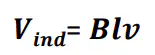
This formula represents the equation for (a) .
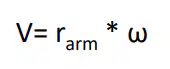
In this formula, ω represents (a) .
The generated EMF in a DC generator is given by Eg=k Φ ω. The term Φ stands for (a) .
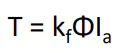
The term I sub a represents?
(a)
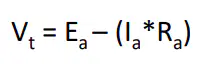
The symbol R sub a stands for?
(a)
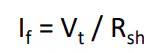
The symbol T sub sh stands for?
(a)
The back electromotive force (Back EMF) in a DC motor is given by ________.
Eb=PΦNZ/(60A)
Pg = Eg×Ia
PL=V×I
T=F×r
The power developed in the armature of a DC generator is expressed as ________.
Eg=kΦω
T=kfΦIa
Pg=Eg×Ia
PL=V×I
The power delivered to the external load is given by the formula ________.
Pg=Eg×Ia
T=kfΦIa
T=F×r
PL=V×I
The EMF generated in a DC generator is directly proportional to:
A. Armature resistance
B. Magnetic flux and speed of rotation
C. Load current
D. Field current only
The formula Eg=kΦω shows that the generated EMF depends on:
A. Voltage drop and resistance
B. Magnetic flux and angular speed
C. Torque and current
D. Load and power factor
In a DC shunt generator, the terminal voltage is:
A. Greater than the generated EMF
B. Equal to the generated EMF
C. Less than the generated EMF due to internal voltage drop
D. Always constant
For a shunt generator, the relationship between currents is:
A. Ia=If+IL
B. Ia=If−IL
C. Ia=IL/If
D. Ia=If×IL
The torque produced by a DC motor is proportional to:
A. Φ/Ia
B. Φ×Ia
C. V/Ra
D. VRa
The mechanical power developed in a DC generator is:
A. P=ωT
B. P=VI
C. P=I2R
D. P=E/I
In the back EMF equation Eb= V − Ia Ra, Eb represents:
A. Applied voltage
B. Voltage drop
C. Counter EMF opposing the supply
D. Terminal voltage
Which of the following equations represents power losses in the armature?
A. I2aRa
B. Eb×Ia
C. V×I
D. ωT
If Pg=EgIa then the generated power depends on:
A. Armature resistance only
B. Field current
C. EMF and armature current
D. Speed and voltage drop
Reversal of current in armature coils for smooth torque.
(a)
Distortion of main magnetic field by armature’s field
(a)
Electrical energy supplied to armature circuit.
(a)
Mechanical energy delivered by the shaft (motor) or electrical energy delivered to load (generator).
(a)
Power losses due to resistance in armature and field windings.
(a)
Converted power in armature / input electrical power.
(a)
Output mechanical power / converted power in armature.
(a)
Ratio of output power to input power.
(a)
Torque developed in the armature (proportional to ΦIa)
(a)
Initial torque produced when motor starts.
(a)
Represented by the symbol A, its the number of current paths (depends on winding type).
(a)
1 hp = 0.7457 kW
True
False

