
 Worksheets
Remedial F1: Human Circulatory system
Total questions: 11
Worksheet time: 5mins
The human body is composed of complex systems that work together to fulfill various physiological functions. One of these systems is the circulatory system. This system functions to…
absorb nutrients for energy production
transport nutrients and oxygen to all parts of the body
facilitate gas exchange for energy production
produce blood and oxygen
The heart is a vital organ composed of specialized cardiovascular muscle, roughly the size of a human fist. It is situated slightly to the left side of the chest cavity, resting between the lungs and protected by the rib cage. Which of the following statements determines the function of the heart?
The heart constantly contracts and relaxes to pump the oxygenated blood to all parts of the body simultaneously, and removes the waste products, such as carbon dioxide.
The heart is responsible for the body's ability to execute various functions, such as walking, sitting, running, and excreting waste from the body.
The heart functions to absorb oxygen into the bloodstream and remove carbon dioxide during the process of respiration.
The heart provides nutrients to the entire body through the process of absorption
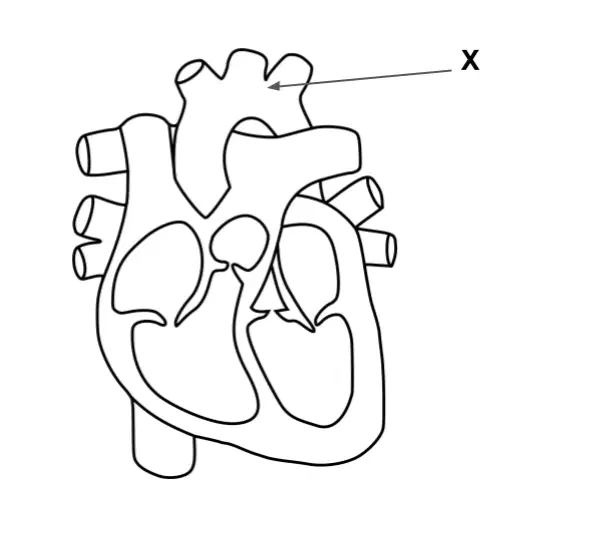
Study the diagram below. The part labeled in X is known as…
Pulmonary artery
Pulmonary vein
Aorta
Superior Vena Cava
The heart consists of four chambers that facilitate blood transport. In which chamber does deoxygenated blood from the body enter?
left atrium
left ventricle
right atrium
right ventricle
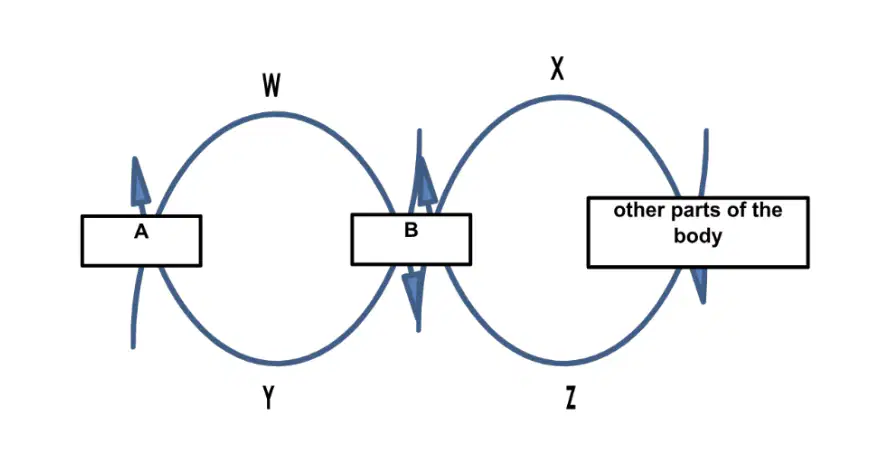
Arrows W, X, Y, and Z represent the movement of blood. Boxes A and B each represent a different organ. Boxes A and B each represent another organ. The box B represents an organ called…
heart
lung
aorta
brain
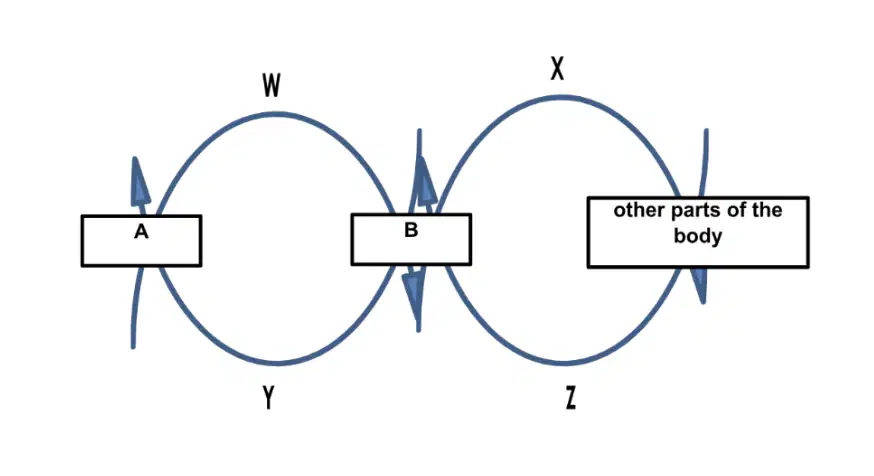
Study the diagram below. How does organ A work together with organ B?
The organ A produces the blood that carries oxygen, and then the organ B exchanges it for carbon dioxide.
The organ A absorbs the oxygen from the blood, then the organ B transfers it to all parts of the body.
The organ A pumps the oxygenated blood to part B for gas exchange.
The organ A provides oxygen to the blood cells and brings it to the organ B to be distributed to all parts of the body.
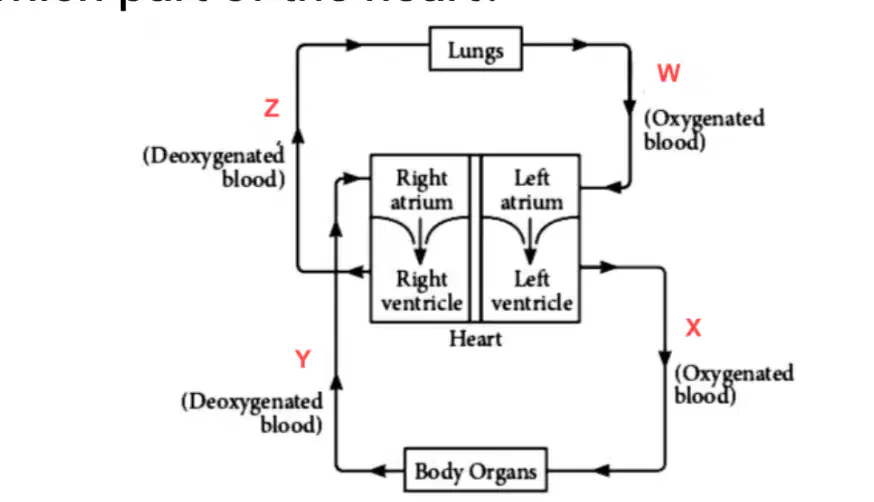
The part labeled in Y represents which part of the heart?
Pulmonary artery
Pulmonary Vein
Aorta
Vena Cava
Which of the following statements is true about the flow of the blood through the heart?
The blood from the body flows to the left atrium of the heart to the lungs
The blood pumped by the left ventricle will flow through the pulmonary vein to all parts of the body.
The blood from the lungs is pumped away from the heart through the biggest artery.
The blood from the lungs will be transported through the largest vein of the body.
Which of the following correctly shows the flow of the blood throughout the body?
Oxygenated blood: lungs → heart → body
Oxygenated blood: heart → lungs → body
Deoxygenated blood: lungs →body → heart
Deoxygenated blood: heart→ body → lungs
What is the primary function of the aorta in the circulatory system?
To carry deoxygenated blood from the body to the heart
To distribute oxygenated blood from the heart to the rest of the body
To facilitate gas exchange in the lungs
To collect blood from the lungs
Which chamber of the heart is responsible for pumping oxygenated blood to the body?
Left atrium
Left ventricle
Right atrium
Right ventricle

