
 Worksheets
LIFE AND WORKS OF RIZAM-SUM-EXAM
Total questions: 61
Worksheet time: 39mins
The ship that Rizal boarded when he first left the Philippines.
Djemnah
Salvadora
Isla de Luzon
San Diego
The place where Noli Me Tangere was first printed.
Madrid, Spain
Paris, France
Berlin, Germany
London, England
The name of Rizal’s dog.
Pulguso
Usman
Tuso
Brownie
The name of Jose Rizal's horse.
Agapito
Alipato
Luna
Apollo
The date when Noli Me Tangere was published.
June 19, 1886
March 21, 1887
December 30, 1886
February 17, 1887
The date when El Filibusterismo was published.
September 18, 1891
October 12, 1891
July 7, 1892
August 25, 1890
His unfinished third novel.
El Amor Patrio
Dapitan Notes
Mi Último Adiós
Makamisa
Rizal’s favorite subject in Ateneo.
Science
Latin
Mathematics
History
The editor of La Solidaridad.
Marcelo H. del Pilar
Mariano Ponce
Graciano López Jaena
Jose Rizal
The execution of Rizal took place at.
Cavite
Intramuros
Bagumbayan
Calamba
Dr. Jose Rizal was born in which town of Laguna.
Pila
San Pablo
Calamba
Los Baños
What date marks the birth of Jose Rizal?
June 19, 1861
December 30, 1861
March 21, 1862
June 12, 1860
What was the full name of Jose Rizal?
(a)
Who was the father of Jose Rizal?
(a)
Rizal’s mother was known for her intelligence and strong faith. What was her name?
(a)
Rizal was the ___ child among eleven siblings.
Fifth
Seventh
Ninth
Eleventh
The Jesuit institution where Rizal studied for his secondary education was.
(a)
What was the title of Rizal’s first poem written when he was eight years old?
(a)
“A la Juventud Filipina” was written to inspire.
The Filipino youth to study abroad
The Filipino youth to strive for excellence and love their country
The Spanish friars to reform
Filipino revolutionaries to fight
Which university did Rizal attend for his medical studies in the Philippines?
(a)
In Europe, Rizal continued his studies at the.
(a)
“Noli Me Tangere” means.
Touch by faith
Touch Me Not
Touch me baby
Touch by touch
Who helped publish Noli Me Tangere?
(a)
The sequel to Noli Me Tangere is.
(a)
Rizal’s secret society in the Philippines for reform and unity.
(a)
Rizal’s common-law wife during exile.
(a)
Choose among the options are the first 2 eldest sisters of Rizal.
Soledad
Saturnina
Trinidad
Narcisa
Josefa
Choose among the following the three youngest sisters of Rizal.
Maria
Trinidad
Josefa
Lucia
Soledad
Which from the following are the works of Rizal.
Sobre la Indolencia de los Filipinos
The Philippines a Century Hence
Junto al Pasig
El Consejo de los Dioses
Fray Botod
Choose of the following is/are the false statement/s about Rizal.
He fought in battles during the Philippine Revolution.
He was executed in Bagumbayan (now Luneta) on December 31, 1896.
He was executed in Bagumbayan (now Luneta) on December 30, 1986.
Rizal is a Filipino.
Select the reasons why Rizal wanted to go abroad in his first trip.
To continue his medical studies
To find influential European patrons who could financially support his studies and help secure better opportunities for his family back in the Philippines.
To further his education and broaden his knowledge about science, culture, and progress in Europe.
To observe and study the life, government, and institutions of other countries so he could help reform and improve the Philippines.
Which of the following are true during his 2nd trip to abroad:
He went to Hong Kong and practiced medicine there.
He met Filipino patriots and discussed plans for reform.
He finished finally both Noli and El fili
He meet Suzanne Jacoby.
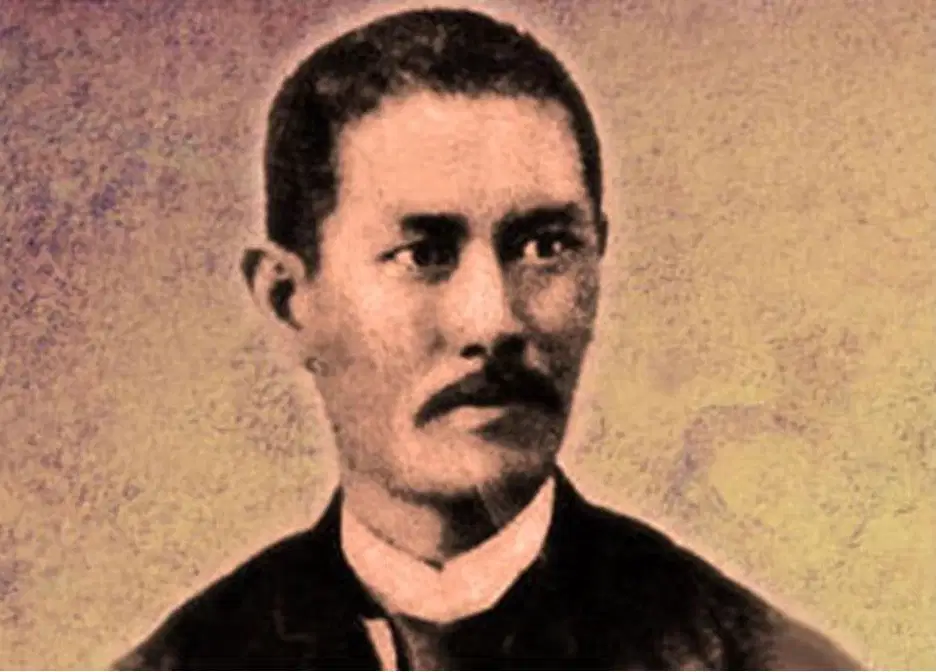
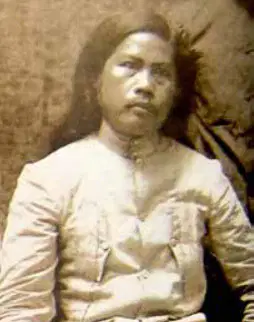
These Filipinos are the illustrados that formed the Propaganda Movement in Europe. Select them.


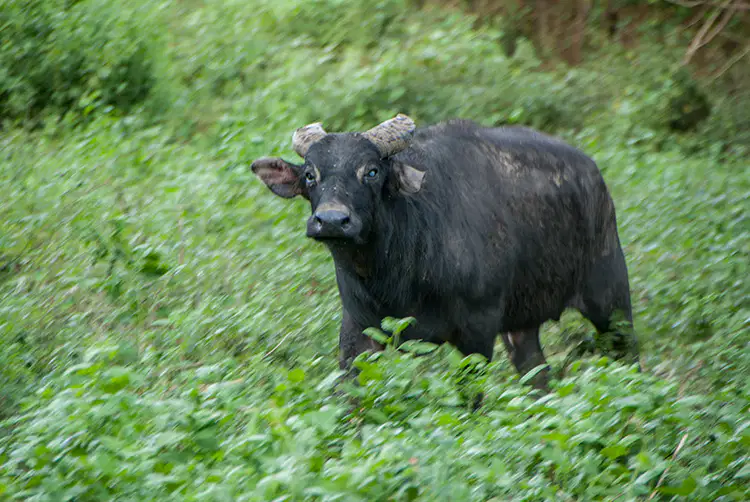
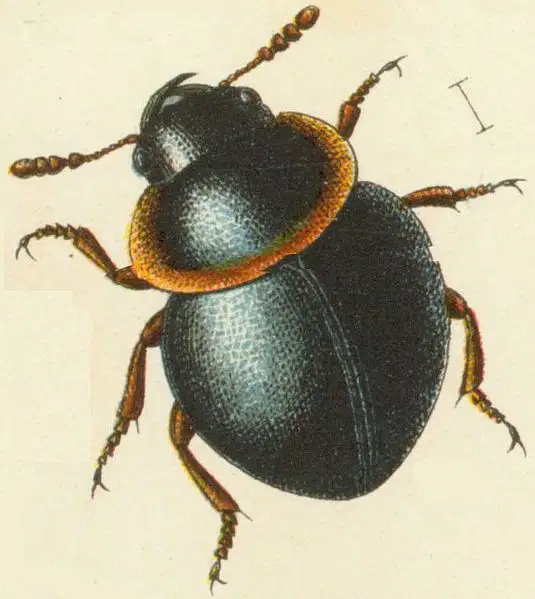
Which of the following are the discoveries of Rizal of different animal species in Dapitan:
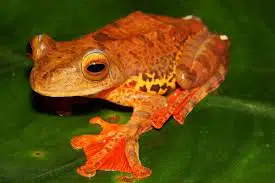
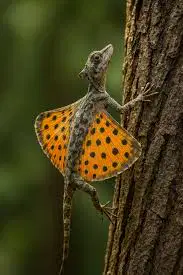
Rizal refused to escape from Dapitan when some revolutionaries offered assistance. If you analyze his reasoning, which perspective most accurately explains his decision?
He feared that escape would be interpreted as guilt and weaken his moral position.
He doubted the Katipunan’s capability to sustain a national revolt.
He was determined to finish his scientific experiments before leaving.
He believed the Spanish government would soon grant peaceful reforms.
He wanted to go to Cuba and sided with the Spaniards to finally get our from his exile in Dapitan and serve the king of Spain.
When Rizal accepted to serve as a doctor in Cuba, it appeared to be an act of loyalty to Spain. From a critical standpoint, what deeper strategy can be inferred from this decision?
He sought to gain Spain’s trust to secretly support Filipino reformists abroad.
He viewed the assignment as a way to redeem his honor and clear his name.
He hoped to prove that Filipinos could serve humanity beyond colonial boundaries.
He wanted to leave Dapitan as a means of escaping political persecution.
When Rizal lived with Josephine Bracken in Dapitan, the local clergy accused him of scandalous behavior. If analyzed through the lens of his reformist views, what does his relationship signify?
Defiance against the Church’s control over personal morality
A symbolic act of rebellion against colonial marriage laws
An embrace of Western romantic ideals over Filipino traditions
A pragmatic compromise to secure companionship in exile
Consider these historical and biographical events:
I. The Cavite Mutiny erupted, leading to the execution of Gomburza.
II. Rizal entered Ateneo Municipal de Manila.
III. The liberal regime of Governor-General Carlos María de la Torre began.
IV. Rizal was inspired to dedicate his novel to the martyred priests.
Which sequence best reflects the chronological and causal relationship of these events?
A. I → III → II → v
B. III → I → II → IV
C. I → II → III → IV
D. I → III → II → IV
The following events reveal the continuity of Filipino resistance before and after Rizal’s death:
I. Execution of Gomburza (1872).
II. Founding of Propaganda Movement (1880s).
III. Formation of Katipunan (1892).
IV. Proclamation of Philippine Independence (1898).
A. I → II → III → IV
B. II → I → IV → III
C. I → III → II → IV
D. I → II → IV → III
6. Arrange the following events in chronological order:
I. The Cry of Pugad Lawin
II. The Pact of Biak-na-Bato
III. Execution of Gomburza
IV. Return of Emilio Aguinaldo from Hong Kong
III – II – I – IV
II – III – I – IV
I – III – II – IV
III – I – II – IV
Which of the following sequences correctly reflects the transition of colonial powers over the Philippines?
I. Spanish rule established
II. British occupation of Manila
III. American sovereignty recognized by the Treaty of Paris
IV. Japanese occupation during World War II
II – I – III – IV
I – II – III – IV
I – III – II – IV
II – IV – I – III
Which of the following events occurred in the correct historical order?
I. The arrival of Ferdinand Magellan
II. Opening of the Suez Canal
III. Legazpi’s establishment of Manila
IV. Execution of Gomburza
I – II – IV – III
I – III – II – IV
II – I – III – IV
I – IV – III – II
Consider the following events related to the Philippine-American War:
I. Malolos Republic proclaimed
II. Treaty of Paris signed
III. Battle of Manila
IV. Capture of Emilio Aguinaldo
I – II – III – IV
II – I – III – IV
I – III – II – IV
II – III – I – IV
Arrange the following presidents according to their period of service:
I. Manuel L. Quezon
II. Jose P. Laurel
III. Elpidio Quirino
IV. Ramon Magsaysay
II – I – III – IV
I – II – IV – III
I – II – III – IV
III – II – I – IV
Arrange the following social movements chronologically:
I. Propaganda Movement
II. Katipunan founded
III. Hukbalahap Rebellion
IV. EDSA People Power Revolution
III – II – I – IV
II – I – III – IV
I – II – III – IV
I – III – II – IV
If the 1872 Cavite Mutiny had not occurred, which of the following historical outcomes would most likely be affected?
The spread of secularization in the Philippine Church
The execution of Gomburza and rise of reformist movements
The colonization of the Philippines by Spain
The fall of Governor-General Izquierdo’s administration
Critics claim Rizal was an “American-sponsored hero.” Which argument best challenges that view?
Americans supported Rizal because he represented peace.
Rizal’s nationalism predated U.S. colonization and opposed any foreign control.
Rizal collaborated with the Americans to maintain order after 1898.
Rizal’s writings had no influence on the revolutionary generation.
If Bonifacio had been recognized as the national hero instead of Rizal, which of the following might best describe the change in Filipino national identity?
The Philippines would value intellectual enlightenment over resistance.
Violence might have become a normalized expression of nationalism.
Religious devotion would have declined in favor of secularism.
The focus on moral education and reform would have increased.
When Rizal volunteered to serve as a doctor in Cuba, what deeper motivation likely influenced his decision beyond his medical duty?
To escape suspicion and surveillance in Dapitan
To permanently settle in Spain and abandon the Philippines
To join the Katipunan secretly from abroad
To start a business in Cuba
Fuego means?
(a)
The last meal of Rizal
Tsaa and Bread
Longanisa
He was not given a single meal for his punishment.
3 boiled eggs
The birth of La Liga was at Doroteo Ongjunco's House at Tondo, Manila.
True
False
Which of the following is false in his 2nd trip:
A. Rizal left the Philippines in 1888 and traveled to Hong Kong after his family’s conflict with the Dominican friars in Calamba.
B. He went to Japan, where he met and fell in love with Seiko Usui
C. He went to various parts of Europe, including London, Paris, and Brussels, to continue his studies and writing.
D. He strengthened his connections with the Propaganda Movement, including Marcelo H. del Pilar and Mariano Ponce.
All items are correct except letter B. While Rizal did go to Japan and met Seiko Usui (O-Sei-san), their relationship happened only during a short stay of about six weeks, and there is no solid historical proof that they were truly “in love” in a deep or formal sense.
All items are correct.
Which sequence best represents the chain of causes and events that led to José Rizal’s exile to Dapitan (1892–1896)?
I. The Spanish friars filed charges against Rizal, accusing him of inciting rebellion through his writings.
II. Rizal’s reformist ideals inspired the formation of La Liga Filipina, which promoted peaceful reforms.
III. The Spanish authorities, alarmed by his influence and the Liga’s potential for unity, ordered his arrest.
IV. The arrest of Rizal led to the dissolution of La Liga Filipina, strengthening the resolve of radical groups like the Katipunan.
V. Rizal was deported to Dapitan under Governor-General Despujol’s order.
II → I → III → V → IV
I → II → III → IV → V
II → III → I → V → IV
II → I → III → IV → V
Which of the following statements CORRECTLY describe Governor-General Eulogio Despujol’s role in Rizal’s life?
I. He initially favored Rizal’s peaceful reform ideas.
II. He later accused Rizal of sedition and ordered his arrest.
III. He signed the deportation order sending Rizal to Dapitan.
IV. He allowed Rizal to return freely to Manila in 1896.
A. I and II only
B. II and III only
C. I, II, and III only
D. II, III, and IV only
Governor-General Ramón Blanco’s main attitude toward Rizal can best be described as:
A. Hostile and oppressive, leading to Rizal’s imprisonment.
B. Sympathetic and respectful, allowing Rizal to go to Cuba.
C. Indifferent, ignoring Rizal’s reformist efforts.
D. Supportive of the friars’ demand for immediate execution.
Which Governor-General was responsible for approving the death sentence of Dr. José Rizal in 1896?
Camilo de Polavieja
Eulogio Despujol
Who among the following Governor-Generals ordered Rizal’s deportation to Dapitan after discovering subversive documents linked to La Liga Filipina?
A. Ramón Blanco
B. Eulogio Despujol
C. Camilo de Polavieja
D. Emilio Terrero
Who was the Dominican priest who served as one of Rizal’s professors in Medicine and was known for being strict and biased against Filipino students?
Fr. Francisco de Paula Sanchez
Fr. José Bech
Fr. León de Guerrero
Fr. Ramón Pablo
Which professor at UST was remembered by Rizal as a kind and encouraging mentor, one of the few Spaniards who appreciated his intellect and moral character?
Fr. José Bech
Fr. León de Guerrero
Fr. Francisco de Paula Sanchez
Fr. Ramón Pablo
What was the name of the two student groups in Ateneo that competed academically, with Rizal belonging to one of them?
Illustrados and Reformistas
Indios and Peninsulares
Jesuits and Dominicans
Carthaginians and Romans

