
NEW
Font size
 Worksheets
Internet of Things (IoT) Quiz
Total questions: 35
Worksheet time: 18mins

What do connections in the Internet of Things (IoT) refer to?
How physical devices transmit and receive data
How humans communicate verbally
How computers store data
How software is developed
What types of networks can IoT connections occur over?
Wired and wireless networks
Only wireless networks
Only wired networks
Satellite networks
What is the primary advantage of using MQTT in IoT networks?
High security
Lightweight protocol for low-bandwidth, high-latency networks
Simplified protocol for resource-limited devices
Traditional web protocol
How does HTTP/HTTPS compare to MQTT and CoAP in terms of weight?
Lighter
Heavier
The same
Not applicable
Which communication model balances bandwidth efficiency and real-time responsiveness?
Request–Response Model
Publish–Subscribe Model
Push/Pull Model
Centralized Architecture
Which layer is responsible for collecting and acting on data using physical sensors and actuators?
Perception Layer
Network Layer
Application Layer
Data Link Layer
Which security risk involves attackers hijacking IoT devices to launch large-scale DDoS attacks?
Weak Authentication
Poor Encryption Practices
Device Hacking & Botnets
Insecure Firmware

What is a consequence of lack of updates or patching in firmware?
Device Hacking & Botnets
Insecure Firmware
Data Leakage
Poor Encryption Practices

What happens to data in transit without TLS/SSL or end-to-end encryption?
It can be intercepted
It becomes secure
It is encrypted automatically
It is deleted
What type of encryption is recommended for data in transit according to security best practices?
RSA
TLS
SHA-256
MD5
Which practice involves limiting access rights for users to the bare minimum necessary?
Network segmentation
Mutual authentication
Principle of least privilege
Secure boot mechanisms
Why are regular firmware updates and secure boot mechanisms important in security best practices?
To improve network speed
To prevent unauthorized access
To enhance data encryption
To reduce hardware costs
What are "Things" in the context of the provided material?
Physical objects capable of sensing, communicating, and acting
Virtual entities with no physical presence
Objects that only store data
Devices that only perform calculations
Which of the following is an example of a "Thing" as mentioned in the material?
Smart Sensors
Traditional Books
Analog Clocks
Wooden Furniture
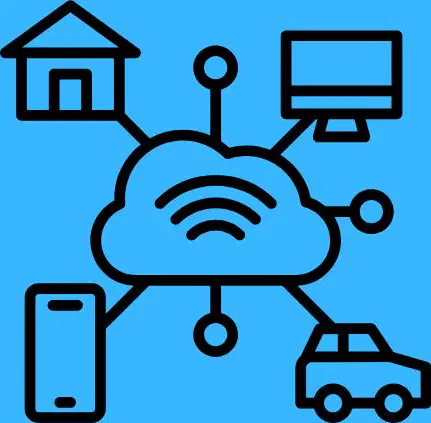
What is the primary purpose of IoT?
To create new social media platforms
To bridge the physical and digital worlds
To develop new programming languages
To manufacture computer hardware
How does IoT contribute to smart cities?
By providing entertainment
By enabling remote healthcare
By ensuring sustainable, data-driven urban management
By offering personalized home security
What does the Dynamic Adaptation characteristic of IoT help maintain?
Seamless communication
System scalability
Optimal performance despite changes in variables
Data transformation
During which period did the Internet of Things experience the "Birth of Connectivity"?
1990 - 1999
2000 - 2009
1960 - 1980s
2010 - 2019
Which era is characterized by the "IoT Revolution"?
1960 - 1980s
2010 - 2019
1990 - 1999
2000 - 2009
What is the focus of the Internet of Things from 2020 to the present?
The Birth of Connectivity
Wireless and Cloud Expansion
The IoT Revolution
Intelligent, Scalable, and Ubiquitous IoT
What technology became the early driver of IoT thinking, giving objects a digital "identity"?
Bluetooth
RFID
Wi-Fi
NFC
What was the focus of the IoT era from 2000 to 2009?
The Birth of Connectivity
The Internet Meets Devices
Wireless and Cloud Expansion
The IoT Revolution
During which period did the Internet of Things experience the "Birth of Connectivity"?
1960 - 1980s
1990 - 1999
2000 - 2009
2010 - 2019
What significant development occurred in the IoT during the 2000-2009 period?
The IoT Revolution
Wireless and Cloud Expansion
The Birth of Connectivity
Intelligent, Scalable, and Ubiquitous IoT
What was a key feature of the IoT during the 2010-2019 era?
The Internet Meets Devices
The IoT Revolution
Wireless and Cloud Expansion
The Birth of Connectivity
What period is referred to as the "Early Foundations" of the Internet of Things?
1960 - 1980s
1990 - 1999
2000 - 2009
2010 - 2019
What is one application of IoT in smart homes?
Real-time vehicle tracking
Integrating home devices into a connected network
Monitoring environmental conditions
Improving crop management
What role does IoT play in environmental monitoring?
It integrates home devices
It supports real-time vehicle tracking
It collects data to track environmental conditions
It monitors patients remotely
Which of the following is a component of the sensing layer in an IoT system?
Database
Sensors
Network cables
User interface
What is the purpose of Edge/Fog Computing in the Data Processing Layer?
To provide centralized storage
To enable local processing closer to the device for real-time decision-making
To enhance data security
To improve data visualization
What is a potential risk of using default passwords on IoT devices?
Enhanced data storage
Improved user experience
Unauthorized access
Increased device performance
Which protocol is commonly used for lightweight messaging in IoT applications?
HTTP
MQTT
SMTP
FTP
What is the main function of the Application Layer in an IoT architecture?
Data visualization
User interface design
Device management
Data collection and processing
What is a common challenge in securing IoT devices?
High manufacturing costs
Complex user interfaces
Limited processing power
Excessive data storage
Which technology is often used for short-range communication in IoT devices?
Cellular networks
Ethernet
Bluetooth
Wi-Fi

