
 Worksheets
Enhancing Customer Relationship - Learning Outcomes
Total questions: 99
Worksheet time: 50mins
Fill in the blank: ________ is fundamental in any customer relationship.
Building trust
Offering discounts
Sending emails
Making promises
What does CRM stand for?
Customer Relationship Management
Customer Retention Model
Customer Resource Management
Customer Review Mechanism
Fill in the blank: Businesses must take ownership of their ________.
customer relationships
office furniture
parking spaces
holiday decorations
Treating every customer as a priority is essential for building lasting relationships.
True
False
Fill in the blank: Customer satisfaction is closely linked to ________.
customer retention
product pricing
employee turnover
market share
What is Total Quality Management (TQM)?
A) A marketing strategy
B) A management approach aimed at continuously improving the quality of products, services, and processes
C) A customer service policy
D) A financial plan
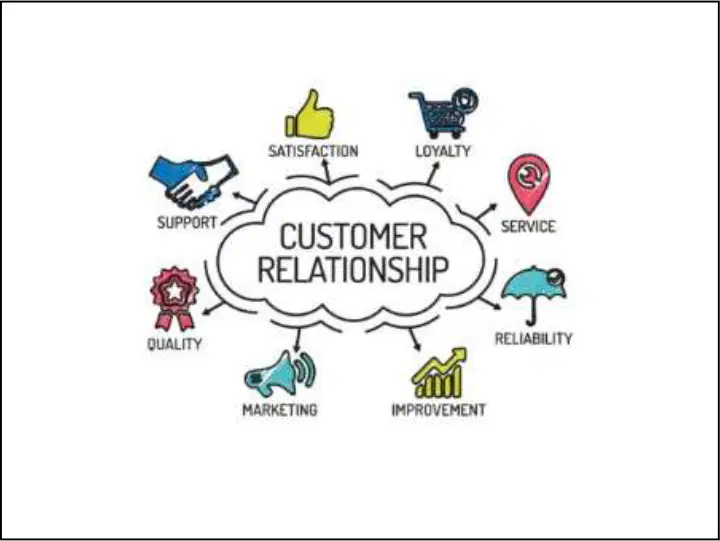
Which of the following is NOT a key element of customer relationship as shown in the diagram?
Satisfaction
Loyalty
Profit
Service
Fill in the blank: Trust assures customers that the service will be ______ every time, reducing doubts about inconsistency.
reliable
expensive
temporary
unpredictable
Which of the following best describes the role of transparent communication in building trust?
Hiding policies from customers
Being transparent about offerings, policies, and pricing
Ignoring customer feedback
Overpromising services
Customers trust that their personal data and transactions are protected, encouraging them to engage confidently.
True
False
Fill in the blank: When trust exists, customers and businesses communicate openly without fear of being _______.
misled
rewarded
ignored
celebrated
Fill in the blank: Trust fosters teamwork and ________, whether between employees or between customers and service providers.
cooperation
competition
confusion
isolation
Fill in the blank: A trusted brand wins repeat purchases and referrals because customers feel ______ staying with them.
safe
bored
confused
ignored
Fill in the blank: Businesses built on trust sustain growth because loyal customers and strong partnerships last over ______.
time
distance
money
luck
Fill in the blank: Trust reduces hesitation and confusion, allowing quicker and more ______ decisions.
confident
hesitant
delayed
uncertain
Fill in the blank: In times of problems, trust helps both sides stay calm and work together toward fair _______.
solutions
arguments
punishments
complaints
Fill in the blank: With trust, customers and businesses feel less exposed to risks of fraud, poor service, or hidden _______.
costs
benefits
rewards
discounts
Fill in the blank: Trust reduces stress and anxiety for customers and employees, creating a more positive ________.
experience
conflict
barrier
problem
What is one strategy to build success trust that involves sharing clear, honest information and explaining benefits in a way that builds customer confidence?
Communicate effectively & convincingly
Offer discounts frequently
Avoid customer feedback
Limit information sharing
Which strategy to build success trust focuses on showing empathy by listening to customer needs and addressing their problems sincerely?
Display caring & concern
Offer discounts & promotions
Focus on product features only
Ignore customer feedback
Prioritize speed over quality
Which strategy to build success trust involves treating all customers equally, maintaining transparency in pricing and policies, and avoiding favoritism?
Be fair
Be aggressive
Offer secret discounts
Prioritize VIP customers
What should you do to build success trust when you don't know something or when mistakes happen?
Admit errors or lack of knowledge
Ignore the issue and move on
Blame others for the mistake
Pretend to know the answer
Hide the mistake from others

Look at the image of a person aiming a bow and arrow at another person with an apple on their head. What does this image most likely represent in the context of building trust?
A) Risk and responsibility
B) Competition
C) Celebration
D) Teamwork
Which strategy involves believing in customers' honesty and respecting their opinions to encourage mutual trust?
Keep your word
Trust your customers
Show respect
Elicit customer input
Which strategy is about fulfilling promises and commitments made to customers to prove reliability?
Provide peace of mind
Keep your word
Personalize your approach
Individualize service
Which strategy includes offering guarantees, clear policies, and reliable service so customers feel safe choosing you?
Provide peace of mind
Show respect
Elicit customer input
Keep an open mind
Which strategy involves taking ownership of the experience by following up, solving issues, and showing accountability?
Personalize your approach
Be responsible for your customer relationship
Keep your word
Show respect
Which strategy is about tailoring communication and service to individual customer preferences?
Personalize your approach
Keep an open mind
Individualize service
Elicit customer input
Which strategy involves accepting feedback, adapting to changes, and considering different perspectives to improve service?
Keep your word
Keep an open mind
Show respect
Provide peace of mind
Which strategy is about going beyond standard service by remembering customer history, likes, and needs?
Individualize service
Personalize your approach
Trust your customers
Elicit customer input
Which strategy values customers’ time, opinions, and choices to make them feel appreciated?
Show respect
Keep your word
Provide peace of mind
Be responsible for your customer relationship
Which strategy involves asking for suggestions and feedback to involve customers in shaping the service or product?
Elicit customer input
Keep an open mind
Personalize your approach
Show respect
Trust is important to the customer-provider relationship because:
it builds loyalty and ensures reliable service.
it allows for higher prices without justification.
it eliminates the need for communication.
it guarantees immediate problem resolution.
What does CRM stand for?
Customer Relationship Management
Customer Resource Method
Corporate Revenue Management
Client Relationship Marketing
Which of the following is NOT a benefit of Customer Relationship Management (CRM)?
Enhanced Customer Experience
Improved Customer Retention
Decreased Sales and Revenue
Better Marketing Campaigns
CRM helps companies collect customer data, track their preferences, improve communication, and build long-term relationships to increase satisfaction, loyalty, and ________.
sales
expenses
competition
conflict
CRM allows companies to understand customers better so businesses can serve them better.
True
False
Which of the following is a way CRM enhances customer experience?
By tracking customer preferences and interactions
By ignoring customer feedback
By reducing communication
By limiting data collection
CRM tools help sales teams identify prospects, track leads, and manage pipelines more efficiently, which results in more ________ and higher revenue.
conversions
meetings
expenses
delays
Fill in the blank: CRM provides a centralized database of customer information, enabling support teams to quickly access past interactions and resolve issues faster. This is an example of _________
Streamlined Customer Service
Automated Marketing Campaigns
Financial Reporting
Product Inventory Management
Fill in the blank: CRM collects and analyzes customer data, helping organizations make smarter decisions based on trends, behaviors, and performance metrics. This is known as _________.
Data-Driven Decision Making for organization
Customer Relationship Enhancement
Automated Marketing Campaigns
Sales Forecasting Automation
Fill in the blank: By analyzing purchase history and preferences, CRM identifies products or services that complement what the customer already bought, opening sales opportunities. This is called _________.
Cross-Selling and Upselling Opportunities
Customer Segmentation
Lead Scoring
Customer Retention Analysis
Fill in the blank: CRM allows different departments (sales, marketing, service) to share customer data, ensuring better coordination and teamwork. This is an example of _________.
Improved Internal Collaboration within organization
Customer Data Privacy Violation
External Vendor Management
Automated Product Manufacturing
Fill in the blank: Businesses using CRM can deliver more personalized, efficient, and reliable services, standing out from competitors who don’t use such systems effectively. This is known as _________.
Competitive Advantage
Customer Retention
Market Saturation
Brand Dilution
Fill in the blank: CRM systems grow with the company, adapting to handle more customers, more data, and more processes as the business expands. This demonstrates _________.
Scalability and Growth for company to develop
Limited functionality
Decreased efficiency
Lack of flexibility
Fill in the blank: One of the provider characteristics that affects customer loyalty is __________.
Responsiveness
Location
Price Tag
Advertising
Fill in the blank: One of the provider characteristics that affects customer loyalty is __________.
Adaptability
Location
Price Fluctuation
Advertising
Fill in the blank: One of the provider characteristics that affects customer loyalty is __________.
Communication skills
Physical strength
Technical gadgets
Office location
Fill in the blank: One of the provider characteristics that affects customer loyalty is __________.
Decisiveness
Ambiguity
Negligence
Indifference
Fill in the blank: One of the provider characteristics that affects customer loyalty is __________.
Enthusiasm
Location
Price
Advertising
Fill in the blank: One of the provider characteristics that affects customer loyalty is __________.
Ethical behavior
Physical strength
Technical jargon
Geographical location
Fill in the blank: One of the provider characteristics that affects customer loyalty is __________.
Initiative
Location
Price
Advertising
Fill in the blank: One of the provider characteristics that affects customer loyalty is __________.
Knowledge
Location
Price
Advertising
Fill in the blank: One of the provider characteristics that affects customer loyalty is __________.
Perceptiveness
Aggressiveness
Indifference
Impatience
Fill in the blank: One of the provider characteristics that affects customer loyalty is __________.
Planning ability
Physical strength
Geographical location
Product price
Fill in the blank: One of the provider characteristics that affects customer loyalty is __________.
Problem-solving ability
Physical appearance
Location of the provider
Advertising budget
Fill in the blank: One of the provider characteristics that affects customer loyalty is __________.
Professionalism
Location
Advertising
Pricing
Fill in the blank: One of the provider characteristics that affects customer loyalty is __________.
Reliability
Color scheme
Location size
Advertising budget
Fill in the blank: One of the provider characteristics that affects customer loyalty is __________.
Trustworthiness
Punctuality
Creativity
Flexibility
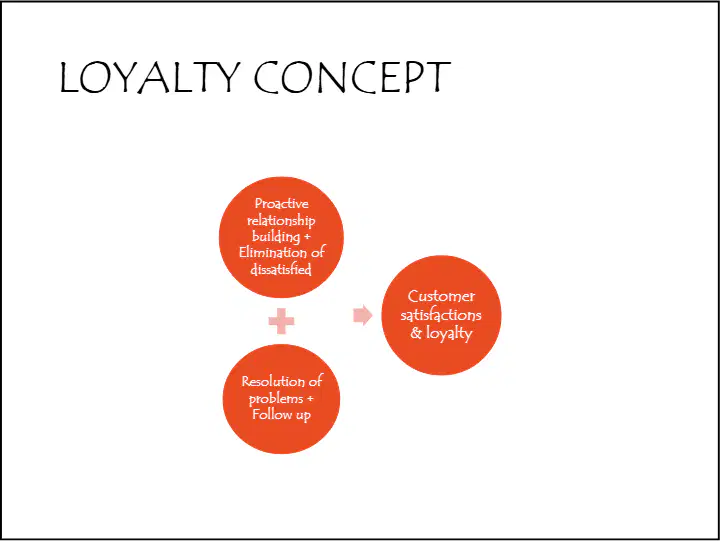
According to the diagram, the two main actions that lead to customer satisfaction and loyalty are:
Providing quality service and building strong relationships
Offering discounts and advertising heavily
Expanding product lines and increasing prices
Reducing costs and limiting customer feedback
Which provider characteristic is described as: 'Quick and attentive reactions to customer needs make customers feel valued, increasing loyalty.'?
Responsiveness
Empathy
Tangibles
Reliability
Which provider characteristic is described as: 'Ability to adjust services based on customer preferences or unexpected situations builds trust.'?
Adaptability
Consistency
Affordability
Punctuality
Which provider characteristic is described as: 'Clear, respectful, and effective communication enhances understanding and strengthens relationships.'?
Communication skills
Technical expertise
Time management
Physical strength
Which provider characteristic is described as: 'Making confident and timely decisions reassures customers and shows professionalism.'?
Decisiveness
Empathy
Flexibility
Patience
Which provider characteristic is described as: 'Positive energy and genuine interest in serving customers create a welcoming experience.'?
Enthusiasm
Punctuality
Accuracy
Formality
Which provider characteristic is described as: 'Acting with honesty and fairness builds customer trust and long-term loyalty.'?
Ethical behavior
Technical expertise
Aggressive marketing
Flexible pricing
Which provider characteristic is described as: 'Proactively addressing customer needs (before being asked) shows care and increases satisfaction.'?
Initiative
Flexibility
Punctuality
Empathy
Which provider characteristic is described as: 'Having strong product and service knowledge boosts customer confidence in the provider.'?
Knowledge
Friendliness
Punctuality
Flexibility
Which provider characteristic involves understanding unspoken customer needs and emotions to provide personalized service?
Perceptiveness
Efficiency
Assertiveness
Technical Skill
Which provider characteristic is described as organizing tasks effectively to ensure smooth service delivery and reliability?
Planning ability
Empathy
Technical expertise
Communication skills
Which provider characteristic is about handling complaints and issues effectively to encourage customers to stay loyal?
Problem-solving ability
Technical expertise
Product variety
Pricing flexibility
Which provider characteristic involves maintaining high standards in behavior, appearance, and service to build respect and loyalty?
Professionalism
Punctuality
Friendliness
Flexibility
Which provider characteristic is about consistently delivering on promises to create customer confidence and repeat patronage?
Reliability
Empathy
Tangibles
Responsiveness
Which provider characteristic is described as customers remaining loyal when they feel safe and assured the provider has their best interest in mind?
Trustworthiness
Affordability
Convenience
Speed
Fill in the blank: To show customers you value them with every interaction, you should treat each encounter with ______ and appreciation, making customers feel important.
respect
indifference
hesitation
impatience
Fill in the blank: To build trust, you should listen to customers and respond by paying attention to their needs, feedback, or complaints, and reply ______.
thoughtfully
quickly
randomly
carelessly
Fill in the blank: Give customers free information by sharing helpful tips, updates, or ______ that benefits them, not just what sells.
knowledge
products
advertisements
discounts
Fill in the blank: Expanded loyalty rewards involve providing extra incentives and personalized rewards to show long-term ______ to their satisfaction.
commitment
interest
curiosity
distance
Fill in the blank: Communicate frequently by keeping in touch through updates, reminders, or ______ so customers feel cared for and connected.
follow-ups
complaints
invoices
discounts
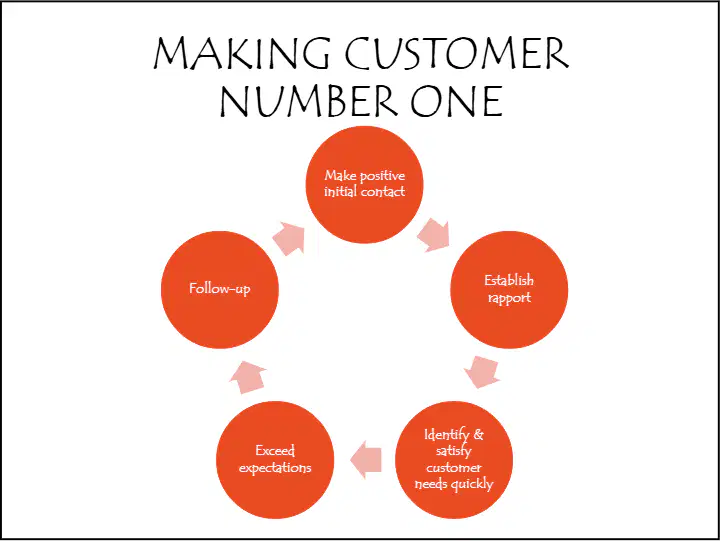
What is the first step in making the customer number one according to the diagram?
Make positive initial contact
Offer a discount immediately
Ask for customer feedback first
Apologize for any inconvenience
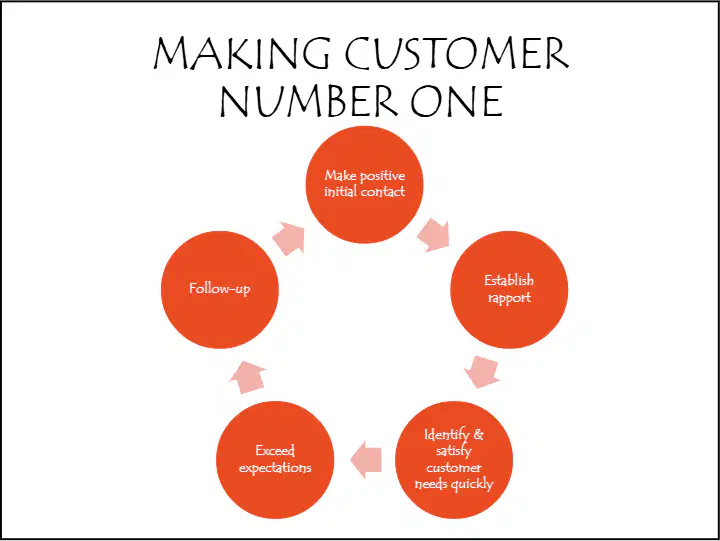
Which of the following is NOT a step in the 'Making Customer Number One' process?
A) Make positive initial contact
B) Establish rapport
C) Ignore customer needs
D) Follow-up
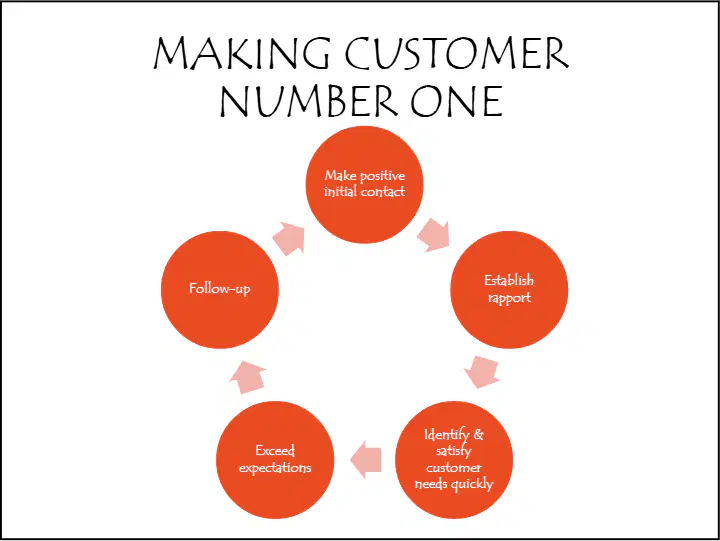
Fill in the blank: After 'Establish rapport', the next step in making the customer number one is ________.
Identify & satisfy customer needs quickly
Offer discounts immediately
Close the sale as soon as possible
Ignore customer feedback
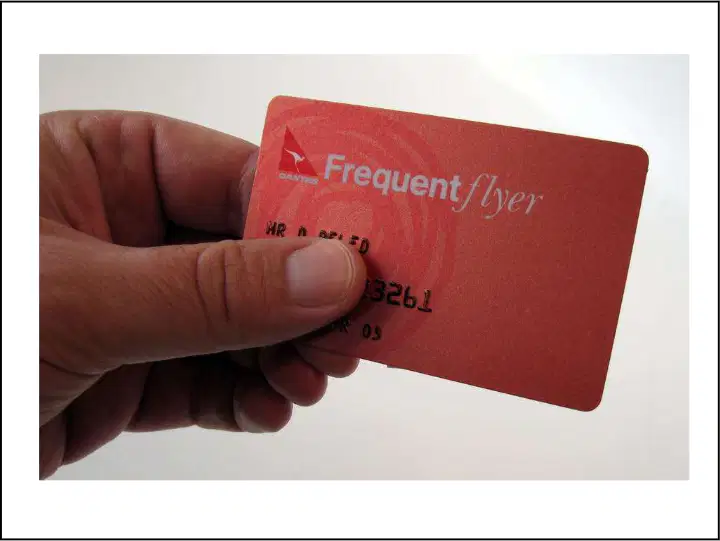
What type of card is shown in the image?
Frequent flyer card
Credit card
Library card
Gift card
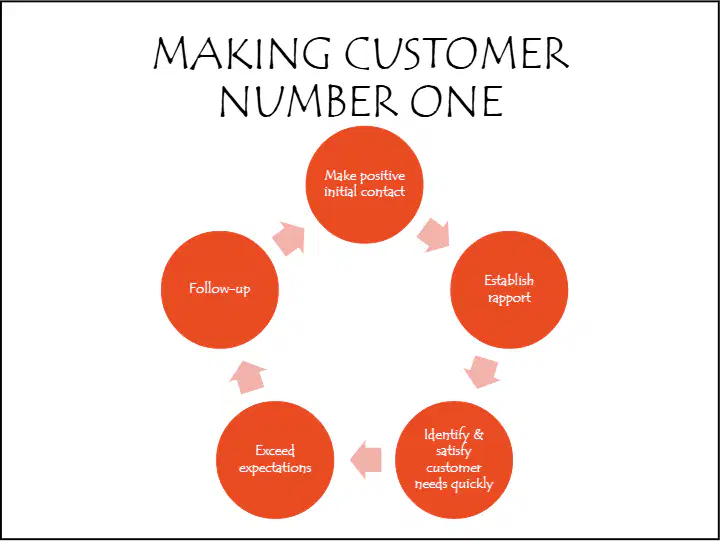
Which of the following lists all the steps in the 'Making Customer Number One' process as shown in the diagram?
Identify customer needs, Deliver quality service, Follow up for feedback, Build long-term relationships
Deliver quality service, Ignore feedback, Build long-term relationships, Increase prices
Identify customer needs, Deliver poor service, Avoid feedback, Build short-term relationships
Identify customer needs, Deliver quality service, Ignore feedback, Build long-term relationships
Fill in the blank: ________ your staff to be attentive, friendly, and responsive to guest needs and inquiries to deliver excellent service.
Train
Ignore
Distract
Confuse
Fill in the blank: Tailor the guest experience to individual preferences whenever possible to ________ the experience.
personalize
generalize
complicate
standardize
Fill in the blank: Ensure that your facilities are clean, well-maintained, and comfortable to maintain ________ and comfort.
cleanliness
noise
temperature
lighting
Fill in the blank: Offer unexpected perks, surprises, or personalized touches to delight guests and leave a lasting impression to anticipate and ________ expectations.
exceed
ignore
lower
delay
Fill in the blank: Address guest concerns or issues promptly and effectively to provide quick and effective ________ resolution.
problem
menu
table
guest
Fill in the blank: Encourage guests to provide feedback on their experiences and use it to identify areas for improvement to solicit and act on ________.
feedback
decorations
reservations
menus
Fill in the blank: Implement a loyalty program that rewards repeat guests for their patronage to offer loyalty ________ and incentives.
rewards
penalties
complaints
restrictions
Fill in the blank: Design memorable experiences that leave a lasting impression on guests to create ________ experiences.
memorable
forgettable
temporary
ordinary
Fill in the blank: Streamline the booking and check-in processes to make them as smooth and hassle-free as possible to provide seamless ________ and check-in processes.
booking
departure
security
luggage
Fill in the blank: Foster a positive atmosphere and culture within your hospitality business that reflects genuine care and hospitality to cultivate a positive ________ and culture.
atmosphere
menu
schedule
budget
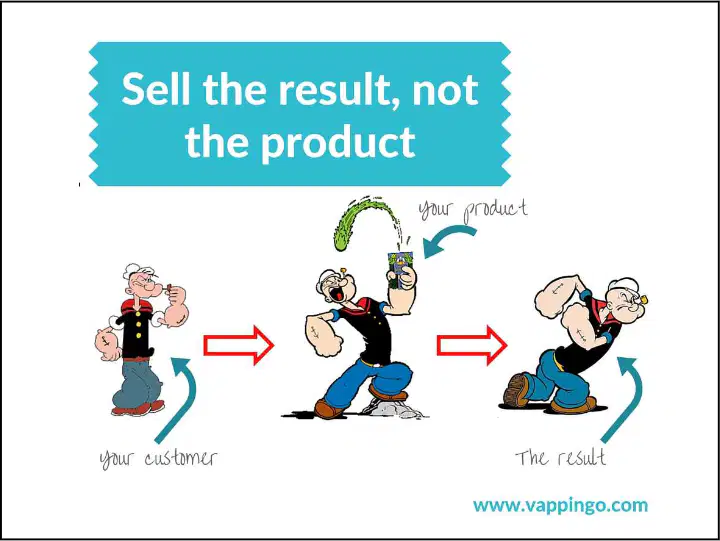
What is the main message of the visual with the cartoon character?
Sell the product, not the result
Sell the result, not the product
Focus on features, not benefits
Ignore the customer
Which of the following is a tip to provide quality service to customers?
Pay attention
Ignore complaints
Focus only on features
Avoid knowing your competition
Fill in the blank: One tip to provide quality service to customers is to ________ with one customer at a time.
Deal
Argue
Ignore
Rush
Which of the following is NOT listed as a tip to provide quality service to customers?
Give customers special treatment
Handle complaints effectively
Sell only features
Know your customers
Fill in the blank: Service each customer at least ________.
adequately
rarely
impatiently
randomly

