
NEW
Font size
 Worksheets
Introduction to the Renaissance
Total questions: 22
Worksheet time: 11mins
Which event in 1453 significantly impacted the Christian world and contributed to the Renaissance?
The First Crusade
The signing of the Magna Carta
The Fall of Constantinople
The discovery of the Americas
Which development best explains how trade accelerated the Renaissance?
Isolation from Arab and Ottoman merchants reduced competition
Improvements in banking and manufacturing increased commercial activity
Decline of population after plagues reduced demand for goods
Heavy censorship by universities limited new ideas
Which architect is associated with the Pazzi Chapel in Florence, known as “the perfect Brunelleschi building,” despite being completed after his death?
Filippo Brunelleschi
Leon Battista Alberti
Donatello
Michelangelo
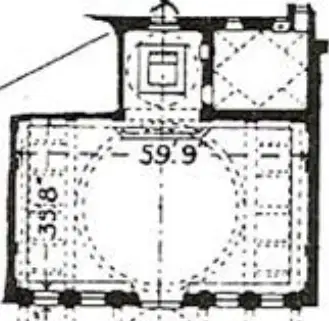
Which design feature of the Pazzi Chapel reflects Early Renaissance spatial order?
A centralized plan with two barrel-vault bays
A Gothic rib-vaulted nave with flying buttresses
An irregular polygonal plan with pointed arches
A Greek-cross plan covered by a wooden truss
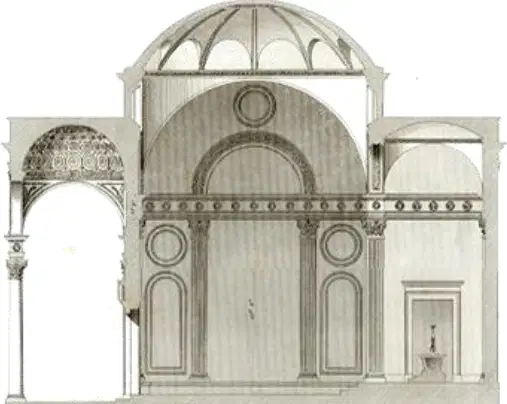
Which interior treatment aligns with Brunelleschi’s aesthetic in the Pazzi Chapel?
Grey-and-white articulation with glazed terracotta roundels
Polychrome stained-glass clerestory windows
Dark timber ceilings with gilded coffers
Extensive fresco cycles covering all walls
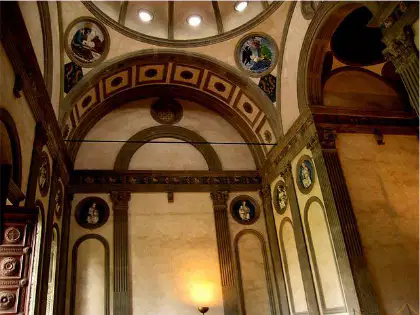
Which feature best reflects Brunelleschi’s grey-and-white style in the Pazzi Chapel?
Alternating dark stone and white plaster outlining arches and entablatures
Polychrome marble inlays on the floor
Gold-leafed coffers on the dome and vaults
Red brick on interior walls
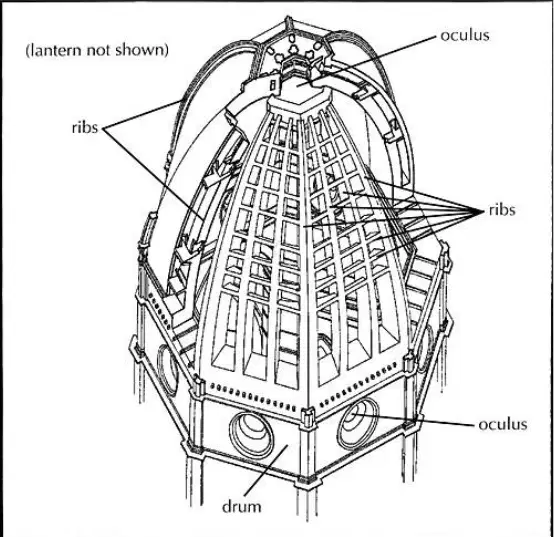
Which challenge did Filippo Brunelleschi solve without using traditional wooden centering?
Carving the marble façade
Supporting the dome during construction
Designing the bell tower
Painting the frescoes inside the dome
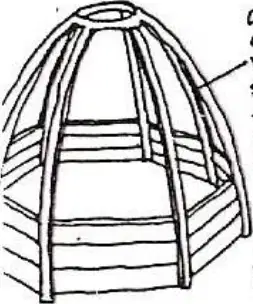
What structural concept explains how Brunelleschi built over an octagonal space while maintaining stability?
Erecting a circular base first, then switching to an octagon
Using eight ribs with panels to create an octagonal dome thick enough for a circular dome inside
Adding external flying buttresses to each face of the octagon
Suspending the brick courses from the lantern
Which design element of the Basilica of Santa Andrea reflects Leon Battista Alberti’s adaptation of ancient Roman architecture?
Gothic ribbed vaulting with pointed arches
A facade organized like a triumphal arch with Corinthian pilasters
Byzantine domes arranged in a Greek-cross plan
Baroque broken pediments with dramatic statuary
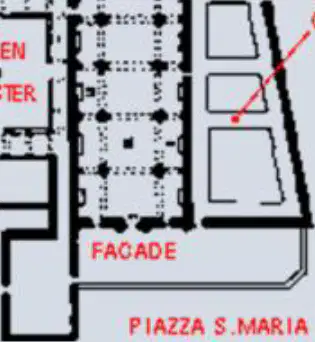
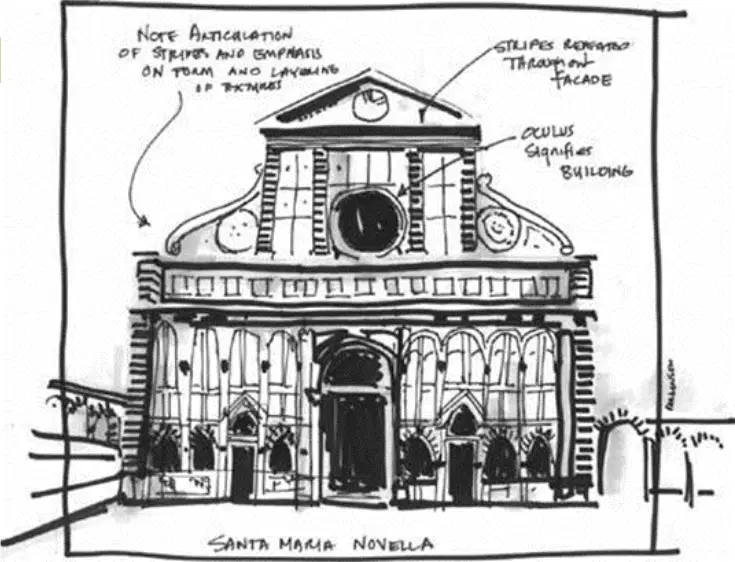
Which design approach best describes Alberti’s facade for Santa Maria Novella?
Retention of medieval forms
Fusion of classical proportions with the medieval structure
Adoption of Gothic verticality with pointed arches
Use of rustic masonry with minimal ornament
In discussing the facade of Santa Maria Novella, which classical feature signals Alberti’s humanist intent in the design?
Flying buttresses
Corinthian columns and temple-front motifs
Ribbed vaults
Lancet windows
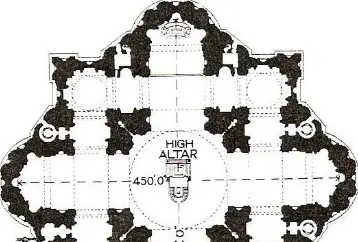
Which statement identifies a distinctive interior feature shared by major Renaissance basilicas like St. Peter’s that reflects classical revival?
Use of a barrel vault roofing the nave
Adoption of timber truss roofs over naves
Replacement of apses with square sanctuaries
Absence of side aisles to emphasize a centralized plan
Which architect is associated with the Villa Rotunda in Vicenza (1566), a hallmark of High Renaissance architecture?
Donato Bramante
Andrea Palladio
Michelangelo Buonarroti
Leon Battista Alberti
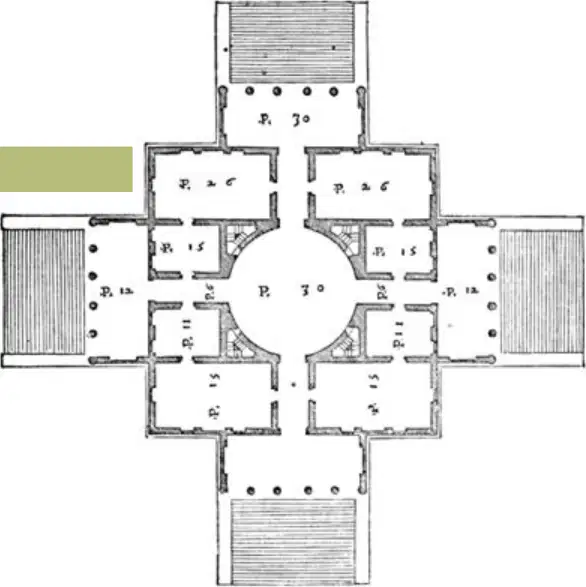
The Villa Rotunda plan features a central hall and four identical porticoes. Which High Renaissance characteristic does this exemplify?
Asymmetry and dynamism
Centralized balance and geometric harmony
Gothic verticality and pointed arches
Baroque theatricality and movement
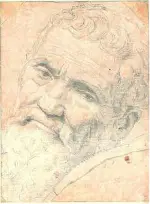
Which statement best identifies Michelangelo’s connection to St. Peter’s Basilica?
He designed the original Latin Cross plan of the basilica.
His red chalk sketch for the dome was his last artwork before his death in 1564.
He carved the column capitals of the nave in a new Mannerist order.
He completed the basilica’s bronze baldachin over the high altar.
Which feature of Late Renaissance/Mannerism contrasts with the clarity and balance of High Renaissance architecture like Bramante’s?
Ambiguity vs. clarity
Use of barrel vaults
Latin Cross plan
Unity in spatial organization
Which architectural feature of the Basilica of St. Peter’s exemplifies the High Renaissance emphasis on grandeur and scale?
Pointed arches throughout the nave
Gothic flying buttresses
Large dome with a lantern
Extensive use of stained glass
What innovative construction technique did Brunelleschi employ to create the dome of Florence Cathedral?
Prefabricated steel trusses
Traditional wooden scaffolding
Use of reinforced concrete
Double-shell structure with a herringbone pattern
Which aspect of the Villa Rotunda reflects Andrea Palladio’s interpretation of classical Roman architecture?
Symmetrical facade with a central portico
Use of elaborate frescoes on the interior walls
Integration of Gothic elements in the design
Asymmetrical layout of the surrounding gardens
What characteristic of the dome of Florence Cathedral showcases Brunelleschi's innovative approach to architecture?
Use of a single material throughout
Integration of a circular base with an octagonal structure
Incorporation of a lantern at the apex
Application of a complex ribbed design
Which element of the Pazzi Chapel's design emphasizes symmetry and proportion, key principles of the Renaissance?
Equal spacing of columns and arches
Use of contrasting colors in the facade
Asymmetrical placement of windows
Irregular shapes in the floor plan
Which feature of the Basilica of St. Peter’s reflects the influence of classical Roman architecture on Renaissance design?
Incorporation of Corinthian columns in the facade
Presence of intricate mosaics throughout the interior
Application of Gothic elements in the nave
Use of large, open spaces without columns

